
The Franco surname comes from the Germanic Franks, and in medieval Europe it carried a second meaning: free. It belongs equally to Italy, Spain, Portugal and the Sephardi Jewish world, which is why it is spread so widely today.
What Does the Surname Franco Mean?
Franco means Frank, a member of the Germanic people who ruled early medieval western Europe, and by extension it means free, because Franks in conquered territory held a privileged legal status that exempted them from certain dues.
The chain runs through medieval Latin francus, “belonging to the Franks”, which drifted into the general sense of a free man. The same root gave the French franc, the English words frank and franchise, and the name of France itself.
Where the tribal name itself came from is still argued over. One theory ties it to the francisca, the throwing axe the Franks carried. Another reverses the direction and derives the tribal name from a Germanic word for free. Philologists have not settled it, and any page that states one flatly is guessing.
For the surname, standard works including the Dictionary of American Family Names give two routes. Franco is either taken from the medieval personal name Franco, an ethnic name for a Frank, or it is a status name from franco meaning free, applied to a freed slave or a settler released from feudal dues.
Where the Franco Name Comes From
There is no single homeland. Franco arose independently in Italy, in Spain, in Portugal and in Sephardi Jewish communities, each time from the same Frankish root but for different local reasons.
Italy
The Italian Franco has two overlapping sources. It descends from the medieval given name Franco, in wide use across northern Italy by the eleventh century, and it also served as a short form of Francesco. Both hardened into hereditary surnames in the late Middle Ages.
Modern Italy has roughly 39,000 bearers, and unusually they are not clustered in one province. Franco runs the length of the peninsula, heaviest in Piedmont and Friuli in the north and in Calabria, Puglia, Campania and Sicily in the south. That even spread is itself a clue: a name this dispersed almost never has one founding family.
Spain and Portugal
In Iberia, franco was a legal category before it was a name. From the eleventh century, kings including Sancho Ramírez of Aragon and Alfonso VI of León and Castile invited French craftsmen, innkeepers and merchants to settle the pilgrim road to Santiago, granting the new settlements charters of privilege. The towns were burgos francos and the people in them were francos.
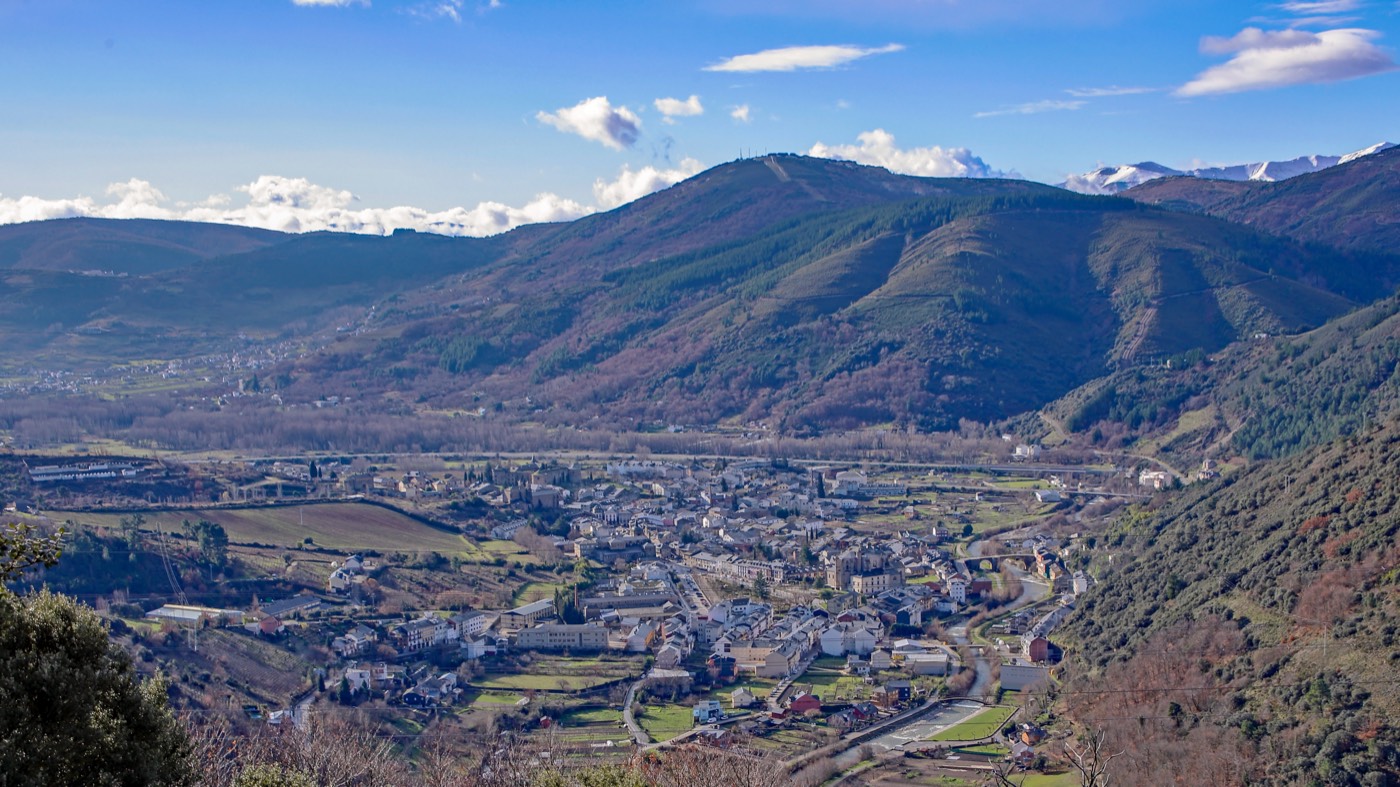
Jaca, Estella and Villafranca del Bierzo all began this way, and the Villafranca and Vilafranca place names scattered across Iberia are the fossil record of the policy. A man called Franco might therefore be of French descent, or simply a townsman holding a franchise the peasantry around him did not. Portuguese usage matches the Spanish, with an added toponymic route from places such as Vila Franca de Xira.
Readers weighing the same question will meet it again in the Guerra surname, likewise claimed by both Italy and Spain with good evidence on each side.
The Sephardi Francos
Franco is also a documented Sephardi Jewish surname, and not a marginal one. The Jewish Encyclopedia traces it to a locality near Navarre and records Francos at Amsterdam, Venice, Tunis, Constantinople, Adrianople, Salonica, Smyrna, Crete and Rhodes.
What holds that scatter together is trade. After the expulsions from Spain and Portugal, Franco families settled in the free port of Livorno and in Amsterdam, and from there ran a network reaching London and the Ottoman Levant. Some of the London Francos, who married into the Lousada and d’Aguilar families, came from Livorno in the mid eighteenth century. In Aleppo and Smyrna, Iberian and Italian Jewish merchant houses that kept their European passports were known as the Señores Francos, the same word by a different door, since in the Levant a Frank meant a westerner.
The names are recoverable. Solomon Franco, who died in 1639, founded a Hebrew printing house in Constantinople that ran for close to fifty years. Mendez Mordecai Franco was president of Amsterdam’s Portuguese Jewish community around 1684, and David Franco Mendes, born there in 1713, became its leading Hebrew poet. Raḥamim Franco was chief rabbi of Hebron from 1833 to 1896, and Moshe Yehuda Franco, born in Rhodes in 1837, died as Rishon LeZion in Jerusalem in 1917.
Spelling Variants and Related Names
Franco is a stable spelling, but it sits at the centre of a large family of names built on the same Frankish root across a dozen languages.
In Italian the relatives include Franchi, Franchini, Franci, Franceschi, Di Franco, Lo Franco and De Franco, along with Francese and Franzese, which mean “the Frenchman” outright. Spanish and Portuguese give Francos, Catalan gives Franch, French gives Franc, Francq and Lefranc, German and Dutch give Frank, Franke and Vranken, and English gives Frank and Franks.
Two cautions. Franco is not a variant of Francisco, though the two share a saint and are constantly confused in American records. And the Ashkenazi surname Frank usually points to Franconia in southern Germany rather than to the Italian or Iberian Franco. In Hebrew and Ladino records the name appears as פראנקו.
The Francos in America
Francos reached America by four separate routes: Sephardi merchants in the colonial period, Italians after 1880, Iberian labour migrants, and the very large twentieth-century movement from Latin America.
The first was startlingly early. Solomon Franco, a Sephardi scholar and merchant, reached Boston in 1649 with a cargo consigned to Major General Edward Gibbons, and is the first Jew recorded living in Massachusetts. He sued Gibbons over a commission he was owed, and the General Court settled the matter by paying him a small weekly allowance on condition he take the next ship for Holland.
The Italian Francos came in the mass migration between 1880 and 1924, and they went where the work was. The steel towns of the Ohio valley took many, and the Italians of Youngstown, Ohio drew on Calabria and Campania in exactly the proportions the surname suggests. In New York State, Francos appear in the electrical works that built Italian Schenectady and in the power and chemical plants that pulled labourers to Niagara Falls.
Pennsylvania and New England took the rest, and Franco households appear in the 1910s and 1920s returns for the knitting mills of Reading, Pennsylvania and the machine-tool trades of Springfield, Massachusetts.
A smaller stream came from the Ottoman Aegean. Sephardi families from Rhodes and the Sea of Marmara began arriving around 1900 and concentrated in a few cities, above all the Sephardi community of Seattle. Rhodes was a Franco stronghold, and the surname travelled with them.
The largest group came last. Franco is a major surname in Mexico, Colombia, Brazil and the Dominican Republic, and migration from those countries after 1965 is the main reason the name ranks where it does today.
Notable People Named Franco
Veronica Franco (1546 to 1591) was a Venetian poet and courtesan whose Terze rime and published letters gave her one of the few independent literary reputations a woman held in her century.
Francisco Franco (1892 to 1975) was born at Ferrol in Galicia, led the Nationalist side in the Spanish Civil War of 1936 to 1939, and ruled Spain as head of state until his death in November 1975. His association with the name is incidental: the surname is centuries older than him and belongs to a million people with no connection to Spanish politics.
Itamar Franco (1930 to 2011), of Italian descent, became president of Brazil in 1992 after the impeachment of Fernando Collor and served until the end of 1994.
John Franco (born 1960), a Brooklyn relief pitcher, spent fourteen seasons with the New York Mets and retired with 424 saves, the most by a left-hander in major league history.
Marielle Franco (1979 to 2018) was a Rio de Janeiro city councillor and human rights campaigner from the Maré favela complex, assassinated in March 2018 in a case that became a national cause.
How Common Is Franco Today?
Franco is the 476th most common surname in the United States, carried by 69,943 Americans at the 2010 Census. Worldwide the figure is close to a million, across more than 170 countries.
The distribution corrects the common assumption that Franco is chiefly Italian. Brazil has the most bearers at roughly 194,000, then Mexico with about 159,000, Colombia with 95,000, the United States, Argentina, Spain with around 44,000 and Italy with around 39,000. The Iberian and Latin American Francos comfortably outnumber the Italian ones.
| US rank (2010 Census) | #476 |
|---|---|
| Americans with the name | 69,943 |
| Origin | Italian, Spanish, Portuguese and Sephardi Jewish |
| Meaning | Frank, and by extension free |
Frequently Asked Questions
What does the surname Franco mean?
Franco means a Frank, a member of the Germanic people who dominated early medieval Europe, and it also means free. The second sense grew out of the first, because Franks in conquered lands held a privileged status exempt from certain dues.
Is Franco Italian or Spanish?
Both, genuinely. The name arose separately in Italy, Spain and Portugal from the same Latin root, and no single country owns it. By raw numbers the Iberian and Latin American Francos are much the larger group.
Where does the Franco family come from?
There is no one Franco family. The name appears across Italy, along the Spanish pilgrim roads where French settlers were granted charters, in Portugal, and among Sephardi Jews of Iberian descent from Amsterdam to Rhodes.
How common is the surname Franco?
It ranks 476th in the United States with 69,943 bearers, and about a million people carry it worldwide. Brazil has the largest population of Francos, followed by Mexico and Colombia.
Is there a Franco family crest or coat of arms?
No. In every major heraldic tradition arms are granted to an individual and pass to that person’s direct descendants, never to everyone sharing a surname. Sites offering you a Franco crest are selling a decoration, not a lineage, and with a name of this many independent origins the claim is doubly hollow.
Is Franco a Jewish surname?
It can be. Franco is a well-documented Sephardi surname, borne by rabbis, printers and merchant families in Livorno, Amsterdam, London, Salonica and Rhodes. But most people called Franco are not Jewish, so the name alone proves nothing and has to be checked against records.
If your family carries the Franco name, its route to America is traceable. Atlas of Home can follow it from an Italian hill town, an Iberian franchise town or a Sephardi trading house to wherever your family landed, and to wherever you are now.