
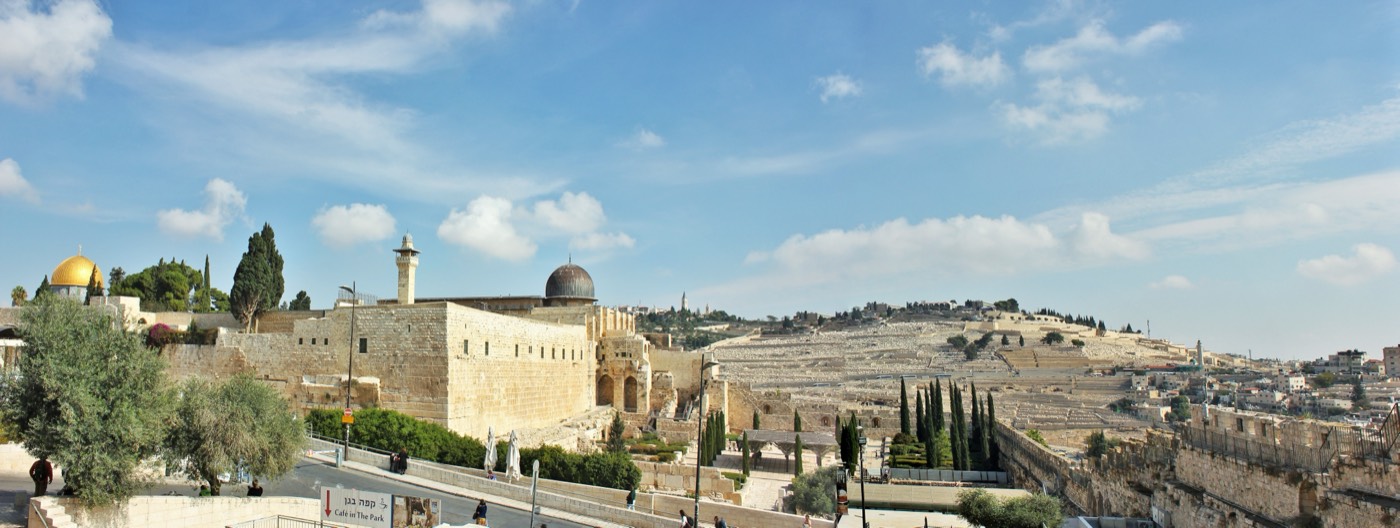
The Cohen surname means “priest” in Hebrew, and it carries a claim no other family name in the Western world makes: patrilineal descent from Aaron, brother of Moses, and from the men who served at the altar of the Temple in Jerusalem.
What Does the Surname Cohen Mean?
Cohen comes from the Hebrew כֹּהֵן (kohen), meaning “priest”. It marks a family as belonging to the kohanim, the hereditary priestly line of ancient Israel, traditionally descended in the male line from Aaron.
The word is old, running through the Hebrew Bible with cousins across the Semitic languages. Unlike almost every other surname you could research, Cohen never described what a man did for a living in some medieval village. It described a religious status he inherited at birth and could not acquire any other way.
That status still carries obligations in observant communities. A kohen is called first to the Torah reading. He delivers the priestly blessing. He officiates at pidyon haben, the redemption of a firstborn son. Under halakhic law he may not marry a divorcee or a convert, and he avoids contact with the dead, which is why in many Jewish cemeteries you will find kohanim buried near the perimeter, reachable from the path without walking among the graves.
Where the Cohen Name Comes From
The Cohen name comes from ancient Judaea, and specifically from the Temple priesthood in Jerusalem. But the status and the surname have very different ages, and honest family history has to keep them apart.
The status: three thousand years old
Priestly descent has been tracked patrilineally since biblical times, survived the destruction of the Second Temple in 70 CE, and was carried through every subsequent dispersal, maintained independently by families in Baghdad, Fez, Kraków and Salonica. A man knew he was a kohen because his father had told him so, and that chain of telling is the actual mechanism of transmission.
The surname: mostly two hundred years old
Fixed hereditary surnames are a much later development. Most Ashkenazi families acquired them only under state compulsion: Emperor Joseph II’s edict of 1787 in the Habsburg lands, Napoleon’s decree of 1808, Prussia in 1812, and a sequence of Russian imperial laws from 1804 onwards. Our page on the Schwartz surname traces that registration process in more detail.
When the clerks arrived, families who already carried an inherited priestly designation had an obvious answer, and Cohen and its dozens of translations were written into the registers. Sephardi and Italian communities had fixed the name earlier, in some cases by the medieval period.
What the DNA studies actually found
In 1997 Karl Skorecki and colleagues published a short paper in Nature reporting that self-identified kohanim carried a distinctive distribution of two Y-chromosome markers, and that the pattern appeared in both Ashkenazi and Sephardi kohanim, implying it predated their separation. A 1998 follow-up defined a six-marker signature that became famous as the Cohen Modal Haplotype.
Roughly 45 per cent of Ashkenazi kohanim and 56 per cent of Sephardi kohanim matched it, against about 13 per cent of other Jewish men. Press coverage promptly turned this into proof of descent from Aaron. It is not.
Later work qualified it heavily. The six-marker haplotype turned out to be common in non-Jewish Middle Eastern populations, including Yemenis, Bedouin, Iraqis, Muslim Kurds and Armenians, so it is a Near Eastern signature rather than a priestly one. Michael Hammer’s higher-resolution 2009 study found about 46 per cent of kohanim in a single lineage, J-P58, but distributed the rest across some twenty other haplogroups. That points to several founding priestly lines, not one man.
The fair summary: a large minority of kohanim share a Near Eastern paternal ancestry of real antiquity, which is genuinely striking given two thousand years of dispersal. It is not a genetic test for descent from Aaron, and no reputable geneticist has claimed it is.
Spelling Variants and Related Names
Cohen has one of the largest variant families of any surname on earth, because every community that carried the priesthood translated or transliterated it into the local language. The direct spellings include Cohn, Kohn, Kohen, Cohan, Coen, Conn, Cahn, Kahn and Kahane, the last from the Aramaic form.
In the Russian Empire, where Hebrew h was rendered as g, the name became Kagan, Kogan, Kogen and the patronymic Kaganovich. Polish records give Kon. Some immigrants to Britain and America reshaped it as Cowan or Cowen, and in Ireland it collided with the unrelated native surname Coyne.
Three related names hide the meaning rather than spelling it. Katz is an acronym of kohen tzedek, “righteous priest”. Kaplan comes from the Latin capellanus, chaplain, a straightforward translation of “priest” into the language of the surrounding Christian administration. Azoulay, common among Moroccan Jews, is traditionally read as an acronym of the Levitical verse setting out whom a kohen may not marry.
Sephardi and Mizrahi branches added more: Sacerdote and Sacerdoti in Italy, Cunha and Coinha among Portuguese conversos, Cohen-Scali in Morocco, Cohen-Maghari among Yemeni Jews. The Samaritan community, separate from Judaism for over two millennia, maintains its own priestly line and uses the cognate title too.
The Cohens in America
Cohens reached America in every Jewish migration wave, beginning before the Revolution. Jacob I. Cohen emigrated from Bavaria in 1773, fought with the largely Jewish militia company of the Charleston District Regiment at Beaufort in 1779, then built a merchant business in Richmond before the family moved on to Baltimore.
The great arrivals came later: German-speaking Jews from the 1840s through the 1870s, who scattered into peddling and retail across the South and Midwest, and then some two million Jews from the Russian Empire, Galicia and Romania between 1881 and 1924. Most of the second group landed at Castle Garden or Ellis Island and stayed in New York.
Their descendants moved outward within a generation or two. Many left the Lower East Side for Brooklyn and Queens, and the Jewish community of Forest Hills still shows the layers, with Ashkenazi families joined after 1970 by Bukharian and Iranian arrivals. In Pennsylvania, Squirrel Hill became the settled centre of Jewish Pittsburgh, and in New Jersey the mill town of Passaic drew immigrant families to its factories.
The fastest growth since the war has been in the strictly Orthodox and Hasidic communities. The yeshiva town of Lakewood has expanded enormously since the 1940s, and the Satmar village of Kiryas Joel has one of the youngest populations in the country.
Notable People Named Cohen
Jacob I. Cohen Jr. (1789 to 1869) was a Baltimore banker and railroad director who campaigned for the Maryland “Jew Bill”, passed in 1826, which finally allowed Jews to hold public office in the state.
Hermann Cohen (1842 to 1918) founded the Marburg school of neo-Kantian philosophy and wrote Religion of Reason Out of the Sources of Judaism, one of the major works of modern Jewish thought.
Eli Cohen (1924 to 1965), born in Alexandria to an Aleppan Jewish family, was the Israeli intelligence agent who spent years embedded in Damascus society before his capture and public execution.
Paul Cohen (1934 to 2007), an American mathematician, won the Fields Medal in 1966 for proving that the continuum hypothesis is independent of the standard axioms of set theory.
Leonard Cohen (1934 to 2016), the Montreal poet and songwriter, was raised on the family tradition of priestly descent and said he had “a very Messianic childhood”, having been told he descended from Aaron.
Stanley Cohen (1922 to 2020) shared the 1986 Nobel Prize in Physiology or Medicine with Rita Levi-Montalcini for the discovery of growth factors.
How Common Is Cohen Today?
Cohen ranked 351st in the 2010 United States Census, with 89,091 Americans bearing the name. It is also the most common surname in Israel, and counting its variants makes the family far larger still.
| US rank (2010 Census) | #351 |
|---|---|
| Americans with the name | 89,091 |
| Origin | Jewish (Hebrew) |
| Meaning | Priest, from Hebrew kohen |
Frequently Asked Questions
What does the surname Cohen mean?
It means “priest”, from the Hebrew kohen. The name signals a family tradition of patrilineal descent from Aaron and from the priests who served in the Temple in Jerusalem.
Is Cohen a Jewish name or can it be something else?
Cohen is Jewish, and it is also borne by Samaritan priestly families, who share the biblical inheritance but not the later Jewish tradition. A handful of unrelated names look similar by coincidence, such as the Irish Coyne, which some emigrant Cohens later adopted.
Where does the Cohen family come from?
There is no single Cohen family and no single village of origin. The priestly line originates in ancient Judaea, and Cohen families are documented across Central and Eastern Europe, Italy, Morocco, Iraq, Yemen and the Ottoman lands.
How common is the surname Cohen?
It ranked 351st in the United States in 2010, with 89,091 bearers, and it is the most common surname in Israel. Counting Kohn, Kahn, Katz, Kaplan, Kagan and the rest would multiply that figure many times over.
Is there a Cohen family crest or coat of arms?
No. In the European heraldic traditions, arms are granted to individuals and pass to their direct descendants, never to everyone who happens to share a surname. Any site selling you a “Cohen family crest” is selling a decoration, not a lineage, and the point is doubly sharp here: the Cohen inheritance was religious status, recorded in memory and communal record rather than on a shield.
Does having the surname Cohen mean I am a kohen?
Not automatically. Most bearers do come from families with a priestly tradition, but some adopted the name during the surname decrees without that descent, and many genuine kohanim carry entirely unrelated surnames. Community records and family tradition, not the name alone, are what establish the status.
If your family carries the Cohen name, its route from the eastern Mediterranean to America is traceable. Atlas of Home can follow it from the priestly registers and shtetl records to whichever port your family landed at, and to wherever you are now.
Further reading: Kohen and Y-chromosomal Aaron on Wikipedia.