
The Lambert surname comes from the old Germanic personal name Landberht, built from land, meaning land or territory, and berht, meaning bright or famous. It spread across France, the Low Countries, Germany and England on the back of a murdered bishop’s cult.
What Does the Surname Lambert Mean?
Lambert means “bright land” or “famous in the land”. It derives from the Continental Germanic personal name Landberht, from Old High German lant (land, homeland) and beraht (bright, renowned), and it became a surname the ordinary way, by children being known as the son or daughter of a man called Lambert.
That makes it a patronymic, not an occupational or place name. Nobody was ever a Lambert by trade or by address. Somewhere in the twelfth century, a father in Picardy or Brabant or Yorkshire was christened Lambert, and his descendants kept the name.
The Old English cognate of the same compound, Landbeorht, existed in England before 1066 but did not survive in that form. The Norman and Flemish version replaced it entirely, which is why almost no English Lambert can claim an unbroken Anglo-Saxon line through the name itself.
One rival theory deserves a mention. Early English surname dictionaries note spellings such as Johannes le Lambehirde (1310) and suggest a few English Lamberts descend from a “lamb-herd”, a shepherd. That strand is real but small. The vast majority of Lamberts trace to the personal name.
Where the Lambert Name Comes From
Lambert comes from the Frankish lands between the Meuse and the Rhine, and above all from the diocese of Liège and Maastricht, where a seventh-century bishop named Lambert was murdered and made a saint. His cult turned an ordinary Germanic name into one of medieval Europe’s most used baptismal names.
The Low Countries and the cult of Saint Lambert
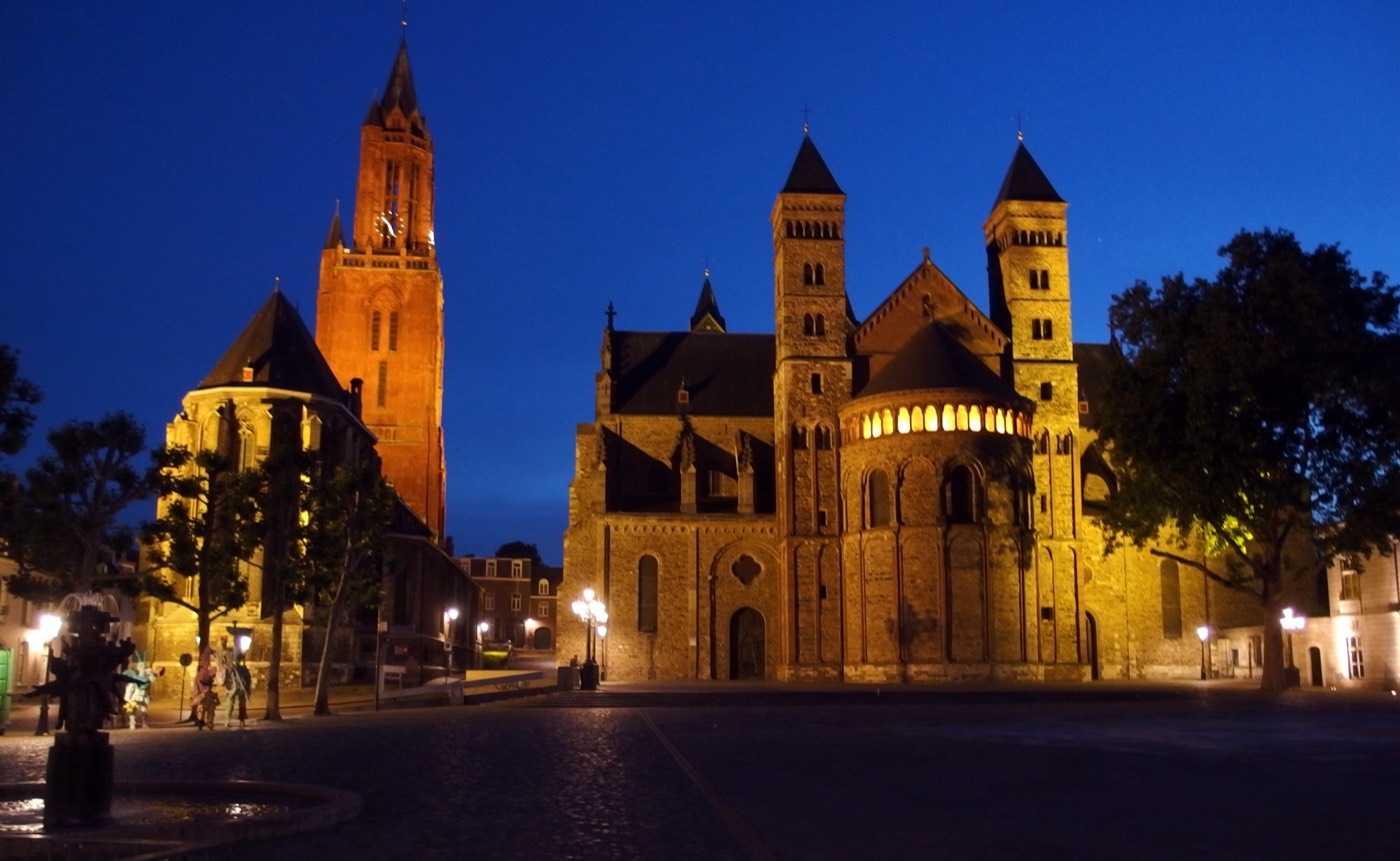
Lambert of Maastricht was bishop of Maastricht and Liège from roughly 670 until his death around 705. He was killed by an armed party under a Count Dodo, reportedly after denouncing Pepin of Herstal’s relationship with Alpaida, the mother of Charles Martel. His remains went first to Maastricht and later back to Liège, where the cathedral raised over his tomb made the city a pilgrimage centre.
Veneration of Saint Lambert spread through Holland, Westphalia and northern France. Each wave of devotion produced another generation of baby Lamberts, and by the time surnames hardened there were Lambert families in every direction from Liège. The name is still the second most frequent surname in Wallonia.
France and the northern provinces
France is the name’s second home, and by weight of numbers arguably its first. Lambert is one of the more common surnames in the country, densest historically in Bourgogne-Franche-Comté, the Pays de la Loire and the Grand Est, the last sitting directly on the old Frankish corridor.
French Lamberts are therefore not French in the Latin sense at all. They carry a Germanic name that arrived with the Franks and was reinforced by a Walloon saint.
England, Normandy and the Flemish weavers
England received the name twice. The Normans brought the Continental form after 1066, displacing the native Landbeorht. Then Flemish weavers settled in East Anglia and Yorkshire from the twelfth century onward, carrying Saint Lambert’s name with them as a favourite baptismal choice.
The result is a genuinely English surname with a foreign core, concentrated in Yorkshire, Lincolnshire, Norfolk and the West Country. A Lambert line from Calton in Yorkshire produced both the Cromwellian general John Lambert and the Lamberts who settled in County Galway and built Castle Lambert and Creg Clare near Athenry, which is how a Germanic name became a Hiberno-Norman Irish one.
Spelling Variants and Related Names
The main variants of Lambert are Lambard, Lamberd, Lampert, Lamberts, Lambrecht, Lamprecht, Lambrechts, Lamberty, Lambertz and Lammert. Most are regional pronunciations of the same Landberht rather than separate names.
The German and Dutch forms preserve the older shape most clearly. Lambrecht and Lamprecht in Germany, Lambrechts and Lambregts in Flanders, and Lammers and Lemmens in the Rhineland and Limburg all descend from the same personal name, the last through the pet form Lemmen.
French records add Lambry, Lamberton, Lambot, Lambotte and Lambelin, several of them diminutives meaning “little Lambert”. Italian and Latinised forms include Lamberti, Lambertini and Lambertus. In England the older Lambard and Lambarde survive as separate surnames, and Lamberth appears as a local respelling.
In Ireland there is no native Gaelic form at all. The Galway Lamberts stood on Norman footing, so any claim that Lambert anglicises an older Irish sept name should be treated with suspicion.
The Lamberts in America
American Lamberts come from two almost entirely separate migrations: English Lamberts who arrived in the colonial period, and French-Canadian and Acadian Lamberts who came south from Quebec and the Maritimes. The two groups share a name and almost nothing else.
The English arrival came first. Thomas Lambert, a Quaker from Yorkshire, was among the settlers on Rancocas Creek in Burlington County, West Jersey, and in December 1681 he was one of the commissioners who signed the rules for surveying and dividing land along the Delaware. Lambert farms run through the early records of Burlington and Trenton, and later Lamberts spread into Virginia, the Carolinas and across the Appalachians, which is why the name is common in Tennessee, Kentucky and West Virginia today.
The French line begins with Aubin Lambert dit Champagne, baptised in 1632 at Tourouvre in the Perche, who reached Quebec in 1663 with a company attached to the Carignan-Salières Regiment and stayed when it was recalled. He married Élisabeth Aubert, one of the filles du roi, at Notre-Dame de Québec in 1670. The Association des Lambert d’Amérique counted over sixteen thousand of his descendants by 2014, concentrated in the Mauricie and the Beauce.
Those Quebec Lamberts came into New England in the great southward movement of the nineteenth century, when whole parishes emptied into the mill towns. Lambert fills the parish registers of the French-Canadian community in Lowell, Massachusetts, the Amoskeag housing of Manchester, New Hampshire, and the mill families of Woonsocket, Rhode Island.
A third French strand runs through Acadia. Lamberts were among the Acadian families of the Maritimes, and the deportations of 1755 to 1763 scattered them. Some regrouped in the upper Saint John valley, where the Acadian settlements around Madawaska, Maine preserved the old speech; others reached Louisiana between 1764 and 1785 and joined the Cajun world centred on Lafayette. Lambert appears too among the Creole families of Tremé in New Orleans.
Smaller streams fill in the rest. Some Lamberts were Huguenots, part of the Protestant exodus behind settlements such as New Paltz in New York. Others were Walloon and Flemish Catholics who reached the industrial Midwest, including the Belgian community in Detroit. German Lamberts, often originally Lambrecht, shortened the spelling.
Notable People Named Lambert
Saint Lambert of Maastricht (c. 636 to c. 705) was the bishop whose murder and cult made the name popular across northern Europe. His feast day is 17 September, and the cathedral over his shrine dominated Liège until the French Revolution.
Lambert Simnel (c. 1477 to c. 1525) was the boy impostor crowned in Dublin in 1487 as a pretender to Henry VII’s throne. When the rebellion collapsed at Stoke Field, Henry put him to work in the royal kitchens.
John Lambert (1619 to 1684), born at Calton in the West Riding of Yorkshire, was one of Cromwell’s ablest generals and the author of the Instrument of Government, the written constitution behind the Protectorate. He fought at Marston Moor, Dunbar and Worcester, and died a prisoner off Plymouth.
Johann Heinrich Lambert (1728 to 1777), a tailor’s son from Mulhouse in Alsace, was the first to prove rigorously that pi is irrational, publishing in 1768, and he introduced the hyperbolic functions into trigonometry at the Berlin Academy. His life is documented by the MacTutor archive.
Jack Lambert (born 1952), from Mantua, Ohio, played eleven seasons at middle linebacker for the Pittsburgh Steelers, won four Super Bowls and entered the Pro Football Hall of Fame in 1990.
Miranda Lambert (born 1983), born in Longview, Texas and raised in Lindale, is among the most decorated country songwriters of her generation.
How Common Is Lambert Today?
Lambert was the 329th most common surname in the United States at the 2010 Census, carried by 93,678 Americans. Worldwide it is borne by roughly 325,000 people, chiefly in the United States, France, England, Canada and Belgium.
| US rank (2010 Census) | #329 |
|---|---|
| Americans with the name | 93,678 |
| Origin | Germanic, carried into French, Walloon, Dutch, German and English use |
| Meaning | “Bright land”, from land plus berht |
Within the United States the name clusters in two very different places: the Appalachian and Southern states settled by English Lamberts, and the New England mill belt and Louisiana settled by French ones. That split is usually the first clue to which family a Lambert belongs.
Frequently Asked Questions
What does the surname Lambert mean?
Lambert means “bright land” or “famous in the land”, from the Germanic personal name Landberht, combining land with berht. It is a patronymic surname, taken from a father’s baptismal name rather than from a trade or a place.
Is Lambert French or English?
It is genuinely both, and originally neither. The name is Germanic and became common in France, Belgium, the Netherlands, Germany and England independently. In America, Lamberts in the South and Appalachia usually descend from English settlers, those in New England and Louisiana from French-Canadian or Acadian ones.
Where does the Lambert family come from?
There is no single Lambert family. The name arose separately wherever the personal name was popular: the diocese of Liège and Maastricht above all, then northern and eastern France, Flanders, the Rhineland, and Yorkshire, Lincolnshire and Norfolk in England.
How common is the surname Lambert?
Lambert ranked 329th in the United States at the 2010 Census with 93,678 bearers. Relative to population it is far commoner in France and Belgium, where it is the second most frequent surname in Wallonia.
Is there a Lambert family crest or coat of arms?
No, and this matters. In every heraldic tradition, arms are granted to an individual and pass to that person’s direct descendants, never to everyone who happens to share a surname. Several unrelated Lambert families held arms, including the Lamberts of Yorkshire and of Galway, but those arms belong to those lineages alone. Any site selling you a “Lambert family crest” is selling a decoration, not a lineage.
Why is Lambert so common in Quebec?
Most Quebec Lamberts descend from Aubin Lambert dit Champagne, who came from Tourouvre in the Perche in 1663 and married a fille du roi in 1670. His descendants number well over sixteen thousand, and many later moved south into the New England mills.
If your family carries the Lambert name, its route from the Meuse valley to America is traceable. Atlas of Home can follow it from a saint’s shrine in Maastricht, a Yorkshire dale or a farm in the Perche to wherever your family landed, and to wherever you are now.