
On a grey afternoon along Morse Road, the smell of steaming dumplings drifts out of a former Toys R Us. Inside, past aisles of mustard greens and sacks of basmati, a small counter sells momo to a queue that never quite empties. The Nepalis in Columbus, Ohio have turned this stretch of the city’s north side into something that feels, in fragments, like home. They are mostly Lhotshampa, Nepali-speaking people expelled from Bhutan, and Columbus now holds the largest community of them anywhere outside South Asia.
The Place
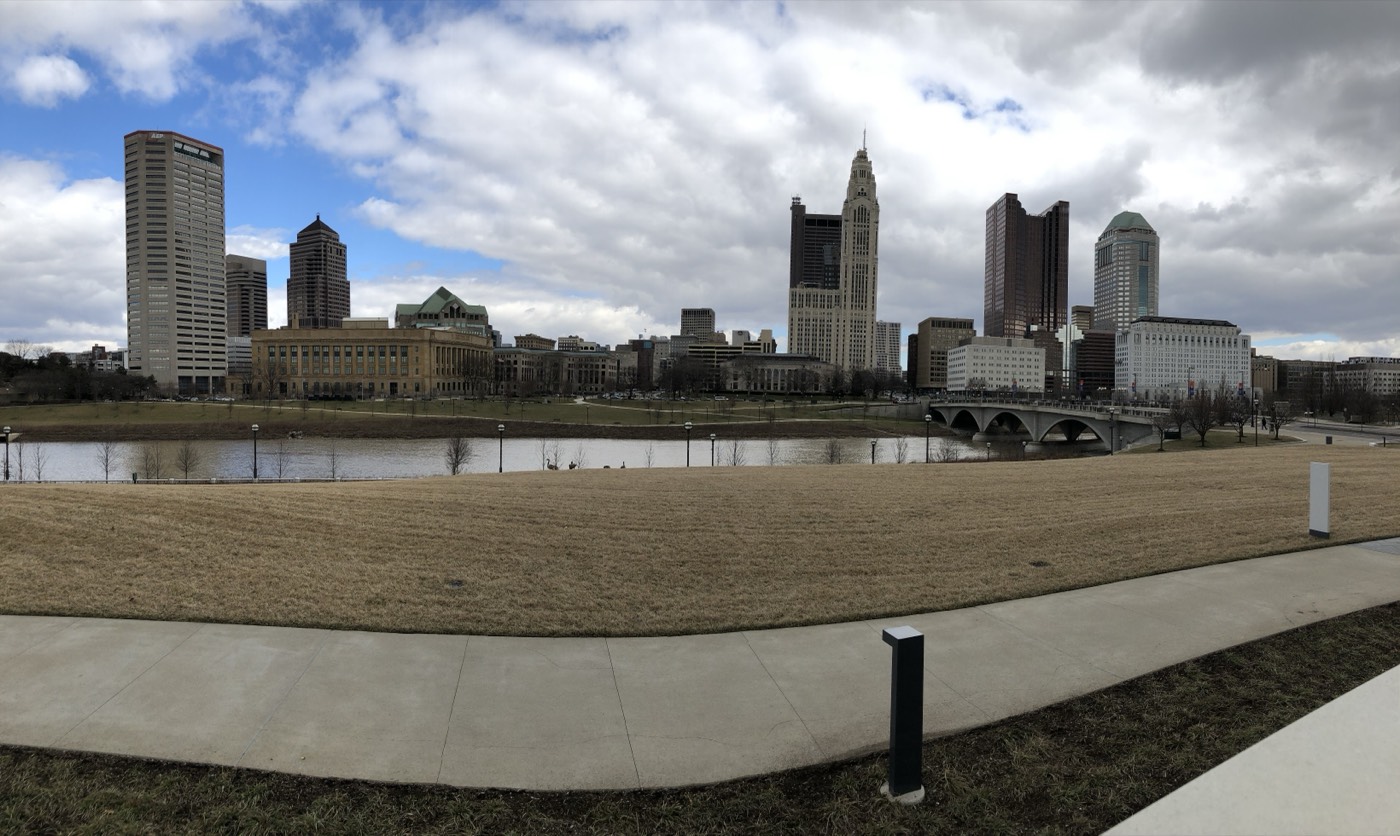
Columbus is the capital of Ohio and its largest city, a flat, fast-growing metropolis built on insurance, retail, government and Ohio State University. It is not an old industrial town like Youngstown or Toledo. It grew by sprawl rather than by steel, and that openness left room, on its northern edge, for newcomers.
The northern district called Northland, threaded by Morse Road and Cleveland Avenue, is where much of that story has unfolded. Once a corridor of dying shopping malls and emptying big-box stores, it has been remade by immigrants from Somalia, Central America, West Africa and the Himalayas.
For the Bhutanese-Nepali community, Northland is the centre of gravity. It is where the markets are, where the community organisations keep their offices, and where, on autumn evenings, the festival of Dashain fills apartment courtyards with the sound of Nepali.
How It Became Nepali
To understand why thousands of Nepali-speaking families ended up in central Ohio, you have to start far from it, in the southern lowlands of Bhutan.
The people from the south
The Lhotshampa, whose name means roughly “people of the south”, are ethnic Nepalis whose families had farmed Bhutan’s southern belt for generations, in some cases for more than a century. They spoke Nepali, practised mostly Hinduism, and lived apart from the Buddhist Dzongkha-speaking majority of the highlands.
In the late 1980s, the Bhutanese government, anxious about national identity and the growing southern population, tightened citizenship laws and enforced a code of dress and custom drawn from the north. Lhotshampa who had lived in Bhutan for generations were reclassified as illegal immigrants.
Expulsion and the camps
Between the late 1980s and early 1990s, after protests and a harsh crackdown, around a hundred thousand Lhotshampa were driven out of Bhutan. Most crossed into eastern Nepal, where the United Nations refugee agency established camps near the town of Damak.
There they stayed, not for months but for the better part of two decades. Children were born in the camps, grew up in them, and reached adulthood without ever setting foot in the country their parents called home. Nepal would not grant them citizenship, and Bhutan would not take them back.
The irony was bitter. Bhutan markets itself to the world by its measure of Gross National Happiness, a phrase coined by its kings. The people in the camps near Damak had been counted out of that happiness entirely, their citizenship erased and their homes given to others.
The deadlock broke in 2007 and 2008, when the United States, working with the UN High Commissioner for Refugees and several other countries, agreed to resettle the camp population. It became one of the largest resettlement efforts in modern American history. The first families to reach Columbus arrived to bitter Ohio winters, unfamiliar bureaucracy and apartment blocks far from any village green, and set about, quietly, to begin again.
Why Columbus
More than ninety thousand Bhutanese refugees were eventually resettled in the United States. They were scattered at first across dozens of cities, placed by resettlement agencies in whichever towns had housing, jobs and caseworkers.
Columbus was one of the original resettlement sites, but its dominance came later, through what demographers call secondary migration. Families placed in colder, costlier or more isolated cities began to move, drawn by Columbus’s cheap rents, plentiful entry-level jobs and, above all, by relatives who had gone before.
The Bhutanese Community of Central Ohio, founded in 2009 and incorporated as a non-profit in 2012, estimates that up to thirty thousand Bhutanese-Nepali people have settled in greater Columbus since 2008 through primary and secondary migration. National figures put the single Columbus community at around twenty-seven thousand. Either way, it is the largest concentration of Bhutanese-Americans in the country.
Building a community
The early years were hard in familiar ways. Families arrived with little English, complex trauma from the camps, and households that often stretched to eight or more people under one roof. Mental health strain, including high rates of PTSD, followed many out of the camps.
But the community organised quickly. Mutual-aid groups, faith networks and the Bhutanese Community of Central Ohio knitted the scattered arrivals together. Entrepreneurship, a survival skill honed in the camps where refugees ran informal shops and trades, took hold fast on the north side.
Within a decade, Bhutanese-Nepali families owned grocery shops, restaurants, salons, trucking firms and home-care agencies clustered along Morse Road and Cleveland Avenue. The same arc, on a smaller scale, repeated in nearby cities, an echo of the way earlier waves of newcomers built the Italian neighbourhoods of Youngstown a century before.
The Landmarks
Saraga International Grocery, 1265 Morse Rd. The 40,000-square-foot market fills a former Toys R Us that had sat empty for a decade. Opened by Korean-American brothers in this Northland location, it stocks the spices, lentils, fresh greens and household goods that serve Columbus’s Bhutanese-Nepali, Somali, Latino and Asian communities under one roof.
Momo Ghar, inside Saraga, 1265 Morse Rd. A small Nepali and Tibetan dumpling counter that became one of the most celebrated places to eat in Columbus, named the city’s top-rated restaurant by Yelp and featured well beyond Ohio. Its steamed and jhol momo turned a grocery food stall into a regional landmark.
Namaste Indo-Nepali Cuisine, 1279 Morse Rd. Opening in 2013 in a strip mall beside Saraga, Namaste is credited with introducing Nepalese cooking to central Ohio’s wider public. Its thali platters, rings of small dishes around rice, became many Columbus diners’ first taste of the food of the Himalayas.
Khaja Ghar Restaurant & Bar, 2057 Morse Rd. Set in a brightly painted building along Morse Road between Menards and Cleveland Avenue, Khaja Ghar serves Himalayan and Nepalese cooking to a largely community crowd. Its name simply means “snack house”, an everyday Nepali phrase for the corner eatery.
Bhutanese Community of Central Ohio, 1925 East Dublin-Granville Road. The community’s anchor institution offers post-resettlement support, English classes, youth mentoring, rental assistance and leadership programmes. From this Northland office the BCCO has shaped two decades of arrivals into an organised civic presence.
Bharatiya Hindu Temple, 3671 Hyatts Road, Powell. The largest Hindu temple in the Columbus area, north of the city in Powell, draws worshippers from across the region’s South Asian communities, including Bhutanese-Nepali Hindus marking Dashain and other festivals of the autumn calendar.
The Northland gardens. On church-owned land in northeastern Columbus, Bhutanese-Nepali families rent small plots for twenty dollars or so a season, growing saag, mustard leaf, beans, squash, okra and chilli. Documented in a 2019 university study, the gardens recreate, on a few square metres of Ohio soil, the farming life the camps took away.
Where They Came From
The thread that runs through every Bhutanese-Nepali family in Columbus passes through the same two places: the southern districts of Bhutan, and the refugee camps of eastern Nepal that followed.
Their ancestors were farmers of Bhutan’s southern foothills, Nepali-speaking and largely Hindu, settled there over generations. What binds the Columbus community is not a single home village but a shared experience of expulsion and the long wait in the camps near Damak.
That history explains the texture of the community today. The shared language is Nepali. The major festival is Dashain, the long Hindu celebration of autumn, marked across the camps and now across Northland. And the prevailing instinct, born of statelessness, is to put down roots that cannot be taken away again, which in Columbus has meant buying homes, opening businesses and registering to vote.
It is why the gardens matter so much. A plot of mustard greens on church land is not just cheap food; it is a deliberate act of belonging by people who once owned land, lost it, and are determined to till their own soil again, this time in Ohio.
Columbus Today
Today the Bhutanese-Nepali presence in Columbus is no longer a fragile arrival story. It is an established part of the city’s north side, woven into its commerce, its schools and increasingly its politics.
In nearby Reynoldsburg, Bhuwan Pyakurel, who spent eighteen years in a Nepali refugee camp before reaching Ohio in 2014, won a city council seat in 2019, becoming the first Bhutanese-Nepali elected to public office anywhere in the United States. A former president of the BCCO, he embodied a community moving from resettlement to representation. The community’s story has also reached the screen, in the 2026 feature film “The World’s Happiest Man”, shot in part among Ohio’s Bhutanese refugees.
The work is not finished. A younger generation navigates two languages and two worlds; older arrivals still carry the weight of the camps. But along Morse Road, where the momo never stops steaming and the markets stay busy past dark, a people who were once citizens of nowhere have made central Ohio unmistakably theirs. Their story sits alongside other Ohio chapters Atlas of Home has traced, from the Bhutanese of Akron to the Somalis of Columbus and the Polish of Toledo.
Frequently Asked Questions
How many Nepalis live in Columbus, Ohio?
The Bhutanese-Nepali community in greater Columbus is estimated at up to thirty thousand people, with the single Columbus community put at around twenty-seven thousand. This makes the Nepalis in Columbus, Ohio the largest community of Bhutanese-Nepali people anywhere outside South Asia.
Why are there so many Nepalis in Columbus?
Most are Lhotshampa, ethnic Nepalis expelled from Bhutan around 1990 who spent up to two decades in UN refugee camps in eastern Nepal. The United States began resettling them in 2008, and Columbus, with its low rents and plentiful jobs, drew thousands more through secondary migration as families reunited.
What is the difference between Nepali and Bhutanese-Nepali?
Bhutanese-Nepali, or Lhotshampa, are ethnic Nepalis whose families lived in southern Bhutan for generations before being expelled. They speak Nepali and are mostly Hindu, but their immediate origin is Bhutan and the Nepali refugee camps, not Nepal itself.
Where is the best Nepali food in Columbus?
The Morse Road corridor on the north side is the heart of it. Momo Ghar inside Saraga International Grocery at 1265 Morse Road is famous for its dumplings, while Namaste Indo-Nepali Cuisine at 1279 Morse Road and Khaja Ghar at 2057 Morse Road serve full Himalayan menus.
Which neighbourhood do Nepalis live in in Columbus?
The community is concentrated in Northland, the district on Columbus’s north side along Morse Road and Cleveland Avenue. The Nepalis in Columbus, Ohio have made this once-declining retail corridor into a hub of markets, restaurants, places of worship and community organisations.
Is there a Bhutanese-Nepali community organisation in Columbus?
Yes. The Bhutanese Community of Central Ohio, founded in 2009 at 1925 East Dublin-Granville Road, offers resettlement support, English classes, youth mentoring and leadership programmes, and serves as the community’s main civic anchor.
If your family’s story passed through Columbus, or any of the places Nepalis have made home in America, Atlas of Home can trace that journey. From the southern foothills of Bhutan and the camps of eastern Nepal, to a steaming momo counter on Morse Road, to wherever you are now.