
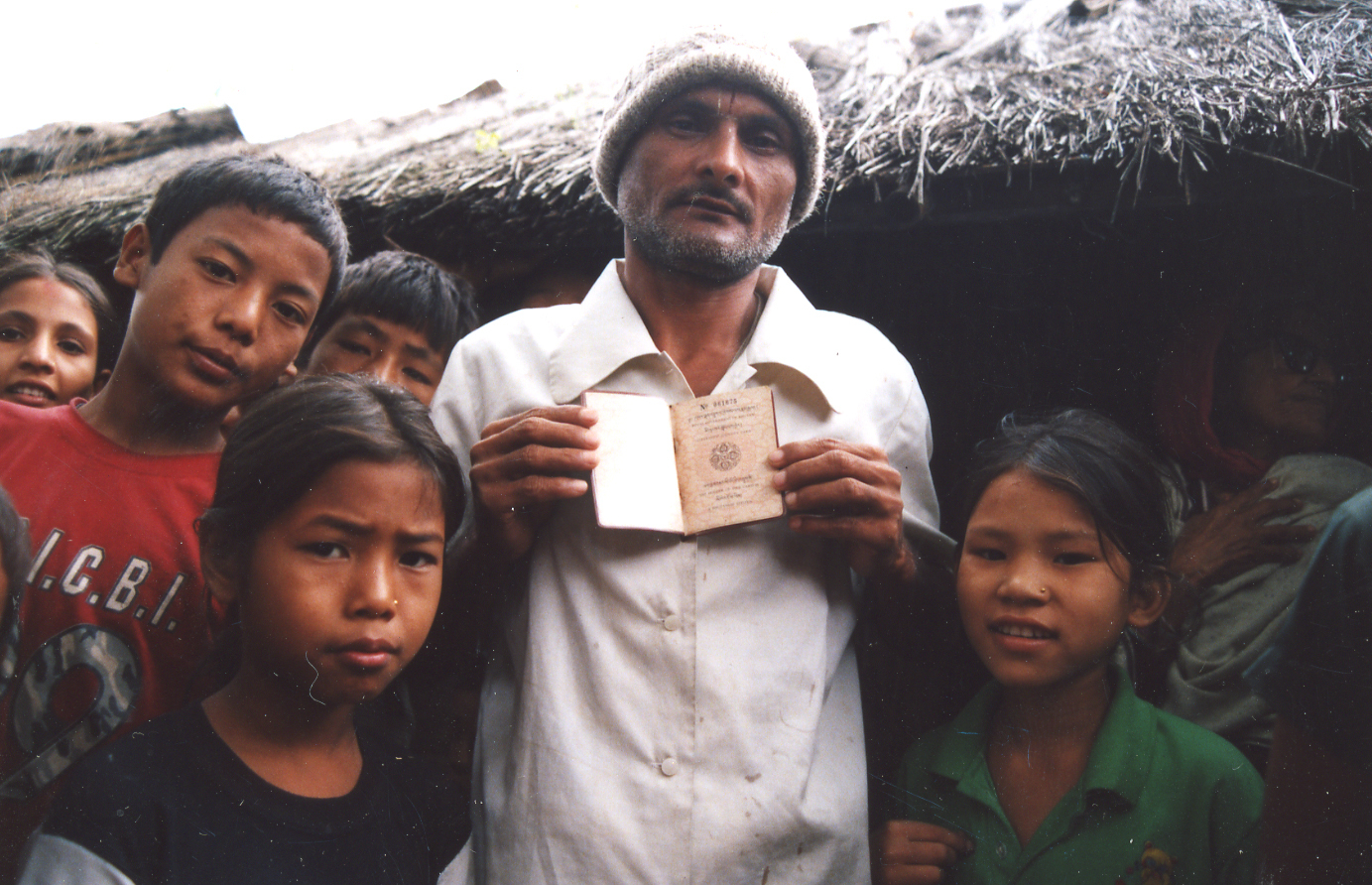
In October, when the air on North Hill carries the first cold snap from Lake Erie, the kitchens along Cuyahoga Falls Avenue fill with the smell of goat curry and rice. Families set out plates for Dashain, the ten day Hindu festival that arrives every autumn, and the elders apply red tika paste to the foreheads of the young. Outside, conversations move easily between Nepali and English. A few blocks away, the parking lot of Family Groceries spills over with shoppers reaching for fresh coriander, dried fenugreek, and the long thin eggplants that nobody used to sell in Akron.
This is the heart of the largest community of Bhutanese refugees in the United States. Most of them are Lhotshampa, ethnic Nepali people who were citizens of Bhutan, expelled by their own government in the early 1990s, and held in refugee camps in eastern Nepal for the better part of two decades before America took them in.
They built the rest of their lives on a hill in Ohio.
Akron, The Place
Akron sits in the northeast corner of Ohio, half an hour south of Cleveland, in the rolling country where the Cuyahoga River bends west toward Lake Erie. For most of the twentieth century the city was the rubber capital of the world, home to Goodyear, Firestone, BFGoodrich, and General Tire. When the rubber industry collapsed in the 1980s, the population began a long slide, falling from a peak of nearly 290,000 in 1960 to roughly 190,000 today.
North Hill rises on a ridge just north of downtown, the streets sloping down toward the Little Cuyahoga valley. The housing stock is mostly modest frame and brick, single and two family homes built between 1910 and 1940 for the Italians, Croats, Poles, and Irish who came to work the rubber plants. By the 1990s, with the factories long gone, much of it was vacant or undervalued.
That was the city that opened its door, in 2008, to a kingdom on the other side of the earth.
How Akron Became Bhutanese
Before the Bhutanese
North Hill has always been an entry point. Italian masons and labourers arrived in the early 1900s, opened bakeries and grocers along North Main Street, and built parish churches that anchored the neighbourhood through the rubber era. As late as 1980, one in five North Hill residents claimed Italian ancestry. African American families moved up from the south side after the Second World War, and Hmong, Lao, and Vietnamese refugees were resettled here in the 1970s and 1980s.
By the early 2000s, the rubber jobs were gone, the Italian grandchildren had moved out to Cuyahoga Falls and Tallmadge, and whole blocks of two and three bedroom homes were renting for a few hundred dollars a month. The neighbourhood was quiet in a way Akron had not been quiet for a hundred years.
The Bhutanese Arrive
In 2006, the Bush administration announced that the United States would accept up to 60,000 Bhutanese refugees from camps in eastern Nepal. The first family stepped off the plane in March 2008. A small number of them were sent to Akron almost from the start, handled by the International Institute of Akron, the city’s resettlement agency, which had been working on Main Street since 1916.
The reasons Akron got more than its share of the new arrivals were practical. Rent on a three bedroom house in North Hill was a fraction of what it cost in Columbus or Pittsburgh. The International Institute had capacity, and a second nonprofit, Asian Services in Action, had already opened a clinic and case management office on Carroll Street to serve refugees from Southeast Asia. Schools in the North Hill cluster had English as a second language teachers in place.
Once the first families settled, the rest followed. Bhutanese refugees who had been resettled in Atlanta, Phoenix, Houston, and Syracuse began driving north on their own dime to join cousins and neighbours on North Hill. Resettlement workers call this secondary migration. By 2015 it was the single biggest force shaping the community.
Akron at Its Peak
By the late 2010s, North Hill was something Akron had never seen. Within a two mile radius along Cuyahoga Falls Avenue and North Main Street, there were thirteen Nepali grocery stores, half a dozen restaurants serving momos and dal bhat, a Bhutanese owned tax preparation business, and a Himalayan music academy in a converted storefront.
The Bhutanese Community Association of Akron, founded in 2009, ran citizenship classes, organised Dashain and Tihar celebrations in rented school gyms, and registered voters block by block. Children who had been born in the camps walked to Akron Public Schools speaking three languages by sixth grade. More than 80 percent of the district’s English language learners were enrolled in the North Hill cluster.
The newspapers began calling it Akron’s International District. Census tract by census tract, the numbers showed something quietly remarkable. North Hill was the only part of Akron that had stopped shrinking. After fifty years of decline, the city was growing again, and the people doing the growing were arriving from refugee camps in Jhapa.
The Change
The formal resettlement programme wound down by 2018. The camps in Nepal that had once held more than 100,000 people were emptying, with a small population of mostly elderly residents left behind to face an uncertain end.
The community in Akron kept changing. A new generation finished high school and went off to Kent State, the University of Akron, and Ohio State. Some of them came back as nurses, social workers, and engineers. Others moved on to Columbus, where the job market was hotter, or to Atlanta, where another large Bhutanese population had built itself around the suburbs.
The early 2020s brought new turbulence. Federal refugee admissions were slashed, expanded, and slashed again across administrations, and the network of nonprofits that had built the community had to recalibrate. In 2025, Summit County’s main resettlement contract was handed from the International Institute of Akron to a newer organisation, the International Welcome Center. The Bhutanese community kept growing anyway, anchored now by businesses and homeowners rather than the resettlement pipeline that started it.
The Landmarks of Bhutanese Akron
Asian Services in Action, 730 Carroll Street. ASIA opened in 1995 to serve refugees from Vietnam and Laos, then expanded to a federally qualified health clinic that now sees Bhutanese, Burmese, Karen, and Afghan patients in their own languages. The Carroll Street building, just south of Tallmadge Avenue, is where many North Hill families register for primary care, dental visits, and senior programmes.
Nepali Kitchen, 399 East Cuyahoga Falls Avenue. Opened in the mid 2010s, Nepali Kitchen was one of the first sit down restaurants in the neighbourhood to serve traditional Lhotshampa cooking to a mixed crowd of refugees and curious Akronites. The menu runs to momos, thukpa, sel roti, and a goat curry that tastes the way Dashain is supposed to taste.
Family Groceries, North Main Street. Opened in 2011, Family Groceries was the first South Asian grocery on North Main and the place that proved the neighbourhood could sustain a real anchor store. Bhutanese, Nepali, and Indian shoppers from across Northeast Ohio drive in for fresh produce, halal meat from Amish country, and shelves of spice and lentil packets that nowhere else in Summit County carries.
The Bhutanese Community Association of Akron. Founded in 2009 and now headquartered in Tallmadge, the BCAA is the cultural and civic spine of the community. It runs language classes, organises Dashain and Tihar gatherings, mediates between elders and city agencies, and has trained dozens of younger members to interpret for new arrivals.
Himalayan Music Academy, North Hill. Puspa Gajmer, a Bhutanese refugee and musician, founded the academy in 2016 in a converted storefront on North Hill. It teaches madal drumming, bansuri flute, and traditional Nepali singing to children who have never seen the foothills their grandparents farmed.
Dhimal’s Mini Market, East Cuyahoga Falls Avenue. One of the older Bhutanese owned shops on the avenue, Dhimal’s stocks the everyday staples that turn a rented duplex into a home. Rice in fifty pound sacks, fresh greens flown in weekly, ghee, and tika packets in the days before Dashain.
The North Hill International Marketplace. Held in late summer, the marketplace brings Bhutanese, Karen, Burmese, and Nepali vendors together on a closed off block of North Main Street. Families sell momos and biryani, children paint flags, and the elders, in formal daura suruwal and gho, sit on folding chairs and watch the neighbourhood they made.
Where the Akron Bhutanese Came From
The Bhutanese in Akron almost all trace their roots to the four southern districts of Bhutan: Tsirang, Sarpang, Samtse, and Dagana. These are the lowland belts that border India, the tea and rice country where ethnic Nepali farmers had lived and worked since the late 1800s. Their ancestors had crossed in from eastern Nepal and Sikkim a generation or two earlier, building villages on land that the Drukpa rulers in the high Himalayas had little use for.
That changed in the late 1980s. The Bhutanese government, alarmed by census numbers showing the Lhotshampa population approaching a third of the kingdom, enacted a policy called Driglam Namzha. It required all citizens to wear the national dress in public, banned the teaching of Nepali in schools, and tightened citizenship rules to retroactively strip thousands of southern families of the documents they had held for decades.
Protests in 1990 were met with arrests and military patrols. By December 1991 a mass exodus had begun. Soldiers visited villages in Sarpang and Samtse, families were made to sign voluntary migration forms at gunpoint, and homes were burned. By 1993 there were more than 85,000 Lhotshampa in temporary camps inside Nepal. By 1996 the number had crossed 100,000, roughly 40 percent of the country’s ethnic Nepali population.
For the next seventeen years they lived in seven UN administered camps in Jhapa and Morang districts in southeastern Nepal: Beldangi I, Beldangi II, Beldangi Extension, Sanischare, Khudunabari, Goldhap, and Timai. Bamboo huts. Rations. Schools run by volunteers. A generation of children who grew up in places that were never meant to be permanent.
Then, in 2008, the planes started leaving for the United States.
Akron Today
Walk North Hill on a Saturday in 2026 and the neighbourhood is loud in a good way. Children play on the sidewalks. Older men in faded baseball caps sip tea outside the grocers. The signage on Cuyahoga Falls Avenue is half English, half Devanagari script. Akron Public Schools, which had been losing students for decades, has begun to stabilise, with North Hill cluster schools serving the children of refugees from three continents.
The Bhutanese community here is no longer arriving. It is staying. Resettlement officials estimated the Akron Bhutanese population at between 4,000 and 5,000 in 2020. Local community leaders put the figure higher in 2026, somewhere between 7,000 and 10,000 once secondary migration is counted in, making Akron either the first or second largest Bhutanese American population in the country, in a race with Columbus that nobody seems particularly invested in winning.
Some of the early arrivals are buying homes. Some are opening restaurants in second locations in Cleveland and Canton. The high school graduation rates in the cluster schools have climbed. A handful of second generation Bhutanese Akronites are working in the city’s hospitals and have run for school board.
The neighbourhood the Italians built and the rubber workers filled now belongs, in its own quiet way, to people who once lived in bamboo huts on the eastern plains of Nepal. The story is not finished. It is just one chapter in.
Frequently Asked Questions
Why did Bhutanese refugees settle in Akron?
Akron offered affordable post industrial housing in the North Hill neighbourhood, an established resettlement agency in the International Institute of Akron, and an existing refugee services nonprofit called Asian Services in Action. After the first Bhutanese families arrived in 2008, secondary migration from other US cities turned Akron into the largest Bhutanese refugee community in the country.
Are Bhutanese still in Akron today?
Yes. The community has stayed and grown. Estimates in 2026 put the Bhutanese population in Akron between 7,000 and 10,000, concentrated in the North Hill neighbourhood, with active businesses, cultural associations, and second generation members in local schools and professions.
What are the most famous Bhutanese landmarks in Akron?
The cultural and commercial heart sits along Cuyahoga Falls Avenue and North Main Street in North Hill. Anchor landmarks include Asian Services in Action on Carroll Street, the Bhutanese Community Association of Akron, Nepali Kitchen restaurant, Family Groceries on North Main, the Himalayan Music Academy, and the annual North Hill International Marketplace.
Where in Bhutan did the Akron Bhutanese come from?
Almost all of them are Lhotshampa, ethnic Nepali Bhutanese from the four southern districts of Tsirang, Sarpang, Samtse, and Dagana. After being expelled from Bhutan between 1991 and 1992, most spent fifteen to twenty years in UN administered refugee camps in eastern Nepal, including Beldangi, Sanischare, and Khudunabari, before being resettled in the United States.
When did Bhutanese refugees first arrive in Akron?
The first Bhutanese refugee families arrived in Akron in 2008 as part of a US programme to resettle up to 60,000 Bhutanese refugees from camps in Nepal. Formal resettlement continued through 2018, and secondary migration from other US cities has continued to grow the community since then.
If your family’s story passed through the southern hills of Bhutan, the camps of eastern Nepal, or a duplex on North Hill, Atlas of Home can help trace the journey. From Tsirang to Beldangi to Cuyahoga Falls Avenue, every step carried something worth keeping.