
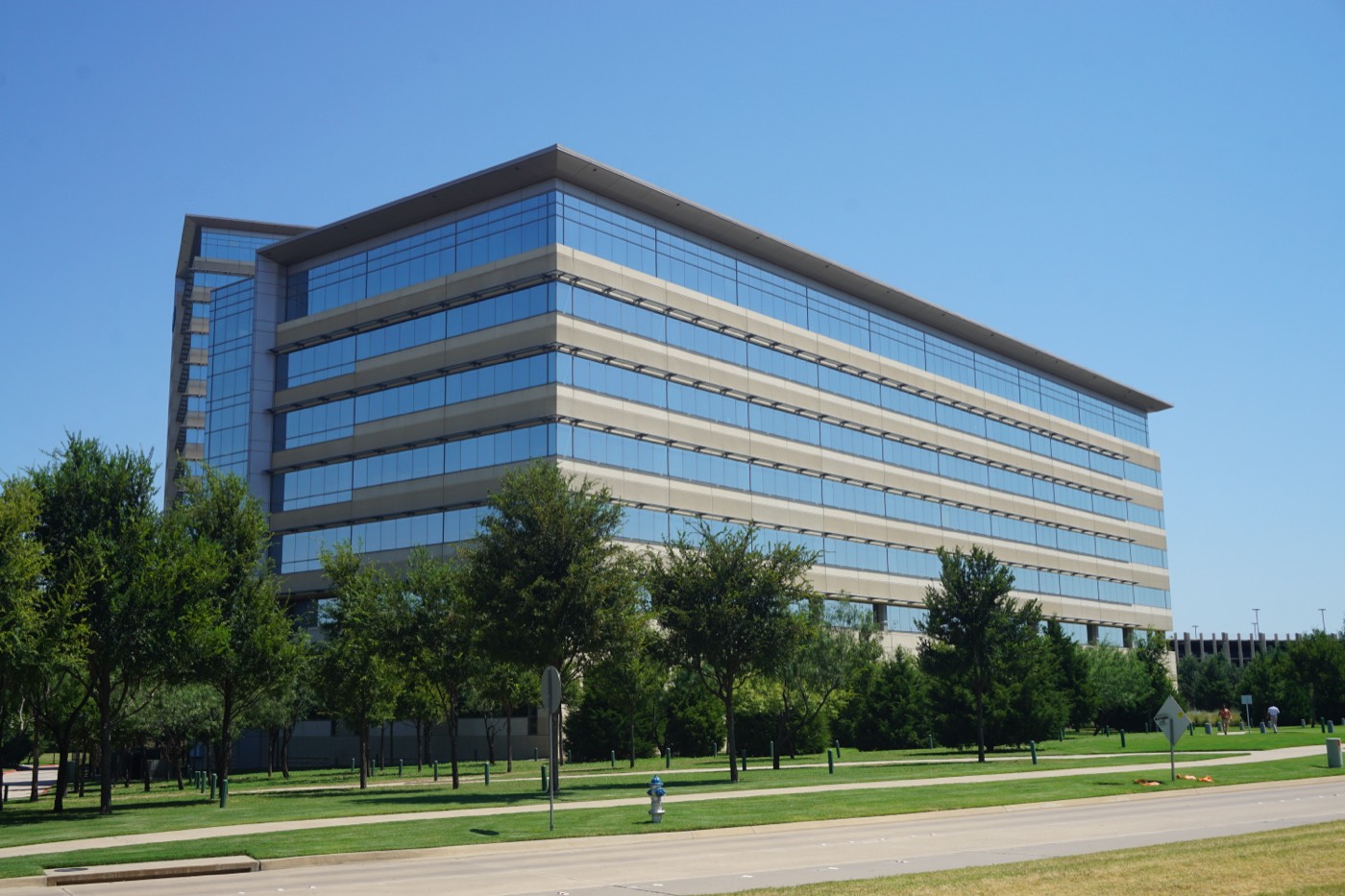
Drive the access roads off Central Expressway in Richardson, past the glass towers of the old Telecom Corridor, and the signage begins to change. A grocer advertising fresh curry leaves. A South Indian vegetarian kitchen wedged between engineering firms. The Indians in Richardson, Texas did not arrive looking for a neighbourhood. They arrived looking for work, and the neighbourhood grew up around the work.
The Place
Richardson sits about fourteen miles north of downtown Dallas, straddling the line between Dallas and Collin counties. For most of the twentieth century it was a quiet farming town that became a postwar suburb, ninety-five per cent White as recently as 1980.
Then the technology arrived. Richardson packed more than five thousand businesses into its twenty-eight square miles and earned a nickname that stuck: the Telecom Corridor. The companies clustered within a mile of Central Expressway, and the workers they recruited came from everywhere.
By 2020 the city was roughly half non-Hispanic White, seventeen per cent Hispanic, and seventeen per cent Asian, more than twenty thousand residents of Asian descent. A great many of them were Indian.
How It Became Indian
The Indian story in Richardson is really a story about timing. The community settled here because this is where the jobs were, and the jobs arrived in two distinct waves separated by a generation.
The first professionals
Indians in Texas were once a handful of people. By 1930 the entire state counted only forty-nine, many of them in Dallas. The 1965 Immigration and Nationality Act, which abolished the old national-origin quotas, changed that arithmetic completely.
The earliest arrivals were professionals: doctors, engineers, and skilled medical workers. The late 1960s and 1970s also brought an influx of Indian women, particularly nurses from South India, recruited to fill a postwar shortage in American hospitals. They were a small, dispersed community, but they laid the social groundwork.
That groundwork had a name. The India Association of North Texas, founded in 1962 and incorporated in 1976, set up its centre in Richardson and became the umbrella organisation for the region’s Indians. Long before there was a critical mass, there was a place to gather.
The Telecom Corridor boom
The 1980s remade Richardson. Telecommunications firms opened facilities up and down Central Expressway, and the city stopped being a sleepy suburb and started being an engineering hub. AT&T had been in the area since 1956, and over the following decades it was joined by names like MCI, later folded into Verizon, alongside Texas Instruments, Cisco Systems, Fujitsu, Samsung, and dozens of others.
These were companies that ran on engineers, and the engineering talent India produced was abundant and increasingly mobile. Richardson became, as one account put it, home to one of the earliest Indian settlements among the Dallas suburbs.
The H-1B generation
The second wave came in the 1990s, and it came on a visa. The H-1B programme, designed to import skilled foreign workers, opened a pipeline straight from Indian engineering colleges to the office parks of North Texas. Indians would come to claim roughly forty-one per cent of all H-1B visas granted nationally.
Many were recruited directly into the technology firms of the Richardson corridor and the office towers of nearby Las Colinas. The corridor’s millions of square feet of office space employed thousands of Indian engineers and IT professionals, and they needed somewhere to live, shop, and worship close to the job.
Richardson, sitting right at the centre of that employment map, became the obvious answer. The grocers and restaurants and temples followed the engineers, not the other way around.
The university anchor
There was a second magnet a few minutes from the office parks. Since the 1980s, Indian students have pursued advanced degrees at the University of Texas at Dallas, whose business school is named for the Indian-American industrialist Naveen Jindal.
UT Dallas funnelled a steady stream of young Indians into the region, many of whom finished their degrees, took jobs in the corridor, and never left. A campus and a corridor, side by side, made Richardson a place where an Indian engineer could arrive at twenty-two and still be there at fifty.
The Landmarks
India Association of North Texas, 701 N Central Expressway, Richardson. Founded in 1962, IANT is the oldest and largest pan-Indian organisation in the region. It is non-political and non-sectarian by design, a deliberate attempt to give a community of many languages and faiths a single front door. Its India Day and Republic Day events draw families from across the metroplex.
India Bazaar, 1425 E Belt Line Road, Richardson. A full Indian grocery on Belt Line Road, stocked with the spices, lentils, sweets, and produce that a home kitchen actually needs. Shops like this are the quiet infrastructure of a diaspora: the place you go on a Saturday morning to buy curry leaves and run into someone from your home state.
Bawarchi Indian Cuisine, 1801 N Greenville Avenue, Richardson. Opened in 2014, Bawarchi built its reputation on dum biryani, tandoori kababs, and South Indian dosas, and marked a decade in business in 2024. Its owners saw a simple opportunity: bring authentic Indian cooking closer to the people already living and working nearby.
Madras Pavilion, Richardson. A South Indian vegetarian kitchen that is also certified kosher, an unusual combination that tells you something about how cosmopolitan this corner of Dallas has become. Dosas, idli, and an all-vegetarian menu make it a fixture for the corridor’s many vegetarian families.
Taj Mahal Imports, Richardson Heights, Richardson. One of the original Indian shops in the city, set in an Indian-oriented strip centre near Central Expressway, selling everything from religious icons to grocery staples. It has since closed, but for years it was a landmark, the kind of place newcomers were told to visit on their first weekend in town.
University of Texas at Dallas, Richardson. The campus that has fed the community for forty years. Its Naveen Jindal School of Management carries the name of an Indian industrialist, and its halls have long been thick with Indian graduate students in engineering and computer science, many of whom became corridor employees and Richardson residents.
The Telecom Corridor, along Central Expressway, Richardson. Not a single building but a stretch of office parks that is the reason the rest of this list exists. The corridor’s recruiting of engineers is, as much as any temple or grocer, the founding landmark of Indian Richardson.
Where They Came From
There is no single Indian Richardson, because there is no single India. The community here is a federation of regions, and you can hear it in the languages spoken across the wider metroplex: Hindi, Telugu, Tamil, and Gujarati, among others.
The early professionals of the 1960s and 1970s skewed South Indian, the nurses from Kerala and the neighbouring states, the doctors and engineers from across the peninsula. The H-1B engineers of the 1990s and 2000s came heavily from the technology-feeder regions of South India, the Telugu-speaking and Tamil-speaking states that send so many graduates into software.
Gujarati families, with their long American history of small business and pooled resources, built their own networks across the northern suburbs. The result in Richardson is a community that does not map neatly onto any one state of India. It maps onto an industry, and the industry drew talent from all of it.
Richardson Today
Richardson today is no longer the frontier of Indian Dallas. The community has spread north and outward, into Plano, Allen, Frisco, and beyond, chasing newer and more affordable housing the way the engineers once chased the jobs. Some of the largest temples and festivals now sit in those newer suburbs rather than in Richardson itself.
The metroplex as a whole counted roughly 235,000 Indian Americans by the early 2020s, around three per cent of the region, with the heaviest concentration in Collin County to the north. The annual Diwali Mela has grown into one of the largest celebrations of its kind in the country, drawing crowds in the thousands.
What Richardson keeps is its seniority. This was one of the first places Indians settled in Dallas, and it remains where the India Association of North Texas keeps its doors, where the older grocers and restaurants line Belt Line Road, where the corridor still hires and the university still graduates. Some shops have closed and some families have moved on. But the centre of gravity that Richardson established, the idea that an Indian engineer could build a whole life within a few miles of the office, is still holding.
For families across the United States with roots in the diaspora, places like Richardson are worth tracing. To see related communities, read about the Indians in Westborough, Massachusetts, the Indians in West Chester, Ohio, the Indians in Shrewsbury, Massachusetts, and the Indians in Hilliard, Ohio. Closer to home in Texas, the same suburban story shaped the Nigerians in Frisco, Texas and the Venezuelans in Katy, Texas.
Frequently Asked Questions
Why did so many Indians settle in Richardson, Texas?
The Indians in Richardson, Texas settled there because of work. Richardson’s Telecom Corridor, the cluster of telecommunications and technology firms along Central Expressway, recruited engineers heavily from the 1980s onward, and Indian engineers and IT professionals followed the jobs. The grocers, restaurants, and community organisations grew up to serve them.
What is the Telecom Corridor and why does it matter to the Indian community?
The Telecom Corridor is Richardson’s nickname, earned because more than five thousand businesses, many in telecommunications and technology, operate within the city. Companies including AT&T, Verizon, Texas Instruments, and Cisco employed thousands of skilled workers, and the demand for engineering talent drew a large Indian workforce to the area.
Is there an Indian community organisation in Richardson?
Yes. The India Association of North Texas, founded in 1962 and based on North Central Expressway in Richardson, is the oldest and largest pan-Indian organisation in the Dallas-Fort Worth area. It is non-political and non-sectarian and hosts large community events such as India Day.
Where can you find Indian food and groceries in Richardson?
Richardson has long-standing Indian businesses, including India Bazaar grocery on East Belt Line Road, Bawarchi Indian Cuisine on North Greenville Avenue, and the South Indian vegetarian restaurant Madras Pavilion. These cluster along the corridor where the Indian community first concentrated.
Where did the Indians in Richardson, Texas come from?
The Indians in Richardson, Texas come from many regions. Early arrivals after 1965 included doctors and South Indian nurses, while the H-1B technology wave of the 1990s drew heavily from the Telugu and Tamil speaking states of South India. Gujarati and Hindi-speaking families are also part of the wider North Texas community.
Is Richardson still the centre of Indian Dallas?
Richardson was one of the earliest Indian settlements in the Dallas suburbs and remains historically important, home to the India Association of North Texas and many established businesses. However, the community has expanded north into Plano, Allen, and Frisco, where some of the largest temples and festivals are now located.
If your family’s story passed through Richardson, or any of the places Indians have made home in America, Atlas of Home can trace that journey. From a college town in South India to an office park on Central Expressway, to wherever you are now.