
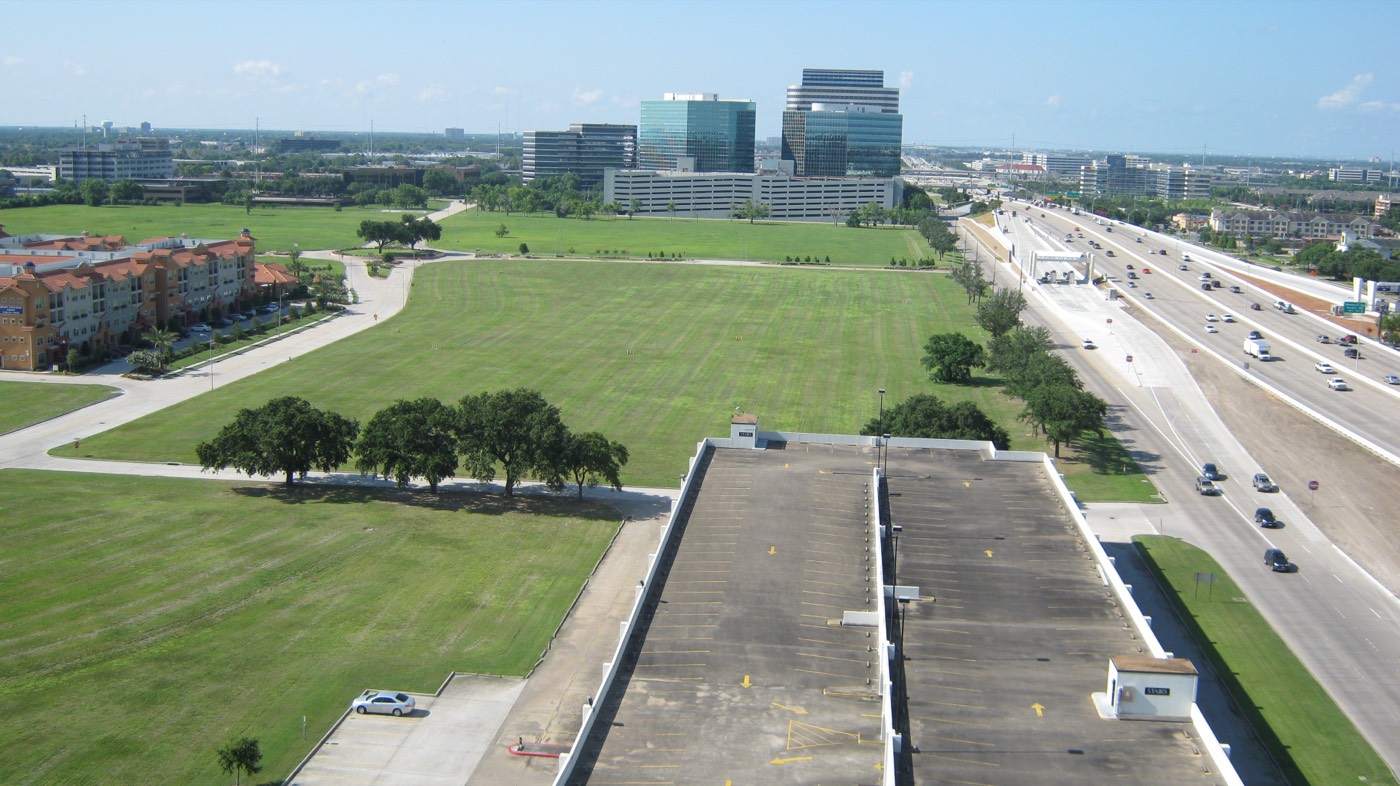
Drive west on Westheimer Road, past the glass office towers of the Energy Corridor, and the signs begin to change. Saffron and barberry. Joojeh kabob and sangak. Doogh in the cooler beside the soda. The Persians in Houston have built one of the largest Iranian-American communities in the country here, threaded through the strip malls of Westchase and the suburban streets that fan out toward Memorial, a long way from Tehran and entirely at home.
The Place
Houston is the fourth-largest city in the United States, a flat, sprawling, air-conditioned metropolis built on oil, medicine and the sheer refusal to stop growing. It has no zoning, which means a Persian grill can sit beside a tyre shop beside a glass office tower, and frequently does.
The Persian story plays out along a western spine of the city. It runs through Westchase and the Westheimer corridor, north into Memorial and the neighbourhoods around the Energy Corridor, and south-west toward Hillcroft, the old immigrant high street locals nicknamed Little Persia.
This is not a single enclave so much as a constellation. Iranian families are spread across affluent west Houston, drawn by good schools, big houses and proximity to the two industries, energy and medicine, that brought so many of them here in the first place.
How It Became Persian
There was no single arrival. The Persians came to Houston in waves, each shaped by the politics of a country thousands of miles away, and each settling into a city that happened to need exactly the skills they brought.
The oil years, before the revolution
Houston and Iran were bound together by petroleum long before the first large wave of immigrants arrived. In the 1960s and 1970s, under the Pahlavi monarchy, Iran sent students and young engineers abroad to train, and a global energy capital like Houston was a natural destination.
Some came to study at the University of Houston or Rice. Others came through the oil companies themselves, learning the trade that they expected to carry home. Houston’s golden energy years, supercharged by the 1973 oil embargo and the price spikes that followed, made the city a magnet for petroleum talent from everywhere, Iran included.
These early arrivals were small in number but consequential. They knew the city before the crisis came, and when it did, they became the anchor that later refugees could grab onto.
The revolution and the great wave
Everything changed in 1978 and 1979. The revolution ended the fifty-year reign of the Pahlavi dynasty, and in its aftermath tens of thousands of Iranians left, some fearing the new theocracy, many simply unable to see a future for their families at home.
They scattered across Europe, Canada and the United States. Within America, Los Angeles drew the largest share, but Texas became the fourth-largest area of Iranian-American settlement, and Houston was its centre of gravity.
The timing was cruel and lucky at once. The 1979 hostage crisis poisoned American feeling toward Iran just as these families arrived, and many Houston Iranians remember the suspicion and hostility of those years. Yet the same revolution that drove them out had pushed oil prices to record highs, and Houston was booming. The city needed engineers, geologists and physicians, and the new arrivals were often exactly that.
This was, by and large, an educated and professional exodus. Many came with degrees, capital and English. They did not start at the bottom so much as resume careers, in hospitals, in oil services firms, in private practice.
Settling west
The community gathered first around Hillcroft Avenue, the south-west corridor that has long served as Houston’s international high street. Persian grocers, kabob houses and rug galleries opened among Pakistani, Indian and Lebanese neighbours, and the strip earned its nickname, Little Persia. The same south-western corridor draws other South Asian and Middle Eastern communities, including the Indians who settled west in nearby Katy.
Darband Shishkabob opened on Hillcroft in 1986, one of the early restaurants to put Persian food on the Houston map. Within a few years, Farsi schools and cultural classes followed, the quiet infrastructure of a community deciding it intended to stay.
As families prospered, many moved further west and north, toward the bigger houses of Westchase, the Energy Corridor and Memorial. The Westheimer corridor became a second, more suburban Persian belt, anchored by markets, grills and the Iranian Cultural Foundation. Hillcroft remained the old heart; Westheimer became the everyday one.
Doctors, engineers and the M. D. Anderson connection
Two institutions shaped Persian Houston more than any neighbourhood: the energy industry and the Texas Medical Center, the largest medical complex in the world. Iranian-American physicians, researchers and engineers built careers in both, and their success rooted the community in the city’s professional class.
The bond runs deep enough to be measured in gifts. In 2006, an Iranian-American couple based in Houston donated 10 million dollars to the University of Texas M. D. Anderson Cancer Center, one of many quiet signs of how far a refugee generation had come.
You can trace the same professional arc in other Texas Persian communities, from the Persians in Plano, drawn north by Dallas technology firms, to the Iranian families of San Diego on the coast. The pattern repeats: education first, then a profession, then a quiet kind of belonging.
The Landmarks
Hillcroft Avenue, Houston, TX 77036. The original spine of immigrant Houston, nicknamed Little Persia, where the community first put down roots in the 1980s. Persian grocers, kabob houses and carpet galleries still cluster here among Pakistani, Indian and Arab neighbours, a reminder of where the story began before it moved west.
Darband Shishkabob, 5670 Hillcroft Ave, Houston, TX 77036. Open since 1986, this is one of the oldest Persian kabob houses in the city, a plain room where the koobideh and the saffron rice have outlasted nearly every fashion in Houston dining. For older Iranians it is a landmark as much as a restaurant.
Bijan Persian Grill, 5922 Hillcroft St, Houston, TX 77036. A few doors along the same avenue, Bijan keeps the Hillcroft tradition going with tahdig, gheymeh stew and kabab barg. It is the kind of place where Farsi drifts between tables and the staff know the regulars by name.
Kasra Persian Grill, 9741 Westheimer Rd, Houston, TX 77042. Opened in 1999 by Morty Parsa, who brought his cooking from Tehran to Westchase, Kasra became the everyday Persian dining room of west Houston. Saffron chicken, ghormeh sabzi and filet mignon kabob barg draw a steady crowd of Iranian families and curious newcomers alike.
Cafe Caspian, 12126 Westheimer Rd, Ste 116, Houston, TX 77077. Further out the Westheimer corridor, Caspian is the more ornate of the western grills, known for joojeh kabob and mahicheh, the slow-braised lamb shank served over sabzi polo. It anchors the suburban end of the Persian map.
Phoenicia Specialty Foods, 12141 Westheimer Rd, Houston, TX 77077. A sprawling international supermarket directly across Westheimer from Caspian, Phoenicia is where Persian Houston does its weekend shopping. The aisles carry saffron, dried barberries, rose water, fresh sangak and the tanur breads that no household celebration can do without.
Iranian Cultural Foundation-Houston, 9703 Richmond Ave, Ste 105, Houston, TX 77042. The ICF is the community’s civic centre, running Farsi classes, lectures and concerts, and organising the city’s annual Nowruz festival each spring. It is where the second and third generations learn the language, the poetry and the calendar their grandparents carried across the world.
Where They Came From
Most of Houston’s Persians trace their roots to Iran’s cities rather than its villages: Tehran above all, but also Shiraz, Isfahan, Tabriz and the Caspian provinces in the north. This was an urban, educated migration, and it carried the tastes and accents of metropolitan Iran with it.
The community is also religiously varied in a way outsiders rarely expect. Alongside Muslim families, Houston is home to Iranian Jews, Christians, Baha’is and a notably active Zoroastrian community, the keepers of Iran’s most ancient faith. The Zoroastrian Association of Houston is among the larger such bodies in the country.
What united them was less a single homeland than a single rupture: the revolution, and the decision to build a life somewhere safer. They came as Tehranis and Shirazis and left, over forty years, as Houstonians.
Houston Today
Houston now holds one of the largest Iranian-American communities in the United States, with the city and its suburbs commonly estimated to be home to tens of thousands of people of Iranian descent. They are doctors at the Medical Center, engineers in the Energy Corridor, business owners along Westheimer and a growing second generation raised entirely in Texas.
The rhythms of the year still follow the Persian calendar. Each spring the Iranian Cultural Foundation’s Nowruz festival fills a park with music, dancing and the haft-sin table, drawing Iranians and non-Iranians alike to mark the first day of spring. Yalda and Mehregan are kept too, smaller and more domestic, around family tables.
It is not a community without tension. Distance from Iran, the politics of the homeland and the slow drift of younger generations toward English and American life all pull at the seams. But the institutions hold. The grills stay full, the markets stock sangak fresh each morning, and the language is still taught on Sunday afternoons. For a community that arrived as exiles, that is its own kind of homecoming.
Frequently Asked Questions
How many Persians live in Houston?
Houston is home to one of the largest Iranian-American communities in the United States, with the city and surrounding suburbs commonly estimated at tens of thousands of people of Iranian descent. Exact figures vary because census categories do not always capture ancestry precisely, but the Persians in Houston rank among the biggest such communities in the country.
Where is the Persian neighbourhood in Houston?
There is no single enclave. The community first gathered along Hillcroft Avenue in south-west Houston, nicknamed Little Persia, and later spread west along the Westheimer corridor through Westchase and toward Memorial and the Energy Corridor. Persian businesses are concentrated along Westheimer and Hillcroft, while families live across affluent west Houston.
Why did Iranians settle in Houston?
Two things drew them: the energy industry and the Texas Medical Center. Many of the Persians in Houston arrived after the 1979 revolution as educated professionals, engineers, physicians and scientists, who found that a global oil capital and the world’s largest medical complex needed exactly their skills.
Where can I find Persian food and groceries in Houston?
The Westheimer corridor in Westchase is the centre of Persian dining and shopping, with restaurants like Kasra Persian Grill and Cafe Caspian and the large Phoenicia Specialty Foods market. Hillcroft Avenue, the older Little Persia, is home to long-running spots such as Darband Shishkabob and Bijan Persian Grill.
What religions do Houston’s Iranians practise?
The community is religiously diverse. Alongside Muslim families it includes Iranian Jews, Christians, Baha’is and an active Zoroastrian community, whose Houston association is among the larger ones in the United States. This mix reflects the breadth of the migration that followed the revolution.
How does Houston celebrate Nowruz?
Each spring the Iranian Cultural Foundation-Houston organises a public Nowruz festival marking the Persian New Year and the first day of spring, with music, dancing, food and the traditional haft-sin table. It draws both Iranians and non-Iranians, and is the most visible annual gathering of the Persians in Houston.
If your family’s story passed through Houston, or any of the places Persians have made home in America, Atlas of Home can trace that journey. From Tehran and Shiraz to the kabob houses of Hillcroft and the Westheimer corridor, to wherever you are now.