
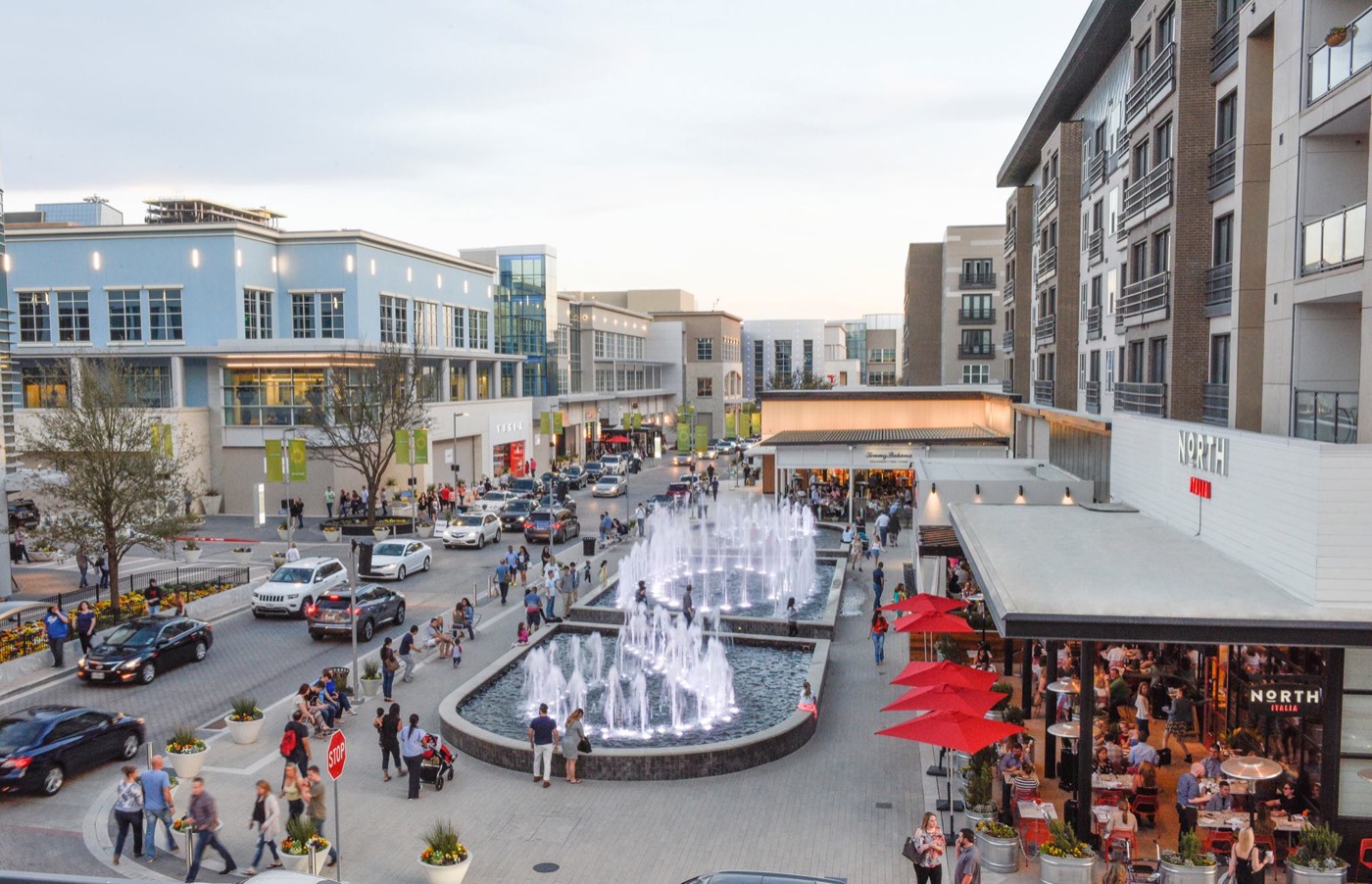
On the first day of spring, the haft-sin tables go up in living rooms off Legacy Drive: sprouted wheatgrass, sumac, a mirror, a goldfish in a bowl, coins for the year ahead. The Persians in Plano, Texas keep Nowruz the way their parents kept it in Tehran and Shiraz, only now the windows look out on cul-de-sacs and the glass towers of a corporate campus a few miles north. This is a community that arrived for the schools and the jobs, and stayed because the food was finally good.
The Place
Plano sits on the northern edge of Collin County, twenty miles up the Dallas North Tollway from downtown Dallas. For most of its life it was farmland, a quiet stop on the Houston and Texas Central Railway, and as recently as 1970 it had fewer than 18,000 people.
Then the corporations came. JCPenney moved its headquarters from New York to Plano in 1992, Frito-Lay built its global head office here, and in 2017 Toyota Motor North America opened a billion-dollar campus that pulled roughly a thousand jobs in from California, Kentucky and New York. Pizza Hut, Liberty Mutual and JPMorgan Chase followed.
The result is one of the most affluent suburbs in Texas, with a median household income well above the state average and a population that crossed 290,000. Nearly a quarter of Plano residents are Asian or of Middle Eastern descent, and the city’s reputation rests on two things: white-collar work and the public schools that feed it.
How It Became Persian
There is no single Persian neighbourhood in Plano the way there is a Tehrangeles in West Los Angeles. The Persians here are spread across master-planned subdivisions, and to understand how they got there you have to look one suburb south, to Richardson, and back about fifty years.
The students, 1960s and 1970s
The Southwest Center for Advanced Studies opened in Richardson in 1964 and became the University of Texas at Dallas in 1969. In the same years, the Shah’s government was sending tens of thousands of young Iranians abroad to study engineering and the sciences, and a steady number landed in North Texas.
They came for the universities and the cheap, fast-growing economy, and many never left. The history of most Persians in the Dallas-Fort Worth area traces back to those Iranian students of the late 1960s and 1970s, who finished their degrees and went to work as the region built itself into a technology centre.
The revolution, 1979
The 1979 Iranian Revolution turned a student migration into a permanent diaspora. Engineers and doctors who had expected to go home found that the home they had left no longer existed, and a second wave followed: professionals, business owners and families leaving a country at war with Iraq through most of the 1980s.
Many of these arrivals were secular, educated and middle-class, and they slotted into the Telecom Corridor that was making Richardson the telecommunications capital of the world. Fujitsu, Northern Telecom, Ericsson, MCI and Alcatel hired engineers by the thousand, and Iranian names appeared on a great many of the badges.
The move north to Plano
As that first generation prospered, it did what every prospering Dallas family did: it moved north for the schools. Plano Independent School District became one of the highest-rated public districts in Texas, and the suburb’s new subdivisions offered larger houses than the older streets of Richardson.
So the centre of gravity shifted. The Persian businesses and the older cultural anchors stayed clustered in Richardson, along Coit Road and Spring Valley, while the families themselves increasingly lived in Plano, Frisco and Allen, driving south for groceries and a kabob the way they once drove into the city. The community today is best understood as a single Iranian world strung along the Richardson-Plano corridor.
A professional community
Surveys of the Iranian community in North Texas describe a population concentrated in engineering, medicine, retail and technical fields, and Plano’s Persians fit that profile closely. They are physicians and dentists, software engineers at the corporate campuses, accountants, realtors and small-business owners.
Community leaders have long estimated the Iranian population of North Texas at around 30,000, far above the figures the census captures, since many list themselves simply as white. Whatever the exact number, the DFW area holds one of the largest Persian American populations in the country, comparable to the better-known concentrations around Great Neck on Long Island and the suburbs of Rockville in Maryland.
The Landmarks
Little Persia Mediterranean Cuisine, 7801 Alma Drive, Plano. A strip-mall dining room with soft Persian music and a complimentary starter plate of feta, walnuts, basil and warm bread. Regulars order the koobideh, the chicken soltani and a shirazi salad, the cucumber-and-tomato dice that tells you the kitchen is Iranian rather than generically Mediterranean.
Texas Kabob House, 8608 Preston Road, Plano. A no-frills Persian kitchen on Preston Road in north Plano, the kind of place where the rice comes with a saffron crust and the lunch crowd is half Iranian families and half Toyota engineers who learned the menu from a colleague.
Haji Food Market, 4621 West Park Boulevard, Plano. A Persian grocery where the saffron, dried limes, barberries, pomegranate molasses and stacks of sangak bread are the point. Around Nowruz the front of the store fills with sprouting wheatgrass for the haft-sin table, sold by the tray.
Shahrzad Mediterranean Market & Grill, 970 North Coit Road, Richardson. Just over the Plano line, a combined market and grill that draws Plano families south for the things the big chains do not stock. It is one of several Persian anchors clustered along Coit Road, the spine of the old community.
Grace Community Episcopal Church, Plano. Believed to be the only Farsi-speaking Episcopal congregation in the United States, this church plant of the Diocese of Dallas meets inside the Church of the Holy Nativity in Plano. Its roughly ninety members are largely Iranian, many of them converts, and it holds a public Nowruz celebration with food, live music and dancing each spring.
The Iranian-American Community of North Texas (IACNT). An independent non-profit that has served the region’s Iranians for more than three decades, organising concerts, seminars and the large annual Nowruz gatherings, complete with the haft-sin table and a santoor player. It is the closest thing the corridor has to a town square.
Plano East Senior High School, 3000 Los Rios Boulevard, Plano. The only senior high in the district to offer the International Baccalaureate Diploma Programme, and a recurring destination for the children of Persian engineers. For many families, a school like this was the reason they crossed into Plano in the first place.
Where They Came From
Plano’s Persians are overwhelmingly Iranian, and within Iran they skew urban: Tehran above all, then Shiraz, Isfahan, Tabriz and Mashhad. They are the engineers, physicians and merchants of Iran’s professional middle class, the people most likely to have studied abroad and most exposed when the revolution came.
That origin shows in the texture of the community. It is more secular than religious, more likely to celebrate Nowruz, an ancient pre-Islamic festival, than any sectarian holiday, and it includes Muslims, Christians, Jews, Baha’is and the unaffiliated under one loose national identity. Pew Research has noted that Iranian Americans are among the most highly educated immigrant groups in the United States, and the Plano cohort is a near-textbook example.
The pull factors were always the same: universities, then the technology jobs of the Telecom Corridor, then the schools of Collin County. Each wave told the next where to go, and the corridor deepened with every cohort.
Plano Today
There is no Persian quarter in Plano, and there probably never will be. The community is woven into the subdivisions and the office parks rather than concentrated on a single street, which is exactly how its members, many of them a generation or two from the immigrant boat, tend to like it.
What it does have is a calendar and a corridor. At Nowruz the haft-sin tables go up across the city, the IACNT fills a hall, Grace Community throws open its Farsi-speaking doors, and the markets on Coit and Park sell out of wheatgrass. The rest of the year the community is visible in the kabob houses, the saffron shelves and the long roster of Persian doctors, dentists and realtors who serve it.
Plano’s Persians share their adopted suburb with other immigrant communities drawn by the same schools and salaries, the Indian families clustered around the same subdivisions, the Chinese professionals at the tech campuses, and the Pakistani community a few streets over. Together they have remade a former farm town into one of the most quietly cosmopolitan suburbs in America, even if it does not advertise the fact. For a contrast in how a Persian community can wear its identity openly, you need only look west to Tehrangeles in Los Angeles.
Frequently Asked Questions
How many Persians live in Plano, Texas?
There is no precise count, partly because most Iranian Americans are classified as white on the census. Community leaders estimate roughly 30,000 Iranians across North Texas, with a substantial share in Plano, Richardson, Frisco and Allen, making DFW one of the largest Persian populations in the country.
Why did Persians settle in Plano and the Dallas area?
The first Iranians came as students to the University of Texas at Dallas and other schools in the late 1960s and 1970s. The 1979 revolution turned that migration permanent, and the Telecom Corridor’s engineering jobs, followed by Plano’s top-rated schools, drew Persian families steadily north over the decades.
Where do Persians in Plano shop for Iranian groceries?
Haji Food Market on West Park Boulevard in Plano stocks saffron, dried limes, barberries and sangak bread, while Shahrzad Mediterranean Market & Grill on Coit Road in neighbouring Richardson is another favourite. Many Persians in Plano drive the short distance south to the cluster of markets along Coit Road.
What is the best Persian restaurant in Plano?
Little Persia on Alma Drive and Texas Kabob House on Preston Road are two of the better-known Persian kitchens inside Plano itself, serving koobideh, soltani and saffron rice. Richardson, just to the south, holds an even denser concentration of Persian and Iranian restaurants.
How do Persians in Plano celebrate Nowruz?
Families set up the haft-sin table at home with its seven symbolic items, and larger public celebrations are organised by the Iranian-American Community of North Texas and by Grace Community Episcopal Church, the only Farsi-speaking Episcopal congregation in the country. The festivities include Persian food, live music and a santoor player.
Is there a Persian neighbourhood in Plano like Tehrangeles?
No. Unlike Tehrangeles in West Los Angeles, the Persians in Plano are dispersed across the suburb’s subdivisions rather than concentrated on one commercial strip. The community’s cultural anchors, its markets and restaurants, are clustered a few miles south along Coit Road in Richardson.
If your family’s story passed through Plano, or any of the places Persians have made home in America, Atlas of Home can trace that journey. From the universities of Tehran and the streets of Shiraz to a haft-sin table off Legacy Drive, to wherever you are now.