
Drive down Boston Post Road in Rye and the gilded story tells itself: waterfront estates, a yacht club, median incomes that read like phone numbers. But turn onto the narrow lanes off Maple Avenue and a different Rye appears, one built by Italian hands. The story of the Italians in Rye, New York is the story of a working community that put down roots inside a wealthy town and never let go.
The Place
Rye is a small city on the Long Island Sound shore of Westchester County, founded in 1660 and chartered as a city in 1942, the most recent such charter in New York State. For most of its modern life it has been a commuter suburb for Manhattan, reached in under forty minutes by Metro-North.
It is, by almost any measure, rich. The 2020 census counted 16,592 residents, and by 2024 the median household income had climbed past 239,000 dollars. The waterfront mansions and the rolling estates are the picture most people carry of Rye.
That picture leaves out the people who built and tended those estates. Many of them were Italian, and the place they made for themselves still has an address.
How It Became Italian
The Italian Rye begins where the Irish Rye left off, in a cluster of streets in West Rye that everyone called Dublin.
From Dublin to Little Italy
Irish Catholic immigrants settled in Rye in the mid-1800s, building a working-class enclave near Maple and High Streets that took the nickname Dublin. They worked on the railroad, on the roads and in the kitchens and gardens of the wealthy families moving out from the city.
Around the turn of the twentieth century, Italians began arriving in the same few blocks. They moved into Dublin alongside the Irish, and within a generation the neighbourhood had become as Italian as it was Irish, a Little Italy hidden inside one of the richest towns in America.
The newcomers brought a trade the town badly needed. Italian masons knew how to cut and lay stone, and Rye in those decades was a giant construction site of estate walls, garden terraces, carriage houses and chapels. The distinctive stone houses they built for themselves on Dublin’s narrow streets still stand, a pattern of mason’s work that echoes the Italian builders who shaped Arthur Avenue in the Bronx a few miles south.
The man who built a chapel to see
No story captures early Italian Rye like that of the Mainiero family. Donato Mainiero came to Rye as a boy in the 1880s from Castelfranco in Miscano, a hill village in the Benevento province of Campania, the southern region that sent so many of America’s Italians.
His father, John Mainiero, was blind. Seeking to regain his sight, John built a small chapel on Maple Avenue dedicated to a southern Italian saint from his home province, Saint Donato. In 1892 the family began holding a Feast of Saint Donato there, a southern Italian devotion transplanted whole to Westchester.
The original wooden chapel burned in 1925. The family, masons all, rebuilt it in stone. The Feast of Saint Donato, held in early August, grew into an event that drew thousands from across the county and neighbouring states, a tide of Italian Westchester washing into a few Rye blocks once a year.
Donato himself prospered. In the 1920s he built a four-family house at 219 Central Avenue, the kind of multi-family home that let an immigrant family house its own and rent to others. His descendants, the Grippos and the Mittens among them, were still telling the family’s Rye story a century later.
A neighbourhood of named families
Dublin was small enough that everyone knew everyone, and the names recur in its history. Across from the Mainieros at 214 Central Avenue lived Antonio Antinozzi, who raised ten children in the house. The Tripiccos, the Lampugnales, who shortened the name to Lamp in 1953, and the DeCaros, one of whom, Thomas George DeCaro, served as Rye’s city judge for seventeen years, all belonged to the same few blocks.
These were families who arrived as labourers and masons and, over two or three generations, sent their children into the trades, into business, onto the little-league fields and eventually into the city’s civic life. The arc from estate-wall mason to city judge is the whole immigrant story compressed into one neighbourhood.
Building Playland and the parish
If the estates gave the first generation of Italian masons their work, two great projects of the 1920s gave them more. In September 1927, the day after Labor Day, more than a thousand men began building Rye Playland, the country’s first planned amusement park, which opened on the Sound on 26 May 1928. It was exactly the kind of large public works job that Rye’s Italian labourers and tradesmen filled.
That same decade the Catholic parish that the immigrants had built up finally got its monument. The Church of the Resurrection, the parish for Rye and Harrison since 1880, broke ground in 1927 on a vast new Gothic Revival church on Boston Post Road. Completed in 1931 at a cost of around 400,000 dollars, it was so grand that locals called it the Cathedral of Westchester. The Irish had founded the parish, but it was the swelling Italian population around the turn of the century that made a church that size necessary.
The Landmarks
Church of the Resurrection, 910 Boston Post Road. The parish was established in 1880 to serve Rye and Harrison, with the first Mass said in a rented hall at Cedar and Purchase Streets. The towering Gothic Revival church that stands today, designed by Henry D. Murphy and Edward Lehmann and finished in 1931, earned the nickname Cathedral of Westchester. It grew large because the Italian families of Dublin filled its pews.
Church of Saint Donato, Maple Avenue. Born of John Mainiero’s vow and his family’s masonry, this chapel anchored Italian devotional life in Rye. The wooden original burned in 1925 and was rebuilt in stone. Its Feast of Saint Donato, begun in 1892 and held each August, once drew thousands to the heart of Dublin.
The Dublin stone houses, around Maple, High and Central Avenue. The narrow streets of West Rye still carry the distinctive stone houses raised by Italian masons for their own families. Donato Mainiero’s four-family house at 219 Central Avenue, built in the 1920s, is one of the survivors of a neighbourhood that called itself Little Italy as readily as Dublin.
Rye Playland, Playland Parkway. The Sound-side amusement park, built by over a thousand workers from the day after Labor Day 1927 and opened in May 1928, is a National Historic Landmark. Its construction and seasonal upkeep gave steady work to the Italian and Irish tradesmen of West Rye for generations.
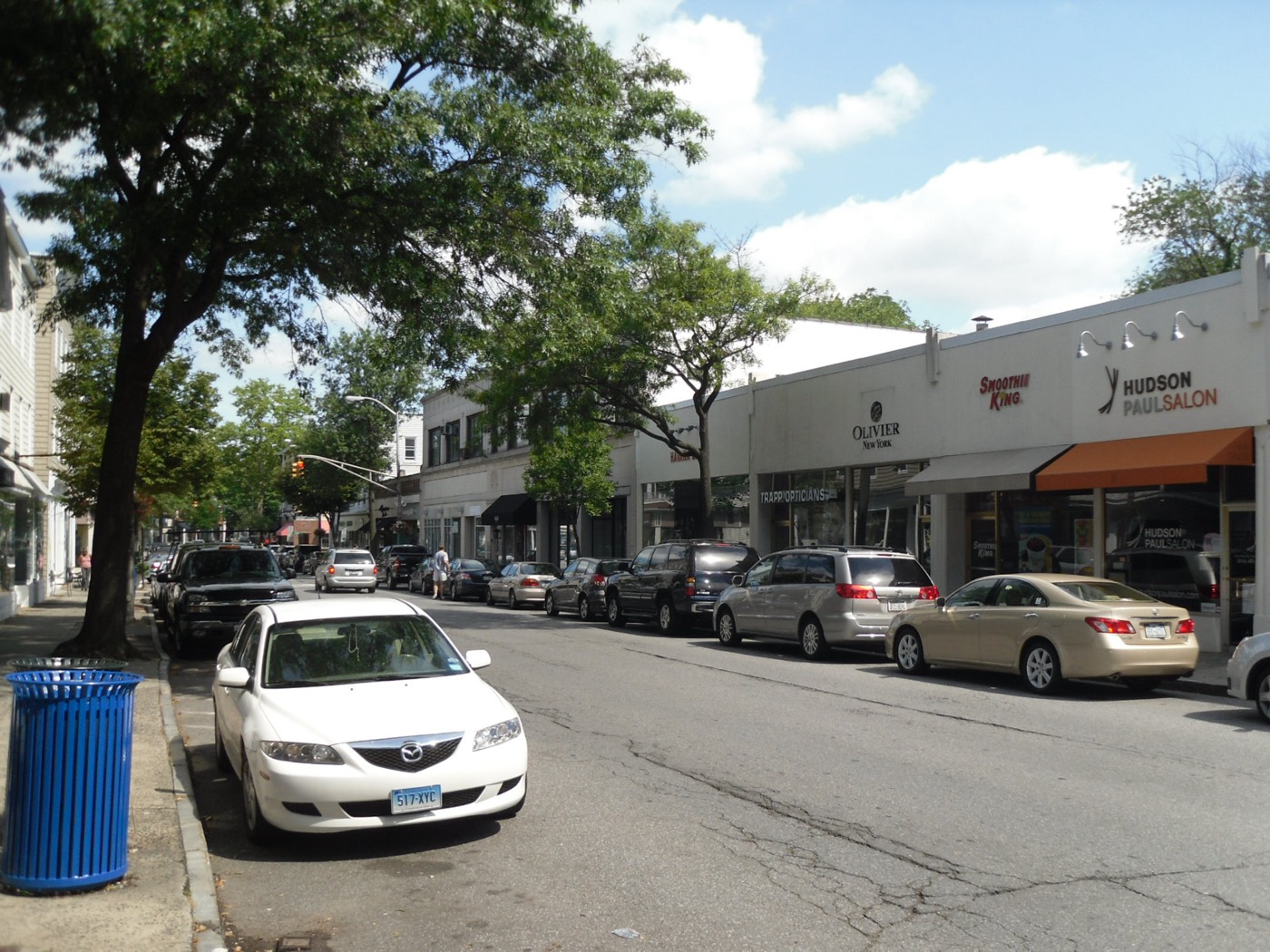
Rye Country Store, 41 Purchase Street. A deli, general store and caterer on the main downtown street with roughly eighty years of service to the town, the kind of counter where a working community’s lunch orders and a wealthy town’s catering jobs meet at the same register.
Aurora Ristorante, 60 Purchase Street. A downtown Italian kitchen turning out brick-oven pizza and handmade pasta, part of the everyday Italian Rye that lives on Purchase Street rather than in the history books.
Rafele Rye, 26 Purchase Street. Chef Raffaele Ronca, who grew up in a family of butchers and earned notice from the James Beard Foundation, brought a Neapolitan kitchen to Rye’s main street, a contemporary echo of the Campanian roots that ran through old Dublin.
Where They Came From
Rye’s Italians came overwhelmingly from the Italian south, the regions that sent the great majority of Italian immigrants to the New York metropolitan area between the 1880s and the 1920s: Campania, Apulia, Basilicata, Calabria and Sicily.
The Mainiero family’s village, Castelfranco in Miscano in the Benevento province of Campania, is typical of the source: a small inland hill town in a region of hard farming and few prospects, the kind of place that emptied steadily toward America. Families from such villages often followed one another to the same American street, which is how a few blocks of Westchester filled with people who had been neighbours, or nearly so, in the old country.
What pulled them specifically to Rye was work. A town building estates, walls, a parkland amusement park and a cathedral-sized church needed stonemasons, labourers, gardeners and domestic staff, and Italian families supplied them, then stayed. It is the same dynamic that produced Italian working enclaves inside other prosperous Westchester and Long Island suburbs, from the Italian families who served Garden City to the trades that built up the wealthier towns nearby.
Rye Today
Rye is wealthier now than it has ever been, and the pressures that come with that wealth press hardest on exactly the kind of modest, multi-family streets that Dublin always was. Stone houses built for masons sit on land worth far more than the houses, and each sale nudges the old neighbourhood further from its origins.
The Italian presence has thinned and dispersed across Westchester, as it has everywhere, into Harrison, the old immigrant wards of Yonkers and the towns beyond. The same suburban affluence that reshaped Rye has reshaped its neighbours, the way it did the commuter enclaves of inland Westchester like Armonk. Many descendants of Dublin’s founding families have moved out, even as the surnames still surface in the parish records, the cemetery and the occasional family in the old houses.
Yet the bones of Italian Rye remain visible to anyone who looks. The Cathedral of Westchester still rises over Boston Post Road. The stone houses still line the West Rye lanes. Italian kitchens still anchor Purchase Street. The community that built so much of Rye left its signature in the most durable material it knew, and in this town, stone outlasts almost everything.
Frequently Asked Questions
When did Italians first settle in Rye, New York?
Italians began settling in Rye around the turn of the twentieth century, moving into the West Rye neighbourhood known as Dublin where Irish Catholic immigrants had settled in the mid-1800s. Their arrival swelled the town’s Catholic population enough to require a much larger parish church.
What was the Dublin neighbourhood in Rye?
Dublin was the working-class neighbourhood near Maple and High Streets in West Rye, named for its early Irish residents. By the early 1900s the Italians in Rye, New York had moved into the same blocks, making it a Little Italy as much as a Little Ireland, known for its stone houses built by Italian masons.
Who was Donato Mainiero and the Church of Saint Donato?
Donato Mainiero came to Rye as a boy in the 1880s from Castelfranco in Miscano in Campania. His blind father, John, built a chapel on Maple Avenue dedicated to Saint Donato, and from 1892 the family held an annual Feast of Saint Donato that drew thousands. After fire destroyed the wooden chapel in 1925, the family rebuilt it in stone.
Why is the Church of the Resurrection called the Cathedral of Westchester?
The Church of the Resurrection at 910 Boston Post Road, founded as a parish in 1880, completed a vast Gothic Revival church in 1931 at a cost of around 400,000 dollars. Its sheer scale earned it the nickname Cathedral of Westchester. The growing Italian Catholic community in Rye was a major reason the parish needed so large a church.
Did Italians help build Rye Playland?
Rye Playland was built beginning the day after Labor Day in 1927 by more than a thousand workers and opened in May 1928. The Italian and Irish labourers and tradesmen of West Rye were among the workforce that built and maintained the park, which is now a National Historic Landmark.
Is there still an Italian community in Rye today?
The Italian community in Rye has thinned and spread across Westchester as descendants moved out and property values rose, but its traces remain. The stone houses of Dublin, the Church of the Resurrection, and Italian restaurants on Purchase Street all keep the story of the Italians in Rye, New York alive.
If your family’s story passed through Rye, or any of the places Italians have made home in America, Atlas of Home can trace that journey. From a hill village in Campania to a stone house on a Dublin lane in Rye, to wherever you are now.