
On a Saturday afternoon along Oak Tree Road, the pavements in Iselin belong to bolts of silk, trays of warm jalebi, and the steady percussion of shopping bags. This is the working heart of one of the largest Indian commercial districts in the United States, and the Indians in Iselin, New Jersey, have spent three decades building it shopfront by shopfront. The street smells of cardamom and frying ghee. The signs read in Gujarati, Telugu, Tamil, and Hindi as readily as in English.
The Place
Iselin is not a town in its own right. It is a census-designated place inside Woodbridge Township, in Middlesex County, about nine miles northeast of New Brunswick and a short hop down the rail line from Newark.
It took its name from Adrian Iselin, a New York investment banker who financed a railway station here and opened a finishing school for the daughters of wealthy Manhattan families in the 1870s. The land was once called Perrytown, then Unionville, before his money attached his name to it.
Today the postcode 08830 covers two very different worlds. To the southwest sit the glass office parks of Metropark, a commuter station on the Northeast Corridor. To the east runs Oak Tree Road, and that is where India arrived.
How It Became Indian
The transformation of Oak Tree Road is recent enough that many of the people who built it are still standing behind their own counters.
A down-on-its-luck strip
In the early 1990s, Oak Tree Road was not a destination. It was a tired stretch of biker bars, shuttered storefronts, and the fading remnants of an older Italian and German Woodbridge. The big oak that once stood at a Revolutionary-era crossroads, and gave the road its name, had long since become a memory.
Into that emptiness came Indian shopkeepers, drawn first by cheap rents and a location wedged neatly between New York and Philadelphia, with the rail line and the New Jersey Turnpike both within reach. The early pioneers met hostility. Some shops were targeted, and the racism of those first years was real. By the early 1990s much of it had subsided, and the gamble had begun to pay.
The arrivals were not starting from nothing. Indian immigration to the United States had opened up after the 1965 Immigration and Nationality Act, and through the 1970s a first wave of doctors, engineers, and scientists had already settled across central New Jersey. What Oak Tree Road offered them, and the relatives they sponsored, was a commercial home to match the residential one.
The H-1B decade
What turned a few shops into a district was the technology boom. Through the late 1990s and 2000s, Indian engineers and IT professionals arrived in central New Jersey in large numbers, many on H-1B visas, many routed through the staffing firms clustered around Edison and Metropark.
They needed somewhere to buy a sari for a wedding, a bag of toor dal, a jar of pickle that tasted like home. Oak Tree Road answered. A grocer drew a sweet shop, the sweet shop drew a jeweller, the jeweller drew a restaurant, and the chain compounded year after year.
India Square takes shape
By the mid-1990s the weekends had turned dense with pedestrians, a rarity in suburban New Jersey. The two-block stretch between Correja Avenue and Middlesex Avenue, on the Iselin side of the road, became known as India Square, the retail epicentre of the whole corridor.
The first Navratri festival in New Jersey was held in the area in 1991, an early signal that this was becoming not just a market but a cultural address. The street kept growing east toward Wood Avenue, the point where Iselin meets the Edison section of the same road, the two communities sharing a single ribbon of commerce.
The calendar filled out from there. Diwali turned the corridor into a runway of lights and archways, with concert stages, food rows, and queues for mithai that wrapped around the block. Ganesh Utsav, Holi, and the two Eids followed the seasons, and the district acquired the rhythm of a place that does not merely sell India but lives by its festival year. According to accounts of the corridor’s growth, the area now counts among the largest South Asian commercial hubs anywhere in the country.
One road, two townships
It is worth being precise about geography, because outsiders often blur it. Oak Tree Road runs roughly a mile and a half through both Edison and Iselin. The Edison end has the larger restaurant count and the bigger headlines. The Iselin end, India Square, holds the oldest, densest concentration of the grocers, jewellers, and clothing shops that started it all. Wood Avenue is the seam between them.
The Landmarks
India Square, Oak Tree Road between Correja and Middlesex Avenues, Iselin. This two-block run is the original core, the densest commercial stretch in the entire corridor. On a festival weekend the foot traffic here rivals any city centre, with shoppers spilling between sari emporiums, electronics stalls, and sweet counters.
Patel Brothers, 1555 Oak Tree Road, Iselin. The flagship of the Indian-American grocery chain that began in Chicago anchors the Iselin strip. Its aisles of lentils, atta, frozen parathas, and fresh curry leaves are the practical engine of the neighbourhood, the place that draws families in from across three states for the weekly shop.
Saravana Bhavan, Oak Tree Road, Iselin. The New Jersey outpost of the global South Indian vegetarian chain serves dosa and idli to queues that form before noon on weekends. It is the kind of place where a Tamil grandmother and a curious newcomer order from the same crisp menu.
Tanishq, Oak Tree Road corridor. When the Tata-owned luxury jewellery house opened a flagship here in 2023, it confirmed that Oak Tree Road had become a national stage, not just a local market. Kalyan Jewellers followed in 2024, joining a row of gold shops whose windows glow against the street.
Shirdi Sai Cultural and Community Center, Woodbridge Township. Devoted to Sai Baba of Shirdi, this temple and gathering space gives the district a spiritual anchor away from the cash registers. It is one of many Hindu, Christian, Muslim, and Jewish congregations that the Indian arrival layered onto an already mixed town.
The India Day Parade route, Oak Tree Road. Each August the road itself becomes the landmark. The parade marches eastbound, ending at the intersection of Middlesex Avenue and Oak Tree Road in Iselin, drawing celebrity guests from Hindi and Telugu cinema and tens of thousands of spectators.
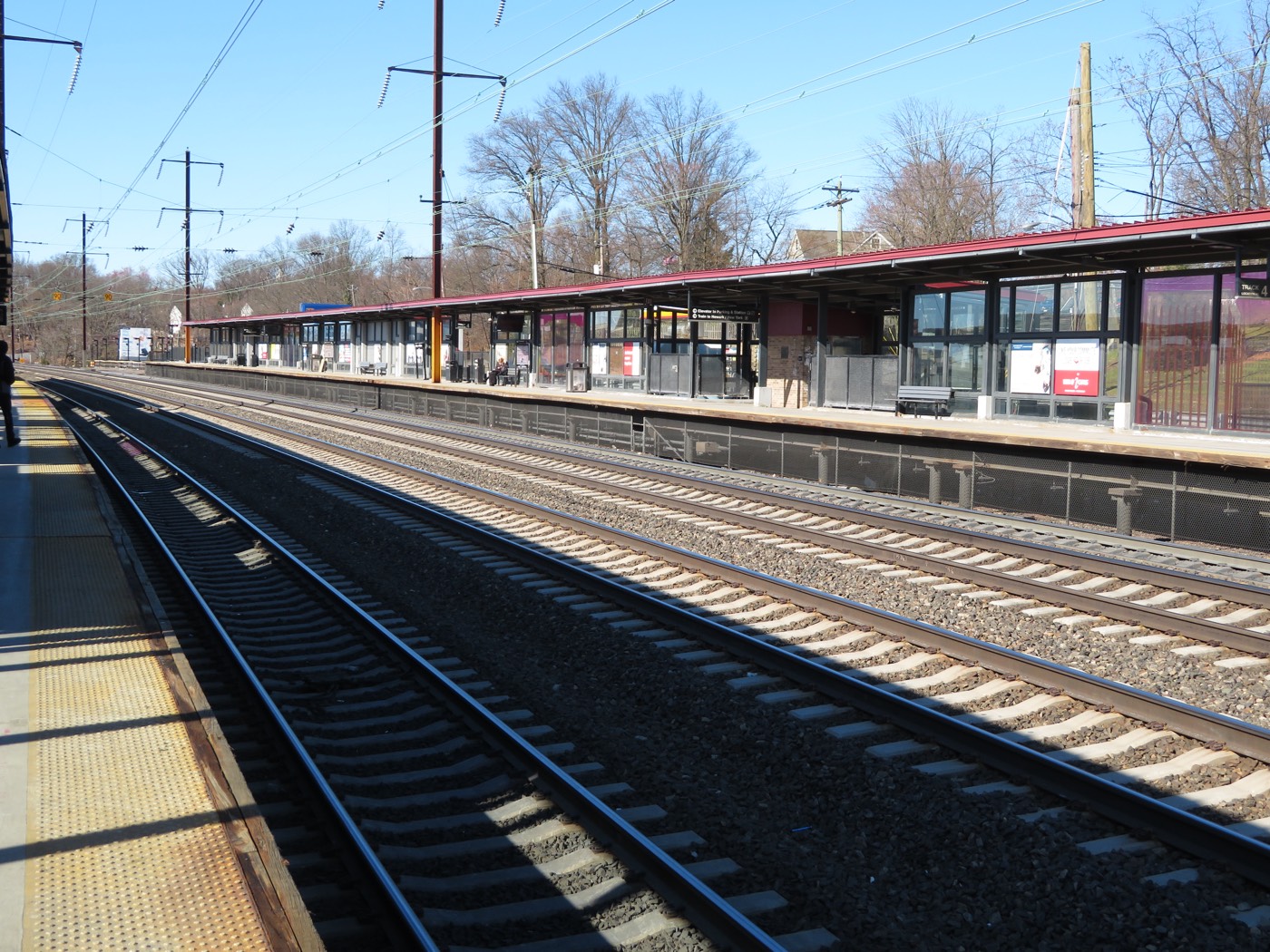
Metropark Station, southwestern Iselin. The Amtrak and NJ Transit stop is the unglamorous reason much of this exists. It put New York within a forty-minute ride and made Iselin a viable home for the commuting professionals whose families fill Oak Tree Road on the weekends.
Where They Came From
The Indians of Iselin do not trace to a single village or state, which is part of what makes the district feel like a small map of India.
Gujaratis were among the earliest and most entrepreneurial arrivals, and many of the grocers and sweet shops carry that imprint. Telugu families came in force with the IT wave, until Telugu cinema stars now headline the August parade. Tamil households gave the street its South Indian restaurants, and Punjabi families brought their own gurdwaras, clothing, and cuisine.
The common thread is migration through the New York metropolitan economy. Middlesex County now has the highest concentration of Indian Americans of any county in the United States, and Iselin sits at its dense centre, fed by chain migration from across the subcontinent.
That chain is the quiet machinery behind the shopfronts. A brother sponsors a brother, a cousin follows a cousin, and a single household in Andhra Pradesh or Surat can, over a decade, become a small cluster of families within a few streets of Oak Tree Road. The U.S. Census Bureau’s data for the Iselin CDP records the result: a town now nearly half Asian, with Indians the dominant share.
Iselin Today
By the 2017 American Community Survey, 42.6 percent of Iselin residents identified as Asian Indian, the highest share of any census-designated place in the country. The wider area now holds over 400 South Asian business establishments, including more than 145 Indian restaurants between Iselin and Edison.
The district has matured past its scrappy origins. National luxury brands have moved in, the festivals have grown into civic events with police road closures and politicians on the dais, and the children of the first shopkeepers are doctors, engineers, and, sometimes, the second generation running the family store.
It is not without strain. Parking is a perennial complaint, rents have climbed, and some longtime non-Indian residents feel the town changed without asking them. But Oak Tree Road remains what it set out to be: a place where the Indian diaspora of the eastern seaboard can find, within a single mile, almost everything home once meant. Families from East Brunswick, South Brunswick, and well beyond drive in for it every weekend, much as earlier generations once travelled to Jackson Heights in Queens.
Frequently Asked Questions
Why is Iselin, New Jersey called Little India?
Iselin shares the Oak Tree Road commercial corridor, one of the largest Indian commercial districts in the United States, with neighbouring Edison. The Indians in Iselin, New Jersey, built more than 400 South Asian businesses along the road, and 42.6 percent of Iselin residents identified as Asian Indian in the 2017 American Community Survey.
Where is India Square in Iselin?
India Square is the two-block stretch of Oak Tree Road between Correja Avenue and Middlesex Avenue, on the Iselin side of the corridor. It is the original and densest retail core of the whole Little India district.
What is the difference between Little India in Iselin and Edison?
They are two ends of the same Oak Tree Road. Wood Avenue marks the boundary, with India Square and the oldest grocers and jewellers on the Iselin side and a larger cluster of restaurants on the Edison side. Together they form a single Indian shopping district.
How do Indians in Iselin get to New York City?
Metropark Station, in southwestern Iselin, is an Amtrak and NJ Transit stop on the Northeast Corridor that puts Manhattan within roughly forty minutes. The rail link is a major reason commuting Indian professionals settled in the area.
When is the India Day Parade on Oak Tree Road?
The India Day Parade is held each August to mark Indian Independence Day. It marches eastbound along Oak Tree Road, ending at Middlesex Avenue in the Iselin section of Woodbridge, and draws celebrity guests from Hindi and Telugu cinema.
Which Indian communities live in Iselin?
The Indians in Iselin, New Jersey, come from across the subcontinent. Gujarati families were among the earliest entrepreneurs, Telugu and Tamil households arrived with the technology boom, and Punjabi families added their own businesses and places of worship.
If your family’s story passed through Iselin, or any of the places Indians have made home in America, Atlas of Home can trace that journey. From a village in Gujarat or Andhra to a shopfront on Oak Tree Road, to wherever you are now.