
The Urban surname comes from the Latin given name Urbanus, meaning “of the city” and, by extension, “refined”. It belongs to no single country. It hardened into a family name separately in Germany, Poland, Bohemia, Slovakia, Austria, Slovenia and Hungary.
What Does the Surname Urban Mean?
Urban means “son of a man called Urban”, from the Latin personal name Urbanus, which meant “of the city” and so “polished, urbane”. It is a patronymic taken from a baptismal name. It never described the bearer.
That distinction matters more here than on almost any other surname page, because the modern English word “urban” pulls readers straight to the wrong conclusion. An ancestor named Urban was not recorded as a city dweller, a townsman or a burgher. Central European clerks had perfectly good words for those, and they used them: Mestský, Miejski, Bürger, Stadler.
What the name records is a christening. A child was named for a saint, and centuries later the neighbours started calling his descendants after him.
The saint in question was popular for two reasons. Eight popes took the name Urban between the third and seventeenth centuries, among them Urban II, who preached the First Crusade at Clermont in 1095 and made the name famous across Latin Christendom. Alongside them stood a separate figure, Urban of Langres, a fourth-century Gaulish bishop who was said to have hidden from persecution in a vineyard and converted the vine-dressers who sheltered him.
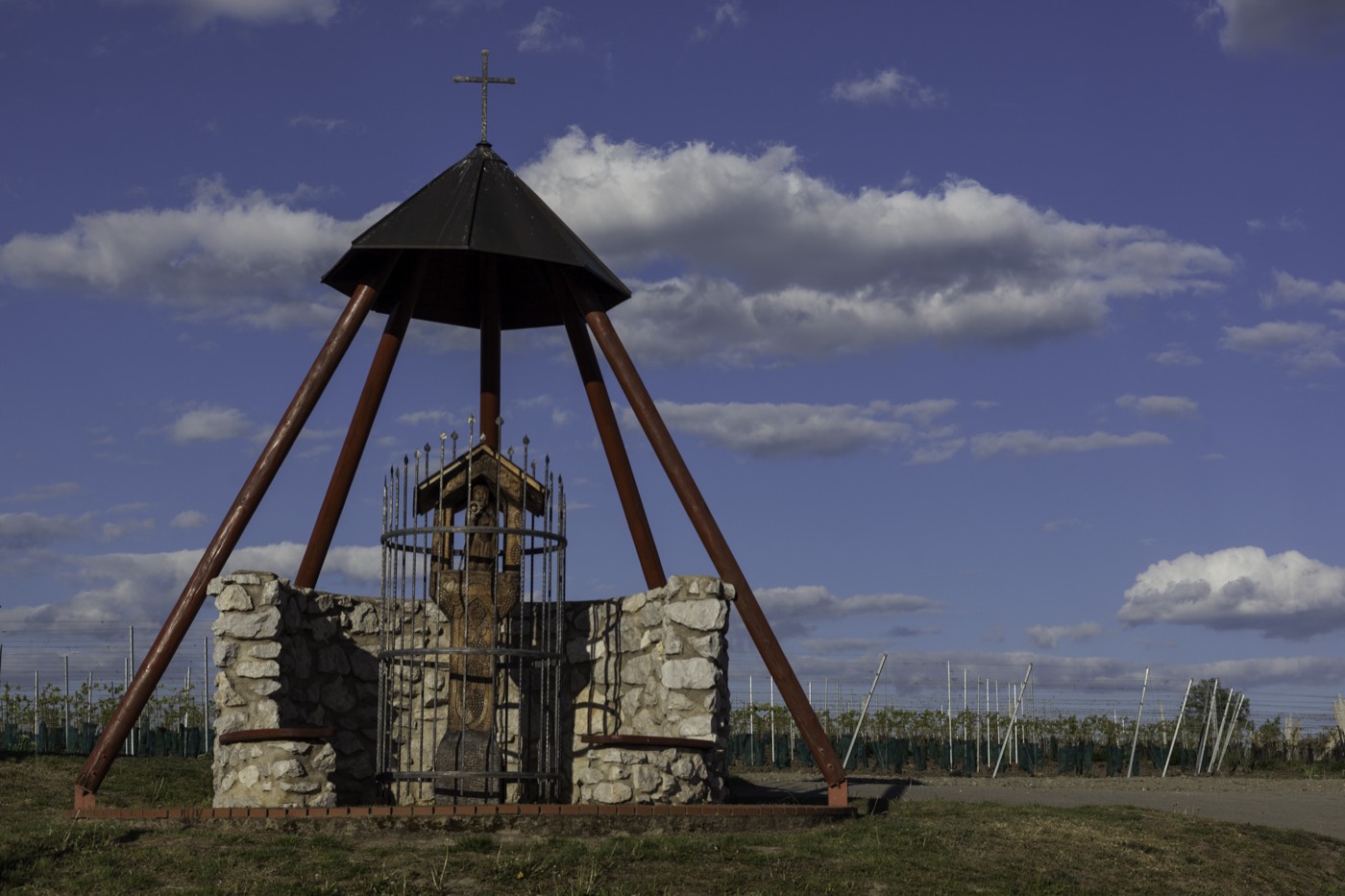
Popular tradition blurred the two, and the result was a patron saint of vine growers, coopers and gardeners whose feast day became a weather marker in the German and Moravian wine country. Sun on Urban’s day meant a good vintage. Vineyards from the Rhine to South Moravia still carry chapels dedicated to him.
Where the Urban Name Comes From
There is no single homeland. Urban became a surname independently in German-speaking Europe, in Poland, in the Czech lands and Slovakia, and in Hungary and Slovenia, because the same Latin given name was current in all of them by the late Middle Ages.
This is the crucial point for anyone tracing the name. A German Urban and a Polish Urban are not usually distant cousins. They are two families that arrived at the same surname from the same Latin root, at roughly the same time, several hundred miles apart.
The German and Austrian core
Germany holds more Urbans than any other country, roughly 34,500 of them, which is around one person in 2,300. The name is well established in Bavaria, Saxony, Silesia and the Rhineland, and again in Austria, where the surname belonged to families in the wine districts of Lower Austria and Burgenland.
The German bearing is old and entirely native. It does not need a Slavic explanation, and readers who find a German Urban in their tree should not assume the family was Czech or Polish before it was German.
Poland, Bohemia and Slovakia
Poland comes second with about 23,600 bearers, Czechia has roughly 8,000 and Slovakia around 3,500. In all three the pattern is the same: a medieval Catholic given name, absorbed into the local naming system, then fixed as a hereditary surname during the parish and estate record-keeping of the sixteenth to eighteenth centuries.
Because the given name was so widespread, Slavic speakers built an unusually large family of derived surnames from it, which is where Urbanek, Urbaniak and Urbański come from. It is the same mechanism that spread the Novak surname across the Czech, Slovak, Slovene and Polish borders at once, and it produces the same false impression of a single ancestral family.
Hungary, Slovenia and the Jewish bearing
Hungarian took the name as Orbán, following Hungarian phonology, and it spread with Hungarian settlement into Slovakia, Transylvania, Croatia, Serbia and among the Rusyns. Slovenian and Croatian families use Urban and Urbanič.
Urban is also carried by eastern Ashkenazi Jewish families, chiefly from Poland and Galicia, who adopted it during the compulsory surname registrations of the late eighteenth and early nineteenth centuries. Jewish bearers were not naming themselves after a Catholic saint. They were taking an existing, unremarkable local surname, which is exactly what the registration laws pushed families to do.
The related Jewish name Urbach is a separate matter. It is usually a German place name or a variant of Auerbach, and it should not be assumed to be a form of Urban.
Spelling Variants and Related Names
Urban has one of the deepest variant families in Central Europe, because every language that borrowed Urbanus also built diminutives and patronymics from it. The core spelling stays remarkably stable. The suffixes do the work.
- Urbánek, Urbanek: Czech, Slovak and Polish, from a pet form of the given name. Roughly 1,900 Americans carry it.
- Urbaniak: Polish patronymic, “son of Urban”. About 1,550 Americans.
- Urbański, Urbanski: Polish, with the noble or locative -ski suffix; feminine Urbańska.
- Urbanik, Urbanowicz, Urbanovský: further Polish, Czech and Slovak derivatives, the last meaning a member of Urban’s household or a man from Urbanovice.
- Orbán: the Hungarian form, and by far the most divergent-looking of the group.
- Urbain: French. Urbano and Urbani: Italian, Spanish and Portuguese.
- Urbanus: the unaltered Latin, kept in Dutch and Low German records.
- Urbanič, Urbanic: Slovenian and Croatian.
Czech and Slovak women bear the feminine form Urbanová, from Urbánek Urbánková. This is not a different family. It is standard Czech and Slovak grammar, in which a woman’s surname takes the -ová ending. American descendants almost always dropped it, so a Marie Urbanová in a Bohemian parish register is the sister of a Josef Urban, not a relative by marriage.
The Urbans in America
Urbans reached America in the great Central European migrations of 1848 to 1914, arriving through New York, Baltimore and Galveston, and they came as Germans, Austrians, Czechs, Slovaks, Poles and Hungarians rather than as one people. That is why American Urbans are scattered across communities that never mixed at home.
German-speaking Urbans came earliest and went furthest inland, settling among the Hill Country farming towns like New Braunfels in Texas. Czech families followed into the farm belt, above all to the Bohemian settlements of Nebraska such as Wilber, and to the black-soil counties of West Texas, where Moravian and Bohemian families broke cotton land.
Slovak Urbans took a different route, into heavy industry. The oil refineries and steel mills of the Calumet region drew thousands, and Whiting, Indiana is one of the clearest examples. Polish Urbans, Urbaniaks and Urbańskis concentrated in the paper and farming towns of Wisconsin, including Stevens Point.
City Urbans are easiest to find in the Czech quarters of New York, where Astoria in Queens still holds the institutions those families built.
Notable People Named Urban
Joseph Urban (1872 to 1933), Viennese architect and stage designer who remade American theatre, designing for the Ziegfeld Follies and the Metropolitan Opera and building the Ziegfeld Theatre in New York.
Milo Urban (1904 to 1982), Slovak novelist, best known for Živý bič (The Living Whip), and a central and controversial figure in twentieth-century Slovak literature.
Matt Urban (1919 to 1995), American soldier of Polish descent, awarded the Medal of Honor in 1980 for repeated actions in France and Belgium in 1944.
Charles Urban (1867 to 1942), Anglo-American film producer and a pioneer of documentary and colour cinema in Britain.
Jerzy Urban (1933 to 2022), Polish journalist and government spokesman during martial law, later founder of the satirical weekly Nie.
Keith Urban (born 1967), New Zealand-born Australian country singer and guitarist, and by some distance the most recognisable bearer of the name today.
How Common Is Urban Today?
Urban is the 1,790th most common surname in the United States, carried by 20,058 Americans at the 2010 Census. Worldwide there are roughly 129,000 bearers, with Germany, the United States, Poland and Czechia holding the largest shares.
| US rank (2010 Census) | #1790 |
|---|---|
| Americans with the name | 20,058 |
| Origin | German, Polish, Czech, Slovak, Austrian, Hungarian and Slovenian |
| Meaning | From the Latin given name Urbanus, “of the city, refined” |
Frequently Asked Questions
What does the surname Urban mean?
It means “son of Urban”, from the Latin baptismal name Urbanus, “of the city, refined”. It is a patronymic from a saint’s name rather than a description of the first bearer, so it does not mean the family lived in a town.
Is Urban Czech or German?
Both, and several others besides. Germany has the most bearers, followed by Poland, then Czechia, Slovakia and Austria, and the name arose independently in each. A German Urban and a Czech Urban are almost never related.
Where does the Urban family come from?
There is no single Urban homeland. The name is concentrated in Bavaria, Saxony, Silesia and Austria on the German side, and in Poland, Bohemia, Moravia and Slovakia on the Slavic side, with Hungarian bearers using the form Orbán.
How common is the surname Urban?
It ranks 1,790th in the United States with 20,058 bearers, and about 129,000 worldwide. It is densest in Slovakia, Czechia and Poland, where roughly one person in every 1,300 to 1,600 carries it.
Is there an Urban family crest or coat of arms?
No. In every European heraldic tradition arms were granted to an individual and passed to his direct descendants, never to everyone who happened to share a surname. Any site selling you an “Urban family crest” is selling a decoration, not a lineage, and with a name that arose separately in six countries the claim is doubly meaningless.
Is Urban a Jewish surname?
It can be. Eastern Ashkenazi families in Poland and Galicia adopted Urban during the compulsory surname registrations around 1800, taking a common local name rather than one with Jewish meaning. The related name Urbach is usually separate, being a German place name or a form of Auerbach.
If your family carries the Urban name, its route from Central Europe to America is traceable. Atlas of Home can follow it from the parish that first wrote down the name, whether in Bavaria, Silesia, Moravia or Hungary, to wherever your family landed, and to wherever you are now.
Further reading: Urban (name) on Wikipedia and Urban at Behind the Name.