
The Novak surname means “the new one”, the newcomer who turned up in a village and was named for the fact of his arrival. It is the most common family name in both Czechia and Slovenia, and it belongs to no single nation.
What Does the Surname Novak Mean?
Novak comes from the Slavic root nov, meaning “new”, with the agent suffix -ak attached, so the name literally means “the new man” or “the newcomer”. It was a nickname for someone who had recently arrived in a settlement and had no local family to be named after.
That is the whole of it. No lost noble house, no forgotten trade, no ancestral river or hill. Just a village, a stranger walking into it, and neighbours needing something to call him. That made Novak the most democratic surname in central Europe: every parish that took in an outsider could generate one independently.
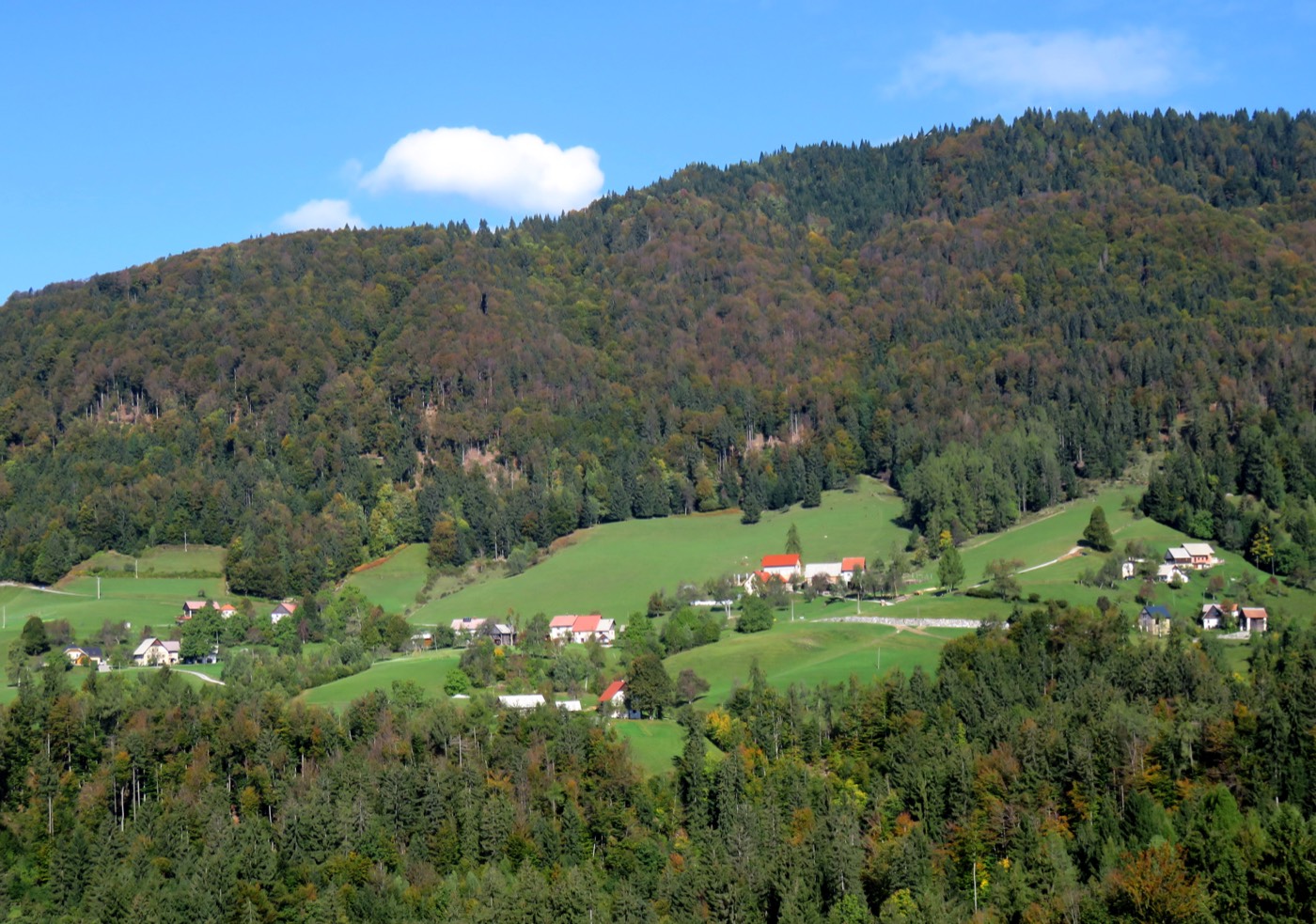
A second, sharper sense survives in Slovene, where the word attached to a peasant who cleared virgin ground, usually high on a hillside, and farmed it. The land was novina, the new clearing, and the man who broke it the novak. Both senses share one idea: someone at the beginning of something.
Where the Novak Name Comes From
Novak comes from the Slavic-speaking heart of central Europe, chiefly Bohemia and Moravia in today’s Czechia, plus Slovenia and northern Croatia, with large secondary populations in Slovakia, Hungary and Ukraine. No one country owns it.
That is worth stating plainly, because English-language sources habitually file Novak as “Czech” and stop there. By raw numbers Czechia has the most bearers, by density Slovenia has the strongest claim of all, and the two traditions grew up independently.
The Bohemian and Moravian Nováks
In the Czech lands the name is written Novák, with the long á, and it has topped the national list for as long as records have been counted. Figures published from the Czech population register in 2017 put Novák and its feminine form Nováková together at more than 68,000 people, ahead of Svoboda, Novotný and Dvořák.
Novák is so ordinary in Czech that it works the way “John Smith” does in English. Pan Novák is the placeholder on a form, the everyman in a joke, the name on a specimen bank card. A Czech family carrying it should expect villagers and tradespeople rather than gentry.
The Slovenian Novaks and the Cleared Hillside
Slovenia is where the name is most concentrated. Novak sits at number one on the Slovenian list, ahead of Horvat, Krajnc and Kovač, with counts in the range of eleven to fifteen thousand depending on the source. In a country of two million, that is an extraordinary share.
The Slovenian Novaks are tied to the mountain clearances, to families who took ground nobody had farmed and made it pay. The evidence is on the map: in the hills above Cerkno, in the western uplands, sit two villages called Gorenji Novaki and Dolenji Novaki, Upper and Lower Novaki, from the same root as the surname.
Slovene even stresses the name differently. Czech, Slovak and Hungarian speakers hit the first syllable, NO-vak, while Slovenes put the weight on the second, no-VAK. If a relative has ever corrected your pronunciation with unusual firmness, that may be why.
Croatia, Slovakia and Hungary
In Croatia, Novak ranks among the five or six most frequent surnames, concentrated in the north around Zagreb, Zagorje and Međimurje rather than on the Dalmatian coast. Slovakia and Hungary both carry the accented Novák in quantity, a legacy of centuries inside the Kingdom of Hungary, and the name appears among Ashkenazi Jewish families from the same territories and in western Ukraine. The mechanism was always identical: a new arrival, a local nickname, a name that stuck to the children.
Spelling Variants and Related Names
The main split is diacritical. Novák, with the acute accent, is the Czech, Slovak and Hungarian form; Novak, unaccented, is the Slovene, Croatian and Serbian form. They look identical in English because the accent is the first thing to vanish at a border. Forms you are likely to meet in the records:
- Nováková, the Czech and Slovak feminine form. A woman in Czech records is Nováková, not Novák, which routinely confuses first-time readers of a parish book.
- Novack, Novacek, Nowack, American and German-influenced respellings, adopted at ports and in county courthouses by clerks with no key for á.
- Nováček, a Czech diminutive, “little Novák”, a separate surname in its own right.
- Novaković, Novakovich, the Serbian and Croatian patronymic, “son of Novak”, common across Serbia, Bosnia and Montenegro.
- Novikov, Novikova, the Russian equivalent from the same root.
- Nowak, the Polish cognate and the largest single population of the name group anywhere. If your line runs through Poland or Silesia rather than Bohemia, see our companion page on the Nowak surname.
One curiosity: in Serbian, Novak survives as a first name rather than a surname, which is how the tennis player Novak Djokovic came by it. The same word did different jobs in different corners of the Slavic world.
The Novaks in America
Novaks reached America in distinct waves between the 1850s and 1914, arriving as Czechs, Slovenes, Croats and Slovaks rather than one people, and settling accordingly. They landed mostly at New York, Baltimore and Galveston.
The Czech Nováks came first, and came differently from most of Europe. They tended to travel as whole families intending to farm, which is why Czech surnames cluster on the prairie and not only in the mill towns. Nebraska took a heavy share, and the Czechs of Crete, Nebraska show what that migration looked like on the ground, as do the Czechs of Cedar Rapids, Iowa.
The urban Czech story ran through Chicago. Pilsen, on the Lower West Side, was the great Bohemian entry point, and as families prospered they moved west along the streetcar lines into Cicero and Berwyn. A Chicago Novak in 1900 and a Cicero Novak in 1940 are often the same family, one generation apart.
The Slovenian Novaks followed a different map. Cleveland’s St Clair Avenue corridor became the largest Slovenian settlement outside Europe, and the surname is dense in the records of the Slovenians of Cleveland and the Slovenians of Joliet, Illinois, who went to the steel mills and limestone quarries. Croatian Novaks often landed in the same city, and the Croatians of Cleveland shared streets, parishes and shifts with them. Slovak Nováks went where the mills were, notably Bethlehem, Pennsylvania.
The accent did not survive the crossing. Novák became Novak in the manifests and the census, and many families pushed further, to Novack or Novacek, to look less foreign in a hiring line. If your American records show Novak but the Czech parish book shows Novák, nothing was lost. The mark simply had nowhere to go.
Notable People Named Novak
Vítězslav Novák (1870 to 1949) was a Czech composer born at Kamenice nad Lipou in Bohemia. A pupil of Antonín Dvořák at the Prague Conservatory, he became a leading voice of Czech musical nationalism and taught there from 1909.
Kim Novak (born 1933) was born Marilyn Pauline Novak in Chicago to second-generation Czech-American parents. A defining screen presence of the 1950s, above all in Hitchcock’s Vertigo, she refused studio pressure to drop her Czech surname.
Robert D. Novak (1931 to 2009) was an American political columnist who, with Rowland Evans, launched the “Inside Report” column in 1963. It became the longest-running syndicated political column in United States history.
Ladislav Novák (1931 to 2011) was a Czech footballer who won 75 caps for Czechoslovakia, 71 as captain, and led the side to the 1962 World Cup final. He spent his club career at Dukla Prague and later managed them.
Slobodan Novak (1924 to 2016) was a Croatian novelist, born in Split and died in Zagreb. His 1968 novel Gold, Frankincense and Myrrh is routinely listed among the finest Croatian novels of the century.
Katalin Novák became Hungary’s first woman President, taking office in May 2022 as the youngest holder of the post, and resigned in February 2024.
How Common Is Novak Today?
Novak is the 980th most common surname in the United States, carried by 35,461 Americans at the 2010 Census. Worldwide the unaccented spelling alone accounts for roughly 134,000 people, and the name ranks first in both Czechia and Slovenia.
| US rank (2010 Census) | #980 |
|---|---|
| Americans with the name | 35,461 |
| Origin | Czech, Slovenian and Croatian (West and South Slavic) |
| Meaning | “The new one”, a newcomer to a village |
That American figure understates the family. Add the Novacks, Novaceks and Novakoviches, then the enormous Polish Nowak population, and the wider name group is one of the largest in Slavic Europe. For the international picture see the Wikipedia overview of the Novak name and Radio Prague International, which reports the Czech register data.
Frequently Asked Questions
What does the surname Novak mean?
Novak means “the new one” or “the newcomer”, from the Slavic root nov, “new”, plus the suffix -ak. It began as a nickname for someone who had recently moved into a village. In Slovene it carries the extra sense of a farmer who settled newly cleared ground.
Is Novak Czech or Slovenian?
Both, genuinely. Novák is the most common surname in Czechia and Novak the most common in Slovenia, and the two traditions arose separately from the same Slavic word. It is also among the most frequent names in Croatia and common in Slovakia, Hungary and Ukraine.
Where does the Novak family come from?
There is no single Novak family. The name arose independently in hundreds of villages across Bohemia, Moravia, Slovenia, northern Croatia, Slovakia and Hungary, wherever a stranger settled. Most Novaks are unrelated to most other Novaks.
How common is the surname Novak?
Very. It ranks 980th in the United States with 35,461 bearers at the 2010 Census, and it is the most common surname in both Czechia and Slovenia. Counted with cognates such as Nowak, Novaković and Novikov, it is one of the largest name groups in Europe.
Is there a Novak family crest or coat of arms?
No, and this is worth saying clearly. In every European heraldic tradition, arms were granted to an individual and passed to direct descendants, never to everyone sharing a surname. Any site selling a “Novak family crest” is selling a decoration, not a lineage, and since Novak arose independently in hundreds of unconnected villages, the idea is doubly meaningless here.
Why is Novak spelled Novák in some records?
The acute accent marks a long vowel in Czech, Slovak and Hungarian, so those records show Novák, while Slovene, Croatian and Serbian spell it without. American clerks and ship manifests had no way to type the accent, so it was dropped at arrival and almost never restored.
If your family carries the Novak name, its route from central Europe to America is traceable. Atlas of Home can follow it from the Bohemian parish or the Slovenian hillside clearing to wherever your family landed, and to wherever you are now.