
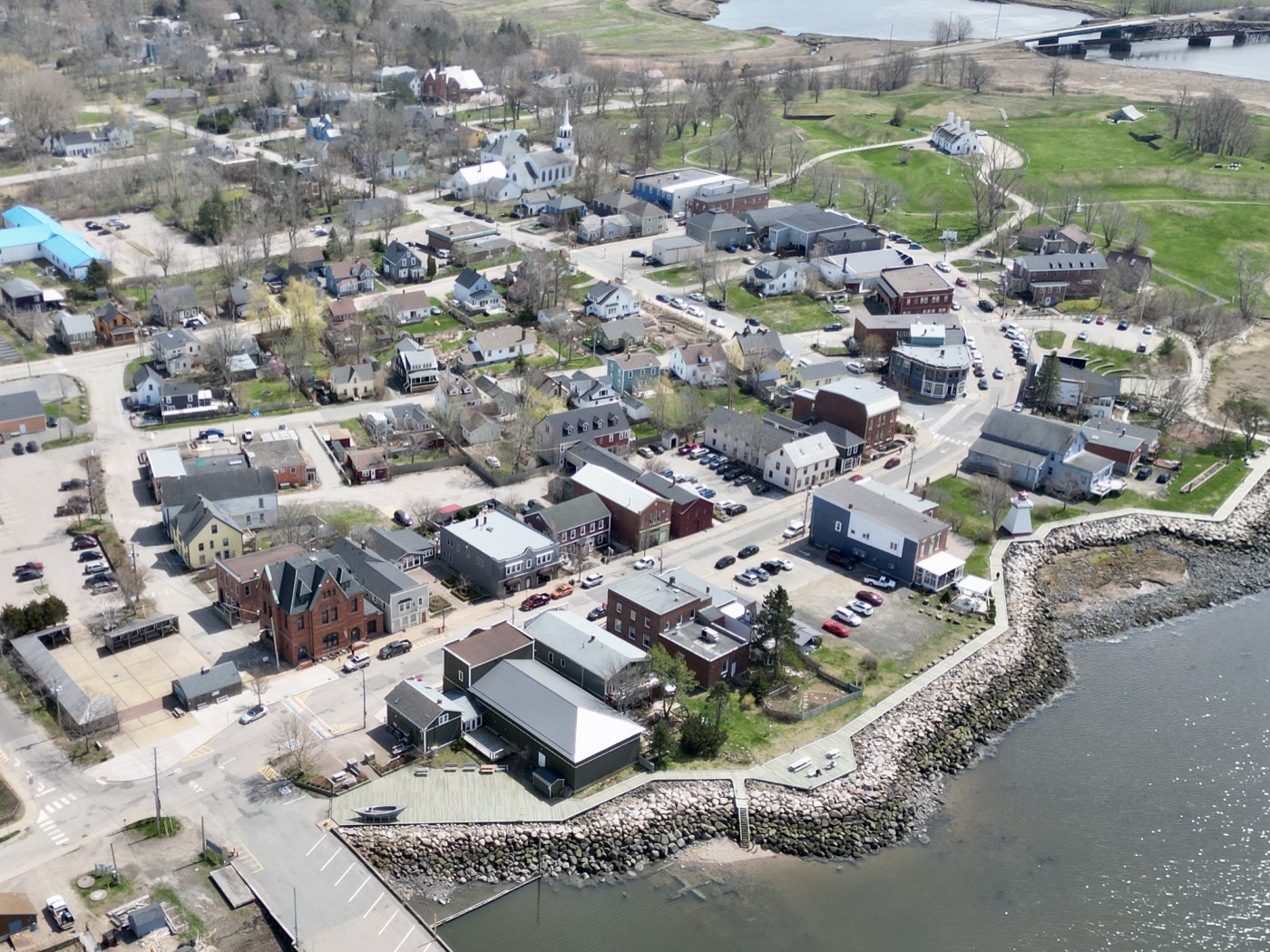
The Richard surname comes from the Germanic personal name Ricohard, built from ric, “power, rule”, and hard, “brave, hardy”. It is a French name above all, and in North America it is an Acadian one.
What Does the Surname Richard Mean?
Richard means “strong in rule”, or roughly “hardy ruler”, from the Old Frankish personal name Ricohard: ric, “power, ruler”, and hard, “brave, hardy”. As a surname it is patronymic, meaning simply “son of a man called Richard”.
The Franks carried the name into Gaul, where it settled into French as Richard. From there it travelled twice. The dukes of Normandy used it for generations, and the Normans took it to England after 1066 in the form Ricard, where it became one of the most popular baptismal names in the medieval kingdom.
That double journey is why the name looks familiar on both sides of the Channel. A French Richard and an English Richard share a root but not a family, because the surname formed independently in each country from the same well-used first name. It says nothing about an ancestor’s character. Someone in the line was baptised Richard, and his children were known by it.
Where the Richard Name Comes From
France is the heartland. As of 2014 roughly a quarter of the world’s Richards lived in France, with the heaviest concentrations in Pays de la Loire, Centre-Val de Loire and Brittany, and the name is also found in England and Germany in its various forms.
The French homeland
Richard became fixed as a hereditary French surname in the late medieval centuries, in the wave that turned baptismal names into family names. It is a name of the west and centre of France rather than the south, which matters for anyone tracing a line across the Atlantic, because the west is where the ships left from.
Michel Richard dit Sansoucy and Acadia
For most North American Richards, the line narrows to one man. Michel Richard dit Sansoucy was born in the Saintonge region of western France around 1630 and arrived at Port-Royal, in Acadia, in the early 1650s in the entourage of Emmanuel Le Borgne.
He came as a soldier. When his service ended he stayed, took two land grants on the upper Rivière au Dauphin, now the Annapolis River, and farmed. Around 1656 he married Madeleine Blanchard, daughter of Jean Blanchard and Radegonde Lambert, and between 1657 and 1677 they had ten children, four sons and six daughters. He died at Port-Royal some time between 1686 and 1693.
Ten children in a small, closed, fast-growing colony is an enormous genealogical event. Richard is now counted among the most numerous Acadian family names alongside LeBlanc, Landry, Hébert and Cormier, and in New Brunswick it ranks third of all family names, after LeBlanc and Cormier.
What a dit name is
A dit name is an alternate surname, introduced by dit, “called”. Sansoucy, “carefree”, is the sort of nickname that usually signals a military background, and it stuck to Michel and to some of his descendants.
This trips up researchers constantly. The same person appears in the records as Michel Richard, as Michel Sansoucy, or as both, and different branches later kept different halves. If a Richard line seems to vanish from the parish registers, look for the dit name before assuming the family moved.
Spelling Variants and Related Names
Recorded variants of Richard include Ricard, Richardt, Ricquart, Rickaert, Ryckewaert and Rijkaard, alongside the English Richards, Ritchard and Richardson, the Italian Riccardi and the Spanish and Portuguese Ricardo. The German cognate line runs through Reichart and Reichert.
In Acadian and French-Canadian records the surname also hides behind its dit forms, chiefly Sansoucy, sometimes written Sansouci or Sanssouci.
The bigger variation is not spelling but sound. In French the name is ree-SHAR, with the final d silent. In English it is RITCH-erd. The written form never changed, so the split is invisible on paper and instantly audible in a room.
Many American families switched, usually within a generation or two of leaving a French-speaking community, and usually because a foreman, a teacher or a recruiting sergeant said it the English way first. In Louisiana’s Acadiana parishes ree-SHAR is still the local pronunciation. Relatives who pronounce the same name two different ways are not two families. They are one family with two histories.
The pattern is the same one that runs through the Lambert surname, another Germanic personal name that became French, crossed to Acadia and to England separately, and now splits into French-Canadian and colonial English branches that share a spelling and nothing else.
The Richards in America
American Richards arrived by several routes, but the largest by far is the Acadian one, and it begins with a deportation. Between 1755 and 1764 British authorities expelled roughly 10,000 to 13,000 Acadians from what are now Nova Scotia and New Brunswick, an event Acadians call le Grand Dérangement.
Families were loaded onto ships and scattered to the British seaboard colonies, to England, to France and to the Caribbean. Many died of disease, shipwreck or exposure. Households were separated and, in a great many cases, never reunited. Richard families were caught in all of it.
The most famous ending is Louisiana. Exiles who had been repatriated to France volunteered for the Spanish colony, and in 1785 Spain paid to ship roughly 1,600 of them across the Atlantic. Their descendants became the Cajuns, and Richard is one of the classic Cajun surnames, thick on the ground among the Cajun families of Lafayette and present in the older French world of the French Quarter in New Orleans.
Others made their way back north. Acadians resettled the Maritimes and the upper Saint John valley, where the Acadian community at Madawaska in northern Maine still straddles the Canadian border, and Richard remains one of the commonest names on both sides of it.
The third wave is industrial. Between roughly 1840 and 1930 as many as 900,000 people left Quebec and the Maritimes for the textile mills of New England, settling in the neighbourhoods known as Little Canadas. Richard families turned up in French-Canadian Lewiston, Maine and in Woonsocket, Rhode Island, where mill work, the parish and the French language held communities together for decades. It is in these towns that ree-SHAR most often became RITCH-erd.
The 2010 census recorded how Americans named Richard identified themselves: 70.35 per cent as white, 23.46 per cent as Black, 2.75 per cent as Hispanic. That is self-identification in one census year, not a measure of ancestry. It reflects the reach of French colonial Louisiana, where French surnames were carried by white Creole and Cajun families, by free people of colour, and by Black families whose names came out of slavery under French and Spanish rule.
Notable People Named Richard
Marcel-François Richard (1847 to 1915), priest from Saint-Louis-de-Kent, New Brunswick, and the central figure of the Acadian national renaissance. He proposed the Acadian flag and the anthem Ave Maris Stella at the 1884 national convention and helped establish 15 August as National Acadian Day.
Maurice “Rocket” Richard (1921 to 2000), the Montreal Canadiens forward who became the first player to score 50 goals in 50 games and a symbol of French Canada far beyond hockey.
Henri Richard (1936 to 2020), Maurice’s younger brother, who won eleven Stanley Cups, more than any other player in the history of the sport.
Zachary Richard (born 1950), Cajun and zydeco musician and poet from Scott, Louisiana, appointed to the Order of Canada in 2009 for his work defending the French language and Acadian identity.
J.R. Richard (1950 to 2021), the Houston Astros pitcher from Vienna, Louisiana, one of the most feared right-handers of the 1970s until a stroke ended his career in 1980.
Pierre Richard (born 1934), the French comic actor best known for Le Grand Blond avec une chaussure noire.
How Common Is Richard Today?
Richard is the 629th most common surname in the United States, carried by 53,893 Americans at the 2010 census. It is far more concentrated than that national figure suggests, clustering heavily in Louisiana, northern New England and the Canadian Maritimes.
| US rank (2010 Census) | #629 |
|---|---|
| Americans with the name | 53,893 |
| Origin | French, from a Germanic personal name |
| Meaning | “Strong in rule”, from ric (power) and hard (brave) |
Frequently Asked Questions
What does the surname Richard mean?
It means “strong in rule”, from the Old Frankish personal name Ricohard: ric, “power, ruler”, plus hard, “brave, hardy”. As a surname it is patronymic, indicating descent from a man baptised Richard rather than describing a trade or a place.
Is Richard a French surname or an English one?
Both, independently. The personal name is Frankish and became French first, and the Normans carried it to England after 1066. Most North American Richards are French in origin, and specifically Acadian, while English lines more often appear as Richards or Richardson.
Where does the Richard family come from?
The name comes from France, with its strongest concentrations in the west and centre. The great North American line comes from Michel Richard dit Sansoucy of Saintonge, who settled at Port-Royal in Acadia in the early 1650s and had ten children there.
How common is the surname Richard?
It ranks 629th in the United States, with 53,893 bearers at the 2010 census. In Canada it is much more prominent, ranking third among all family names in New Brunswick, after LeBlanc and Cormier.
Is there a Richard family crest or coat of arms?
No. In the heraldic traditions of France, England and Scotland, arms are granted to individuals and pass to their direct descendants, never to everyone who happens to share a surname. Any site selling you a “Richard family crest” is selling a decoration, not a lineage.
What does “dit Sansoucy” mean in Richard records?
Sansoucy, “carefree”, is a dit name, an alternate surname introduced by dit, “called”, often originating as a military nickname. The same ancestor may appear in the registers as Richard, as Sansoucy, or as both, so search under every form before concluding a line has ended.
If your family carries the Richard name, its route from France to America is traceable. Atlas of Home can follow it from the marshlands of Port-Royal to the Louisiana prairies, the Maine border country or the New England mill towns, and to wherever you are now.
Further reading: Wikipedia on the Richard surname and the Expulsion of the Acadians.