
The Pavlov surname means “son of Pavel”, and Pavel is the Slavic form of Paul, from the Latin Paulus, “small” or “humble”. It belongs to Russia and to Bulgaria, in that order by numbers and in the reverse order by density.
What Does the Surname Pavlov Mean?
Pavlov means “son of Pavel” or “Pavel’s”. Pavel is the Russian and Bulgarian form of Paul, which descends from the Latin Paulus, an ordinary Roman cognomen carrying the sense of “small”, “slight” or “humble”.
The possessive -ov ending does the same work here that it does in every Slavic patronymic of this shape, and we have set that mechanism out at length on the Ivanov surname page. What is worth dwelling on instead is Pavel.
The literal meaning is a red herring for most families. Nobody in a Russian village in 1700 chose Pavel for a baby because it meant “small”. They chose it because it was the name of an apostle, and because the priest offered it from the church calendar.
Saul of Tarsus, a Jewish tentmaker and Roman citizen, used Paulus as his Roman name. Every Pavlov, Pawlak, Paulsen and Paoli in the world traces back through him to that Latin adjective, which had already stopped meaning anything much by the time it became a name.
Where the Pavlov Name Comes From
Pavlov comes from Russia and Bulgaria. Forebears counts roughly 242,000 bearers worldwide, about 188,000 of them in Russia and 13,700 in Bulgaria, with Ukraine, Kazakhstan and Belarus behind them.
Raw numbers flatter Russia because Russia is large. Measured by density the picture inverts: in Bulgaria roughly one person in 507 is a Pavlov, against one in 765 in Russia. This is a genuinely shared name, not a Russian one that leaked south.
Why Pavel Was Everywhere
Orthodox children were named from the church calendar, usually for a saint whose feast fell near the birth or the baptism. Saints Peter and Paul share 29 June, one of the great feasts of the year, and Pavel was in constant supply as a result.
Hereditary surnames arrived late for ordinary people in the Russian Empire. Most peasant families only fixed one in the nineteenth century, and universal registration waited for the Soviet internal passport system of the 1930s. A great many households simply froze the father’s or grandfather’s given name in place, which is why the commonest Russian surnames are all baptismal names with -ov on the end.
The Russian Heartland
Within Russia the surname clusters around Moscow and Moscow Oblast, which is unremarkable, and around the Chuvash Republic on the middle Volga, which is not. Chuvashia holds about five per cent of all Russian Pavlovs despite being a small republic.
The Chuvash are a Turkic-speaking people, Christianised under Russian rule, and when surnames were imposed they were built from Orthodox baptismal names in the standard Russian pattern. A Volga Pavlov is therefore quite often Chuvash rather than ethnically Russian, which is the sort of thing a DNA test reveals and a surname conceals.
Bulgaria and the Balkans
Bulgarian uses the same possessive -ov and the same stock of Orthodox given names, so Bulgarian Pavlovs formed independently rather than by migration from Russia. The Popov surname page works through that Russian and Bulgarian overlap in detail.
Macedonian families carry Pavlov unchanged. Serbian, Croatian and Montenegrin families carry Pavlović instead, with the -ić suffix doing the identical job. There is also a scattering of Pavlovs in eastern Slovakia.
Spelling Variants and Related Names
In Cyrillic the name is Павлов, feminine Павлова. Transliteration into English has been inconsistent for a century, and older American and French records often show Pavloff, using the German and French convention for the final consonant.
The feminine Pavlova is not a variant but the correct form for a woman in Russian and Bulgarian. What happens to it in American paperwork is covered on the Petrov surname page.
Because Paul travelled with Christianity, the name has a cognate almost everywhere in Europe:
- Russian, Bulgarian, Macedonian: Pavlov, Pavlova, Pavlovsky, Pavlovich
- Serbian and Croatian: Pavlović, Pavlica
- Ukrainian: Pavlenko, Pavliuk, Pavliv, Pavlyshyn
- Polish: Pawłowski, Pawlak, Pawlik, Pawłowicz
- Czech and Slovak: Pavlík, Pavlas, Pavelka, Pavel
- Hungarian: Pál, Pálfi, Pálinkás
- German: Paulus, Pauls, Pauli, Paulsen
- Danish and Norwegian: Poulsen, Povlsen, Paulsen
- Italian: Paolo, Paoli, Paolini, De Paolis
- Spanish: Pablo, Pablos
- Greek: Pavlou, Pavlidis
- Romanian: Pavel, Pavelescu
- English: Paul, Pawson
Two names that get swept into this family do not belong in it. Powell is Welsh, from ap Hywel, “son of Hywel”, and Hywel is an entirely separate name meaning “eminent”. Pavón is Spanish for peacock, from the Latin pavo, and was a nickname rather than a patronymic. The resemblance to Pavel is coincidence in both cases.
The Pavlovs in America
Pavlovs reached America in three distinct waves: labour migrants from the Russian Empire and Bulgaria before the First World War, political exiles after the 1917 revolution, and a large Soviet and post-Soviet emigration from the 1970s onward.
The first wave was economic. Bulgarian men came for work in the Midwest, and the community that formed around them is the subject of our piece on the Bulgarian community in Chicago. Serbian Pavlovićs followed similar routes into the same industrial cities, as the Serbs of Chicago did.
The second wave was smaller and very different in character: officers, engineers, doctors and dancers who left after 1917 and rebuilt Russian institutional life abroad. San Francisco took a large share, and the churches, bookshops and bakeries of the Richmond District still mark where they landed.
The third wave is the one most living Pavlovs belong to. Brooklyn absorbed the greatest number, and Brighton Beach became the recognised centre of Russian-speaking America. Later arrivals spread wider: software engineers around Bellevue, Washington, and a wealthier, more recent settlement in Sunny Isles Beach, Florida.
Notable People Named Pavlov
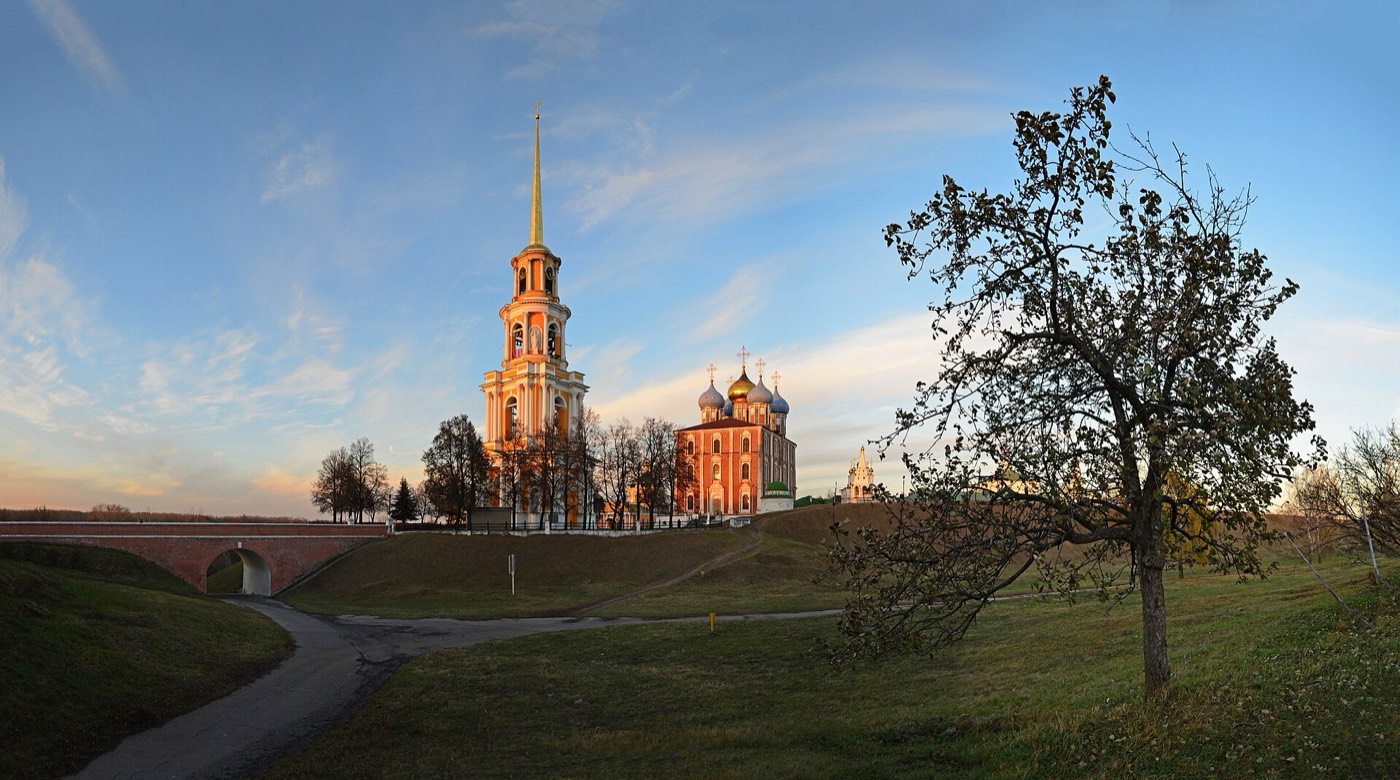
Ivan Pavlov (1849 to 1936) was born in Ryazan, the son of a village priest, and won the 1904 Nobel Prize in Physiology or Medicine for his work on the physiology of digestion. The conditioning experiments that made him famous came afterwards, out of the same laboratory.
Anna Pavlova (1881 to 1931) was the most celebrated ballerina of her generation, remembered above all for The Dying Swan. The meringue dessert is named after her, and Australia and New Zealand have argued about which of them invented it ever since.
Yakov Pavlov (1917 to 1981) was the sergeant whose platoon seized and held an apartment block in Stalingrad from September to November 1942. It is still called Pavlov’s House.
Valentin Pavlov (1937 to 2003) was the last Prime Minister of the Soviet Union, in office from January to August 1991. His currency reform and his part in the August coup ended both his career and, shortly afterwards, the state.
Iliya Pavlov (1960 to 2003) was a Bulgarian businessman and the head of the Multigroup conglomerate, one of the dominant figures of the country’s post-communist economy. He was assassinated in Sofia.
Oleg Pavlov (1970 to 2018) was a Russian novelist who won the Russian Booker Prize in 2002 for Karaganda Nines.
How Common Is Pavlov Today?
Pavlov is the 21,707th most common surname in the United States, carried by 1,199 people at the 2010 Census. That is uncommon in America and very common indeed at home.
| US rank (2010 Census) | #21,707 |
|---|---|
| Americans with the name | 1,199 |
| Origin | Russian and Bulgarian |
| Meaning | Son of Pavel (Paul) |
The related entries in the same census file fill in the picture. Pavlik records 3,725 bearers, Pavlovich 1,133, Pavlovic 1,089, Pavlenko 413, Pavlovsky 386, Pavloff 344, Pavlova 265 and Pavlovski 107. The whole cluster is small, and no single spelling dominates.
The Pavlov to Pavlova ratio, roughly four and a half to one, is the levelling of the feminine form showing up in the arithmetic. Bureau records reflect it too: of Americans named Pavlov in 2010, 95.83 per cent identified as white, 2.42 per cent as Hispanic, 0.67 per cent as two or more races and 0.58 per cent as Asian or Pacific Islander. Those are self-identification proportions recorded on a census form, not measures of ancestry.
Frequently Asked Questions
What does the surname Pavlov mean?
Pavlov means “son of Pavel”. Pavel is the Russian and Bulgarian form of Paul, from the Latin Paulus, meaning “small” or “humble”. The -ov ending is a possessive suffix used across the Slavic languages.
Is Pavlov Russian or Bulgarian?
Both, genuinely. Russia has far more bearers in absolute terms, around 188,000 against roughly 13,700 in Bulgaria, but Bulgaria has the higher density at about one person in 507. Bulgarian Pavlovs formed independently from the same Orthodox given name, not by migration from Russia.
Where does the Pavlov family come from?
There is no single Pavlov family. The name arose separately in thousands of households wherever a man called Pavel had children, across Russia, Bulgaria, Macedonia, Ukraine and eastern Slovakia. Within Russia it clusters around Moscow and, unusually, the Chuvash Republic on the Volga.
How common is the surname Pavlov?
Worldwide it is about the 2,270th most common surname, with roughly 242,000 bearers. In the United States it ranks 21,707th with 1,199 people, which makes it rare in America and ordinary in Russia and Bulgaria.
Is there a Pavlov family crest or coat of arms?
No. In every European heraldic tradition, arms are granted to individuals and pass to their direct descendants, never to everyone who happens to share a surname. Russia had no general system of burgher heraldry at all, and most Pavlovs descend from peasant households that had no arms to grant. Anyone selling you a “Pavlov family crest” is selling a decoration, not a lineage.
Did Ivan Pavlov really use a bell?
Probably not, or at least not routinely. His published work records a metronome, a buzzer, a whistle, a lamp, a rotating object and other stimuli, and the English translations rendered the Russian zvonok, an electric doorbell, as “bell”. Historians of psychology have been correcting the image for decades, and it has outlasted every correction.
If your family carries the Pavlov name, its route from the Russian and Bulgarian countryside to America is traceable. Atlas of Home can follow it from a parish register in Ryazan or Plovdiv to whichever port your family landed at, and to wherever you are now.