
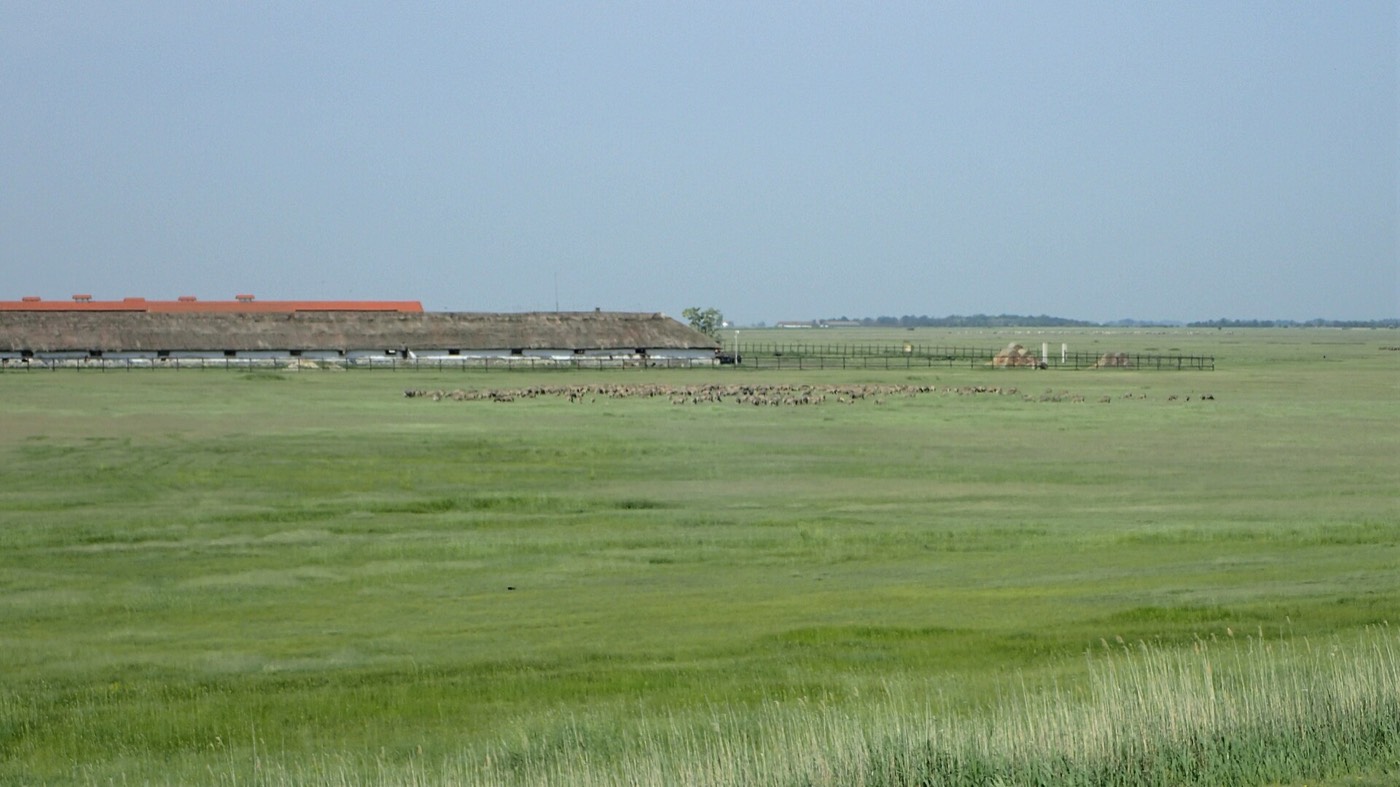
The Kovacs surname means blacksmith. It is Hungarian, one of the two or three commonest family names in the country, and it belongs to a village workshop somewhere on the Great Plain rather than to a castle or a clan.
What Does the Surname Kovacs Mean?
Kovacs means blacksmith. It is the anglicised spelling of Hungarian Kovács, an occupational surname taken directly from the trade word kovács, and it named the man who worked hot iron at the forge.
That much is uncontested. The interesting part is where the Hungarian word came from.
Hungarian is a Uralic language, related to Finnish and Estonian and to nothing else in central Europe. When the Magyars settled the Carpathian Basin around 895 they arrived among Slavic-speaking populations and borrowed a thick layer of vocabulary from them: words for settled farming, for Christian practice, for village crafts. Kovács is one of those borrowings. It comes from Proto-Slavic *kovačь, from the verb *kovati, to hammer or to forge.
The same Slavic root produced Kovač in Croatia and Serbia, Kováč in Slovakia, Koval in Ukraine and Kowal and Kowalski in Poland. Kovács is not merely the Hungarian equivalent of those names. It is the same word, taken into a different language.
Every settled European society ended up with a very common surname for the smith, for the reason set out on the Schmidt surname page: the forge was the one workshop a village could not do without. Hungary reached the same answer as Germany, Poland and England. It simply reached it in borrowed words.
Where the Kovacs Name Comes From
Kovacs comes from Hungary, though not from any one county. It is occupational, so it arose independently wherever there was a forge, which is exactly why so many unrelated families carry it.
A name from the workshop, not from a bloodline
There is no Kovács clan, no founding ancestor, no single homeland village. Hereditary surnames spread through Hungary from roughly the fourteenth to the sixteenth centuries, beginning with the nobility and working downwards, and were universal by the time the state took over civil registration in 1895. Across that stretch every market town had a smith, and each could produce a separate Kovács line.
A few lines were later ennobled and took a territorial predicate, which is how you get forms like Kováts de Fabriczy. For most families the name records a job, not a status.
Beyond the modern border
Before 1920 the Kingdom of Hungary included what is now Slovakia, Transylvania, Vojvodina, Burgenland and Transcarpathia. Hungarian-speaking Kovács families have lived in all of those places for centuries and many still do.
The consequence for research is blunt. If your family left “Hungary” in 1905, the parish register you need may sit in a Slovak, Romanian, Serbian or Ukrainian archive, under a place name nothing like the one on the manifest.
Spelling Variants and Related Names
The Hungarian form is Kovács, with an acute accent on the a and the digraph cs pronounced like the ch in church, giving roughly “KOH-vahch”. American records almost always drop both marks, producing Kovacs, Kovach or Kovacz.
Kováts and Kovách are the other Hungarian variants, and both are genuine older spellings rather than errors. Before Hungarian orthography was standardised in the nineteenth century, ts was an ordinary way of writing the cs sound, which is why an eighteenth-century officer signed himself Kováts.
The Slavic cousins form a large and useful family:
- Kováč (Slovak) and Kovář (Czech)
- Kovač (Croatian, Serbian, Bosnian, Slovene), with the patronymic extensions Kovačić and Kovačević, meaning son of the smith
- Covaci and Covaciu (Romanian)
- Kowal, Kowalski, Kowalczyk (Polish)
- Koval, Kovalenko, Kovalchuk (Ukrainian)
The spelling signals the language, and the language signals the country. The digraph cs is Hungarian and only Hungarian. The letter č is Slovak or South Slavic, and a Slovak Kováč keeps the long á a Croatian Kovač does not. The suffixes -ić and -ević are Croatian, Serbian or Bosnian, Covaci is Romanian, Kowal- Polish, Koval- Ukrainian.
That system collapses at the American pier. Clerks stripped the accents, so a bare Kovac or Kovach in a US record could have started as any of the above. What tells you is not the surname but the given names beside it and the parish named as home.
Further out sit the non-Slavic smiths meaning the same thing: Schmidt, Smith, Ferraro, Herrero, Lefèvre and Mac Gabhann.
The Kovacses in America
Most American Kovacs families descend from the great emigration out of the Kingdom of Hungary between about 1880 and 1914, when hundreds of thousands of labourers left for American mills, mines and foundries, sailing from Bremen, Hamburg and Fiume into Ellis Island.
They went where the heavy industry was. Cleveland took the largest share, and the Hungarian district along Buckeye Road grew into one of the densest Magyar settlements anywhere outside Hungary itself. Toledo built its own version around the Birmingham neighbourhood beside the foundries, where a man named Kovács could find his surname described what he actually did all day.
New Jersey drew the same traffic. The mills of Passaic and the factories of New Brunswick filled with Hungarian families, while the Manhattan blocks of Yorkville known as Little Hungary kept Hungarian churches, newspapers and butchers well into the twentieth century.
A second wave arrived under very different circumstances. When the 1956 revolution was crushed, some two hundred thousand Hungarians fled and around thirty-five thousand were admitted to the United States. About four-fifths were processed at Camp Kilmer in New Jersey, a few miles from the New Brunswick colony their countrymen had built fifty years earlier. This wave skewed young and educated: students, engineers and professionals rather than mill hands.
That name order is the most useful thing to know before searching Hungarian records. Civil registers, parish books and many emigration lists put the surname first, and indexers have reversed them inconsistently ever since, so search both ways.
Two further traps. Hungarian married women were recorded with the suffix -né attached to the husband’s full name, so Kovács Jánosné means Mrs János Kovács and contains no trace of her own given name. And given names were translated on arrival: János became John, István Stephen, Ferenc Frank. The man who left as Kovács Ferenc is buried as Frank Kovacs.
Notable People Named Kovacs
Michael Kovats de Fabriczy (1724 to 1779) was a hussar officer born at Karcag on the Great Plain. Commissioned colonel commandant of Pulaski’s Legion in 1778, he trained the Continental Army’s first hussars and was killed at Charleston on 11 May 1779. He and Casimir Pulaski are remembered together as founding fathers of the United States cavalry.
Ernie Kovacs (1919 to 1962) was born in Trenton, New Jersey, to a Hungarian immigrant father and became the most inventive comedian of early American television, treating the medium as a visual toy rather than a filmed stage. He died in a car crash at forty-two.
Pál Kovács (1912 to 1995) won six Olympic gold medals in sabre fencing between 1936 and 1960, including the individual title at Helsinki in 1952.
Margit Kovács (1902 to 1977) was a ceramist whose folk-inflected figures made her one of Hungary’s best-loved twentieth-century artists. A museum in Szentendre is devoted to her work.
Kati Kovács (born 1944) is a Hungarian singer and actress whose career runs from the 1960s beat era through decades of pop and film work.
Joe Kovacs (born 1989) is an American shot putter of Hungarian descent, world champion in 2015 and 2019 and a three-time Olympic silver medallist.
How Common Is Kovacs Today?
Kovacs ranked 3,917th in the 2010 United States Census, carried by 9,072 Americans. In Hungary it is a different story: roughly 209,000 people bear the name, in the top handful nationally alongside Nagy, meaning great, and Tóth, which means Slovak and quietly repeats the same point about Hungary’s Slavic neighbours.
Of those 9,072 bearers, 94.96 per cent identified themselves as white, 2.88 per cent as Hispanic, 1.06 per cent as two or more races, 0.73 per cent as Asian or Pacific Islander and 0.31 per cent as Black. Those are self-identification proportions from one census, not a measure of anyone’s ancestry.
| US rank (2010 Census) | #3,917 |
|---|---|
| Americans with the name | 9,072 |
| Origin | Hungarian (occupational) |
| Meaning | Blacksmith |
Frequently Asked Questions
What does the surname Kovacs mean?
Kovacs means blacksmith. It is the anglicised form of Hungarian Kovács, an occupational surname for the man who worked iron at the village forge, and it is common in Hungary for the same reason Smith is common in England.
Is Kovacs Hungarian or Slavic?
The surname is Hungarian, but the word behind it is Slavic. Hungarian borrowed kovács from Proto-Slavic *kovačь after the Magyars settled among Slavic speakers in the Carpathian Basin. A family called Kovács is Hungarian; the vocabulary is not.
Where does the Kovacs family come from?
From Hungary, and from the wider historic kingdom, which until 1920 included Slovakia, Transylvania, Vojvodina and Transcarpathia. Because it is occupational the name arose separately in hundreds of places, so there is no single ancestral village.
How common is the surname Kovacs?
In the United States it ranked 3,917th in the 2010 Census, with 9,072 bearers. In Hungary it is among the two or three most frequent surnames, held by roughly 209,000 people.
Is there a Kovacs family crest or coat of arms?
No. In Hungarian and every other European heraldic tradition, arms were granted to an individual and passed to his direct descendants, never to everyone sharing a surname. A few Kovács families were ennobled and did receive arms, but those belong to those specific lines. Any site selling a “Kovacs family crest” is selling a decoration, not a lineage.
What is the difference between Kovacs, Kovac and Kovacevic?
All three mean smith, but they mark different languages. Kovács with the cs digraph is Hungarian, Kovač with the háček is Slovak or South Slavic, and Kovačević adds a Serbo-Croatian suffix meaning son of the smith. American records strip the accents, which is how the distinction gets lost.
If your family carries the Kovacs name, its route from Hungary to America is traceable. Atlas of Home can follow it from the parish registers of the old kingdom to the mill towns of Ohio and New Jersey, and to wherever you are now.