
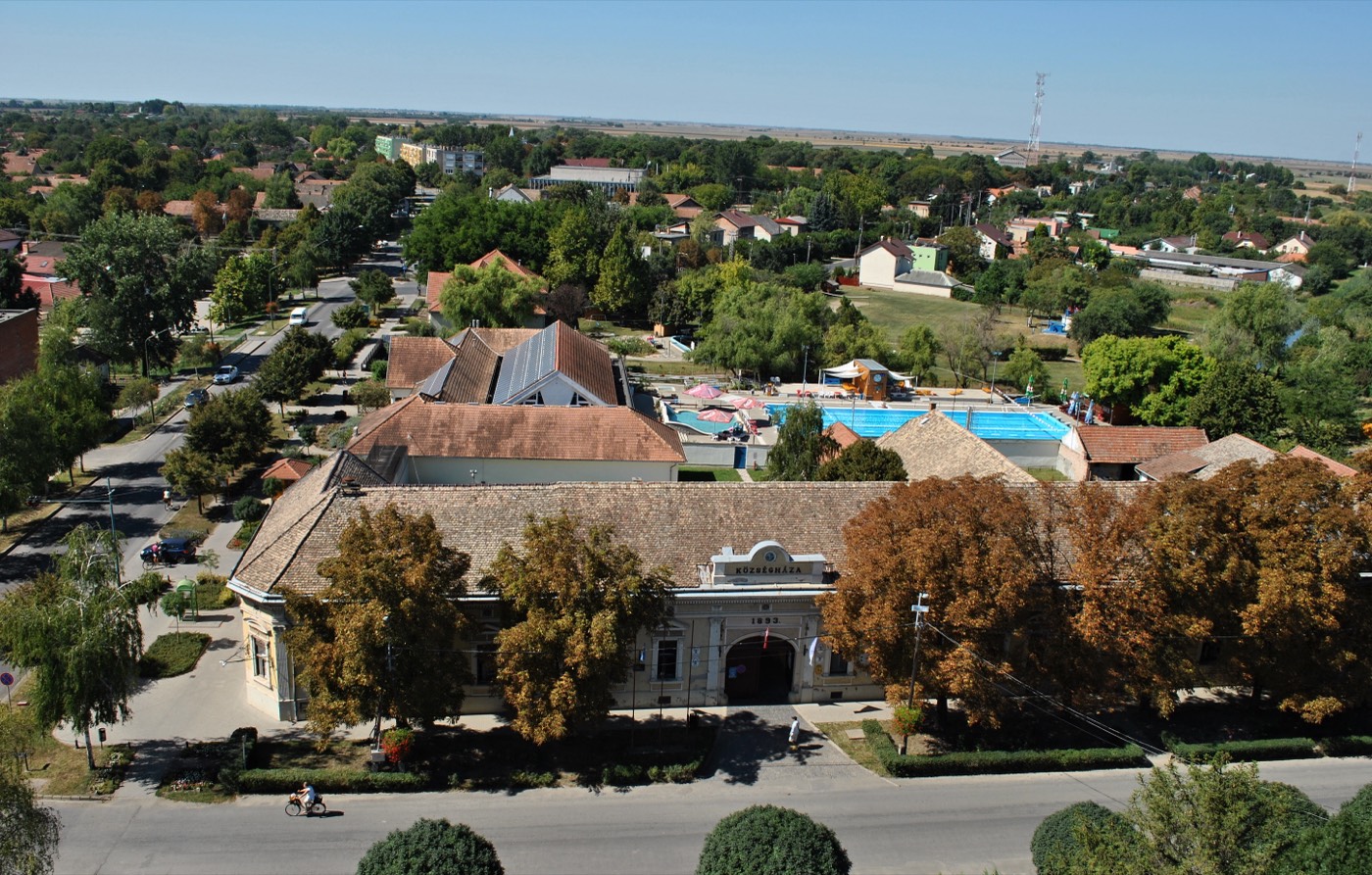
The Toth surname is Hungarian in language but Slavic in meaning: it comes from tót, the old Hungarian word for a Slav living inside the Kingdom of Hungary, usually a Slovak or a Slovene. It is the third most common surname in Hungary.
What Does the Surname Toth Mean?
Toth, properly written Tóth, means “the Slav”. It is an ethnonymic surname, given to a person because of the ethnic group their neighbours thought they belonged to, and that group was Slavic rather than Magyar.
The root is the Hungarian word tót (plural tótok). In the mediaeval Kingdom of Hungary it covered all the Western Christian Slavic peoples of the realm: Slovaks in the northern uplands, Slovenes in the far west, and the Kajkavian-speaking Croats of Slavonia. Only from the late eighteenth century did the meaning narrow, until by the nineteenth century tót meant specifically “Slovak”.
There is an irony buried in the etymology. Linguists trace tót back to an Indo-European root reconstructed as something like teuta, “the people”, which also gives us Teuton, Deutsch and, at one remove, Dutch. A word that once meant “us” ended up, in Hungarian mouths, meaning “them”. So a Toth family carrying a Hungarian name may well descend from Slavic neighbours absorbed into Hungarian-speaking villages.
Where the Toth Name Comes From
The name comes from the Kingdom of Hungary, the multilingual realm that until 1920 covered present-day Hungary along with Slovakia, Transylvania, Vojvodina and Croatia-Slavonia. It arose wherever Hungarian speakers lived close enough to Slavic speakers to need a word for them.
A Carpathian contact zone
The Carpathian Basin was never ethnically tidy. Hungarian, German, Slovak, Croatian, Serbian, Romanian and Rusyn communities lived in overlapping villages for centuries, and surnames record that friction. Ethnonymic names make up roughly seven to eight per cent of all Hungarian surnames, and the same logic produced Németh (“the German”), Horváth (“the Croat”) and Rácz (“the Serb”).
Tóth is the most numerous of them all. The Hungarian name for Slavonia was Tótország, the Land of the Tóts, and it stayed that way on maps until the late nineteenth century. Towns such as Tótkomlós in Békés county, founded by Slovak Lutheran settlers in 1746, still carry the element.
How the nickname hardened into a surname
Hungarian hereditary surnames began to crystallise from the fourteenth century, slowly and locally. A man known in his village as Tót János, “Slav John”, was thereby distinguished from every other János on the register. Within two or three generations the tag stopped describing and started being inherited, and his grandchildren were Tóths whether or not anyone remembered why.
This matters for anyone tracing the name, because there were several reasons a man might be labelled tót. He might have been of Slavic descent, migrated from the Slovak uplands, spoken the language, dressed like Slovak peasants, or simply lived at the Slavic end of the village. The surname records a perception, not a bloodline.
Where the Tóths are today
Hungary remains the heartland. Roughly 300,000 people there carry the name, about one in thirty-three, behind only Nagy and Kovács. Beyond the modern border it survives wherever the old kingdom’s Hungarian-speaking populations remained after 1920: some 11,000 Tóths in Slovakia’s southern districts, several hundred in Transylvania, and a scattering in Vojvodina, Croatia and the Czech Republic, usually written Tot.
Spelling Variants and Related Names
The main variants are Tóth, Tót, Toth and Tot. The h is silent and purely decorative, a mark of old orthography many families kept because it looked more established on paper. The native form is Tóth, the acute accent giving a long vowel, pronounced roughly “toht”. Older parish registers, written in Latin, show Toth, Tott, Thot or Thoth, since clerks spelled by ear.
- Tóth, the standard modern Hungarian spelling
- Tót, the simpler form, less common as a surname
- Toth, the accentless form used almost universally in the English-speaking world
- Tot, the usual spelling in Serbia, Croatia and Slovenia
- Tóthné, not a separate name but the traditional married form, “Mrs Tóth”, which confuses many first-time researchers
Compound forms appear too, because a village with four Tóth households needed to tell them apart: Tóth-Szabó, Kis Tóth (“little Tóth”), Nagy Tóth (“big Tóth”).
One caution: a small number of Toth families are not Hungarian at all but German, the name there descending from forms related to Tod or Todt. If your paper trail runs to Bavaria rather than the Carpathians, the Hungarian etymology may not apply.
The Toths in America
Most American Toths descend from the great wave of emigration out of the Kingdom of Hungary between roughly 1880 and 1914. Land was concentrated in few hands, the rural population was growing fast, and wages for day labourers were desperate. America wanted muscle for its mills and coal seams.
They came through Castle Garden and then, from 1892, Ellis Island, and went almost without exception to the industrial north-east and midwest. Many intended to stay a few years and buy land at home, and more than half of those arriving before 1914 did return. The ones who stayed built the churches, halls and burial societies that still mark the map.
In New Jersey the mills drew a large Magyar workforce into the Hungarian colony at Passaic, while Johnson and Johnson and the wallpaper works anchored the Hungarian community in New Brunswick. In Manhattan, arrivals crowded into Little Hungary in Yorkville, east of Second Avenue in the seventies and eighties.
Ohio took more of them than anywhere. Cleveland’s Buckeye Road became the largest Hungarian district outside Budapest, and down the lake shore the glass and auto plants filled the Birmingham neighbourhood of Toledo.
Because the name means what it means, a good number of American Toths came out of the Slovak rather than the Magyar side of the kingdom, and settled with Slovaks. The steel town parishes of Slovak Bethlehem in Pennsylvania and the refinery streets of Whiting, Indiana hold Toth headstones. If your Toth ancestors turn up in a Slovak Lutheran or Greek Catholic congregation rather than a Hungarian Reformed one, that is not an error in the record. That is the name telling you the truth about itself.
The accent disappeared at once at the immigration desk and in the payroll book, which is why the American form is nearly always plain Toth. Searching only the accented spelling in US records will cost you most of your family.
Notable People Named Toth
Saint Alexis Toth (1853 to 1909) is the most consequential Toth in American religious history. Born in Kobylnice into a Carpatho-Rusyn family of Greek Catholic priests, he reached Minneapolis in November 1889. Rebuffed by the local Latin-rite archbishop, he led his congregation into the Russian Orthodox Church in 1891, an example that eventually brought seventeen parishes and over twenty thousand people with it. He was canonised in 1994.
Árpád Tóth (1886 to 1928) was one of the finest Hungarian lyric poets of the twentieth century. Born in Arad, he published from 1908 in the modernist review Nyugat alongside Ady, Babits and Kosztolányi, and translated Baudelaire, Keats and Milton into Hungarian. Tuberculosis killed him at forty-two.
André de Toth (1913 to 2002) was born in Makó and took a law degree in Budapest before turning to film. He fled Hungary in 1939 and built a Hollywood career on hard, unsentimental thrillers and westerns, including Pitfall in 1948. He is best remembered for House of Wax in 1953, the most successful of the early 3D features, made despite his having lost an eye and being unable to perceive 3D.
Alex Toth (1928 to 2006) was one of the most admired draughtsmen the American comics industry produced. Born in New York to Hungarian immigrant parents who belonged to the country’s Slovak minority, he became a principal designer at Hanna-Barbera, creating Space Ghost and shaping the look of Super Friends, Birdman and The Herculoids. He entered the Jack Kirby Hall of Fame in 1990.
Matej Tóth (born 1983), a Slovak race walker, won the 50 kilometre world title in 2015 and Olympic gold in Rio in 2016, Slovakia’s first athletics medal since independence in 1993. A neat closing of the circle: a Slovak carrying a Hungarian surname that means “Slovak”.
How Common Is Toth Today?
Toth is the 1,826th most common surname in the United States, carried by 19,606 Americans at the 2010 Census. In Hungary it is the third most common name of all.
| US rank (2010 Census) | #1,826 |
|---|---|
| Americans with the name | 19,606 |
| Origin | Hungarian |
| Meaning | “The Slav”, from Hungarian tót, a Slovak or Slovene of the Kingdom of Hungary |
That figure counts only the accentless spelling; add the Tóth and Tot variants and the true number is higher. Concentrations remain heaviest in Ohio, Pennsylvania, New Jersey, Michigan and Indiana, which is exactly where the mills and mines were.
Frequently Asked Questions
What does the surname Toth mean?
Toth means “the Slav”. It comes from the Hungarian word tót, which in the mediaeval Kingdom of Hungary denoted a Slavic-speaking person of the realm, most often a Slovak or Slovene. It was a nickname that became hereditary.
Is Toth Hungarian or Slovak?
The word is Hungarian, but it describes a Slav. Many Toth families are Magyar by language and culture while descending, at some distance, from Slovak or Slovene neighbours. Others are Slovak families who acquired a Hungarian label in a mixed village.
Where does the Toth family come from?
There is no single Toth family or place of origin. The name arose independently in hundreds of villages across the old Kingdom of Hungary, wherever Hungarian and Slavic speakers lived side by side. It is densest today in Hungary and in southern Slovakia.
How common is the surname Toth?
Very. It is the third most common surname in Hungary, with roughly 300,000 bearers, around one person in thirty-three. In the United States it ranks 1,826th, with 19,606 Americans recorded at the 2010 Census.
Is there a Toth family crest or coat of arms?
No, and anyone selling you one is selling a decoration rather than a lineage. In Hungarian, British and every other European heraldic tradition, arms were granted to a specific individual and pass to their direct descendants, never to everyone sharing a surname. Individual armigers named Tóth certainly existed, but their arms belong to their descendants alone, not to the name.
Why do so many Toths turn up in Slovak rather than Hungarian churches in America?
Because the name frequently marked a genuinely Slavic family. Emigrants from the kingdom’s northern counties were counted as Hungarian subjects on ship manifests whatever language they spoke at home, so a Toth family could arrive labelled Hungarian and join a Slovak Lutheran or Greek Catholic parish. Search both communities.
If your family carries the Toth name, its route from the villages of the old Kingdom of Hungary to America is traceable. Atlas of Home can follow it from a Carpathian parish register to whichever mill town your family landed in, and to wherever you are now.
Further reading: the term Tótok and the Visegrád surname atlas of Eötvös Loránd University.