
The Dvorak surname is Czech, from dvůr, a manor or farmstead. It marked a family that held one, a farmer with land and standing rather than a labourer, and it is among the commonest names in Bohemia and Moravia.
What Does the Surname Dvorak Mean?
Dvorak, properly Dvořák, means a man of the dvůr: the Czech word for a manor, a court or a large farmstead. It is a status name rather than a job title, and it marked a substantial farmer who held such a holding, or a man attached to the lord’s court.
That distinction mattered in a Czech village. Rural society was graded by how much land a household worked, and the words were precise. A sedlák held a full farm, a chalupník a cottage and a strip, a domkář a house and almost nothing. A dvořák sat at or near the top of that ladder.
Sources also record an older, narrower sense: a servant or official of a manorial estate, the steward who ran the place rather than the man who owned it. In Moravia the word meant a freeholder subject only to the king. All three readings say the same practical thing to a neighbour. This family had a relationship with the big farm, and it was not that of a day labourer.
A minority theory derives the name instead from zdvořilý, meaning polite or courtly, since both words trace back to the court. It appears in the literature, but it is not the accepted gloss.
Where the Dvorak Name Comes From
The Dvorak name comes from the Czech lands, chiefly Bohemia and Moravia, where it is still concentrated today. Modern distribution puts its heaviest clusters in the Central Bohemian, South Moravian and South Bohemian regions.
Hundreds of villages, not one family
There is no Dvořák clan and no single founding ancestor. The name arose independently wherever there was a dvůr and a man attached to it, which is to say almost everywhere. That is why it became so common, and why two Dvorak families from opposite ends of Bohemia are almost certainly unrelated.
Czech surnames of this kind fall into a few clear families. Some come from status, like Dvořák and Svoboda, the freeman. Some come from novelty, like Novák, the newcomer to the village. Others come from a father’s given name, like Marek. Dvořák belongs firmly to the first group, and that is what makes it useful to a family historian: it is a description of rank.
Fixed by the registers
Hereditary surnames were already in general use among Czech country people before the modern state took an interest. What eighteenth century Habsburg record keeping did was freeze them, through parish registers and conscription lists. From that point a Dvořák stayed a Dvořák, whether or not he still held the farm.
Spelling Variants and Related Names
The Czech form is Dvořák, feminine Dvořáková. American records flatten it to Dvorak, and the same family can appear as Dvorack, Dvoracek, Dvorsky or Dworak inside a single generation.
The cause is one letter. Czech ř is a raised alveolar trill, rolled and partly fricative at the same time, and it is effectively unique to Czech. English has nothing like it. Anglophone clerks heard something between a rolled r and the s in “measure” and wrote down whatever their ear and their pen could manage, which is why the same immigrant turns up as Dvorak, Dvorzak, Dvorjak and Dvorschak in different documents.
The lesson for anyone searching records is to search wide. Drop the diacritics, then try every plausible cluster: rz, rj, rsh, sch and the bare r. Manifests, naturalisation papers and census sheets rarely agree.
Related Czech names
Dvořáček is the diminutive, the little Dvořák, often a younger man or the holder of a smaller place. Dvorník names the man who worked the yard, a steward or farmyard hand. Dvorský is the adjectival form, meaning simply “of the manor”. American spellings include Dvoracek, Dvornik and Dvorsky.
Cognates across the Slavic languages
All descend from Proto-Slavic *dvorü, the enclosed yard or court, which gives Polish dwór, Slovak dvor and Ukrainian dvir. The Polish forms are Dworak and Dworski; Slovaks carry Dvorák and Dvorník, East Slavs Dvornik and Dvorsky. A Dworak in America may be a Polish family, or a Czech one whose v became a w at a clerk’s desk.
A small Ashkenazi bearing is also recorded for Dvorak and Dworak, in Bohemia, Moravia and the Polish lands, where Jewish households took status and occupational surnames alongside their neighbours. It is a minority strand. Dworkin, which looks similar, is a separate name, usually from Dvoyre, the Yiddish form of Deborah.
The Dvoraks in America
Dvoraks arrived with the great Czech emigration that ran from the 1850s to the First World War, which put Czech families on the Texas prairie, across the Midwest farm belt and into the industrial cities. Subdivided holdings and Habsburg conscription pushed; cheap American acres pulled.
There is an irony in it. A name meaning the man with the substantial farmstead was carried across the Atlantic by families who left precisely because there was no longer enough land at home to go round.
They landed and clustered. Some of the oldest Czech settlement in the country is in the Czech farming country of central and west Texas, settled from the 1850s. Nebraska drew enough Bohemians to give the state Wilber, still billed as the Czech capital of the United States. Iowa built the Czech Village of Cedar Rapids around meatpacking and milling work. In Chicago the Czechs made Pilsen on the Lower West Side and then moved west into Cicero, which became one of the most Czech towns in America.
Spillville, Iowa, 1893
In the summer of 1893 Antonín Dvořák took his wife and six children to Spillville, a village of about 350 people in north east Iowa, for three months. His assistant Josef Kovařík had suggested it: the place was his home town.
Spillville was Czech speaking, settled largely from southern Bohemia. Dvořák played the organ at St Wenceslaus church, walked along the Turkey River in the mornings, and wrote two of his most loved chamber works there, the String Quartet No. 12 in F major and the String Quintet in E flat major. The most famous Czech alive spent a summer as an ordinary member of a Czech American farming village, and it was, by his own account, one of the happiest stretches of his life.
Notable People Named Dvorak
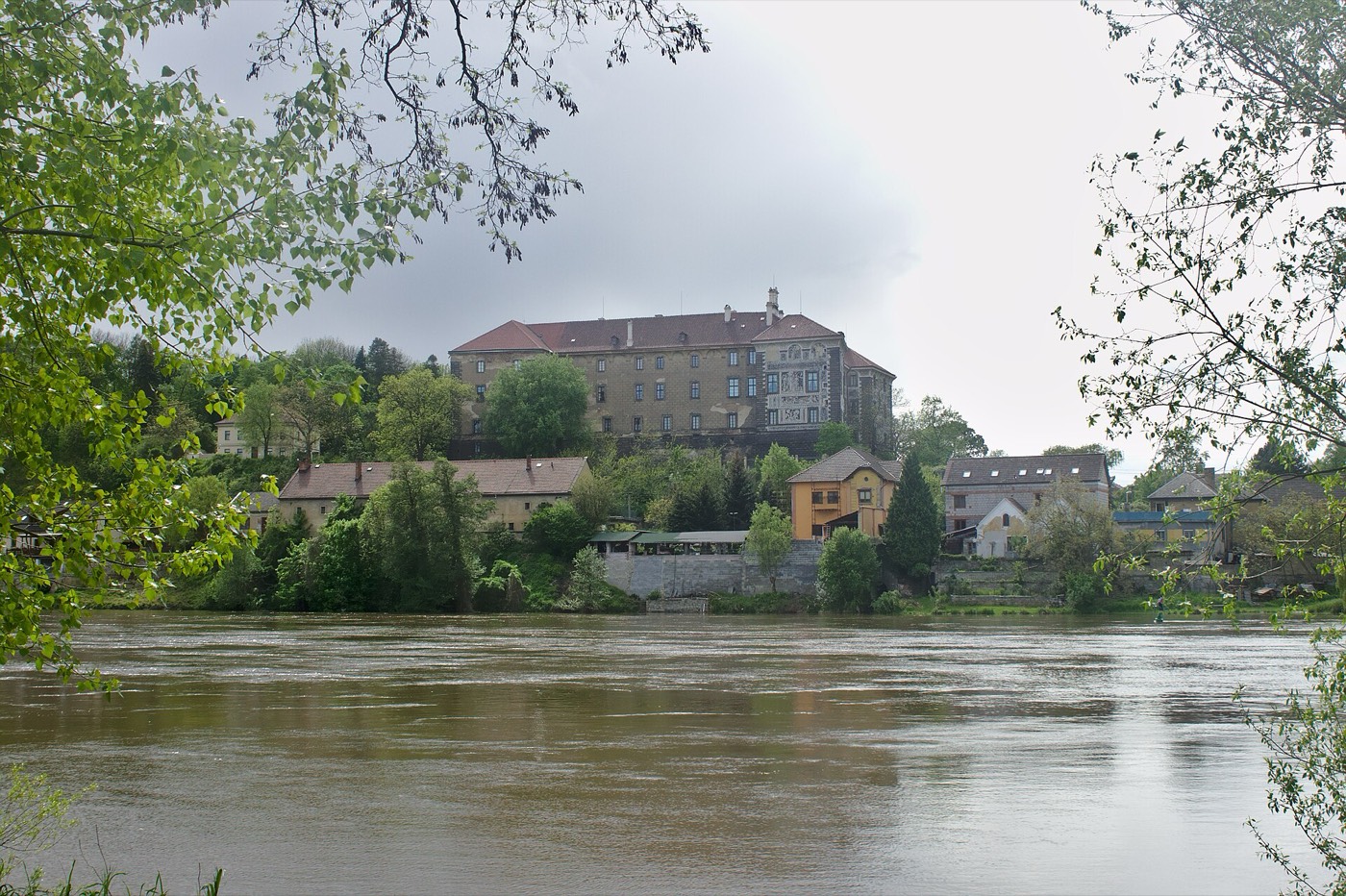
Antonín Dvořák (1841 to 1904) was born at Nelahozeves, a village on the Vltava north of Prague, the son of a butcher and innkeeper. He directed the National Conservatory of Music of America in New York from 1892 to 1895, and his Symphony No. 9, “From the New World”, was first performed at Carnegie Hall in December 1893.
Max Dvořák (1874 to 1921), born at Roudnice nad Labem, was a leading figure of the Vienna School of art history.
August Dvorak (1894 to 1975), born in Minnesota to a family of Czech descent, was an educational psychologist who taught at the University of Washington from 1923 to 1964. With his brother in law William Dealey he devised the Dvorak Simplified Keyboard, patented in 1936.
Ann Dvorak (1911 to 1979), born Anna McKim, was an American film actress who took her mother’s family’s Czech surname at her 1931 breakthrough and is best remembered for Scarface. She was no relation to the composer.
Tomáš Dvořák (born 1972) is a Czech decathlete, world champion in 1997, 1999 and 2001, and a former world record holder with 8,994 points set in Prague in 1999.
How Common Is Dvorak Today?
Dvorak ranked 4,562nd in the 2010 US Census, held by 7,771 Americans. In the Czech Republic it is far commoner, standing fourth among all surnames, behind Novák, Svoboda and Novotný.
Of Americans recorded with the name in 2010, 95.43 per cent identified themselves as white and 2.16 per cent as Hispanic. Those are self-identification figures collected by the Census Bureau, not a measure of ancestry or descent.
| US rank (2010 Census) | #4,562 |
|---|---|
| Americans with the name | 7,771 |
| Origin | Czech |
| Meaning | Man of the dvůr, a manor or large farmstead |
Frequently Asked Questions
What does the surname Dvorak mean?
Dvorak, in Czech Dvořák, means a man of the dvůr, a manor, court or large farmstead. It was a status name for a substantial farmer who held such a place, or for a steward attached to a lord’s court. Either way it signalled standing in the village.
Is Dvorak Czech or Polish?
Dvorak is Czech. The Polish equivalents, Dworak and Dworski, are built on dwór from the same Slavic root. Because American clerks swapped v and w freely, a Dworak in the United States may descend from either a Polish or a Czech family.
Where does the Dvorak family come from?
From Bohemia and Moravia, now the Czech Republic, with the heaviest concentrations today in the Central Bohemian, South Moravian and South Bohemian regions. There is no single Dvorak family: the name arose independently in hundreds of villages wherever a household held or served the local farmstead.
How common is the surname Dvorak?
It is the fourth most common surname in the Czech Republic, roughly what Baker is to English. In the United States it is far rarer, ranked 4,562nd in the 2010 Census with 7,771 bearers, concentrated in the Czech settlement states of Texas, Nebraska, Iowa and Illinois.
Is there a Dvorak family crest or coat of arms?
No. In every major heraldic tradition arms are granted to an individual and pass to direct descendants, never to everyone sharing a surname. Since Dvořák arose separately in hundreds of unrelated households, a single crest for the name is an impossibility. Sites selling one are selling a decoration, not a lineage.
Is the Dvorak keyboard named after the composer?
No. The Dvorak Simplified Keyboard is named after August Dvorak, an American educational psychologist of Czech descent who patented the layout in 1936 with his brother in law William Dealey. He was not related to Antonín Dvořák. The shared surname simply reflects how common it is.
If your family carries the Dvorak name, its route from Bohemia to America is traceable. Atlas of Home can follow it from the village dvůr to wherever your family landed, and to wherever you are now.