
The Chen surname began as a place, not a person. It comes from the ancient State of Chen in what is now eastern Henan province, and today it belongs to Chens, Chans, Tans, Chins and Trans who mostly have no idea they share it.
What Does the Surname Chen Mean?
Chen (陳 in traditional characters, 陈 since the simplifications of the 1950s) means the State of Chen. It is a toponymic surname, taken from a small vassal state of the Zhou dynasty in eastern Henan, and it records where a family lived rather than what they did.
As an ordinary word, 陳 means to set something out in order, and by extension something long-standing. Those senses belong to the vocabulary, not to the family. Anyone telling you the surname means “ancient” has read a dictionary entry and stopped there.
Behind the state name sits an older layer. Chinese genealogy separates the ancestral surname, the xing, from the lineage name, and the Chens trace theirs to Gui (媯), the clan of the legendary sage king Shun. That descent is traditional rather than documented.
Where the Chen Name Comes From
The name comes from Huaiyang County in eastern Henan, site of the Zhou-era State of Chen, and spread south into Fujian and Guangdong. That move is why it is now a coastal name, and a seafaring one.
Duke Hu and the State of Chen
The traditional account begins around 1046 BC, when King Wu of Zhou overthrew the Shang and enfeoffed Gui Man, said to descend from Emperor Shun, with territory in what is now Huaiyang. Gui Man is remembered as Duke Hu of Chen, founder of the name.
The state lasted almost six centuries. When Chu absorbed it in 479 BC, its people carried the name of the lost state with them as a family name. Every Chen alive is, in the logic of the clan books, a citizen of a country that ended before Socrates was born.
Yingchuan, the hall name
By the Han dynasty the most prestigious branch was settled at Yingchuan, also in Henan. Yingchuan Tang became the hall name Chen families use to identify their line, still painted above ancestral halls from Fujian to Singapore.
South to Fujian and Guangdong
In 669 the Tang court sent Chen Zheng into the ungoverned country of southern Fujian, and when he died in 677 his son Chen Yuanguang (657 to 711) took over the command. Zhangzhou prefecture was created in 686, and Chen Yuanguang is venerated across southern Fujian, Taiwan, Singapore, Malaysia and Indonesia as Kaizhang Shengwang, the Sacred Duke who opened Zhangzhou.
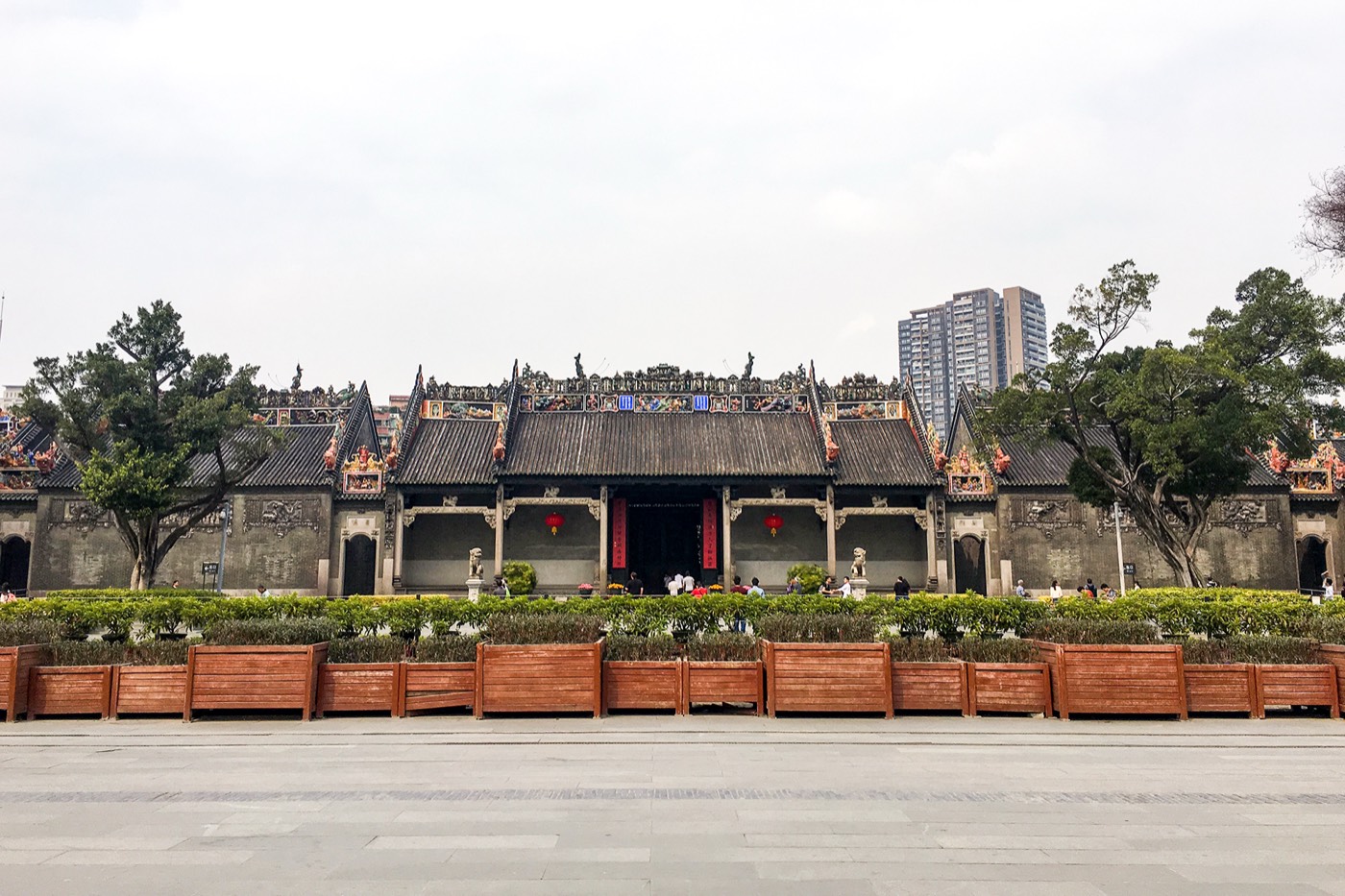
That is the hinge of the story. Fujian and Guangdong were the provinces that sent people overseas, and Chen was already among their commonest names. The Chen Clan Ancestral Hall in Guangzhou, built in 1894 by seventy-two Chen lineages to house their sons sitting the imperial examinations, is the grandest monument any Chinese surname has raised to itself.
Spelling Variants and Related Names
Chen, Chan, Tan, Chin, Tang, Zen, Dan, Tran and Jin are not related surnames. They are the same character, 陳, written down by a clerk who was listening to a different language. The spelling records which tongue the family spoke at the moment of registration, nothing more.
Chen is Mandarin pinyin, used in mainland China and, since the 2000s, on most Taiwanese passports. The older Wade-Giles spelling Ch’en runs through twentieth-century American records.
Chan is Cantonese, standard in Hong Kong and Macau, and it travels wherever Cantonese speakers went: San Francisco, Vancouver, London, Sydney.
Tan is Hokkien and Teochew, the Southern Min languages of coastal Fujian and eastern Guangdong. Those were the emigrant provinces of the South Seas, so Tan is the form carried by the great majority of Chinese Singaporeans, Malaysians, Indonesians and Filipinos. It is the commonest spelling of the name outside China, and the one least likely to be recognised as Chen.
Tang and Taing are Teochew forms common in Cambodia. Chin is Hakka and Taishanese, and is also how the character is read in Japanese. Zen comes from Wu, the language of Shanghai and the lower Yangtze. Dan is Hainanese.
Tran, written Trần in Vietnamese, is the Sino-Vietnamese reading of the same character. It is the second most common surname in Vietnam after Nguyen, and it belonged to the Trần dynasty that ruled from 1225 to 1400 and threw back three Mongol invasions. Vietnamese tradition holds that the ruling house came from Fujian. Jin (진) is the Korean reading, borne by far fewer families and not to be confused with the commoner Kim.
Indonesia added a further disguise. Cabinet Presidium Decision 127 of 1966 pressed Chinese Indonesians into Indonesian-sounding names, and many Tans folded the old syllable into the new one: Tanuwijaya, Tanudjaja, Tanoto, Sutanto. The businessman Sukanto Tanoto was born Chen Jianghe. The name is still there, hiding in the first syllable.
One caution runs the other way. Not every Tan is a Chen: the spelling serves other characters, and families with no Chinese ancestry at all. Only the character settles it, which is why the most useful thing an overseas family can recover is not a spelling but a gravestone.
The Chens in America
Chens reached America in three waves: Cantonese labourers from the Pearl River Delta after 1849, families from Taiwan and Hong Kong after the 1965 immigration reform, and mainland graduate students from the 1980s. Each wave spelled the name differently.
The first came from the Siyi counties of Guangdong, above all Taishan, drawn by the gold rush and held by the railroads. They did not write Chen. They wrote Chan, or Chin, because that is how the character sounded in Cantonese and Taishanese, and those spellings still dominate the oldest families in San Francisco’s Chinatown.
Then the door shut. The Chinese Exclusion Act of 1882 stood until 1943, and the response was the paper son system: young men entered on purchased identities, taking the sponsor’s surname to match the documents. Whole families spent generations under a name that was not theirs, and much of Chinese American genealogy is the work of finding which surname the paperwork replaced.
The 1965 Immigration and Nationality Act changed the pattern completely. Students arrived from Taipei and Hong Kong, took degrees and jobs, and moved to the suburbs rather than the Chinatowns. Taiwanese Chens are the reason for places such as Walnut in the San Gabriel Valley and for the Taiwanese presence in Monterey Park. Outside Chicago, the same generation built the Chinese communities of Glenview and Vernon Hills.
The third wave came from the mainland after 1979 and spelled the name in pinyin: Chen, plainly, for the first time in American history. These were the doctoral students and engineers who filled the research corridors, and they settled where the laboratories were, in Princeton and in Sacramento suburbs such as Folsom. A Chin in Oakland, a Chan in Brooklyn and a Chen in Princeton can descend from one Guangdong village and never suspect it.
Notable People Named Chen
Chen Duxiu (1879 to 1942), born in Anhui, edited the journal New Youth and was dean at Peking University. In 1921 he co-founded the Chinese Communist Party and became its first General Secretary.
Tan Kah Kee (1874 to 1961), born in Jimei, Fujian, joined his father in Singapore in 1890 and built a rubber and shipping empire. He spent much of it on schools, founding Xiamen University in 1921.
Jackie Chan (born 1954), born Chan Kong-sang in Hong Kong, is the Cantonese spelling of the name at its most famous, and one of the most widely seen film performers in history.
Chen Shui-bian (born 1950), a lawyer from a tenant-farming family in Tainan, was President of Taiwan from 2000 to 2008, the first from outside the Kuomintang, and was later imprisoned on corruption charges.
Joan Chen (born 1961) was recruited into the Shanghai Film Studio as a teenager, moved to the United States, and played Empress Wanrong in The Last Emperor in 1987.
Steve Chen (born 1978) was born in Taipei, raised in suburban Illinois, and co-founded YouTube in 2005 with two colleagues from PayPal.
How Common Is Chen Today?
Chen ranked 150th in the 2010 United States census, with 169,580 Americans carrying it. That counts only the pinyin spelling, so it undercounts the family badly: the Chans, Chins, Tans and Trans are tallied separately.
In mainland China, Chen is the fifth commonest surname with roughly 70 million bearers, and the commonest of all in Guangdong, Fujian, Zhejiang, Hong Kong and Macau. In Taiwan it leads outright, held by about 11 per cent of the population. Add every romanisation together, the Vietnamese Trần included, and 陳 is carried by 80 to 100 million people, among the four commonest surnames on earth. Fuller detail sits at the Wikipedia entry for the surname.
| US rank (2010 Census) | #150 |
|---|---|
| Americans with the name | 169,580 |
| Origin | Chinese (陳/陈) |
| Meaning | From the ancient State of Chen, in modern Henan |
Frequently Asked Questions
What does the surname Chen mean?
Chen means the State of Chen, a Zhou dynasty vassal state in what is now Huaiyang County, Henan. It is a place name, not a description of an occupation or a trait. The character carries other senses in ordinary speech, but those are not what the surname refers to.
Is Chen Chinese or Vietnamese?
Chen is Chinese, and Trần is the Vietnamese reading of the identical character 陳. Vietnamese Trầns descend from families who took Chinese-style surnames during the long centuries of Chinese influence, and the Trần dynasty is traditionally said to have come from Fujian. The Korean surname Jin is the same character again.
Where does the Chen family come from?
The name originates in eastern Henan and is traditionally traced to Duke Hu of Chen, enfeoffed there around 1046 BC. The lineage moved south over the following centuries, and by the Tang dynasty was established in Fujian and Guangdong, the two provinces almost all overseas Chens, Chans and Tans come from.
How common is the surname Chen?
Chen was the 150th commonest surname in the 2010 US census, with 169,580 bearers, and is the fifth commonest in mainland China with around 70 million. It is the most common surname of all in Taiwan, Hong Kong, Macau, Guangdong and Fujian.
Is there a Chen family crest or coat of arms?
No. European heraldry grants arms to individuals and their direct descendants, never to everyone sharing a surname, and China had no such tradition at all. Any site selling you a Chen coat of arms is selling a decoration, not a lineage. What the Chens have instead is real: hall names, ancestral halls and genealogies, and those can be traced.
Are Chen, Chan and Tan the same surname?
Yes. All three, with Chin, Tang, Zen, Dan, Tran and Jin, are romanisations of the single character 陳, spelled according to the language the family spoke when the name was registered. Two people sharing the character are far more closely related than two sharing the spelling, which is why Chinese genealogy works from characters, not English letters.
If your family carries the Chen name, in any of its spellings, its route from southern China to America is traceable. Atlas of Home can follow it from the ancestral halls of Fujian and Guangdong to wherever your family landed, and to wherever you are now.