
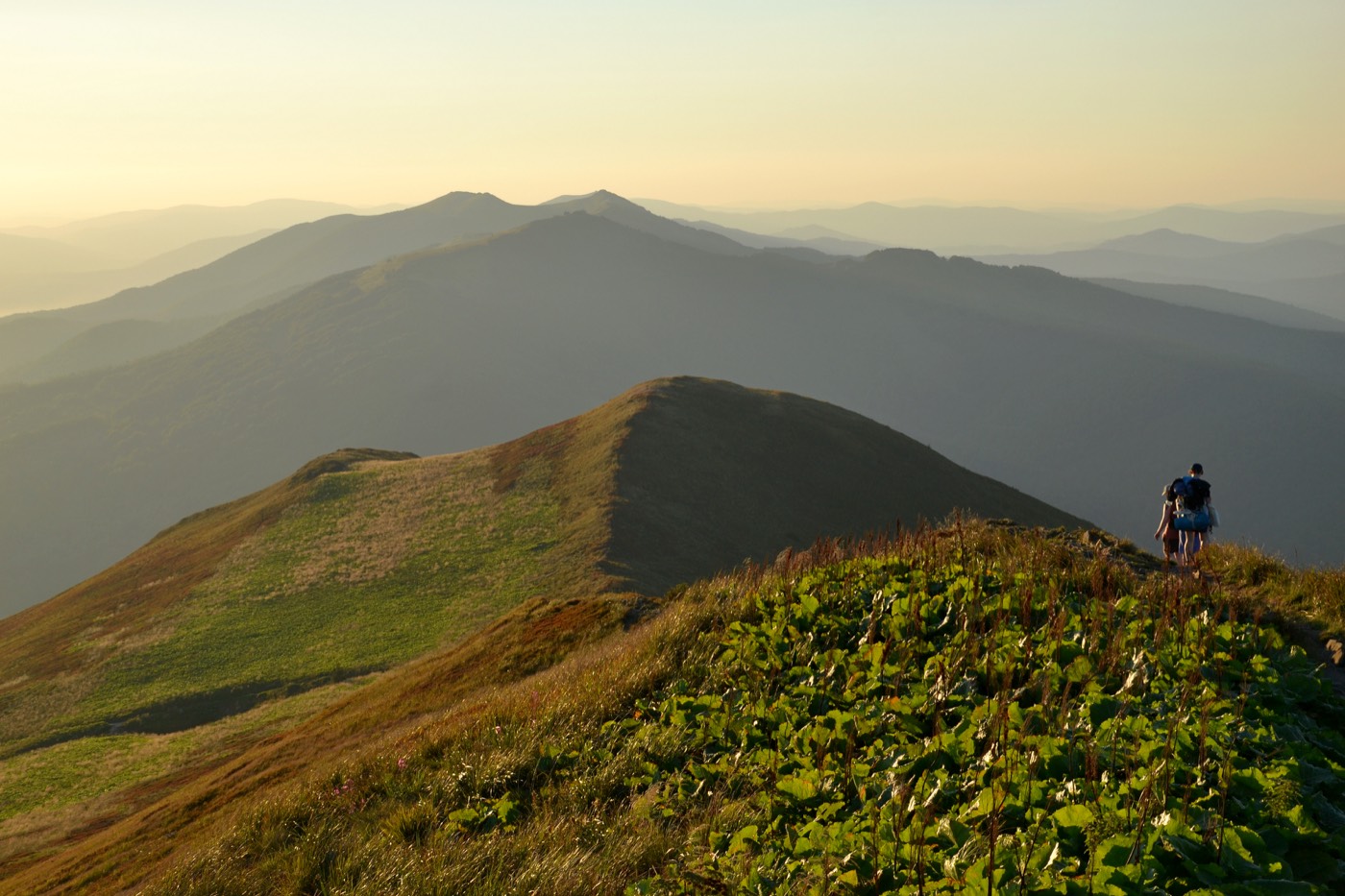
The Boyko surname is Ukrainian, and it began as the name of a people rather than a person. The Boykos are highland farmers and herders of the Carpathian Mountains, and the name marked a family as coming from that country.
What Does the Surname Boyko Mean?
Boyko (Ukrainian Бойко) means “a Boyko”, a member of the Carpathian highlander people of that name. The surname therefore identified a family by the community it belonged to, not by a trade, a father or a farm.
What nobody can agree on is what the ethnonym itself means. The Boykos have been studied for two hundred years and their name is still unexplained.
The theory with the widest support was put forward by the nineteenth-century priest and grammarian Joseph Levytsky, who traced it to the dialect exclamation бойє (boye), roughly “it is really so”. Neighbours heard the highlanders say it constantly and named them after it. The Internet Encyclopedia of Ukraine calls this the most accepted explanation, which is not the same as calling it proved.
A second theory, argued by the Slavist Pavel Jozef Šafárik and later by Franjo Rački, connected the Boykos to a place called Boiki mentioned by the Byzantine emperor Constantine VII in the tenth century. Most scholars now read that reference as Bohemia rather than the Carpathians, and the archaeologist Yaroslav Pasternak found no evidence for the related idea that the name preserves the Celtic tribe of the Boii.
A third possibility has nothing to do with mountains at all. Slavic has a personal name Boyko, a short form of Boyan, and an adjective boykyi meaning brisk, bold or quick-witted. Either could produce a surname anywhere in the East Slavic world, and probably did.
Where the Boyko Name Comes From
The Boyko homeland, Boykivshchyna, is a band of roughly 8,000 square kilometres in the middle Carpathians: southern Lviv oblast, western Ivano-Frankivsk oblast and north-eastern Zakarpattia in Ukraine, continuing over the ridge into south-eastern Poland.
The Highland Country
The Boyko lands run from the Solynka river in the west, beyond which the Lemkos begin, to the valley of the Limnytsia in the east, beyond which the country becomes Hutsul. Together with those two groups the Boykos make up the Carpathian highlanders, usually counted as a branch of the Rusyns.
Many of their villages were settled under Wallachian law, which released them from labour service in exchange for tribute in animals and forest goods. They herded, then farmed oats and potatoes, and carried salt down to Galicia and Volhynia until Austria took the salt trade into state hands. Their three-domed wooden churches are still the most recognisable buildings in the region. At its height the population was around 400,000.
A Name Given From Outside
Here is the part that matters for anyone tracing the surname. Boykos have often disliked the word. Many preferred to call themselves verkhovyntsi, highlanders, and treated Boyko as something between a nickname and a slight.
That makes the surname a record of how a family was seen rather than what it called itself. It is the same mechanism behind the Toth surname in Hungary, which labelled a Slav from the Hungarian side of the line. An ethnonym surname is nearly always given by the neighbours, and it fixes an outsider’s view of your family in the parish register for good.
The Scattering, 1944 to 1947
Boyko families are dispersed today because the community was taken apart within three years. Between 1944 and 1946, around 482,000 Ukrainians, Boykos and Lemkos among them, were moved from post-war Poland into the Ukrainian SSR under bilateral transfer agreements.
What remained was cleared by Operation Vistula (Akcja Wisła), which ran from 28 April to 31 July 1947. Close to 140,000 Ukrainians, Rusyns, Boykos and Lemkos were deported from south-eastern Poland to the formerly German territories in the north and west, and deliberately scattered thinly so that no village could reform. Polish villages in the Bieszczady stood empty for a generation.
Poland’s Senate condemned the operation in 1990, President Aleksander Kwaśniewski expressed regret in 2002, and in 2007 Presidents Lech Kaczyński and Viktor Yushchenko jointly called it a violation of human rights. By 1970 perhaps 230,000 people of Boyko origin remained. In the 2001 Ukrainian census, 131 people gave Boyko as their ethnicity.
Spelling Variants and Related Names
The native form is Бойко in Ukrainian Cyrillic. Boyko and Boiko are the two common English transliterations, and both are correct: Boiko follows the scholarly system, Boyko follows how the name sounds.
In Poland and Slovakia the name is written Bojko, with the Czech and Slovak feminine Bojková. Older American records also show Boyk, Bojko and Bojka, and clerks who met the name at Ellis Island produced a fair number of one-off spellings that never recurred.
Several separate surnames are built on the same root. Boychuk (Бойчук) adds the western Ukrainian patronymic ending -chuk, giving “son of Boyko”. Boychenko (Бойченко) does the same with the eastern -enko. Boykiv is a possessive form meaning “Boyko’s”. These are relatives of the name, not spellings of it, and a Boychuk family is not a misfiled Boyko family.
The Boykos in America
Boykos reached the United States in three waves: labour migration from Austrian Galicia and Hungarian Subcarpathia between the 1880s and 1914, displaced persons after 1945, and a steady movement since Ukrainian independence in 1991.
The first wave went where the heaviest work was. Men from the Carpathian villages filled the mills and mines of western Pennsylvania, and the community they built is still visible among the Carpatho-Rusyns of Pittsburgh. Immigration clerks recorded them as Austrian, Ruthenian, Russian or simply Slavish, depending on the year and the officer, which is why so many Boyko family trees stall at the manifest. The same ambiguity shadows the Koval surname, and for the same reason.
The post-war wave was different: educated, political, and often made up of people the deportations had already uprooted once. They concentrated in cities, above all in the parishes and bookshops of Little Ukraine in Manhattan’s East Village. Their children moved outward with the post-war economy, to Ukrainian Parma, Ohio and to Warren, Michigan, where the car plants paid. In Chicago the anchor was and remains Ukrainian Village.
In the 2010 US Census, 96.79 per cent of Americans named Boyko self-identified as white, with 1.45 per cent identifying as Hispanic and 1.06 per cent as two or more races. Those are self-identification proportions recorded on one form in one year, not a measure of ancestry, but they do describe a name that has stayed close to its European immigrant profile.
Notable People Named Boyko
Aleksandra Boiko (1918 to 1996) commanded an IS-2 heavy tank in the 48th Guards Heavy Tank Regiment, with her husband as her driver-mechanic. She fought from the Baltic through Poland into Czechoslovakia in 1944 and 1945 and was decorated with the Order of the Patriotic War.
Volodymyr Boyko (1938 to 2015) ran the Illich Iron and Steel Works in Mariupol for decades, sat in the Verkhovna Rada, and was named a Hero of Ukraine. The city’s stadium carries his name.
Yuriy Boyko (born 1958) served as Ukraine’s energy minister and as a deputy prime minister, and finished fourth in the 2019 presidential election with just under 12 per cent of the vote.
Eugene “Jeep” Boyko (1923 to 2003) was born in Saskatoon and spent his career at the National Film Board of Canada. His Helicopter Canada was nominated for an Academy Award, and in the 1970s he worked alongside Indigenous filmmakers making their own films.
Darren Boyko (born 1964), from Winnipeg, played 476 games for HIFK in the Finnish league and in 2006 became only the second non-Finn ever inducted into the Finnish Hockey Hall of Fame.
How Common Is Boyko Today?
Boyko is uncommon in the United States and very common in Ukraine. It ranked 13,418th in the 2010 US Census with 2,271 bearers, while in Ukraine it is consistently listed among the ten most frequent surnames in the country.
| US rank (2010 Census) | #13,418 |
|---|---|
| Americans with the name | 2,271 |
| Origin | Ukrainian (Бойко) |
| Meaning | A Boyko, one of the Carpathian highlander people |
The gap between the two figures is the whole story of the name. It stayed home.
Frequently Asked Questions
What does the surname Boyko mean?
It means “a Boyko”, a member of the highlander people of the Ukrainian Carpathians. The meaning of that ethnonym is itself disputed, with the leading theory tracing it to the dialect exclamation boye.
Is Boyko Ukrainian or Russian?
Boyko is Ukrainian in origin and is among the most common surnames in Ukraine. It is also carried by many families in southern Russia and elsewhere in the former Soviet Union, largely through migration and through the independent personal name Boyko.
Where does the Boyko family come from?
The Boyko homeland is Boykivshchyna in the middle Carpathians, covering southern Lviv oblast, western Ivano-Frankivsk oblast and north-eastern Zakarpattia, plus the Bieszczady on the Polish side. Bearers of the surname, however, are found across all of Ukraine.
How common is the surname Boyko?
In the United States it ranked 13,418th in the 2010 Census, with 2,271 people. In Ukraine it sits in the top ten, with tens of thousands of bearers, and it is also well represented in Canada, Poland and Kazakhstan.
Is there a Boyko family crest or coat of arms?
No. In every serious heraldic tradition, arms are granted to an individual and pass to that person’s direct descendants, never to everyone who happens to share a surname. Any website selling you a “Boyko family crest” is selling a decoration, not a lineage.
Are all Boykos descended from the Carpathian highlanders?
No, and this is worth saying plainly. Boyko is borne as an ordinary surname right across Ukraine and southern Russia by families with no Carpathian connection, arising from the personal name Boyko or the adjective boykyi, “brisk”. A Boyko surname is a lead worth following, not proof of highland ancestry.
If your family carries the Boyko name, its route from the Carpathians to America is traceable. Atlas of Home can follow it from the highland villages of Boykivshchyna to wherever your family landed, and to wherever you are now.