
Walk the length of Main Avenue in Wallington on a Saturday morning and the shop signs read like a street in Krakow. Pierogi steam behind deli glass, kielbasa hangs in coils, and the talk drifting out of the bakeries is as often Polish as English. For its size, no town in America wears its homeland quite so plainly. The Polish in Wallington, New Jersey, have made a square mile of Bergen County into one of the most concentrated pieces of Poland anywhere outside Poland itself.
The Place
Wallington is small and tightly drawn, just over a square mile of streets pressed against a bend in the Passaic River in southern Bergen County. It sits roughly fifteen miles northwest of Midtown Manhattan, close enough that the skyline glints on a clear day, far enough to feel like its own world.
The borough was incorporated on 2 January 1895, carved from neighbouring townships and named for Walling Van Winkle, an early Dutch settler who built a home on the land. The river separates it from the city of Passaic, crossed by a handful of old bridges. It is a place you can walk end to end in an afternoon, which is part of how it became so thoroughly one thing. Bergen County has long held tight ethnic enclaves like this, from the Ukrainians who gathered around Whippany to the Estonians who built a foothold in Lakewood.
How It Became Polish
Wallington did not start out Polish. It started out as real estate, and the ethnic character followed the marketing.
A colony sold by the lot
In the early 1900s, as the borough filled in, developers advertised Wallington as a place where Slavic factory workers in the crowded industrial cities nearby could buy a suburban lot of their own. It was promoted in part as a “Slovak colony,” aimed at Slovak migrants looking to leave tenement Passaic and Paterson for a house with a yard.
Poles arrived in the same current. The mills and factories of the Passaic River valley were drawing Central European labour by the thousands, and a Polish family that found steady work in Passaic could cross one bridge and buy a home in Wallington. The town’s smallness worked in its favour. A few hundred Polish families on a few short streets quickly became a critical mass. Where bigger cities scattered their Poles across sprawling districts like Cleveland’s Slavic Village, Wallington concentrated them into a single walkable grid.
The church that organised everyone
What turned a Polish presence into a Polish parish was a church. In 1942, after the Diocese of Newark had been reorganised, Rev. Alexander W. Fronczak was appointed to organise a new Polish parish in Wallington. He was formally made its pastor that June.
The parish had no building of its own at first. For its early years it borrowed space, holding Sunday Mass on the second floor of the borough’s Municipal Building. A former grocery and tire shop at Paterson Avenue and Bond Street was bought and pressed into service. The first Mass in the parish’s own basement church was said on Christmas of 1947.
A parish school followed almost immediately, opening in September 1948 and staffed by the Felician Sisters, a Polish-American teaching order. The upper church came later, its cornerstone laid in September 1955 by Archbishop Thomas A. Boland. For two generations, a child in a Polish Wallington family could be baptised, schooled and married within a few hundred yards of home, in a parish where the prayers were said in Polish. It was the same parish-centred pattern that anchored Polish neighbourhoods elsewhere, from Fells Point in Baltimore to the mill towns of New England.
The post-war and post-communist waves
The Polish settlement deepened across the twentieth century in distinct layers. The pre-war arrivals were followed by displaced persons and refugees after the Second World War, Poles who could not or would not return to a country under Soviet control.
Then came the largest reinforcement of all. After the fall of communism in 1989, a fresh generation of Poles emigrated, and many who landed in the New York area gravitated to the places where Polish was already spoken on the street. Wallington, with its delis, its parish, its Polish-speaking neighbours, was an obvious harbour. Each wave found the last one waiting, which is the engine of chain migration: you go where your cousins already are.
By the time the United States counted it, the result was staggering for a town this size. The 2000 census recorded that 51.5 percent of Wallington’s residents claimed Polish ancestry, ranking the borough first in New Jersey and seventh in the entire country among municipalities. Locals took to calling it “Little Poland,” and the name stuck. It is a distinction that puts Wallington in the company of America’s great Polish strongholds, from the Polish South Side of Milwaukee to Buffalo’s Broadway-Fillmore district, though few of them packed so many Poles into so small a footprint.
From Galicia and the high mountains
The people who built this town were not Poles in the abstract. Many traced their roots to the south of Poland, to the lands that had been Austrian-ruled Galicia, the region that sent the great waves of Polish emigration to America from the 1870s onward. And a distinctive thread came from higher still, from the Górale, the Polish Highlanders of the Podhale region beneath the Tatra Mountains. That mountain heritage is not a footnote in Wallington. It is on a restaurant sign.
The Landmarks
Most Sacred Heart of Jesus Church, 127 Paterson Avenue. The spiritual anchor of Polish Wallington and the institution that organised the community in 1942. Masses and devotions are still offered in both English and Polish, and the parish sponsors Polish cultural events through the year. Its school, opened in 1948, served the borough’s children until it closed in June 2014.
The General Casimir Pulaski Monument, Main Avenue near Locust Street. A statue of the Polish-born cavalry commander who died fighting for American independence, set near the water and ringed with tulips that residents tend by hand. It was dedicated on 4 October 2002 and sculpted by Mieczyslaw “Karol” Partyka, a Polish-born artist who had emigrated to New York in 1989.
Tatra Haus, 115 Main Avenue. A Polish Highlander restaurant and bar run by the Stopka family, who carry their roots in the south of Poland to the table. Here the menu leans into Górale cooking: grilled Highlander sheep cheese with bacon and cranberry, rye bread with pork lard spread and pickle, the food of the mountains rendered in a New Jersey storefront.
Krakus Restaurant, 208 Main Avenue. A neighbourhood mainstay for the Polish classics, pierogi, stuffed cabbage, blintzes, and a pickle soup that regulars come back for. It is the sort of room booked for family gatherings, where the Polish of the older guests and the English of the younger ones share a table.
Chefski’s, 360 Main Avenue. A grab-and-go counter at the top of Main Avenue with a short menu and a long list of pierogi, around a dozen kinds, alongside imported Polish soft drinks. It is the everyday end of the food culture, the place you stop on the way home.
The Pulaski Day Parade. Each year on the first Sunday of October, Wallington marches in honour of General Pulaski and of Polish-American heritage. The local contingent elects a Parade Marshal and a Miss Polonia, and the borough’s banners join the larger celebrations of the season. It is the day the whole town becomes openly, loudly Polish.
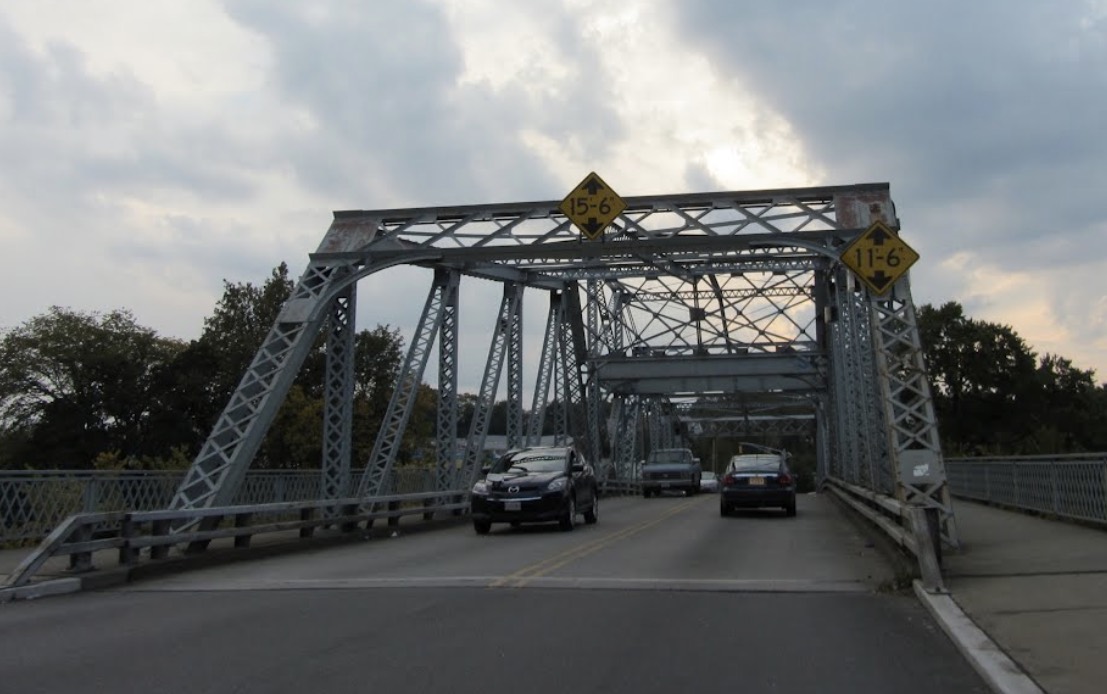
The Gregory Avenue Bridge. Built in 1906 by the Oswego Bridge Company and once known as the Main Avenue Bridge, this steel crossing carries traffic over the Passaic River between Wallington and Passaic. It worked as a moveable swing bridge until 1985. It is a reminder of the industrial river that brought the first Polish workers across in the first place.
Where They Came From
The Polish story in Wallington is, more specifically, a story of southern Poland. The great emigration that filled America’s Polish neighbourhoods drew heavily from Galicia, the Austrian-administered south, beginning in the 1870s. These were often rural people leaving land that could no longer support them, bound for the factory cities of the American Northeast.
Within that flow ran a particular strand of mountain people. The Górale of Podhale, the highland country at the foot of the Tatra Mountains around Zakopane, carried their own dialect, dress and music to America, and they kept it. Wallington’s Highlander restaurant is one small proof that those mountain villages still have descendants on Main Avenue.
Later arrivals, the post-war refugees and the post-1989 emigrants, came from across Poland. But they joined a community whose foundations had been poured by Galician and Highlander families, and they slotted into the institutions those earlier settlers had built.
Wallington Today
Wallington is still, by any measure, one of the most Polish places in America, and Main Avenue still proves it daily. The delis, the bakeries, the banquet halls and the parish carry on, and on a parade Sunday the borough looks much as it has for decades.
But the square mile is changing, as such places always do. By the 2020 census the town’s population stood at 11,868, and its makeup had broadened: the Hispanic and Latino share had grown to nearly a fifth of residents, and the non-Hispanic white population had eased downward. The closing of the parish school in 2014 was the kind of quiet milestone that marks a generation moving on.
Yet the Polishness of Wallington is not a museum piece. The post-communist wave is now raising children here, the Highlander restaurant is full on weekends, and the tulips around the Pulaski statue still get planted every year. For a town that was once sold by the lot to Slavic factory hands, that is a long and stubborn afterlife. Little Poland endures, smaller perhaps, but unmistakably itself.
Frequently Asked Questions
Why are there so many Polish people in Wallington, New Jersey?
The Polish in Wallington, New Jersey, settled there in waves over more than a century. The town was marketed in the early 1900s as a suburban colony for Slavic factory workers from nearby Passaic and Paterson, and chain migration, a Polish parish founded in 1942, and a fresh wave of arrivals after 1989 concentrated the community in its small square mile.
Is Wallington really the most Polish town in America?
It is among the very most Polish. The 2000 census recorded 51.5 percent of Wallington residents claiming Polish ancestry, which ranked the borough first in New Jersey and seventh among all municipalities in the United States. Locals call it “Little Poland.”
What is the main Polish church in Wallington?
Most Sacred Heart of Jesus Church at 127 Paterson Avenue is the historic Polish parish, organised in 1942. It still offers Masses and devotions in both English and Polish and sponsors Polish cultural events throughout the year.
Where can I get Polish food in Wallington, New Jersey?
Main Avenue is lined with options. Tatra Haus at 115 Main Avenue serves Polish Highlander cuisine, Krakus at 208 Main Avenue offers the classics like pierogi and stuffed cabbage, and Chefski’s at 360 Main Avenue is a grab-and-go counter known for around a dozen kinds of pierogi.
Who was Casimir Pulaski and why is there a monument in Wallington?
Casimir Pulaski was a Polish-born cavalry officer who died fighting for American independence and is remembered as the father of the American cavalry. Wallington’s monument, on Main Avenue near Locust Street, was dedicated in 2002 and the town holds a Pulaski Day Parade each year on the first Sunday of October.
Where in Poland did Wallington’s families come from?
Many of the Polish in Wallington, New Jersey, trace their roots to southern Poland, especially the Austrian-ruled region of Galicia that sent the great emigration waves from the 1870s. A distinctive group descends from the Górale, the Polish Highlanders of the Podhale region below the Tatra Mountains.
If your family’s story passed through Wallington, or any of the places Polish people have made home in America, Atlas of Home can trace that journey. From a village in Galicia or a cabin in the Tatra foothills, to a house on Main Avenue beside the Passaic, to wherever you are now.