
Walk the length of North Main Street in Akron’s North Hill on a Saturday morning and you will hear Nepali long before you see a single sign in English. The Nepalis in Akron, Ohio are not tourists or students. They are farmers and their grandchildren, twice exiled, who carried a Himalayan language across two oceans and planted it in a rust belt neighbourhood that the rubber boom built and the rubber bust nearly emptied.
They came not from Nepal directly but from refugee camps in eastern Nepal, and before that from southern Bhutan, where their ancestors had farmed for generations. Today Akron holds one of the largest concentrations of this community anywhere in the United States, and the storefronts they have filled tell a story of survival measured in decades.
The Place
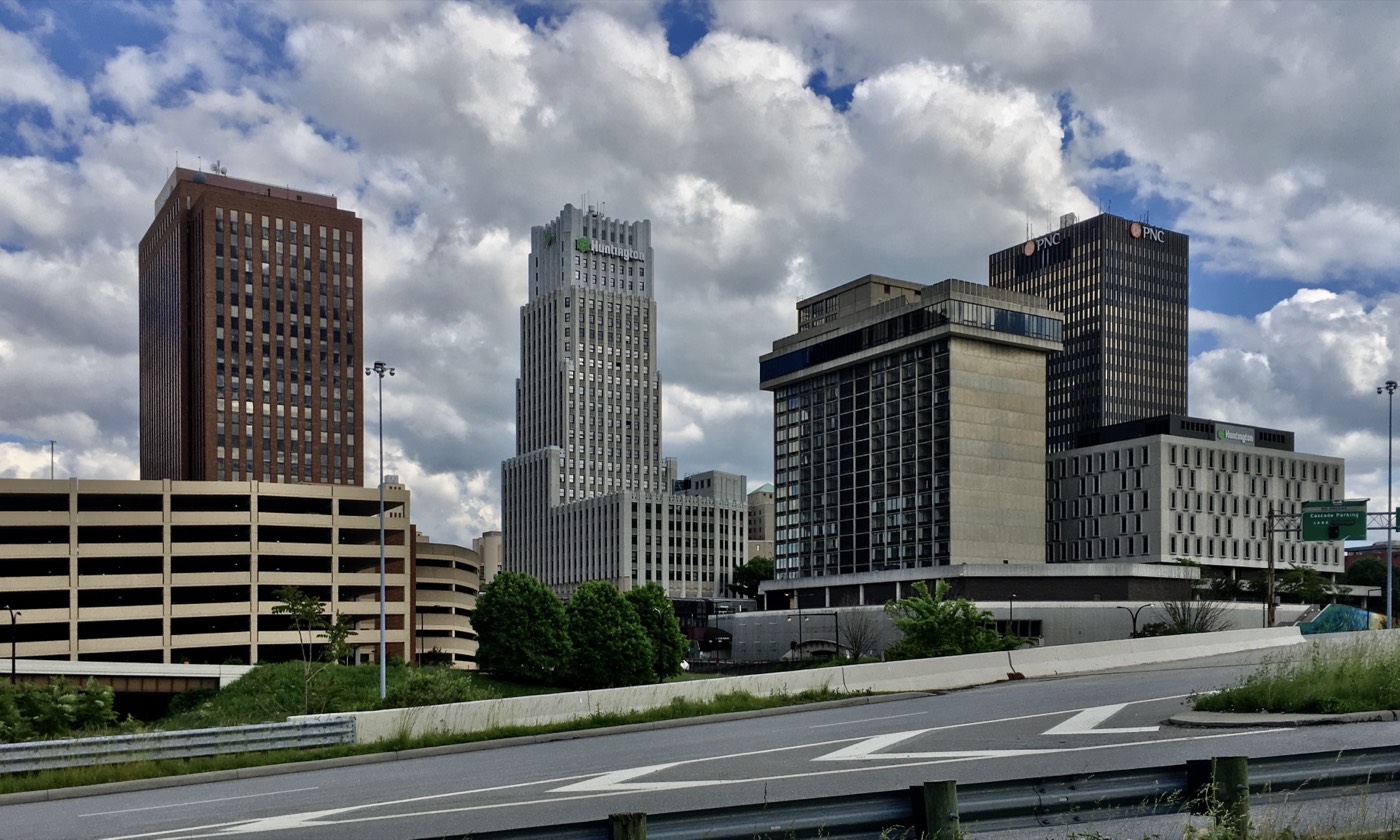
Akron sits in Summit County in northeast Ohio, a city of roughly 190,000 that once called itself the Rubber Capital of the World. B.F. Goodrich arrived in 1876, and Goodyear, Firestone and General Tire soon followed, making Akron the fastest-growing city in America between 1910 and 1920.
The collapse was as steep as the rise. Between 1980 and 1990, rubber and plastics employment fell from 26,000 jobs to 16,000, and the city lost roughly a third of its peak population as the factories closed and consolidated.
North Hill, the neighbourhood that would become the Nepali heartland, sits just across a deep gorge from downtown. It went largely undeveloped until 1922, when the city opened the North Hill Viaduct to bridge the divide, an event marked by a three-mile parade attended by 150,000 people.
How It Became Nepali
The story of the Nepalis in Akron begins, improbably, in the foothills of the eastern Himalayas, in a kingdom most Akronites could not place on a map.
Farmers in southern Bhutan
The people at the centre of this story are the Lhotshampa, a Nepali-speaking, predominantly Hindu minority whose name means “people of the south”. They were descendants of farmers and labourers who had migrated from Nepal into southern Bhutan over the preceding centuries, clearing forest and growing rice, cardamom and oranges.
For generations they were Bhutanese citizens. They spoke Nepali at home, celebrated Dashain and Tihar, and worshipped at Hindu shrines in a country whose ruling culture was Buddhist and Dzongkha-speaking.
The expulsion
That changed in the late 1980s and early 1990s. Bhutan’s government adopted a policy it called “One Nation, One People”, tightening citizenship rules and enforcing Dzongkha dress and language. Tens of thousands of Lhotshampa were stripped of citizenship and forced out.
By the early 1990s, more than 100,000 Nepali-speaking people had been driven from Bhutan and rendered stateless. Neither Bhutan, which had expelled them, nor Nepal, which did not recognise them as citizens, would take them back.
Seventeen years in the camps
The displaced ended up in seven United Nations-administered camps in the Jhapa and Morang districts of eastern Nepal. There they stayed, in bamboo huts under tarpaulin roofs, for the better part of two decades.
An entire generation was born in those camps and knew no other home. Amber Subba, one of the early arrivals to Akron, spent more than seventeen years in a camp before resettlement. Nar Pradhan, another, spent seventeen as well.
The door to Ohio
In 2006, President George W. Bush announced that the United States would accept up to 60,000 Bhutanese refugees. It became one of the largest resettlement programmes in American history, eventually bringing more than 90,000 people to towns across the country.
Resettlement to northeast Ohio began in 2008, with the first families arriving in Akron and Cleveland that year. The work fell largely to the International Institute of Akron, with Catholic Charities Migration and Refugee Services and US Together, an affiliate of the Hebrew Immigrant Aid Society, handling much of the Cleveland caseload.
By 2014 the International Institute of Akron alone had resettled more than 1,500 Bhutanese refugees. By 2020, resettlement officials estimated the northeast Ohio community at between 4,000 and 5,000 people, with the great majority in Akron.
Why North Hill
The newcomers concentrated in North Hill for the most practical of reasons. Housing was cheap, the old viaduct neighbourhood having lost much of its population, and inexpensive homes let families settle close to one another.
That clustering mattered. People who had spent seventeen years living wall to wall with neighbours did not want to be scattered across a strange city. In North Hill they could rebuild the density of camp life on better terms, within walking distance of one another’s kitchens and shops.
The Akron arrivals followed and reinforced a similar settlement just to the east in Youngstown and across the wider Mahoning Valley, the same corridor of old industrial towns where earlier waves of Italians settled in Youngstown a century before to work the mills and factories.
The Landmarks
Family Groceries, North Main Street. Opened in 2011 by Naresh Subba with his brother Srijang Laoti and nephew Gopal Laoti, this is the anchor of Nepali North Hill. It began turning over around $185,000 a year and has since grown into a multi-million-dollar enterprise that has doubled in size, with a sister store in Cincinnati. The shelves carry dried fish for broth, live catfish, rice and legumes, brass dinnerware imported from Nepal and Tihar decorations in season.
Royal Palace, 134 E. Tallmadge Ave. Co-owned by Janga Gajmer and Som Baraily, both Bhutanese, this is the community’s gathering hall for the big nights. It runs as a bar, lounge and event venue, hosting weddings, birthday parties and concerts under one roof, a place to throw the kind of celebration that a camp could never accommodate.
The Namaste Center, North Hill. Once the Italian Center, a relic of North Hill’s earlier immigrant era, the building was purchased to serve as a Bhutanese-Nepali community gathering space. The transfer of a hall from one immigrant community to the next is North Hill’s history in a single deed.
The Bhutanese Community Association of Akron. Registered in the Tallmadge and Akron area, this is the organisational backbone of Nepali community life, coordinating cultural programming, advocacy and support for families still finding their feet. It works alongside the North Hill Community Development Corporation, whose interim director Justin Chenault summed up the neighbourhood’s ethic in a single line: “We teach people how to North Hill.”
The Kirat temple site, Chapel Hill. The Kirat Community Organization of Akron, together with the national Kirat Community Organization of America and the Bhutanese Kirat Rai Organization of America, won approval from Akron’s Board of Zoning Appeals to build a community centre and temple, a project valued at more than $3 million, on former school land. It serves the Kirat Rai among the community, who keep an indigenous Himalayan faith distinct from Hinduism.
The Chapel Hill area, northeast Akron. As the community has grown beyond renting in North Hill, families have moved out toward Chapel Hill, the district around a former shopping mall that is itself transitioning from retail destination to immigrant home. It marks the second chapter of the settlement, from refuge to rootedness.
Nepal Fest, North Hill. The annual festival, held in August, brings the community into the open air with food, music and dance, a public celebration of a culture that spent two decades behind camp fences. It is the day the rest of Akron is invited into the Nepali neighbourhood.
Where They Came From
It is worth being precise about origin, because this community’s geography is layered. The Nepalis of Akron are ethnically Nepali, with roots in the hill districts of eastern Nepal that their ancestors left generations ago. But they are Bhutanese by nationality, or were, having lived and farmed in southern Bhutan for generations before the expulsions.
Their immediate point of departure was neither Nepal nor Bhutan but the refugee camps of Jhapa and Morang in eastern Nepal, where most adults in Akron spent a decade or more. A child who arrived in Akron at ten in 2008 may have been born in a camp, to parents born in Bhutan, descended from grandparents born in Nepal.
What binds them is language and ritual rather than a single passport. They speak Nepali, mark Dashain in autumn and Tihar, the festival of lights, soon after, and within that shared culture carry distinct identities, including the Kirat Rai with their own indigenous faith.
Akron Today
North Hill is now Akron’s most racially and ethnically diverse neighbourhood, home to residents from dozens of nationalities speaking more than two dozen languages, with the Nepali-speaking Bhutanese the largest of the newer groups alongside Burmese, Karen and Afghan arrivals. Roughly 28 percent of North Hill’s population is now Asian.
The economic effect is visible block by block. Storefronts that stood empty during Akron’s long decline now house Nepali grocers, clothing shops and restaurants, and the district has earned the nickname Akron’s International District, sometimes shortened to NoHi.
The struggles are real and should not be airbrushed. The U.S. Centers for Disease Control reported in 2012 that Bhutanese refugees in America died by suicide at roughly twice the rate of the general population, a sign of how heavily displacement and isolation weighed on the first generation. Community organisations in Akron now build much of their work around mental health, elder support and youth belonging.
Still, the arc bends toward permanence. A second generation is graduating from Akron schools, families are buying homes and moving toward Chapel Hill, and a $3 million temple is rising on land that once held a public school. A community that spent seventeen years waiting for a country now owns the buildings it gathers in. North Hill’s long lineage of newcomers, from the Italians and Croatians of the rubber years to the Nepalis of today, sits within the same Ohio immigrant story that gave Toledo its Polish parishes and Ashtabula its Finnish harbour families.
Frequently Asked Questions
Why are there so many Nepalis in Akron, Ohio?
The Nepalis in Akron are mostly Bhutanese refugees of Nepali ethnicity, resettled there beginning in 2008 through the International Institute of Akron. Cheap housing in the North Hill neighbourhood let families settle close together, and Akron grew into one of the largest such communities in the country, estimated at several thousand people.
Are the Nepalis in Akron from Nepal or Bhutan?
Both, in a sense. They are ethnically Nepali but lived as citizens in southern Bhutan for generations until they were expelled in the early 1990s. They then spent up to seventeen years in refugee camps in eastern Nepal before being resettled in the United States, including Akron.
Where do the Nepalis live in Akron?
The community is centred on North Hill, the neighbourhood across the gorge from downtown Akron, now nicknamed Akron’s International District or NoHi. As families have grown more established, many have moved northeast toward the Chapel Hill area, where a Kirat temple and community centre are being built.
What festivals do the Nepalis in Akron celebrate?
The community marks Dashain in the autumn and Tihar, the festival of lights, soon after, both major Nepali Hindu festivals. Akron also hosts an annual Nepal Fest in August, an open-air celebration of Nepali food, music and dance held in North Hill.
What businesses have the Nepalis opened in North Hill?
North Hill now has a cluster of Nepali grocers, clothing shops and restaurants. Family Groceries on North Main Street, opened in 2011, grew into a multi-million-dollar enterprise, and Royal Palace on East Tallmadge Avenue serves as the community’s main event and wedding venue.
How many Bhutanese-Nepali refugees settled in Akron?
By 2014 the International Institute of Akron had resettled more than 1,500 Bhutanese refugees, and by 2020 officials estimated the wider northeast Ohio community at between 4,000 and 5,000 people, with most living in Akron. The city holds one of the largest such populations in the United States.
If your family’s story passed through Akron, or any of the places Nepalis have made home in America, Atlas of Home can trace that journey. From a farm in southern Bhutan and a camp in Jhapa to a storefront on North Main Street, to wherever you are now.