
On a weekday afternoon in Old Tappan, the parking lot at Northern Valley Regional High School fills with the quiet choreography of pickup, and a striking share of the parents waiting behind the wheel are Korean. This small Bergen County borough, tucked against the New York state line, has become one of the most concentrated Korean American communities in the country, a place where families have followed the schools and the church bells north up the Northern Valley. The story of Koreans in Old Tappan is the story of how a tribe-named colonial village, all stone houses and reservoir water, became a destination for ambitious immigrant families chasing the best public education they could find.
The Place
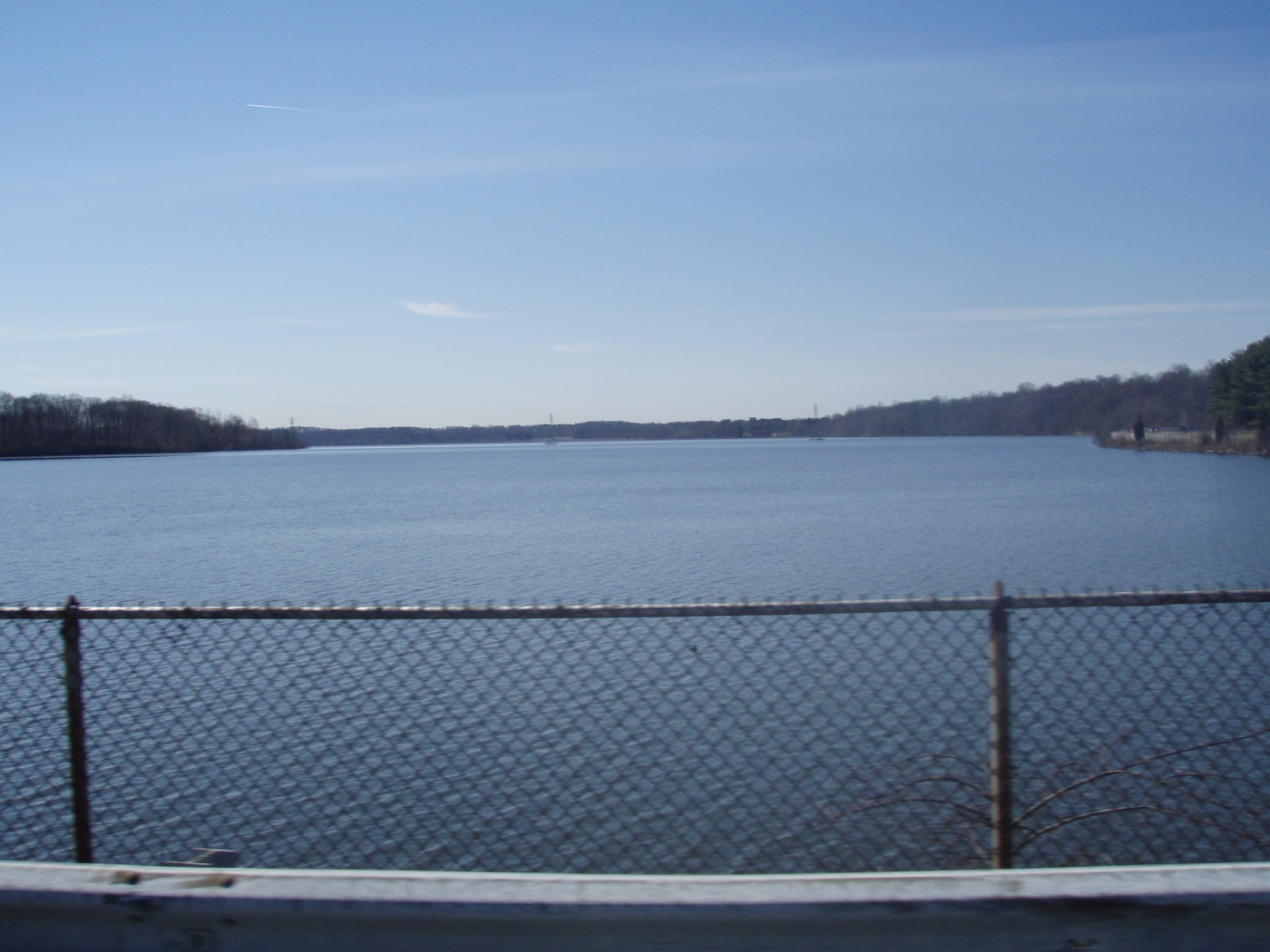
Old Tappan sits at the northern edge of Bergen County, a borough of roughly 4.2 square miles pressed up against Rockland County, New York. It was incorporated on 18 October 1894 and takes its name from the Tappan, the Native American people who once lived along these creeks and ridges. Lake Tappan, the reservoir that supplies much of the region’s drinking water, curls along its eastern flank.
For most of its life the borough was sleepy and almost entirely white, a place of winding lanes, large lots and colonial-era farmhouses. As of the 2020 census it counted 5,888 residents, with a median household income well above $125,000. What sets it apart now is not its size but its make-up: more than a quarter of the borough is Asian, the overwhelming majority of them Korean American.
How It Became Korean
The arrival of Koreans in Old Tappan is the tail end of a much larger migration that reshaped the whole of northern Bergen County across a single generation. To understand the borough, you have to follow the road that runs south from it, down through Closter, Demarest and Cresskill toward the George Washington Bridge.
From Manhattan to the Northern Valley
Korean immigration to the United States surged after the 1965 Hart-Celler Act lifted the old national-origin quotas. The first big wave settled in New York City, many of them around the produce markets, dry cleaners and small businesses of Queens and Manhattan’s emerging Koreatown.
By the 1990s those families were looking across the Hudson. Bergen County offered safe streets, short commutes over the George Washington Bridge and, above all, public schools with reputations that travelled fast within the community. In 1990 around 16,000 Koreans lived in Bergen County. By 2000 the figure had jumped roughly 130 percent to about 37,000, and by 2010 it had reached some 58,000, the highest Korean share of any county in the United States.
The earliest and densest Korean settlement clustered near the bridge, in Fort Lee and Palisades Park, where Broad Avenue became a wall of Hangul signage. From that base, families pushed steadily north, into wealthier, leafier boroughs as their incomes rose.
Several forces pulled in the same direction. Korean firms with Manhattan offices, squeezed by rising commercial rents in the 1990s, relocated wholesale operations and branch offices across the Hudson into Bergen County. Their employees and owners naturally chose to live nearby. At the same time, families who had spent a decade or more running businesses in New York wanted, almost universally, the same thing for their children: a stable suburb with a public school worth the move.
Up the valley, district by district
The migration up the Northern Valley followed a clear logic. Once a borough’s schools acquired a reputation among Korean parents, families with the means to do so concentrated there, and the reputation reinforced itself. Closter, where Korean Americans made up better than a fifth of residents by 2010, became an anchor. Cresskill and Tenafly drew their own large Korean professional communities, and neighbouring Demarest filled with Korean and Chinese families.
Old Tappan sat at the very top of this ladder, the northernmost and among the most expensive rungs. Families who started in Palisades Park or Fort Lee and moved up through Closter often saw Old Tappan as a final destination, the address that signalled both arrival and a particular school.
The school at the heart of it
That school is Northern Valley Regional High School at Old Tappan, opened in 1962 at 100 Central Avenue. It draws students from Old Tappan, Harrington Park, Northvale and Norwood, and it consistently ranks among the strongest public high schools in New Jersey.
For Korean families, the school is more than a feature of the town. It is the reason many of them chose Old Tappan at all. By the time their children reached the upper grades, Koreans made up roughly a third of the student body, and the school formalised that presence with an OT Korean Parents Association, which helps bridge language and culture between immigrant parents and the district.
The pattern is familiar across the corridor: parents who themselves attended university in Seoul or Busan, now working as physicians, pharmacists, engineers and business owners across the Hudson, organising their household around the academic trajectory of their children. Old Tappan offered the rare combination of a small, safe borough and a regional high school worth uprooting for.
Word of mouth did much of the rest. Within the tight networks of church congregations and Korean-language newspapers, the reputation of a school district travelled quickly. A family that bought a house near a top-ranked school told their friends, who told theirs, and within a few years a quiet Bergen borough could see its Korean population double. Old Tappan, sitting at the head of the valley with one of the most sought-after regional high schools attached to its name, was an obvious beneficiary of that chain of recommendation.
The Landmarks
Northern Valley Regional High School at Old Tappan, 100 Central Avenue. Opened in 1962, it is the institution that drew many Korean families to the borough in the first place. Its high rankings and its active Korean Parents Association make it the social and academic centre of Korean life in town.
Charles DeWolf Middle School, 275 Old Tappan Road. The borough’s grades five through eight school feeds into the regional high school. For Korean parents settling in Old Tappan, the local elementary and middle schools are the first rung of a carefully planned route through the district.
Korean Presbyterian Church of Palisade, 236 Old Tappan Road. A Korean-language congregation set among the borough’s quiet streets, it is one of the gathering points where Sunday worship doubles as community life, the place where new arrivals find their footing and where elders keep the language alive.
Lake Tappan. The reservoir along the borough’s eastern edge gives Old Tappan its defining geography and its name’s echo. Its wooded shoreline and walking paths are a familiar weekend backdrop for local families.
The Northern Valley corridor, south on Old Tappan Road toward Closter. A short drive carries residents into the dense Korean commercial life of Closter and the towns below it, where Korean bakeries, restaurants and supermarkets serve the whole valley. Old Tappan is residential and restrained; the corridor below supplies the daily Korean groceries and meals.
Old Tappan Borough Hall, 227 Old Tappan Road. The civic heart of a borough that incorporated in 1894, it sits on the same road as the schools and the Korean church, a reminder of how compact and walkable the centre of community life here remains.
Where They Came From
The Koreans of Old Tappan are, for the most part, a step removed from the immigrant generation that first crossed the Pacific. Their roots run back to South Korea, to Seoul and the major provincial cities, and many passed through New York City or the denser Korean boroughs nearer the George Washington Bridge before arriving here.
What unites them is less a single home region than a shared trajectory: arrival in the United States after 1965, a first chapter in Queens or Manhattan or Palisades Park, a climb up the income ladder and a corresponding climb up the Northern Valley. Old Tappan represents the upper reaches of that climb, a borough chosen deliberately by families who weighed school rankings and commute times and decided this was where they wanted their children to grow up.
Old Tappan Today
Old Tappan today is a borough where two stories sit comfortably side by side. There is the old town of colonial farmhouses, the borough hall on Old Tappan Road, the reservoir and the winding wooded lanes. And there is the Korean Old Tappan: the parents’ association at the high school, the Korean-language church, the steady presence of Korean families at every school event.
The borough itself stays residential and quiet. It has no Korean main street of its own; for that, residents drop down into Closter and the towns below, where the signage turns to Hangul and the supermarkets stock the ingredients of a Korean kitchen. Old Tappan is the bedroom at the top of the valley, the place families come home to.
It is also a community defined by its expectations. The same drive that brought Korean families north, the focus on education and steady advancement, shapes the rhythm of the town. The high school’s rankings are not an accident; they are, in part, a product of the families who chose Old Tappan because of them. Whether the next generation, raised in this leafy borough rather than in the markets of Queens, stays or scatters is the open question every immigrant suburb eventually faces.
Frequently Asked Questions
How many Koreans live in Old Tappan, New Jersey?
Old Tappan’s population was 5,888 at the 2020 census, of which more than a quarter identified as Asian, the great majority of them Korean American. Korean Americans made up about 17 percent of the borough as of 2010, one of the higher shares of any town in the United States.
Why did so many Koreans move to Old Tappan?
The Koreans in Old Tappan came chiefly for the schools. Northern Valley Regional High School at Old Tappan ranks among the strongest public high schools in New Jersey, and that reputation, along with the borough’s safety and proximity to New York City, drew Korean families north up the Northern Valley.
What is the main Korean institution in Old Tappan?
The high school is the practical centre of Korean community life, complete with an OT Korean Parents Association. The Korean Presbyterian Church of Palisade on Old Tappan Road is the borough’s main Korean-language congregation and gathering place.
How does Old Tappan relate to other Korean towns nearby?
Old Tappan sits at the northern end of a chain of Korean communities running up the Northern Valley, including Closter, Demarest, Cresskill and Tenafly. Many families moved up this corridor from the denser Korean enclaves near the George Washington Bridge in Fort Lee and Palisades Park.
Is there Korean food and shopping in Old Tappan?
Old Tappan itself is residential and has little commercial Korean life within its borders. Residents drive a few minutes south into Closter and the surrounding towns, where Korean restaurants, bakeries and supermarkets serve the whole Northern Valley.
When did Koreans start settling in this part of Bergen County?
The major movement came in the 1990s and 2000s, when Korean families left New York City for Bergen County. The county’s Korean population grew from about 16,000 in 1990 to roughly 58,000 by 2010, the highest Korean share of any county in the United States, with Old Tappan among the most concentrated boroughs.
If your family’s story passed through Old Tappan, or any of the places Koreans have made home in America, Atlas of Home can trace that journey. From Seoul to the top of the Northern Valley, to wherever you are now.