
On a Saturday morning in Sharon, you can hear the difference before you see it. The streets near Pond Street go quiet, families walk rather than drive, and the synagogues fill. For the better part of a century, the Jews in Sharon, Massachusetts have shaped a small town south of Boston into one of the most thoroughly Jewish places in New England, a community measured not in storefronts but in the rhythm of a town that learned to keep the Sabbath.
The Place
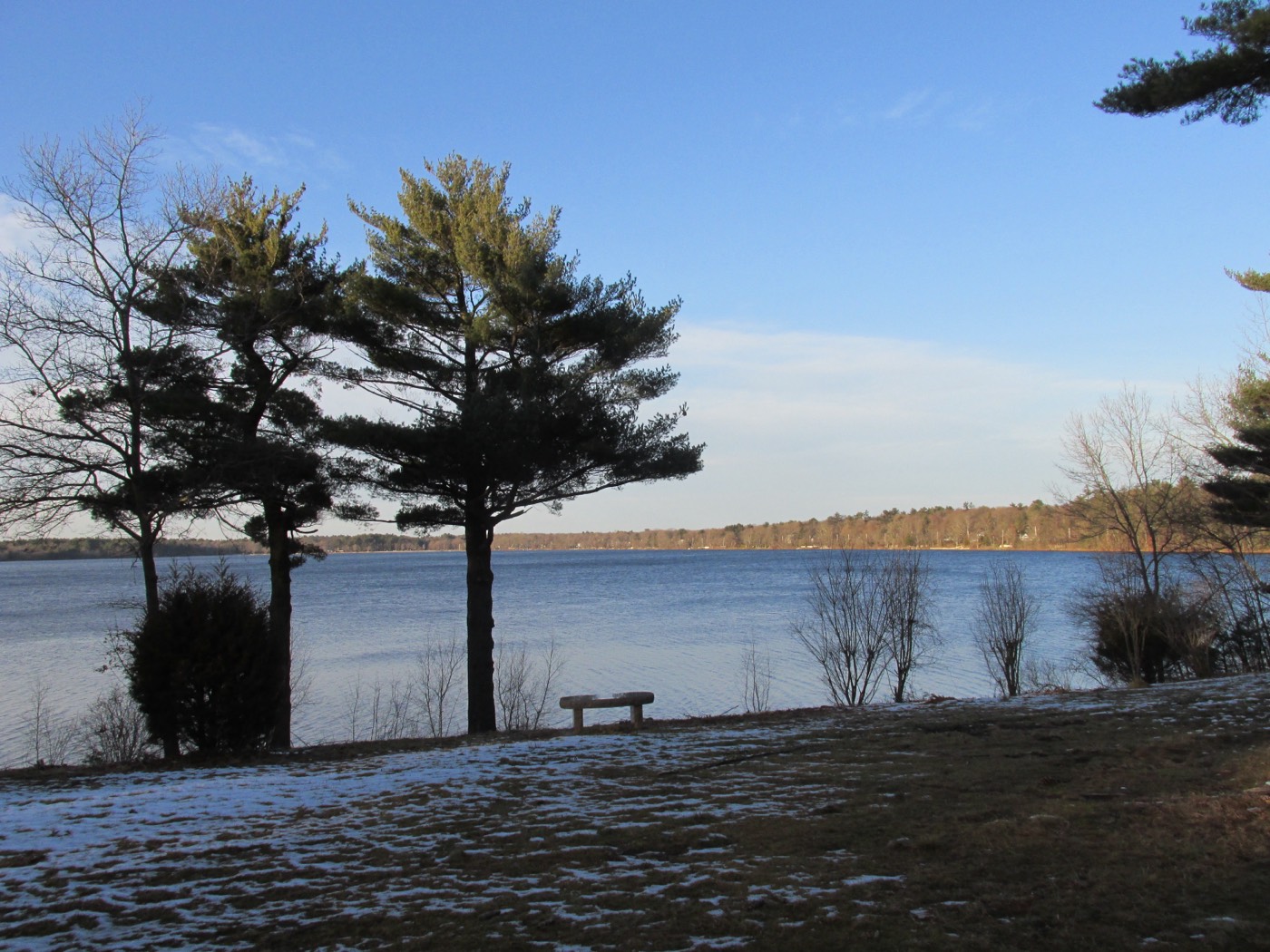
Sharon sits in Norfolk County, roughly 17 miles southwest of downtown Boston, a commuter-rail town of about 18,575 people spread across 24 square miles of woods, conservation land, and lake frontage. At its centre is Lake Massapoag, a 400-acre spring-fed pond that drew summer visitors for more than a century before it drew permanent residents.
It is an affluent, leafy place, with a median household income well above $127,000 and some of the highest property taxes in the state. Today it is also strikingly diverse, with a large Asian population and one of the largest mosques in New England, but its modern identity was built first by Jewish families who arrived for the air and the water and decided to stay.
How It Became Jewish
Sharon’s Jewish story begins not with flight from a city but with a holiday by a lake. From the 1800s through the 1940s, the town was a summer resort, the kind of place where Bostonians took rooms in inns and hotels to escape the heat and breathe the clean air off Lake Massapoag.
The summer people, 1920s and 1930s
In the 1920s, Jewish families began to appear among those summer crowds. Some came only for the season; others started to winter over. The land was cheap, the housing was cheaper, and a tight-knit group of families began gathering to worship in modest quarters, including a small structure behind the Rosenstein Mansion House, a hotel on Pond Street, and a little synagogue on Harding Street.
The community organised itself quickly. In 1925 the women of these families founded the Sharon Hebrew Ladies Aid. By 1936 the families had formally established the Jewish Community Centre of Sharon, with an initial membership of 32 households. It was a congregation built by summer people who had quietly become neighbours.
After the war, a town transformed
The real change came after the Second World War. As Boston’s Jewish families looked for room to raise children in the suburbs, many of them found that the closer, more fashionable towns were not eager to have them. While established communities like the Jews of Brookline and later the Jews of Newton anchored Jewish life closer to the city, Sharon, further out and less exclusive, was different. The land was available and the cost was low, and the families who had summered there for two decades already had a foothold.
They moved in permanently and in numbers. Through the 1950s and 1960s the small summer congregation grew into a year-round institution, and the town’s character shifted with it. By local estimates, by the 1960s and 1970s roughly 60 per cent of Sharon was Jewish, an extraordinary share for any American town, comparable to the heavily Jewish suburbs that grew up outside other big cities, from Scarsdale outside New York to the dense urban enclave of Borough Park in Brooklyn.
Building the institutions
The congregation that began as the Jewish Community Centre became Temple Israel, which in 1949 put up its first dedicated building on land donated by Benjamin Rosenstein. A Hebrew School wing followed in 1954, and a major expansion came in the 1960s. Today it is the largest Conservative synagogue in the South Area of Boston.
Other congregations followed the population. Temple Sinai, a Reform congregation, grew out of the Sharon School of Jewish Education and was established in 1958. Orthodox families built their own institutions, and over the decades the town accumulated the full apparatus of Jewish life: multiple synagogues, a mikvah, and an eruv that lets observant residents carry on the Sabbath. Sharon also became home to Sharon Memorial Park, a cemetery serving the wider Jewish community.
By the end of the century Sharon counted seven synagogues, a density that turned an ordinary suburb into something closer to a Jewish village with a commuter rail stop.
That density was not only spiritual but social. The congregations spawned sisterhoods and brotherhoods, nursery schools and adult-education programmes, youth groups and Hebrew schools that fed one another. Children grew up assuming that their friends, their teachers, and their neighbours kept the same holidays they did, an experience rare for American Jews and almost unheard of in a town this small. The eruv quietly extended the bounds of the Sabbath across whole neighbourhoods, and the mikvah anchored the observant life that the Orthodox congregations sustained.
The Landmarks
Temple Israel, 125 Pond Street. The town’s oldest and largest Jewish congregation, descended directly from the 32 families who organised in 1936. Its first building rose in 1949 on land donated by Benjamin Rosenstein, and it dedicated the Weitzenkorn Family Chapel as recently as 2024. It remains the largest Conservative synagogue south of Boston.
Temple Sinai, 25 Canton Street. Sharon’s Reform congregation, established in 1958 and now home to more than 450 families. After decades on Ames Street the congregation moved in December 2000 into a new building on Canton Street, set among acres of conservation land.
Temple Adath Sharon, 18 Harding Street. A Conservative congregation on the very street where some of the earliest Jewish worship in Sharon took place, a reminder that the town’s Jewish geography has stayed remarkably close to its origins.
Striar Hebrew Academy, 100 Ames Street. A Modern Orthodox Jewish day school serving children from pre-kindergarten through fifth grade, with an early learning centre and after-school programmes. It shares its Ames Street building with Young Israel of Sharon, one of the town’s Orthodox congregations.
Chabad Center of Sharon, 162 North Main Street. The local Chabad-Lubavitch outpost, offering services, classes, and outreach to Jews of every background and level of observance, a fixture of the town’s Orthodox life.
Lake Massapoag, Memorial Beach. The 400-acre spring-fed lake that drew the first Jewish summer visitors a century ago. Its Memorial Beach is still the town’s recreational heart, the place where the resort era and the modern community quite literally meet.
Shaw’s Sharon, 700 South Main Street. The local supermarket whose in-store bakery carries KVH kosher certification, one of the everyday conveniences that make observant life in Sharon practical. For fuller kosher provisioning, families also rely on Zayde’s Market in neighbouring Canton.
Where They Came From
The Jews who built Sharon came overwhelmingly from Boston and its inner neighbourhoods, the children and grandchildren of the great Eastern European immigration that filled the city’s West End, Roxbury, and Dorchester in the early twentieth century. They were not arriving from abroad; they were moving outward, one suburb at a time.
What set Sharon apart was timing and openness. As more desirable towns closer to the city quietly kept Jewish families out, Sharon’s cheaper land and existing summer community made it a place where they could actually buy a house and build a synagogue. The summer colony became a beachhead, and word travelled through extended families and congregations the way it always had.
The pattern was self-reinforcing. Once a critical mass of families had settled, Sharon offered something the inner suburbs could not promise a young Jewish couple in the 1950s: the certainty of a synagogue within walking distance, a Hebrew school for the children, and neighbours who would not look twice at a mezuzah on the doorpost. Each family that arrived made the next family’s decision easier, and the town’s reputation as a place that simply let Jews live their lives drew more of them out from Boston, decade after decade.
Sharon Today
Sharon is no longer the 60 per cent Jewish town of the 1970s. Residents now estimate that the Jewish share has slipped below half, as the founding generation ages and young families find themselves priced out by home values that start near $800,000 and property taxes among the highest in Massachusetts. The synagogues that once strained to hold the crowds now work to hold their members.
At the same time, the town has grown into one of the most genuinely plural places in the region. A large Asian population, around a thousand Hindu residents, and the Islamic Center of New England, among the largest mosques in the area, now share the same square miles as the synagogues, the mikvah, and the eruv. Sharon’s reputation for welcoming people who were turned away elsewhere did not end with the Jewish families who first tested it.
The schools remain the magnet they always were. Sharon’s public schools rank among the best in Greater Boston, with the high school regularly placing near the top of regional lists and a new high school building opened for the 2023 to 2024 year. For Jewish families weighing whether to stay or to go, the combination of strong schools, walkable synagogues, and a century of community history is still, for many, reason enough to remain.
Frequently Asked Questions
How did Sharon, Massachusetts become so Jewish?
The Jews in Sharon, Massachusetts first arrived in the 1920s and 1930s as summer visitors drawn to Lake Massapoag. After the Second World War, as nearby suburbs proved less welcoming, many Boston Jewish families settled in Sharon permanently because land was available and housing was affordable, and by the 1960s and 1970s about 60 per cent of the town was Jewish.
How many synagogues are in Sharon?
Sharon is home to seven synagogues, spanning the Conservative, Reform, and Orthodox movements, along with a mikvah and an eruv. The oldest is Temple Israel on Pond Street, which traces its roots to a congregation organised in 1936.
What is the oldest synagogue in Sharon?
Temple Israel, at 125 Pond Street, is the town’s oldest and largest congregation. It grew from the Jewish Community Centre of Sharon, founded in 1936 with 32 families, and built its first dedicated building in 1949 on land donated by Benjamin Rosenstein.
Is there a Jewish school in Sharon?
Yes. Striar Hebrew Academy at 100 Ames Street is a Modern Orthodox Jewish day school serving children from pre-kindergarten through grade five, and it shares its building with Young Israel of Sharon. Several congregations also run their own religious schools.
Can you keep kosher in Sharon, Massachusetts?
You can. The Jews in Sharon, Massachusetts are supported by an eruv, a mikvah, and kosher provisioning, including the KVH-certified bakery at Shaw’s on South Main Street, with fuller kosher groceries available at Zayde’s Market in neighbouring Canton.
Is Sharon still a Jewish town today?
Sharon remains deeply shaped by its Jewish community, though the Jewish share of the population has declined from its mid-century peak to under half, as the founding generation ages and home prices rise. The synagogues, schools, and Sabbath rhythm of the town endure, alongside a growing Asian, Hindu, and Muslim presence.
If your family’s story passed through Sharon, or any of the places Jews have made home in America, Atlas of Home can trace that journey. From a hotel by Lake Massapoag to a synagogue on Pond Street, to wherever you are now.