
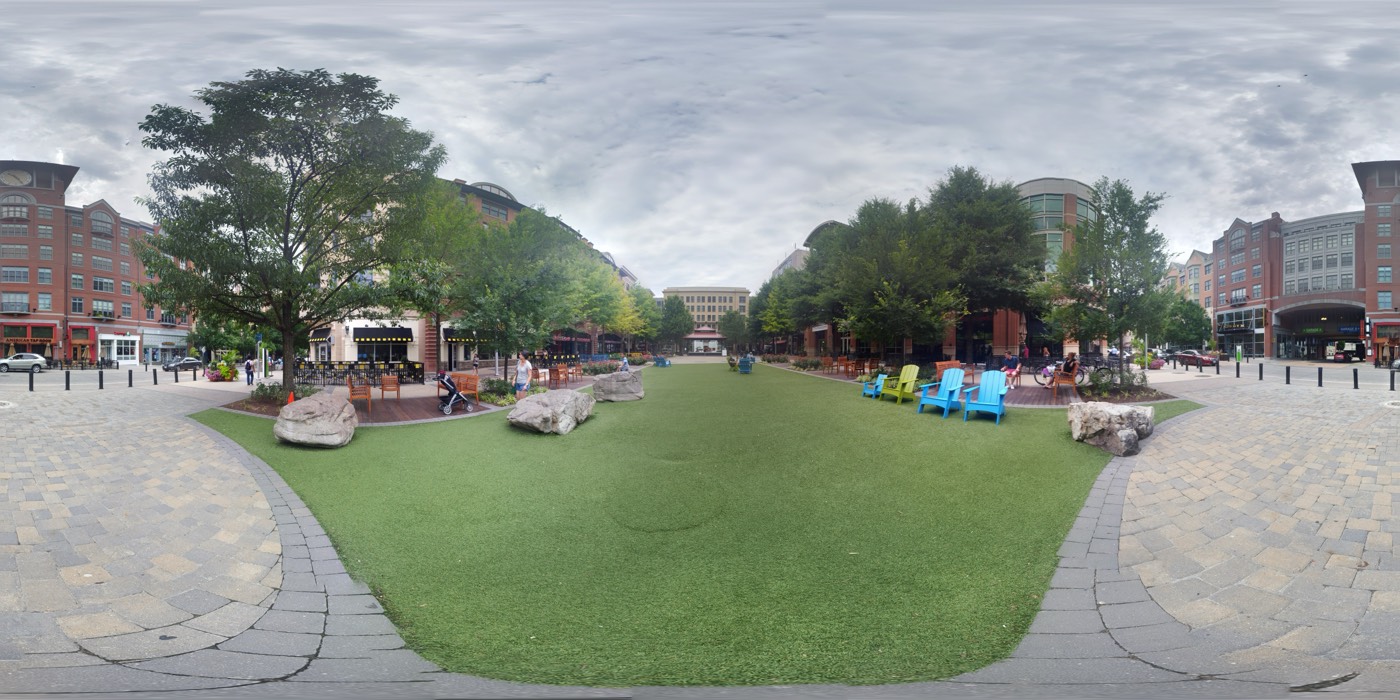
On a Friday afternoon in North Bethesda, the parking lot at Moti’s Market fills with cars whose drivers are racing the sunset. Challah, a brisket, a bottle of Israeli wine, and home before candle-lighting. The Jews in Rockville, Maryland have built one of the most complete Jewish worlds in suburban America here, a place where a Conservative congregation of 1,200 families and a tight Orthodox enclave a few miles east can share the same county, the same schools, and the same kosher butcher.
The Place
Rockville is the county seat of Montgomery County, the most populous county in Maryland and one of the wealthiest in the country. With roughly 67,000 residents and a median household income around $128,000, it sits at the centre of the affluent Maryland suburbs that ring Washington, D.C.
It is a commuter town with deep roots, an old courthouse square and a Metro Red Line stop that carries workers into the District each morning. The schools are among the strongest in the state, and the population is strikingly diverse: white, Asian, Black and Latino families living within the same ZIP codes.
Into this layered suburb the Jewish community arrived in waves, following the same arc as so many American Jews: out of the city, into the green, and then building everything they needed once they got there.
How It Became Jewish
The Jewish story in Rockville is really the story of a postwar migration out of Washington, D.C. The institutions did not begin here. They walked here, one congregation at a time, from the District’s old Jewish neighbourhoods along 16th Street and Petworth.
From the District to the suburbs
Ohr Kodesh Congregation, established in 1948, is generally recognised as the first Jewish institution in Montgomery County. It marked the moment the community began to think of the Maryland suburbs not as a frontier but as home.
The pattern that followed was repeated again and again. A congregation founded in the city would watch its members move north and west across the District line through the 1950s and 1960s, then follow them out to Montgomery County.
B’nai Israel, the area’s anchor Conservative congregation, is the clearest example. Founded in 1925 and rooted for decades in Sixteenth Street Heights, it watched its membership thin as families left the city. By the mid-1960s the building had been vandalised and members reported feeling unsafe at services.
Building on Montrose Road
In 1970, B’nai Israel bought 14 acres on Montrose Road in Rockville and sold its old District building to the Nineteenth Street Baptist Church for $1.2 million. The new home, a sprawling complex eventually built out to 125,000 square feet, signalled that the community’s centre of gravity had moved decisively into Maryland.
Other congregations made the same journey. Congregation Beth Tikva, founded in 1959, served Rockville for decades before merging in 1997 with Temple Israel of Silver Spring to form Tikvat Israel, an egalitarian Conservative synagogue that remains in the city today.
The Orthodox community organised in parallel. Magen David Sephardic Congregation, founded in 1966, gave the Sephardic and Mizrahi families of the region a spiritual home on Woodglen Drive, while still welcoming Ashkenazi members. In 1978, Rabbi Bogner placed an advertisement to gauge interest in an Orthodox congregation in Rockville, bought a house at 320 Lorraine Drive, and Ezras Israel Congregation of Rockville was born.
The Kemp Mill enclave
A few miles east, in the Kemp Mill section of Silver Spring, a denser Orthodox world took shape. The neighbourhood was among several in the Silver Spring area built by Jewish developers catering to Jews leaving the District.
Young Israel Shomrai Emunah, established as a congregation in 1951, was the first Orthodox synagogue in Montgomery County and grew into one of the largest in Maryland. Kemp Mill Synagogue followed, founded in 1990 and moving into its building on Kemp Mill Road in 1998. Together with Woodside, Shaare Tefila and the Yeshiva of Greater Washington, they made the area walkable on Shabbat, the way an Orthodox community must be.
Kemp Mill is technically Silver Spring, not Rockville, and the families there would tell you the distinction matters. But the two communities share the same county institutions, the same day schools, and the same Friday rush to the kosher market, and together they form the eastern and western poles of Montgomery County Jewish life.
Schools, philanthropy and a kosher infrastructure
What turned a cluster of synagogues into a self-sustaining community was the day-school system. The Charles E. Smith Jewish Day School, founded in 1966 and named for the local Jewish real-estate magnate and philanthropist, built campuses in the Rockville area. The Melvin J. Berman Hebrew Academy, an Orthodox school tracing its origins to a 1944 founding in the District, eventually settled in the Rockville area as well.
The Bender JCC of Greater Washington, on Montrose Road near B’nai Israel, became the community’s secular living room: a fitness centre, a preschool, a theatre and a meeting hall under one roof. And the kosher grocers, Moti’s Market on Boiling Brook Parkway in North Bethesda and Shalom Kosher on Lamberton Drive in Silver Spring, gave the community the one thing it could not do without.
The Landmarks
B’nai Israel Congregation, Montrose Road, Rockville. The area’s largest Conservative congregation, with roughly 1,200 member families and a 125,000-square-foot complex on land it purchased in 1970. Its 2011 gold award from the Conservative movement’s Solomon Schechter Awards recognised a programme of adult Jewish education that has become a model for other synagogues.
Bender JCC of Greater Washington, 6125 Montrose Road, Rockville. One of the largest metropolitan JCCs in the country, with a lineage that reaches back to 1913. For thousands of families it is the first door into Jewish Rockville, the place where children swim, seniors gather, and the secular and observant meet on neutral ground.
Magen David Sephardic Congregation, 11215 Woodglen Drive, Rockville. Founded in 1966, this modern Orthodox synagogue carries the liturgy and melodies of the Sephardic and Mizrahi worlds into a county that is overwhelmingly Ashkenazi. Its membership has long included Ashkenazi families drawn to its warmth.
Moti’s Market, 4860 Boiling Brook Parkway, North Bethesda. The community’s glatt kosher butcher and grocer, stocking fresh meat and poultry, fish, prepared foods, wines and home-baked bread. On Friday afternoons it is the busiest room in Jewish Montgomery County.
Young Israel Shomrai Emunah, Kemp Mill, Silver Spring. Established as a congregation in 1951, it was the first Orthodox synagogue in Montgomery County and remains one of the largest in the state. It anchors the walkable Orthodox enclave a few miles east of Rockville’s centre.
Charles E. Smith Jewish Day School. Founded in 1966 and named for the philanthropist and real-estate developer, the school educates Jewish children from across the denominational spectrum, with a lower school on East Jefferson Street in Rockville and an upper school nearby in North Bethesda.
Old St. Mary’s Church Cemetery, Rockville. Not a Jewish landmark, but the resting place of F. Scott Fitzgerald, his wife Zelda and their daughter Frances, and a reminder of Rockville’s older identity. Fitzgerald was first buried elsewhere because the Catholic diocese balked, and the family was reinterred here in 1975, the headstone carved with the closing line of The Great Gatsby.
Where They Came From
The Jews of Rockville did not arrive from a single village abroad. They came, overwhelmingly, from a few miles south, out of the Jewish neighbourhoods of Washington, D.C.
Those families were themselves the children and grandchildren of the great Eastern European migration, Jews from the Russian Empire, Poland and Lithuania who had settled in the District in the early twentieth century, the same wave that filled the tenements and shuls of places like Borough Park in Brooklyn. When the city changed in the postwar decades, they followed the American suburban dream up Connecticut Avenue and across the county line.
Layered on top of that Ashkenazi base came others: Sephardic and Mizrahi families who found a home at Magen David, Israelis drawn to the region’s universities, government and tech sectors, and Soviet Jews who arrived after the 1970s and 1980s emigrations. Today Montgomery County’s Jewish community is one of the largest in the country, with the 2017 Greater Washington Jewish Community Demographic Study counting roughly 105,300 Jewish residents in the county alone.
Rockville Today
The community in and around Rockville is now mature, plural and confident. A family can choose between large Conservative congregations like B’nai Israel and Tikvat Israel, a Sephardic synagogue, and the dense Orthodox network of Kemp Mill, all within a short drive, and send their children to two well-established day schools without leaving the county. The pattern echoes other affluent Jewish suburbs, from the Jewish community in nearby Potomac to the Jewish community in Pikesville outside Baltimore.
It is not a community living in the past. The Bender JCC and the synagogues run thriving preschools and youth programmes, and the kosher infrastructure has only deepened. At the same time, Montgomery County has not been immune to the rise in antisemitic incidents reported across the country, a reality the community discusses openly even as it describes the county as an empowering place to be Jewish.
What endures is the sense of a complete world. Rockville is also home to other strong immigrant communities. The Persian community in Rockville and the Chinese community in Rockville share its streets and schools, part of what makes Montgomery County one of the most genuinely diverse suburbs in America. For the Jewish families here, the achievement is quieter and older: they rebuilt, intact, the institutions they once kept in the city.
Frequently Asked Questions
How large is the Jewish community in Rockville and Montgomery County?
The 2017 Greater Washington Jewish Community Demographic Study found roughly 105,300 Jewish residents in Montgomery County, about 35 percent of the region’s Jewish population. Rockville and neighbouring North Bethesda and Potomac form the western centre of that community, with Kemp Mill in Silver Spring as its dense Orthodox eastern pole.
Why did the Jews in Rockville settle in Montgomery County?
The Jews in Rockville mostly moved north out of Washington, D.C., during the postwar decades, following the broader suburban migration. Congregations such as B’nai Israel relocated their entire institutions, in B’nai Israel’s case buying land on Montrose Road in 1970, after their District neighbourhoods changed.
What are the main synagogues in Rockville?
The largest is B’nai Israel, a Conservative congregation of about 1,200 families on Montrose Road. Others include Tikvat Israel, formed in 1997 from a merger that included Rockville’s Congregation Beth Tikva, and Magen David Sephardic Congregation on Woodglen Drive, founded in 1966.
Where is the Orthodox community concentrated?
The densest Orthodox enclave is in Kemp Mill, a section of Silver Spring a few miles east of Rockville. It is anchored by Young Israel Shomrai Emunah, founded as a congregation in 1951, along with Kemp Mill Synagogue and other shuls, forming a walkable Shabbat community.
Are there kosher markets and Jewish schools in the Rockville area?
Yes. Moti’s Market on Boiling Brook Parkway in North Bethesda is the main kosher grocer and butcher, with Shalom Kosher serving Silver Spring. The Charles E. Smith Jewish Day School and the Melvin J. Berman Hebrew Academy educate children across the denominational range.
Is F. Scott Fitzgerald really buried in Rockville?
Yes. F. Scott Fitzgerald, his wife Zelda and their daughter Frances are buried at Old St. Mary’s Church Cemetery in Rockville. The family was reinterred there in 1975, and the grave, inscribed with the final line of The Great Gatsby, is the cemetery’s most visited site.
If your family’s story passed through Rockville, or any of the places Jews have made home in America, Atlas of Home can trace that journey. From the Jewish streets of Washington, D.C., to a complex on Montrose Road, to wherever you are now.