
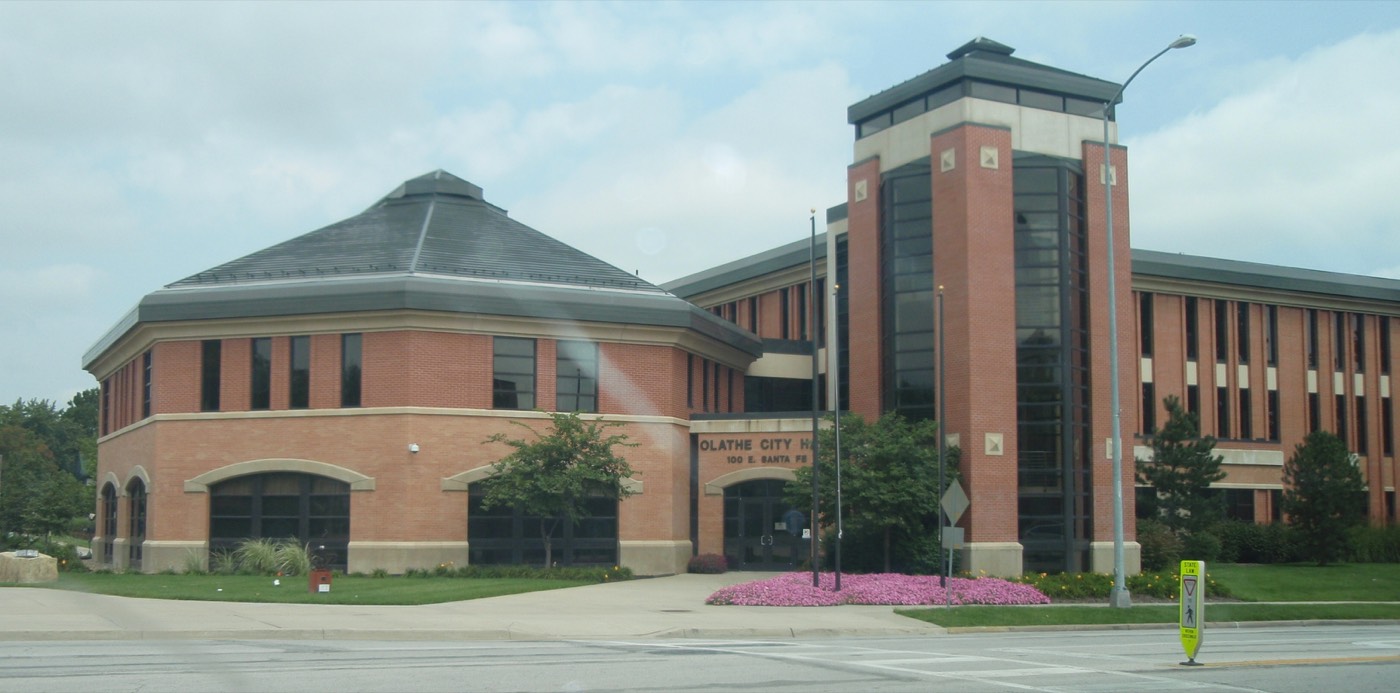
Drive west on 119th Street as the office parks thin out and the subdivisions begin, and you reach the part of Johnson County where the Indians in Olathe, Kansas have quietly built a life. It is not a place that announces itself. There is no Little India, no festival arch over the road. There is a Garmin badge clipped to a lanyard, a dosa griddle warming on a Saturday morning, and a school district that parents researched for a year before they signed the lease.
The Place
Olathe is the county seat of Johnson County and the fourth largest city in Kansas, with 141,290 residents counted in the 2020 census. It sits at the southwestern edge of the Kansas City metro, a region whose immigrant layers run from the Croatian streets of Strawberry Hill to the newer suburbs, bordering Lenexa to the north and Overland Park to the east, far enough out that land was once cheap and lots were once large.
The name comes from a Shawnee word said to mean beautiful, given when the town was founded in 1857 along the Santa Fe Trail. For a long time it was a trail town and then a farm-service town, the kind of county seat with a courthouse square and not much reason for an engineer from Hyderabad to stop.
That changed when the metro grew outward and Olathe became the place where you could buy more house for your salary. The median household income here runs near $96,500, and the schools, not the skyline, are the draw.
How It Became Indian
There was no single boat, no garment district, no railroad that brought Indians to Olathe. They arrived the way most Indian Americans arrived in the suburban Midwest: one job offer at a time, then one cousin at a time, until a critical mass formed almost by accident.
The Overland Park overflow
The Kansas City Indian story did not begin in Olathe. It began a few miles east, in the older Indian community of Overland Park and Leawood, where the metro’s first wave of Indian doctors and engineers settled in the 1980s and 1990s near the hospitals and the corporate offices along College Boulevard.
Olathe became the place families moved when they wanted the same schools and the same temple access but more square footage and a newer build. Olathe was the next ring out, the affordable cousin of the established Indian addresses, much the way Roseville absorbed families priced out of its metro. The community here is best understood as an extension of that older settlement rather than a separate origin story.
Garmin and the engineers
The single largest reason Indians ended up in Olathe specifically has a logo you have seen on a car dashboard. Garmin moved its world headquarters to Olathe in the 1990s and now employs roughly 4,600 people at its campus at 1200 East 151st Street, making it the largest private employer in the city.
Garmin’s work is exactly the kind that draws Indian talent: GPS, avionics, embedded software, wearables, hardware and firmware engineering. For two decades the company has hired electrical and software engineers by the hundred, and a meaningful share of those H-1B and green-card hires came from India. For many Indian families, the commute to a job in Olathe made living in Olathe the obvious choice.
Medicine, IT, and the second wave
Garmin was never the whole picture. Olathe Health and the wider Kansas City hospital system pulled in Indian physicians, anaesthetists, and pharmacists, the same professions that anchored the earlier Overland Park wave. The metro’s IT services and consulting firms, along with the engineering departments at companies across the I-35 corridor, did the rest.
By the 2010s the families arriving were noticeably Telugu and Gujarati, reflecting the broader American IT and small-business migration of those years that also reshaped Midwestern suburbs like Zionsville outside Indianapolis. Where the first Indian arrivals to the metro skewed toward Punjabi and North Indian medical families, the newer Olathe households often spoke Telugu at the dinner table and traded notes about Blue Valley versus Olathe schools on WhatsApp.
The schools did the recruiting
If Garmin brought the parents, the school districts kept them. Olathe is served by Olathe USD 233, one of the largest and best-regarded districts in Kansas, and parts of the city fall inside the highly rated Blue Valley USD 229. For Indian families, where a child’s school is often the first question asked and the last compromise made, this combination was decisive.
The pattern compounded. A family bought in a particular subdivision because a colleague’s children did well at the local elementary, and within a few years three more Indian families lived on the same cul-de-sac. The clustering you see today was built one good report card at a time.
The Landmarks
Hindu Temple and Cultural Center of Kansas City, 6330 Lackman Road, Shawnee. The spiritual anchor for the whole metro’s Indian community, including Olathe’s. Local Hindu and Jain families began planning it in 1982, broke ground in 1985, and opened the doors in May 1988 to thousands of worshippers. It offers services in sixteen languages and houses both Hindu and Jain deities, which is why Olathe’s Jain families consider it home too.
Sri Ganesha Temple of Kansas, 14891 Metcalf Avenue, Overland Park. A short drive east of Olathe, this temple gives South Indian families a more familiar form of worship close to home. For Telugu and Tamil households in Olathe, a Ganesha temple within fifteen minutes is part of what made the suburb feel livable.
Yuva Eats, 14967 West 119th Street, Olathe. One of the few sit-down Indian kitchens actually inside Olathe city limits, at the corner of 119th and Black Bob Road. Its Indian and Nepalese menu, momos alongside the curries, mirrors the mixed Himalayan and Indian families who now live nearby.
Aahaa Modern Indian Cuisine, 7328 West 119th Street, Overland Park. Just over the city line, Aahaa serves the South Indian staples, the crisp dosa and sambar, that Olathe’s Telugu families grew up on. The 119th Street corridor it sits on has become the informal main street of Indian Johnson County.
Garmin headquarters, 1200 East 151st Street, Olathe. Less a landmark than an engine. The campus is where a large share of Olathe’s Indian professionals spend their days, and the reason many of them moved to this corner of Kansas in the first place. The lanyard is a kind of community marker here.
Jain Association of Kansas City, Shawnee. The metro’s Jain families, including those in Olathe, organise around this association and the shared facilities at the Lackman Road temple complex. For a community as small and dispersed as Midwestern Jains, that shared roof matters more than distance.
The Olathe school campuses. Olathe’s high schools, from Olathe West to the older Olathe North and East, are landmarks of a different sort. Walk a graduation and you will hear Patel and Reddy and Sharma read out alongside the Kansas names, a record of two decades of arrivals.
Where They Came From
The Indians in Olathe come overwhelmingly from two streams. The first and older stream is the North Indian and Punjabi medical migration that built the metro’s original Indian presence in Overland Park and Leawood, doctors and their families who arrived in the 1980s and 1990s.
The second and now dominant stream is the Telugu and Gujarati professional migration of the 2000s and 2010s, drawn by IT services work, engineering roles, and the H-1B pipeline that fed companies like Garmin. Telugu families from Andhra Pradesh and Telangana, and Gujarati families with one foot in business and one in software, make up much of the newer growth.
What united both streams was not region but calculation. They came for stable, technical, well-paid work and for schools that would carry their children further, and Olathe offered both at a price the coasts could not match.
Olathe Today
The Indian community in Olathe is real but understated. Johnson County as a whole counts roughly 13,670 Indian residents, one of the highest concentrations in Kansas, and Olathe is among the four cities, with Overland Park, Shawnee, and Leawood, where most of them live. At the city level the census still folds Indians into a broader Asian figure of around four to five percent, which undercounts how visible they have become in particular schools and subdivisions.
You feel the community more than you measure it. It is in the grocery aisle stocked with toor dal off 119th Street, the Diwali gatherings that fill the Lackman Road temple past a thousand people, the carpool threads, the cricket conversations in Garmin break rooms.
It is not a showcase enclave, and that is rather the point. Olathe’s Indian families chose a place that is comfortable, well-schooled, and unflashy, and they have made it home on those terms. The story here is less about arrival than about settling in, which in the Midwest is the harder and quieter achievement.
Frequently Asked Questions
How many Indians live in Olathe, Kansas?
The census does not publish a separate Indian figure for Olathe, grouping them within an Asian population of roughly four to five percent of the city’s 141,290 residents. Johnson County as a whole counts about 13,670 Indian residents, and Olathe is one of the four cities where most of them live.
Why did Indians move to Olathe specifically?
The biggest single draw was Garmin, whose Olathe headquarters hires engineers and software developers, many of them from India. The Indians in Olathe, Kansas were also pulled by top-rated Olathe and Blue Valley schools and by more affordable, larger homes than nearby Overland Park or Leawood.
Where do Indian families in Olathe worship?
Most attend the Hindu Temple and Cultural Center of Kansas City on Lackman Road in Shawnee, which serves both Hindu and Jain communities, or the Sri Ganesha Temple of Kansas in Overland Park. Both are a short drive from Olathe and anchor the metro’s religious life.
What parts of India do Olathe’s Indian families come from?
The older medical wave skews North Indian and Punjabi, settling first in Overland Park and Leawood. The newer and now larger wave is Telugu and Gujarati, from Andhra Pradesh, Telangana, and Gujarat, drawn by IT and engineering work across the Kansas City metro.
Is Olathe a good place for Indian families?
Many think so. The Indians in Olathe, Kansas point to strong schools, the Garmin and healthcare job base, affordable housing, and temple and grocery access along the 119th Street corridor, all within a safe, growing suburb of the Kansas City metro.
Where can you find Indian food and groceries in Olathe?
Yuva Eats on West 119th Street in Olathe serves Indian and Nepalese dishes, while Aahaa Modern Indian Cuisine just across the line in Overland Park focuses on South Indian classics. The 119th Street corridor between the two cities holds most of the area’s Indian restaurants and grocers.
If your family’s story passed through Olathe, or any of the places Indians have made home in America, Atlas of Home can trace that journey. From a village in Andhra Pradesh or a town in Gujarat, to a Garmin lanyard and a cul-de-sac off 119th Street, to wherever you are now.