
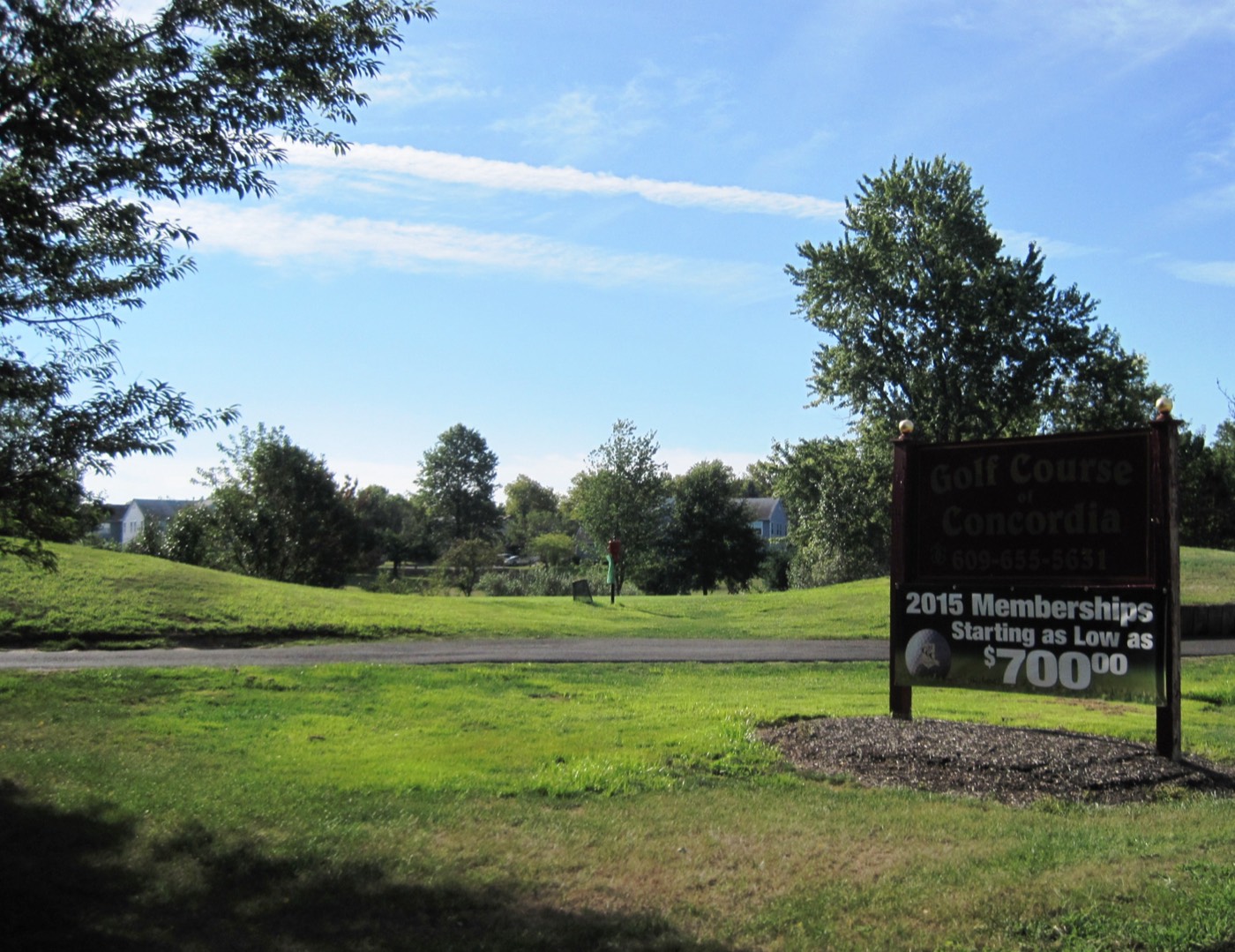
Drive the gridded lanes of Concordia or Rossmoor on a September evening and you will hear it before you see it: the clatter of a kitchen turning out dosa batter, a grandfather narrating a cricket match in Telugu from a screened porch, the small bell of a home shrine. The Indians in Monroe Township did not arrive here the way most diasporas arrive in America. Many came twice, first to Edison or Jersey City as young engineers, then back again decades later, grey-haired, to retire among their own in the quiet of central New Jersey. This Middlesex County township of roughly 50,000 people has become one of the most concentrated Indian retirement landscapes in the country, layered atop a town that was built, half a century ago, for a very different kind of settler.
The Place
Monroe Township sits in the soft middle of New Jersey, a sprawling 42-square-mile township in southern Middlesex County, hemmed by East Brunswick to the north and the farmland of Mercer and Monmouth counties to the south and east. It was incorporated in 1838 and named in honour of James Monroe, the fifth president, when it was still potato fields and gravel pits.
For more than a century it stayed rural. What changed everything was a ramp. When Exit 8A of the New Jersey Turnpike opened in the late 1960s, the township became suddenly, decisively accessible, an hour from Manhattan and minutes from the Princeton corridor. Developers saw open land and good roads, and they built.
What they built first was retirement. Long before the software engineers arrived, Monroe was a town of golf-cart paths and clubhouses, of age-restricted communities laid out like garden cities for the East Coast retiree. That template, it turned out, would suit a wave of newcomers no one had planned for.
How It Became Indian
The numbers are almost startling in their steepness. In the 2000 census, Monroe Township counted 256 residents of Indian origin, less than one percent of the town. By 2017 that figure had reached roughly 5,943, about 13.6 percent of the population. Asian residents as a whole crossed a quarter of the township by the 2020 census. In two decades a town that was overwhelmingly white and ageing acquired one of the densest Indian populations in suburban New Jersey.
The first arrivals, by way of Edison
To understand Monroe you have to understand the towns just to its north. Edison and Iselin, along the old Oak Tree Road corridor, became the symbolic capital of Indian New Jersey in the 1980s and 1990s, the place where the saree shops and the sweet stalls and the first temples clustered. The story of the Indians in Edison, New Jersey is the prologue to Monroe’s.
The engineers and pharmacists and physicians who built careers in that corridor raised their children there, in East Brunswick and Marlboro and the school districts that became shorthand for Indian-American achievement. Then, slowly, they began to look south for room to breathe.
Retirement, reinvented
The decisive turn came when the parents stopped working. Monroe’s age-restricted communities, Rossmoor, Concordia, Clearbrook, Greenbriar at Whittingham, Encore, Stonebridge, Regency at Monroe, had been designed in the 1960s and 1970s for a generation of retiring New Yorkers. By the 2000s those original owners were selling, and the buyers were increasingly Indian.
For an Indian couple in their sixties, the appeal was exact. A single-floor home with no stairs to climb, low maintenance, a clubhouse, and crucially, a short drive to grown children and grandchildren still living in Edison or Princeton or Robbinsville. The 55-plus rule, once a relic of a previous era, now solved a particularly Indian problem: how to live near your family without living on top of them.
The grandparent economy
What followed was a kind of chain migration in miniature, conducted not over oceans but over a few exits of the Turnpike. One couple would buy in Concordia, then tell a brother-in-law, then sponsor the parents of a neighbour back in Hyderabad or Ahmedabad. Walking groups formed. Bhajan circles met in living rooms. The clubhouses that once hosted bridge nights began hosting Diwali parties.
Monroe’s median age, around 58, reflects this. It is an older town than most Indian suburbs, and that is precisely the point. The community here skews toward the grandparents, the retired professionals who spent their working lives elsewhere and chose Monroe for the last chapter. They watch the grandchildren after school, cook the family meals, and keep the religious calendar.
A working-age layer too
This is not only a retirement town. Plenty of younger Indian families, drawn by the strong schools and by proximity to the pharmaceutical and IT employers of the Route 1 corridor, have settled in Monroe’s newer non-restricted subdivisions. They are the working-age layer beneath the retirees, often the very children and in-laws whose presence drew the older generation south in the first place.
The Landmarks
Om Sri Sai Balaji Temple and Cultural Center, 285 Rhode Hall Drive. The spiritual anchor of Indian Monroe sits on an eleven-acre campus with a 45,000-square-foot facility. Ground was broken in June 2016, and the temple is home to a sweep of deities, Lord Venkateswara, the Shiva family, Shirdi Sai Baba and Sathya Sai Baba, alongside a towering 22-foot Hanuman that has become its signature.
BAPS Swaminarayan Akshardham, 112 North Main Street, Robbinsville. A short drive west of Monroe rises one of the wonders of Hindu America. Inaugurated in October 2023 after years of carving by thousands of volunteers, it is by a wide margin the largest Hindu mandir in the Western Hemisphere. For Monroe’s retirees it is a regular pilgrimage, close enough for an afternoon, vast enough to feel like a homecoming.
Patel Brothers and the grocery row, Route 33 corridor. The everyday infrastructure of an Indian kitchen is all here. Patel Brothers, Patidar Cash and Carry and Apna Bazar keep the township stocked with curry leaves, fresh paneer, mustard oil and the right rice, so that no one in Concordia has to drive to Edison for dinner.
Monroe Township High School, 200 Schoolhouse Road. One of the largest high schools in New Jersey, it is the institution the working-age families came for. Its science olympiad teams, its crowded AP rosters and its college lists tell the familiar story of an Indian-American suburb where education is the inheritance everyone protects.
The Concordia and Rossmoor clubhouses. Built for shuffleboard and canasta, these community halls are now as likely to host a Navratri garba or a Telugu association dinner. The transformation of these spaces, from the social centres of one America to another, is the clearest map of the township’s change.
The Route 130 and Applegarth retail plazas. Strip-mall storefronts that have quietly turned Indian: a sweet shop, a threading salon, a tax preparer who works in Gujarati, a doctor’s office with Hindi signage. None of it grand, all of it essential to a community that wanted to age in place without losing its language.
Where They Came From
The Indian families of Monroe are not from one place, but the largest threads lead back to the south and the west. Telugu speakers from Andhra Pradesh and Telangana are heavily represented, which is why the Om Sri Sai Balaji Temple leans toward the Venkateswara devotion of the south. Gujaratis are the other great presence, drawn in part by the gravitational pull of the BAPS movement at Robbinsville.
The deeper logic, though, is American, not Indian. These were the families who had already made it through the first generation of immigration, the H-1B visas of the 1990s, the green cards, the careers in pharma and finance and software along the Route 1 spine. Monroe was not their first stop. It was their reward, the place chosen once the working years were done and the only remaining priority was to be near the children.
Monroe Township Today
Today Monroe is a township of two overlapping populations, the long-established retirees who built the place and the Indian families who have, in many of its communities, become the majority. The transition has not been frictionless. There have been the ordinary suburban tensions over development, traffic and the changing character of clubhouses, the kind of adjustment any town feels when it changes this fast.
But the broader picture is one of quiet success. Home values have held, the schools have strengthened, and the temples and grocers have given the town an economic and cultural vitality it did not have before. A retiree who arrived from Hyderabad in 2010 can now spend an entire week, temple, grocery, doctor, social club, friends, without leaving the township or speaking much English.
That self-sufficiency is the real achievement here. Monroe proves that an immigrant community can put down roots not only in the energetic years of arrival but in the late years too, that it is possible to grow old in America surrounded by your own food, your own faith and your own grandchildren, an exit or two off the Turnpike that made it all possible.
Frequently Asked Questions
How many Indians live in Monroe Township, New Jersey?
The Indian population in Monroe Township grew from just 256 residents in 2000 to roughly 5,943 by 2017, around 13.6 percent of the township. Asian residents as a whole made up more than a quarter of the population by the 2020 census, and the Indians in Monroe Township remain the largest Asian group.
Why do so many Indian retirees move to Monroe Township?
Monroe is full of age-restricted, single-floor communities such as Rossmoor, Concordia and Clearbrook that suit older buyers. For Indian retirees they offer low-maintenance living close to adult children in Edison and Princeton, plus temples and grocers nearby, making it easy to age in place within the community.
What is the main Hindu temple in Monroe Township?
The Om Sri Sai Balaji Temple and Cultural Center on Rhode Hall Drive is the principal temple, set on an eleven-acre campus and known for its 22-foot Hanuman statue. Many residents also visit the enormous BAPS Swaminarayan Akshardham in nearby Robbinsville.
Where do Monroe Township’s Indian families come from?
The largest groups are Telugu speakers from Andhra Pradesh and Telangana and Gujaratis from western India. Most arrived in the United States decades ago as professionals in pharmaceuticals, IT and finance before moving to Monroe in retirement.
How does Monroe compare to Edison for the Indian community?
Edison is the older, denser hub of Indian commerce and younger families, while Monroe skews toward retirees and quieter age-restricted living. Many Monroe residents are the parents of Edison-area families, so the two towns function as linked stages of one community’s life.
Are the schools in Monroe Township good for Indian families?
Yes. Monroe Township High School is one of the largest in New Jersey and is known for competitive academics, which is a major draw for the working-age Indian families who have settled in the township’s newer subdivisions.
If your family’s story passed through Monroe Township, or any of the places Indians have made home in America, Atlas of Home can trace that journey. From a first apartment along Edison’s Oak Tree Road to a clubhouse porch in Concordia, to wherever you are now.