
On a Saturday morning in autumn, the parking lot at India Market on Prairie Center Drive fills with families pushing carts loaded with toor dal, fresh curry leaves and trays of idli batter. A few miles north, a cricket match unfolds on a public field while the smell of frying pakora drifts from a tailgate. This is the everyday texture of the Indians in Eden Prairie, a community that has tripled in a single decade and quietly remade one of the wealthiest suburbs in Minnesota.
The Place
Eden Prairie sits southwest of Minneapolis in Hennepin County, hugging the Minnesota River bluffs. For most of its history it was a slow, pastoral village: between 1880 and 1960 its population grew by only about 1,300 people, from 739 to roughly 2,000.
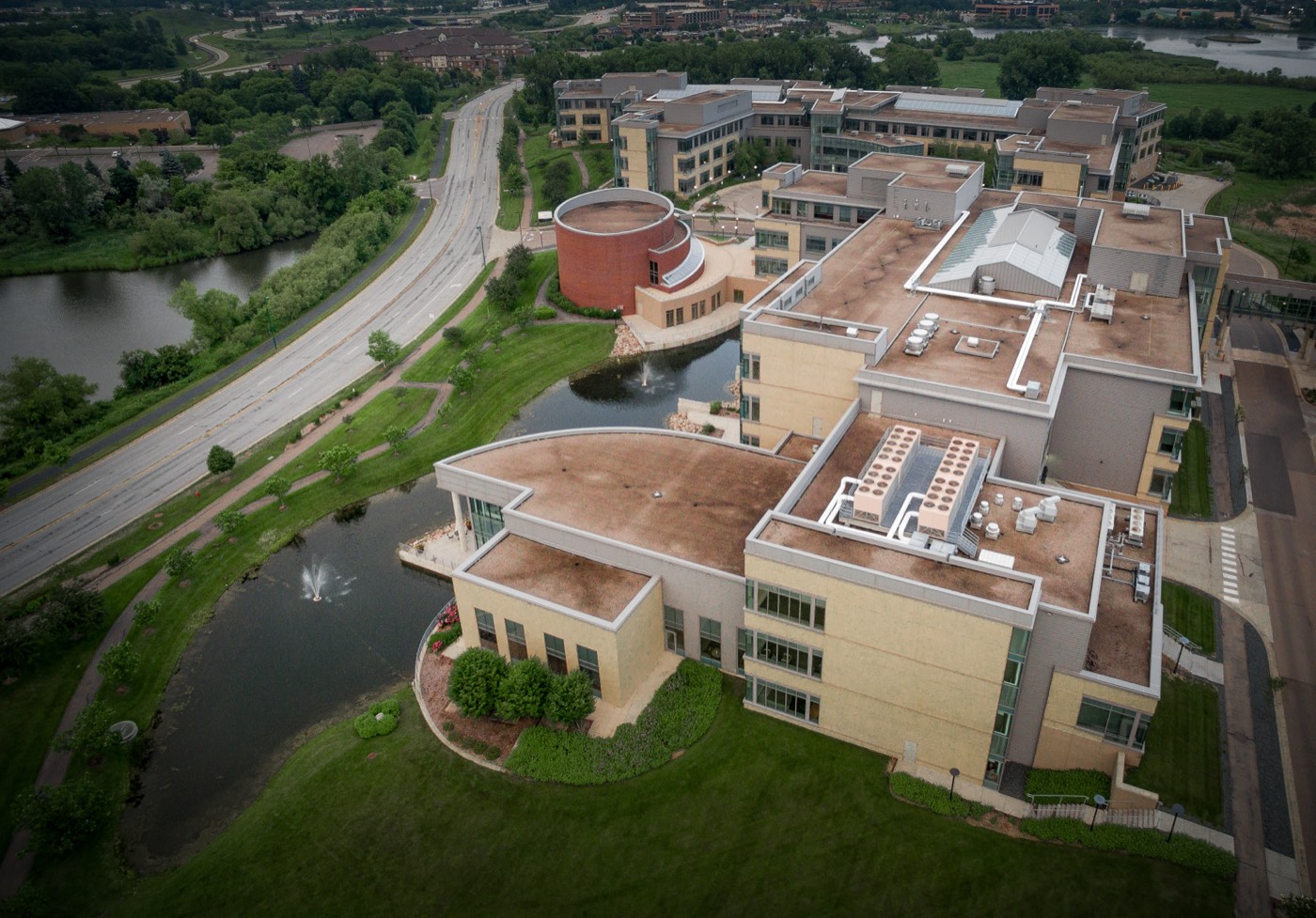
Then the freeways arrived and the farmland gave way to office parks, lakes and cul-de-sacs. Today it is home to more than 2,200 businesses, including the headquarters of logistics giant C.H. Robinson, the health-services company Optum and the hearing-technology leader Starkey.
Money magazine has repeatedly named it one of the best places to live in America, ranking it first nationally in 2010. That combination of corporate jobs and top-rated schools is precisely what drew a generation of Indian professionals here.
The city covers a generous spread of lakes and rolling land, and its housing stock leans toward the spacious single-family homes that suit larger, multigenerational households. It is the kind of place where a family can keep grandparents under the same roof and still be a short drive from an office park, a quality that matters a great deal to newcomers from India.
How It Became Indian
The Indian story in Minnesota is older than most people assume, and Eden Prairie is one of its newest chapters.
The first arrivals
The earliest known permanent Indian resident of the state, according to the Minnesota Historical Society, was Hira Singh, a Sikh from Lahore who enrolled at the University of Minnesota in 1904 to study mining engineering. In 1931 Mohan Singh Sekhon became the first Indian to earn a medical degree in the state.
The University remained the hinge. In 1958 Dr. Padmakar K. Dixit arrived to run the anatomy lab, and in 1961 he officiated what is recorded as the first Hindu wedding in Minnesota, an event that required special state legislation to recognise.
Community life took shape early. An Indo-American Club was formally established in 1946, and in 1973 a body called the India Club was founded, renamed the India Association of Minnesota in 1980. In 1979 the School of India for Languages and Culture began teaching the next generation their parents’ tongues. The institutions came first, before the suburban grocery aisles and the cricket pitches that would follow decades later.
The professional wave
The Immigration and Nationality Act of 1965 opened the door. From the late 1960s through the 1980s, Indians came to Minnesota largely for higher degrees and then stayed, settling into professional careers as doctors, engineers and scientists.
These were not labourers. Among Indian Americans in Minnesota, more than 80 percent work in professional fields, 83 percent hold a bachelor’s degree, and 47 percent hold a postgraduate credential. The state census counted 3,670 Indian Americans in 1980. By 1990 the figure had reached roughly 8,234.
The tech boom and the move to the suburbs
The Immigration Act of 1990 created the H-1B visa, the pipeline that carried thousands of Indian IT professionals into the American economy through the late 1990s and 2000s. Minnesota’s Indian population doubled roughly every decade, reaching about 33,031 in 2010 and an estimated 50,000 by 2017.
The early community had clustered in inner-ring suburbs like New Brighton in the 1970s and 1980s. The newest generation, flush with corporate and tech salaries, looked further out: Eden Prairie, Edina, Plymouth, Woodbury and neighbouring Maple Grove became the suburbs of choice in the 2010s.
The tripling
The growth in Eden Prairie has been startling. More than any other group in Minnesota, Asian Indians have chosen the suburbs, and the city’s Asian-Indian population tripled to around 2,560 in the decade leading up to the most recent census. Asians now make up roughly 13 percent of Eden Prairie’s residents, and Indians are the largest share of that.
The draw is legible in a single sentence repeated at dinner tables across the city: the jobs are here, and the schools are the best in the state. For families weighing where to plant roots, that arithmetic settled the question.
The Landmarks
India Market, 574 Prairie Center Drive #125. The original location of this grocer has anchored the city’s Indian food life since 2018. It is a large store with a butcher counter and a sit-down cafe, the kind of place where a weekend shop turns into a meal and a conversation about which village the new shipment of mangoes came from.
India Spice House, Eden Prairie. Serving the Twin Cities since 2008, it combines a restaurant and a grocery under one roof, turning out biryani, dosa, curries and tandoori dishes. For many newer arrivals it was the first taste of home that did not require a forty-minute drive.
Hindu Society of Minnesota, 10530 Temple Drive, Maple Grove. Also known as the Hindu Temple of Minnesota, this is the spiritual centre of the region’s Hindu families, with more than 43,000 square feet of floor space that makes it one of the largest Hindu temples in the United States. Eden Prairie families drive north for festivals, weddings and weekend prayer.
Eden Prairie High School, 17185 Valley View Road. Consistently ranked among the top public high schools in Minnesota, it is the single institution most often cited by Indian parents explaining why they bought here. Its corridors carry South Asian surnames into the science fairs, the orchestras and the debate teams. State data shows reading and math proficiency well above the Minnesota average, the sort of numbers that travel by word of mouth through the Indian professional networks long before a family signs a lease.
Eden Prairie Center, 8251 Flying Cloud Drive. The 1.1-million-square-foot mall that opened in 1976 is the city’s commercial heart, and on festival weekends it becomes an informal meeting ground where families overlap between errands, the children comparing notes on Diwali plans.
Optum headquarters, Eden Prairie. The health-services campus is one of the largest employers in town, and its cubicles and conference rooms are a daily destination for the engineers and analysts who make up so much of the Indian professional class here. The commute from a Eden Prairie cul-de-sac to an Optum desk is, for many, the whole story in miniature.
India Bazaar, Plymouth. A short drive north, this grocer is known for fresh idli and dosa batter and freshly cut chicken, part of the constellation of stores across the northwest suburbs that Eden Prairie families fold into their weekend routes.
Where They Came From
The Indians of Eden Prairie are not from one place. They reflect the broad geography of post-1965 and post-1990 Indian migration: software engineers from Andhra Pradesh, Telangana and Karnataka; doctors trained across north and south India; entrepreneurs and finance professionals from Gujarat and Maharashtra.
What unites them is not region but profile. They were selected, in effect, by American immigration priorities that favoured the highly educated, which is why the community skews so heavily toward medicine, engineering and technology.
Chain migration did the rest. A cousin who landed a job at Optum or a sibling finishing a degree at the University of Minnesota became the anchor that pulled the next family to the same school district and the same temple.
The pattern is self-reinforcing. One family’s choice of Eden Prairie reassures the next: there will be a temple within reach, a grocer who stocks the right lentils, classmates who also speak Telugu or Gujarati at home, and neighbours who understand why the porch lights stay on through Diwali. Each arrival lowers the cost of the next.
Eden Prairie Today
Today the Indian presence in Eden Prairie is woven into the ordinary. Diwali brings lights to suburban porches and packed celebrations across the Twin Cities, and the broader Indian community marks IndiaFest, a descendant of the first India Day held at St. Paul’s Landmark Center in 1983. Cricket has found a foothold on local fields, a sport that barely registered here a generation ago.
It is not a Devon Avenue or an Edison: there is no single Indian high street, no continuous strip of sari shops. The community is suburban and dispersed, organised around schools, workplaces and a grocery run rather than a neighbourhood you can walk end to end.
That dispersal is the point. The Indians who chose Eden Prairie were choosing the suburban bargain itself, good schools, a corporate paycheck and a quiet street, and they have made it their own without surrendering the temple visit, the festival or the Saturday cart full of curry leaves. Compare the older, denser pattern in Edison, New Jersey, or the tech-belt suburbs of Cupertino, California and Troy, Michigan, and Eden Prairie reads as the Midwestern version of the same American story.
Frequently Asked Questions
How many Indians live in Eden Prairie, Minnesota?
The Asian-Indian population in Eden Prairie tripled to around 2,560 in the decade before the most recent census. Asians overall make up roughly 13 percent of the city, and Indians are the largest single share of that group, making the Indians in Eden Prairie one of the fastest-growing communities in the suburb.
Why did Indians settle in Eden Prairie?
Two reasons dominate: jobs and schools. Eden Prairie hosts major employers like Optum, C.H. Robinson and Starkey, and its school district is consistently ranked among the very best in Minnesota, a combination that drew Indian professional families through the 2010s.
Where is the nearest Hindu temple to Eden Prairie?
The Hindu Society of Minnesota, also called the Hindu Temple of Minnesota, sits at 10530 Temple Drive in Maple Grove. At more than 43,000 square feet it is one of the largest Hindu temples in the United States, and Eden Prairie families travel there for worship and festivals.
Where can I buy Indian groceries in Eden Prairie?
India Market at 574 Prairie Center Drive has anchored the city’s Indian food scene since 2018, with a grocery, butcher counter and cafe. India Spice House also offers groceries alongside its restaurant, and India Bazaar in nearby Plymouth is a popular stop for fresh idli and dosa batter.
What do Indian families in Eden Prairie do for work?
Most work in professional fields. Statewide, more than 80 percent of Indian Americans in Minnesota are employed in professional roles, concentrated in technology, medicine, engineering and corporate management, and Eden Prairie’s corporate campuses make it a natural base.
Is there an Indian neighbourhood in Eden Prairie?
Not in the traditional sense. Unlike older urban enclaves, the Indians in Eden Prairie are dispersed across the suburb, organised around the school district, corporate workplaces and a handful of grocers and restaurants rather than a single high street.
If your family’s story passed through Eden Prairie, or any of the places Indians have made home in America, Atlas of Home can trace that journey. From a village in Andhra Pradesh or a medical college in Gujarat, to a desk at Optum and a cul-de-sac near Valley View Road, to wherever you are now.