
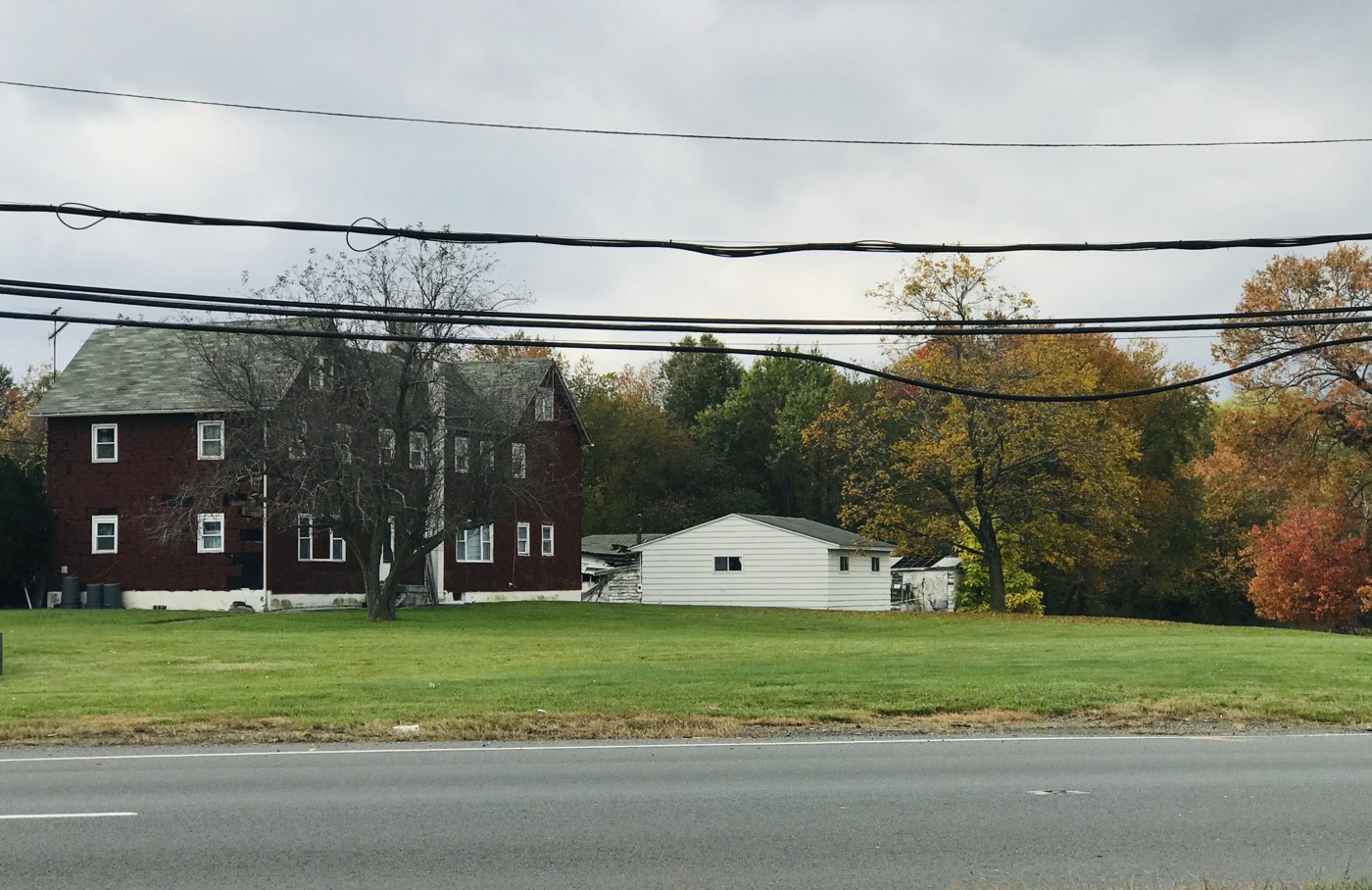
Drive south on Route 130 through the South Brunswick countryside and the signal comes on slowly: a sari boutique here, a Telugu tutoring centre there, then a low brick plaza on Georges Road where the shopping carts at Apna Bazar are stacked with okra, curry leaves and twenty-pound sacks of basmati. This is Dayton, a small hamlet inside South Brunswick Township, and the Indians in Dayton have made it one of the most concentrated South Asian addresses in all of New Jersey.
The Place
Dayton is a census-designated place in South Brunswick Township, Middlesex County, tucked into the southwestern corner of the township with Deans to the north and Monmouth Junction to the west. U.S. Route 130 forms its eastern border, running north roughly ten miles to New Brunswick and south to Hightstown.
The hamlet was originally called Cross Roads. It was renamed in 1866, to ease mail confusion, after a Dayton connected to the Freehold and Jamesburg Agricultural Railroad. For most of its life it was a quiet farming and rail stop on the road between Trenton and the city.
Today it is something else entirely. At the 2020 census the Dayton CDP counted 8,138 residents, and a clear majority of them are Asian. The cornfields gave way to warehouses, pharmaceutical campuses and subdivisions full of families who came for the schools and stayed for the neighbours.
How It Became Indian
Dayton did not become Indian by accident. It became Indian because it sat in the gravitational pull of two of the largest South Asian centres in the United States, and because it offered something those centres could not: space.
The Edison and Iselin overflow
The story begins about fifteen minutes up the road. Edison and Iselin’s Oak Tree Road, the mile-and-a-half strip Indian New Jersey simply calls Little India, became the largest South Asian commercial corridor in the country through the 1980s and 1990s. It was built first by Gujarati families, then broadened to serve Telugu, Tamil, Punjabi and Hindi households across the region.
By the late 1990s those towns were full and expensive. The newer arrivals, many of them engineers and pharmacists on H-1B visas, looked further down the Turnpike and the Route 130 corridor for larger homes and better land. The same pull reshaped the Indian community in Iselin a generation earlier. South Brunswick, with Dayton at its southwestern edge, was exactly that: cheaper per square foot, leafier, and still inside the same orbit of temples, grocers and relatives. It is, in effect, the centre of the broader Indian community in South Brunswick.
The numbers arrive
The shift showed up in the census with unusual speed. As early as the 2000 count, 15.72 percent of Dayton’s residents identified as Indian American, the fourth-highest share of any place in the United States with a thousand or more residents of Indian ancestry.
It kept climbing. The CDP grew from 6,235 people in 2000 to 7,063 in 2010 and 8,138 in 2020, and almost all of that growth was South Asian. By 2020 Asian residents made up close to 54 percent of Dayton, the single largest group, well ahead of the white population.
Middlesex County as a whole now holds the highest concentration of Asian Indians of any county in the country, near twenty percent, a band that runs from Indian Sayreville through Dayton and on to the fast-growing Indian community in Monroe Township. Dayton is one of the densest points inside that dense county.
The IT and pharma engine
What drew families specifically was work. Central New Jersey is a hub for information technology and pharmaceutical employment, and Indian-founded firms anchored themselves nearby. Tata Consultancy Services runs a large facility in Edison; Dr. Reddy’s, Biocon and others placed North American operations in the region.
Dayton landed one of the most visible of these. Aurobindo Pharma, headquartered in Hyderabad, established its U.S. headquarters in the Dayton section of South Brunswick, alongside its manufacturing arm Aurolife Pharma, and later expanded its central New Jersey operations by many millions of dollars. For a Telugu pharmacist arriving from Hyderabad, a job in Dayton meant working for a company from home, in a town where the grocer already stocked the right lentils.
Dayton’s flat, highway-served land suited more than pharma. The hamlet filled with distribution and warehouse space, and even consumer brands such as the underwear label 2(X)IST and the apparel firm Haddad Brands placed operations here. The result was a compact employment base just minutes from home, a rarity in a region where many Indian commuters drive an hour to office parks. In Dayton, work and home sat on the same stretch of Route 130.
The schools seal it
If work brought the first generation, schools kept them. The South Brunswick district is consistently ranked among the strongest in New Jersey, and South Brunswick High School in nearby Monmouth Junction carries an A-plus reputation and a place high on the state rankings, with deep AP and STEM offerings.
The district has also bent its calendar toward its families. In 2010 South Brunswick became one of the first districts in Middlesex County with a large Indian student population to add Diwali to the school calendar, and it has continued adjusting the holiday’s placement to fit families’ observance. For many parents, a school that closes for Diwali was the final argument for buying in Dayton.
The Landmarks
Apna Bazar, 485 Georges Road #107. The anchor grocer of Indian Dayton, part of a regional chain, stacked with fresh okra and bitter gourd, religious items, frozen snacks and walls of rice and atta. On a Sunday morning the car park fills with families doing the week’s shop, and the aisles double as a meeting point.
Dear Delhi Restaurant, Bar & Lounge, 304 Georges Road. A sit-down North Indian restaurant with a full bar and lounge, the kind of room that handles a birthday, a work dinner and a weekend crowd in equal measure. It is one of the few places on Georges Road where Indian Dayton goes out, rather than takes away.
The Park Indian Restaurant, 2316 U.S. Highway 130. A South Indian and vegetarian kitchen with a quirk regulars love: a traditional banana-leaf meal served on the first Sunday of every month. BYOB, big on catering, and a reliable fix for dosa and sambar right on Route 130.
Shree Swaminarayan Hindu Temple, 329 Culver Road, Monmouth Junction. The Vadtal Dham temple serves the Gujarati Swaminarayan community across South Brunswick, with daily morning and evening darshan. For many Dayton families it is the closest expression of the tradition they carried from Gujarat.
Durga Temple, Route 27, Kingston section of South Brunswick. Run by the Central Jersey Hindu Association on a 4.8-acre lot, with a use variance first approved in 1997 and repeated expansion since. It serves North Indian Hindu worship for the wider township and remains a regular Saturday and festival destination.
South Brunswick High School, Monmouth Junction. Not Indian-owned, but the institution that holds the community together. Its rankings, its AP load and its Diwali closure are quoted at dinner tables across Dayton as the reason the family chose this corner of New Jersey.
The Route 130 corridor. The spine of it all. From the warehouses and the Aurobindo campus to the strip plazas of Georges Road, Route 130 is where Indian Dayton works, shops and eats, a working highway that quietly turned into a cultural address.
Where They Came From
Dayton’s Indian community is not from one place. It is layered, and the layers map onto the larger story of Indian New Jersey.
The earliest and most established thread is Gujarati, the same community that built Oak Tree Road in Edison and Iselin and carried the Swaminarayan tradition into South Brunswick, much as it shaped the nearby Indian community in Robbinsville. Many of these families moved south and west out of Edison as those towns filled, bringing the temple network with them.
The second and faster-growing thread is Telugu, families from Hyderabad and the wider Andhra and Telangana region, pulled by the pharmaceutical and IT economy. Aurobindo’s Hyderabad roots are not a coincidence; the company and its people travelled the same path. Tamil, Punjabi and Hindi-speaking households fill out the rest, the same mix that makes Middlesex County print its ballots in Gujarati, Hindi and Punjabi.
Dayton Today
Dayton today is a working hamlet that does not look like a cultural capital and functions like one. There is no grand gateway, no arch over the road. There is a highway, a cluster of plazas, a high school and a great many homes full of families who organised their lives around all three.
The Indian presence here is residential and practical rather than spectacular. The spectacle is fifteen minutes north on Oak Tree Road. What Dayton offers is the quieter version: a bigger house, an A-plus school that closes for Diwali, a grocer five minutes away, a temple within reach, and a job that might carry a Hyderabad name.
It is not without friction. The warehouses that brought jobs also brought traffic to Route 130, and zoning fights over temple expansions and apartments for priests are now a routine part of township life. The June zoning hearings over a temple hall and apartments for its priests are the kind of small, telling argument a settled community has with itself about how to grow.
But the trajectory is clear. Dayton’s cornfields became a corridor, and the corridor became home for thousands of Indian families who decided central New Jersey was where their American story would settle. The arch never went up over Route 130. The community simply moved in, opened the grocer, built the temple, and sent its children to a school that now closes for Diwali.
Frequently Asked Questions
Where is Dayton, New Jersey?
Dayton is a census-designated place within South Brunswick Township in Middlesex County, central New Jersey. It sits along U.S. Route 130 in the southwestern corner of the township, near Monmouth Junction and Kendall Park.
How large is the Indian community in Dayton, New Jersey?
The Indians in Dayton, New Jersey form the heart of the hamlet’s population. As early as 2000, nearly 16 percent of residents identified as Indian American, the fourth-highest share in the country, and by 2020 Asian residents made up close to 54 percent of the Dayton CDP’s 8,138 people.
Why did so many Indian families move to Dayton?
They came for space, work and schools. Edison and Iselin’s Little India filled up and grew expensive, so families moved down the Route 130 corridor for larger, cheaper homes near top-ranked schools, pharmaceutical and IT employers, and an existing network of temples and grocers.
Which Indian communities live in Dayton?
The community is mixed. Gujarati families, linked to the Swaminarayan tradition and the Oak Tree Road corridor, form the oldest layer, while Telugu families from the Hyderabad region drawn by pharma and IT are the fastest-growing. Tamil, Punjabi and Hindi-speaking households are also well represented.
Where do Indians in Dayton shop and worship?
Indian grocers and restaurants line Georges Road and Route 130, including Apna Bazar at 485 Georges Road and Dear Delhi at 304 Georges Road. Worship centres include the Shree Swaminarayan Hindu Temple on Culver Road in Monmouth Junction and the Durga Temple on Route 27 in the Kingston section.
Does South Brunswick close school for Diwali?
Yes. In 2010 South Brunswick became one of the first districts in Middlesex County with a large Indian student population to add Diwali to its school calendar, and it continues to schedule the holiday around families’ observance.
If your family’s story passed through Dayton, or any of the places Indians have made home in America, Atlas of Home can trace that journey. From a flat in Hyderabad or a town in Gujarat, to a brick plaza on Georges Road, to wherever you are now.