
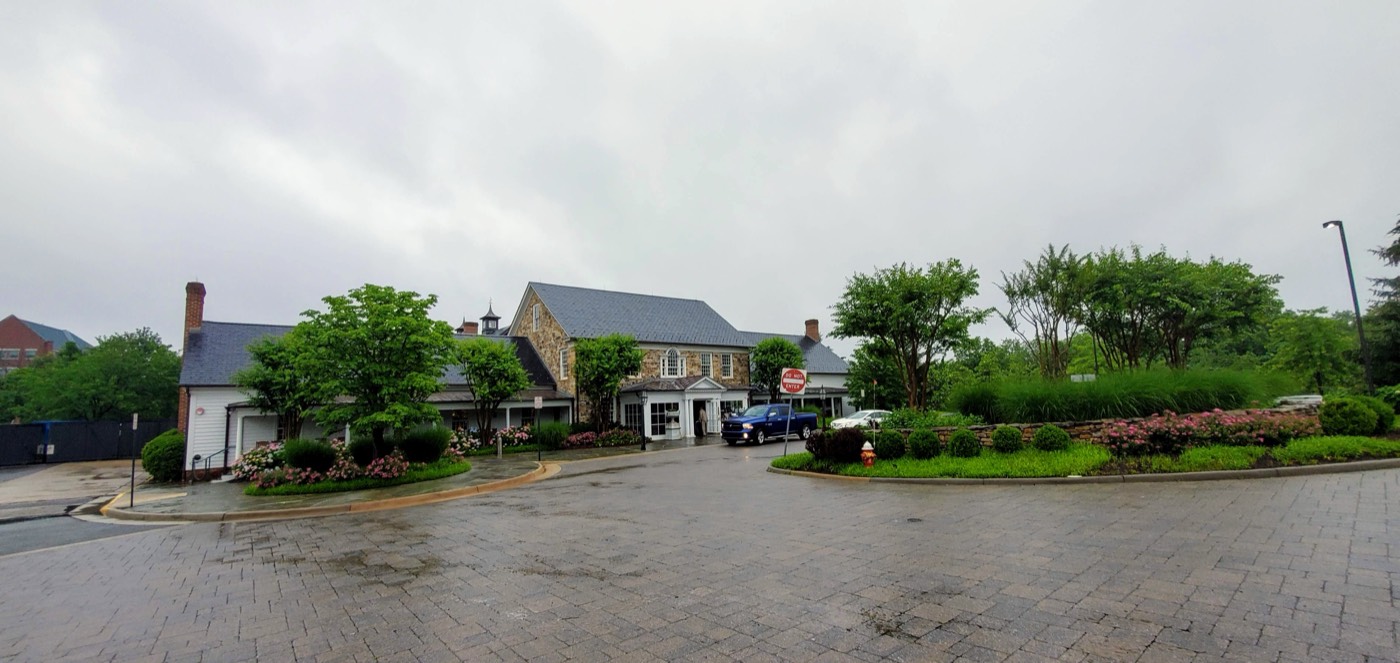
On a Saturday morning in Broadlands, the trail along Stream Valley Park fills with families walking off the weekend. Grandparents in cardigans push strollers past the wetlands, teenagers jog toward Briar Woods, and the conversations drift between English, Telugu, Tamil and Hindi. The Indians in Broadlands did not arrive here by accident. They came for the schools, the data centres a few miles east, and a master-planned town that promised order on what used to be Loudoun County farmland.
The Place
Broadlands is a 1,500-acre master-planned community in eastern Loudoun County, started and developed by Van Metre Homes in the 1990s and built, unusually, on wetlands the developer chose to preserve rather than pave. It sits off the Dulles Greenway, bordered by Ashburn to the northeast and Brambleton to the south, roughly nine miles from Dulles International Airport and thirty-three from Washington. It was the twenty-fifth community in the nation certified as a wildlife habitat by the National Wildlife Federation, a detail that says a good deal about its self-image.
The numbers tell a particular story. As of the 2020 census Broadlands counted 14,021 residents, with a median household income that has since climbed above $240,000 and a homeownership rate near 85 percent. Asian residents made up 25.3 percent of the population, the second-largest group after white residents, and within that share the Indian community is the largest and fastest-growing thread.
How It Became Indian
Broadlands is young. There were no Indian families here in 1990 for the simple reason that there was no Broadlands. The community was raised from scratch over the following two decades, and the people who filled it arrived in step with one of the largest economic transformations in modern American history, happening a few exits down the Greenway.
The data-centre decade
Just east of Broadlands lies Ashburn, the heart of what the industry calls Data Center Alley, the densest concentration of data centres on Earth. An estimated 70 percent of the world’s internet traffic passes through Loudoun County each day, and Northern Virginia is the largest data-centre market in the United States. That infrastructure did not run itself.
It needed network engineers, systems architects, cloud specialists and database administrators, and a great many of them arrived from India, often on H-1B visas tied to consultancies and the cloud providers building out the campuses. The pattern was familiar from Silicon Valley, but here the commute was measured in minutes. An engineer could work on a hyperscale campus off Waxpool Road and be home in Broadlands before the school bus.
That proximity shaped everything. In Silicon Valley the tech worker’s house and the tech worker’s office could be an hour apart, separated by traffic and price. In eastern Loudoun the campuses and the cul-de-sacs were stitched together, and a family could trade a Northern Virginia apartment for a Broadlands townhouse without changing the route to work. For a generation of Indian engineers raised to value stability, that closeness was its own kind of luxury.
The schools did the rest
If the data centres supplied the jobs, Loudoun County Public Schools supplied the reason to put down roots. Broadlands feeds into Briar Woods High School, which sits among the top schools in Virginia, ranks nationally on the U.S. News list and became the state’s first traditional high school to earn STEM certification from Cognia.
For Indian parents who had grown up treating education as the family’s central project, that mattered more than square footage. Four Loudoun County public schools sit inside Broadlands itself, including Hillside, Mill Run and Waxpool elementaries and Eagle Ridge Middle. Word travelled fast through professional and temple networks. A good school district is the most reliable engine of chain migration there is, and Broadlands had one.
A community builds its rhythms
By the 2010s the pattern was self-sustaining. New arrivals from Hyderabad, Chennai and Bengaluru did not have to wonder where to buy curry leaves or where their children would find friends who understood Diwali. The earlier wave had already mapped the territory, and South Asian families were settling not only in Broadlands but across the eastern Loudoun corridor, in the Indian community of neighbouring Brambleton and in the newer rooftops of Indian families in Aldie to the south.
Telugu and Tamil families became especially visible, their cultural associations organising Ugadi and Pongal gatherings in community clubhouses and rented halls. The county seat at Leesburg, with its own growing Indian population, anchored the western end of the same arc. What had begun as a scattering of engineers became, within a single generation, a settled and self-aware community.
The Landmarks
Patel Brothers, 43761 Parkhurst Plaza, Ashburn. The Ashburn outpost of the national grocery chain opened in 2020 a short drive from Broadlands and became an instant anchor. Its aisles of basmati, lentils, frozen parathas and Bengali sweets draw weekend crowds so reliable that regulars know to shop on a weekday if they value their elbows.
Rajdhani Mandir, 4525 Pleasant Valley Road, Chantilly. Serving the Washington metro’s Hindu community since 1985, this temple was inaugurated on its eight-acre wooded site in March 2000 and represents Hindu, Jain and Buddhist traditions. For many Broadlands families it is the default destination for a Saturday darshan or a child’s first rice-feeding ceremony.
Durga Temple of Virginia, 8400 Durga Place, Fairfax Station. Founded as the first temple dedicated to Bhagwati Durga in the United States, it houses a long roster of deities and remains a draw for festivals and life-cycle rituals for families across Northern Virginia, Broadlands included.
Briar Woods High School, 22525 Belmont Ridge Road, Ashburn. The neighbourhood high school and, for many Indian parents, the quiet reason the mortgage made sense. STEM-certified and nationally ranked, its science fairs and Math Honor Society rosters read like a directory of the surrounding subdivisions.
Broadlands Nature Center, 21907 Claiborne Parkway, Broadlands. Tucked into the community’s 150-acre Stream Valley Park, the centre’s trails and wetlands are where the town keeps its promise of nature woven through suburbia. On weekend mornings it doubles as an informal meeting ground for families walking off breakfast.
Clyde’s Willow Creek Farm, 42920 Broadlands Boulevard, Broadlands. The restored-farmhouse restaurant at the community’s edge is where Broadlands celebrates: graduation dinners, engagement parties, the milestone birthdays that punctuate an Indian-American family’s calendar. It is not an Indian restaurant, and that is part of the point. The community has folded itself into the wider life of the town.
Where They Came From
The Indians of Broadlands are overwhelmingly a post-2000 migration, and their origins map onto the technology corridors of southern India more than the older Punjabi and Gujarati waves that settled elsewhere in America. Telugu speakers from Andhra Pradesh and Telangana, and Tamil speakers from Chennai and the wider south, form the visible core, reflecting how Hyderabad and Chennai became feeders for the American IT industry.
Many arrived first as graduate students or on H-1B visas, cycling through consultancies before landing permanent roles with the cloud and networking firms anchoring Data Center Alley. North Indian families from Delhi, Uttar Pradesh and beyond round out the picture, but the dominant accent of a Broadlands clubhouse Diwali is southern. They came for the work, stayed for the schools, and chose Broadlands because it offered both within the same nine-mile radius.
It is a migration that follows degrees rather than villages. Where earlier Indian-American settlement often traced back to a single town or caste network, the Broadlands story runs through engineering colleges and the visa lottery, with families connected less by shared geography than by shared profession. The result is a community at ease with mobility, one that overlaps naturally with the Indian families spreading west toward Gainesville and the newer Prince William and Loudoun developments along the same commuter spine.
Broadlands Today
Drive through Broadlands today and the Indian presence is woven into the ordinary fabric rather than concentrated in a single strip. It shows in the rangoli chalked outside front doors at Diwali, in the carpool lanes outside Mill Run Elementary, in the steady traffic toward Patel Brothers on a Sunday afternoon. This is a community that has arrived at comfort.
It is not without strain. The same data centres that drew the engineers have become Loudoun’s most divisive subject, their power demands and humming campuses pressing against the suburbs they helped build, and Indian-American residents sit on every side of that debate as homeowners, employees and taxpayers. Housing costs that once felt like a bargain now wall off the next wave of arrivals.
There is, too, the quieter work of building culture in a place that had none thirty years ago. Without an old gurdwara or a decades-deep temple congregation to inherit, Broadlands families have improvised their own institutions: clubhouse festivals, weekend Carnatic and Bharatanatyam classes run out of homes, cricket on the community fields, dosa stalls at the summer fairs. The community is writing its traditions in real time, and the children growing up here will inherit a Broadlands Diwali that did not exist before their parents made it.
Still, the trajectory is unmistakable. The children who grew up here are filtering back from college, some buying in nearby South Riding and the western Loudoun towns where the same story is repeating, alongside the established community near the temples of Chantilly. Broadlands has become, within thirty years of being raised from wetland, one of the places where Indian America simply lives.
Frequently Asked Questions
Is there a large Indian community in Broadlands, Virginia?
Yes. Asian residents make up about 25 percent of Broadlands, the second-largest group in the community, and the Indians in Broadlands form the largest and fastest-growing share within that group. Telugu and Tamil families are especially well represented.
Why did so many Indian families settle in Broadlands?
Two reasons stand out: the technology jobs in nearby Ashburn’s Data Center Alley, the densest cluster of data centres on Earth, and the strength of Loudoun County Public Schools. The Indians in Broadlands largely arrived as IT professionals after 2000 and stayed for the schools.
Where do Indian families in Broadlands worship?
Most travel to temples in the wider metro, including Rajdhani Mandir in Chantilly, inaugurated in 2000, and the Durga Temple of Virginia in Fairfax Station, the first Durga temple built in the United States.
Where can you buy Indian groceries near Broadlands?
Patel Brothers at Parkhurst Plaza in adjacent Ashburn, which opened in 2020, is the main draw, stocking everything from basmati rice and lentils to frozen Indian breads and South Indian and Bengali specialities. It is busiest on weekends.
What schools serve Broadlands?
Broadlands contains four Loudoun County public schools, including Hillside, Mill Run and Waxpool elementaries and Eagle Ridge Middle, and feeds into Briar Woods High School, a nationally ranked, STEM-certified school that is a major draw for Indian families.
How affluent is Broadlands?
Very. The median household income exceeds $240,000, homeownership runs near 85 percent, and median home values sit well above the national average, reflecting its position as one of Loudoun County’s premier master-planned communities.
If your family’s story passed through Broadlands, or any of the places Indians have made home in America, Atlas of Home can trace that journey. From the IT corridors of Hyderabad and Chennai to a clubhouse Diwali on the edge of Stream Valley Park, to wherever you are now.