
On a Sunday afternoon at St. Joan of Arc on Lincoln Street, the two o’clock Mass is sung in Twi as often as English, and the women arrive in waxprint and headwraps that would not look out of place in Kumasi. This is one of the quieter facts about the Ghanaians in Worcester, Massachusetts: that the second largest city in New England, the old industrial heart of the Commonwealth, holds one of the densest concentrations of Ghanaian immigrants anywhere in the United States.
The Place
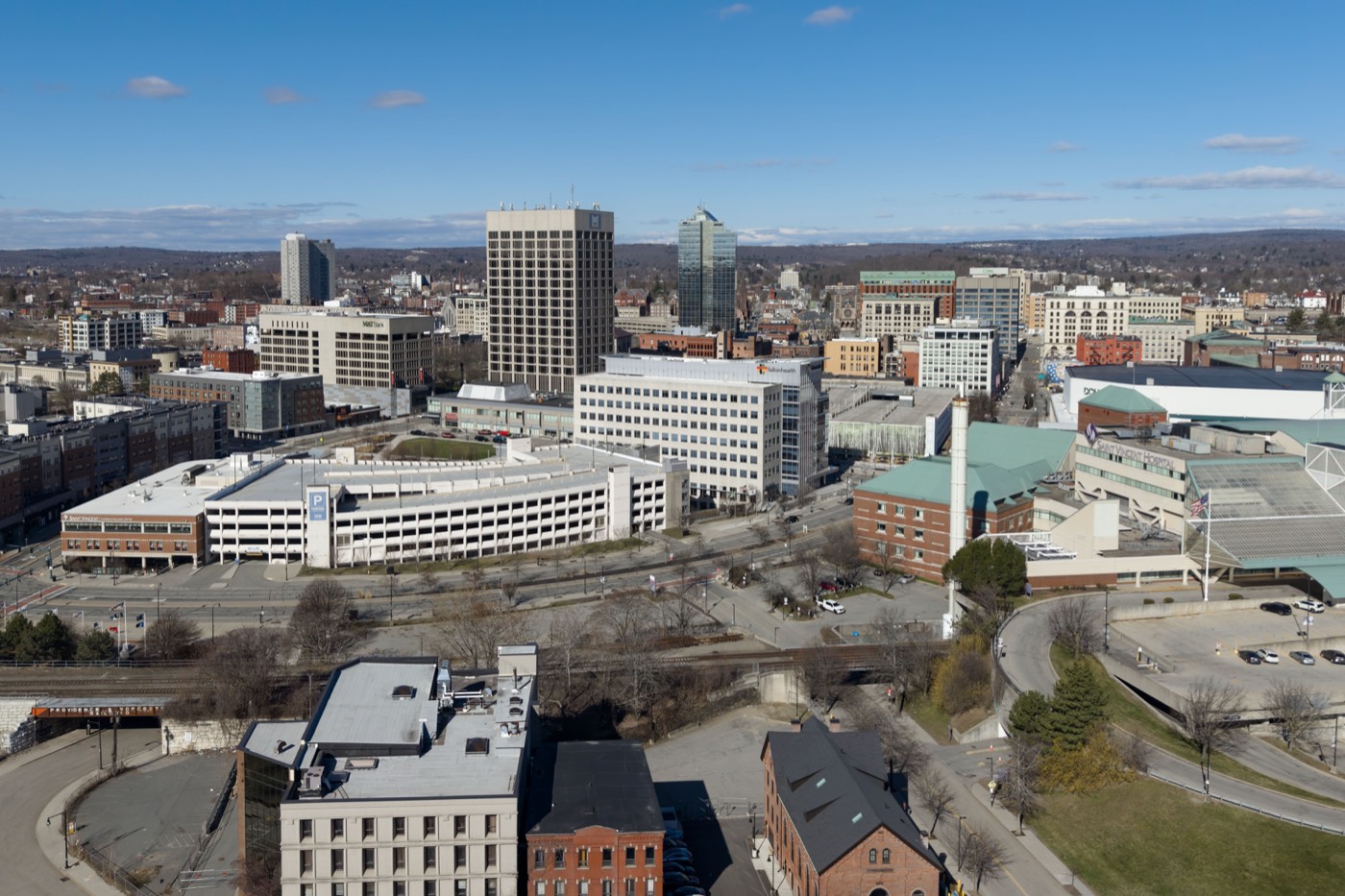
Worcester sits in the hilly middle of Massachusetts, roughly forty miles west of Boston, which gave it the unhurried nickname the Heart of the Commonwealth. For more than a century its inland position meant it grew slowly next to the coastal ports, until a canal to Providence in 1828 and the railroads that followed turned it into a city of mills, wire works and machine shops.
It became a city by charter in 1848. Today it is home to a little over 200,000 people, second in New England only to Boston, and remains a city built by newcomers.
Nearly a quarter of Worcester residents were born abroad. A hundred and fifty years ago that meant the Irish, who once made up some seventy percent of the foreign born. Today the largest shares come from Brazil, Vietnam, Ghana and the Dominican Republic, with the Albanians and Chinese close behind.
How It Became Ghanaian
The Ghanaian story in Worcester is not a single arrival but a chain, link by link, name by name, stretching back more than half a century.
The first arrivals
The earliest Ghanaians reached Worcester in the late 1960s. Sam Mireku, Archie Allotey and the Reverend James Clottey are remembered among the first to settle in the city, a handful of men in a place that then had almost no West African presence at all.
By the mid 1970s a second wave followed, including George Asiamah, who had played professional football in Ghana before taking a job in the city’s electronics industry, and Stephen Safo-Sampah. Many of these early arrivals were men in their early twenties, leaving a Ghana then living under a repressive military government.
Word travels home
What turned a trickle into a community was reputation. Worcester had jobs, and housing that cost a fraction of Boston’s. It was, in the words of residents quoted over the years, peaceful, a good place to raise a family.
That message travelled back to Ghana along family lines, and Worcester became, as one early settler put it, a magnet. Maxwell Agyemfra arrived in 1974 and by 1987 had opened Sweet Farms Mini Mart, one of the early Ghanaian owned businesses in the city. David O. Broni, who came in 1988, went into mortgage broking. Benjamin Adwegewa-Badu arrived with his family in 1995 and became an art teacher at Worcester East Middle School.
A community that organised itself
Ghanaians in Worcester have often been described as advancing quickly, and the explanations offered are practical ones: they arrive speaking English, they prize higher education, and they form close knit societies, many of them organised around traditional chiefs.
Those chiefs are real, not ceremonial. Harry Danso, a middle manager by day, also carries the stool name Nana Awuah Panin III, a royal chief from the Asokwa area near Koforidua who took up his title in 2003 after his uncle’s death. In Worcester he became a kind of counsellor, helping new arrivals find work, sort out landlords and answer discrimination, and in 2011 he was appointed to the city’s Human Rights Commission.
The associations multiplied as the community grew. The Ga Adangbe Club of Worcester, the Kwahuman Association of Central Massachusetts and the Mfantseman Association of Worcester each gathered immigrants from a particular corner of Ghana. The New Juaben Association of New England raised money for medical supplies and schools back home. Over all of them, loosely, sits the Ghana Association of Worcester, whose purpose is simply to bring the city’s Ghanaians together.
The churches arrive
If the associations held the community by hometown, the churches held it by faith, and there were soon many of them. Worcester came to count roughly eight congregations that were predominantly Ghanaian: Presbyterian, Methodist, Assembly of God and several Pentecostal churches among them.
The Ghana Wesley Methodist Church took root on Main Street. A Ghanaian Presbyterian congregation gathered on Chestnut Street. A New England Ghanaian Seventh-day Adventist church formed for the city’s growing Adventist families. And within the Catholic Diocese of Worcester, the Ghanaian Catholic Community settled at St. Joan of Arc parish, where Mass is celebrated for them on Sunday afternoons.
By the turn of the new century the community numbered in the thousands. Estimates have put around 3,000 Ghanaians in greater Worcester and as many as 10,000 across Central Massachusetts, with Worcester holding the heart of it.
The Landmarks
Anokye Krom, 2 Coes Square, off Park Avenue. Richard Boateng, who moved to Worcester in 1997, named his restaurant after Okomfo Anokye, the legendary priest of Asante history. The name means Anokye’s village. It began on Millbury Street and expanded to a larger Park Avenue home in 2021, serving jollof rice, fried plantains and bean soup to a city that, as Boateng put it, was fast becoming a destination for the West African diaspora.
St. Joan of Arc Parish, Lincoln Street. The Ghanaian Catholic Community of Worcester worships here, with a Mass held for the community on Sunday afternoons. It is one of the clearest signs of how the Diocese of Worcester has made room for its newest parishioners, in language, in music and in liturgy.
Ghana Wesley Methodist Church, 340 Main Street. One of the longest established Ghanaian congregations in the city, carrying the Methodist tradition that is so strong in southern Ghana into the centre of Worcester.
Presbyterian Church of Ghana, Chestnut Street. The Presbyterian Church is among the oldest Christian institutions in Ghana, and its Worcester congregation gives the city’s Akan families a Sunday home that feels continuous with the one they left.
New England Ghanaian Seventh-day Adventist Church. A Saturday-worshipping congregation that grew alongside the rest, evidence of how varied the religious life of Ghanaian Worcester really is, well beyond any single denomination.
Institute Park, 82 Salisbury Street. When the community wants to be outdoors and seen, it comes here. The park has hosted the New England Ghana Festival, a day of food, music and dress that turns a slice of Worcester briefly into Accra on a summer afternoon.
Sweet Farms Mini Mart. One of the early Ghanaian owned shops, opened by Maxwell Agyemfra in 1987 after he arrived in 1974. Stores like it were where homesick families first found the plantain, the dried fish and the palm nut that the supermarkets did not stock.
Where They Came From
Worcester’s Ghanaians are not from one place. The community carries most of the languages and peoples of Ghana, which is why the city needed a Ga club and a Fante association and a Kwahu association all at once.
The Akan presence is strong. Harry Danso, the Worcester chief, is Asante, one of Ghana’s largest groups. George Asiamah, one of the early settlers, came from the Eastern Region. The Kwahuman Association draws families from Kwahu, the Twi-speaking Akan towns of the Eastern Region whose people are famous across Ghana as traders. The Mfantseman Association gathers Fante families from the coast around Cape Coast and Elmina, while the Ga Adangbe club holds those from the area around Accra.
What pulled them all to the same New England city was the oldest force in migration: someone they knew was already there. A cousin had a spare room, an uncle knew of a job, a church already sang the right hymns. Each new arrival made the next one easier, until the chain was thousands of links long.
Worcester Today
Ghanaians today are the single largest immigrant group in Worcester, making up around a tenth of the city’s foreign born population. They are not concentrated in one quarter the way some communities are. Families cluster in the Lincoln Village and Washington Heights apartment complexes, and in Main South and Webster Square, but Ghanaian households are scattered across the whole city.
The institutions have matured. The churches are full on Sundays, the associations run their picnics and fundraisers, and a generation that arrived as young men now sends children to Worcester’s schools and, in cases like Jerry Azumah of St. Peter-Marian High School and later the Chicago Bears, into American public life.
The flow has not stopped. Richard Boateng, watching the city from behind the counter at Anokye Krom, put it plainly: the rate at which Ghanaians keep arriving means that, before long, their children’s children will be everywhere in Worcester. For a community that began with a handful of names in the late 1960s, that is a remarkable thing to be able to say.
For more on how Ghanaians built lives in the American Northeast, see the story of the Ghanaians in the Bronx. Worcester’s immigrant pattern echoes other communities in the city too, among them the Albanians in Worcester, and elsewhere in the Commonwealth the Armenians in Belmont, the Chinese in Wellesley and the Chinese in Newton. For the wider picture, the Ghanaian American story and the history of Worcester itself both reward a closer look.
Frequently Asked Questions
How many Ghanaians live in Worcester?
Estimates have put around 3,000 Ghanaians in greater Worcester and as many as 10,000 across Central Massachusetts. The Ghanaians in Worcester make up roughly a tenth of the city’s foreign born residents, one of the densest concentrations of Ghanaian immigrants in the country.
When did Ghanaians first settle in Worcester?
The earliest arrivals came in the late 1960s, including Sam Mireku, Archie Allotey and the Reverend James Clottey. A larger wave followed in the mid 1970s, many of them young men leaving Ghana during a period of military rule.
Why did so many Ghanaians choose Worcester?
Worcester offered jobs and housing that cost far less than Boston, and it was seen as a peaceful place to raise a family. As that reputation travelled back to Ghana along family lines, the Ghanaians in Worcester grew through chain migration, each arrival helping the next.
What Ghanaian churches are there in Worcester?
Worcester has roughly eight predominantly Ghanaian congregations, including Ghana Wesley Methodist Church on Main Street, a Ghanaian Presbyterian church on Chestnut Street, a New England Ghanaian Seventh-day Adventist church, and the Ghanaian Catholic Community at St. Joan of Arc parish.
Where can you find Ghanaian food in Worcester?
Anokye Krom, founded by Richard Boateng who arrived in 1997, serves Ghanaian dishes such as jollof rice, fried plantains and bean soup. It began on Millbury Street and moved to a larger location at Coes Square off Park Avenue in 2021.
Which parts of Ghana do Worcester’s Ghanaians come from?
They come from across the country, which is why the city has separate hometown associations. There are strong Akan groups, including Asante and Kwahu from the Eastern Region and Fante from the coast, alongside Ga and Adangbe families from the Accra area.
If your family’s story passed through Worcester, or any of the places Ghanaians have made home in America, Atlas of Home can trace that journey. From a chief’s stool near Koforidua or a Fante town on the coast, to a Sunday Mass on Lincoln Street, to wherever you are now.