
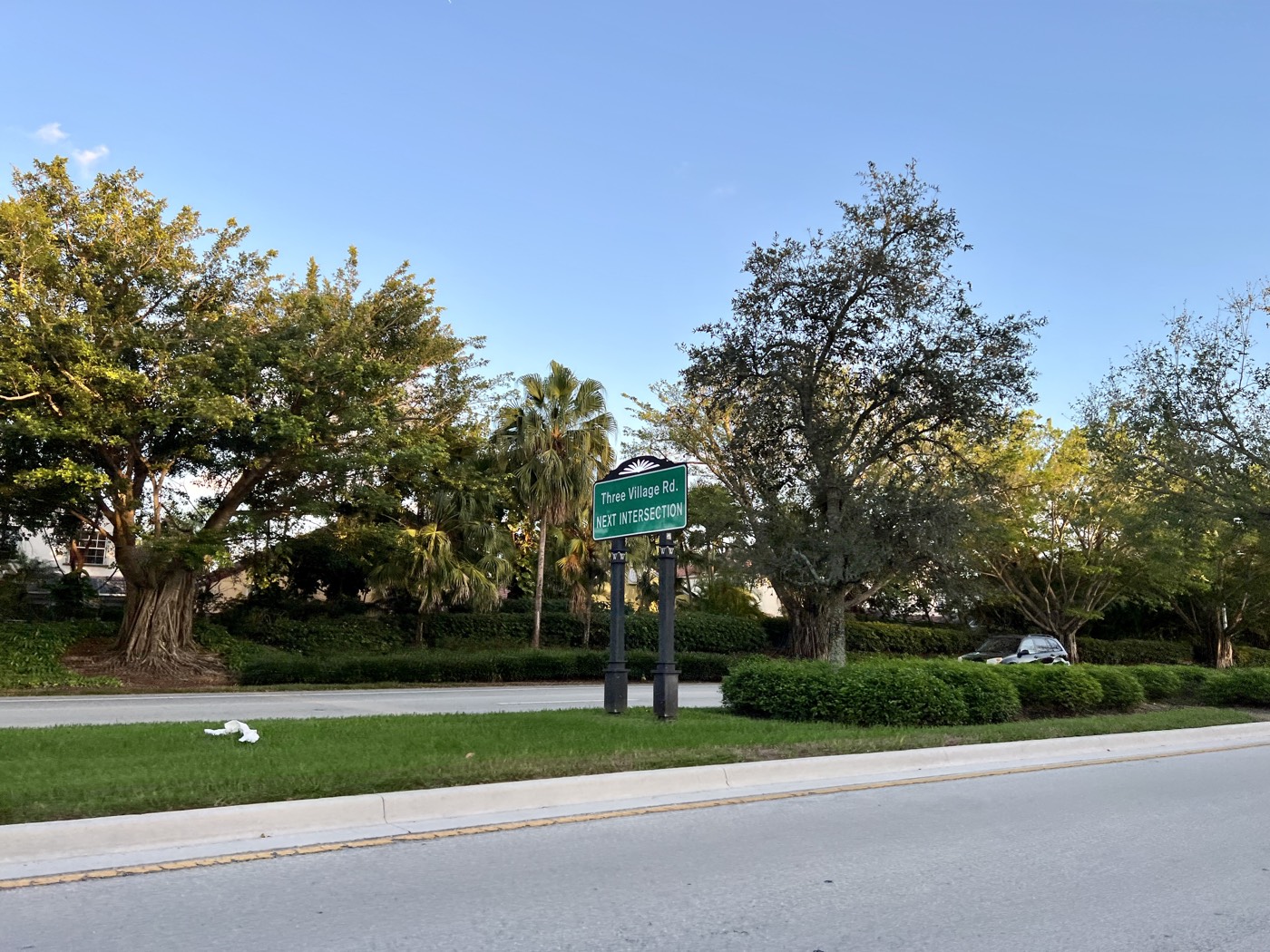
Drive west on State Road 84 until the strip malls thin out and the lakes begin, and you reach a city that did not exist a generation ago. The Cubans in Weston did not arrive here off a raft or through a refugee processing centre. Most arrived in a moving van from Kendall or Coral Gables, carrying a mortgage pre-approval and a child already enrolled at one of Broward’s best public schools. Weston is the Cuban story in its second act: not exile, but arrival.
The Place
Weston sits at the far western edge of Broward County, 26 square miles of master-planned streets pressed up against the Everglades. The whole city is barely older than its youngest residents. It was incorporated on 3 September 1996, when roughly 90 per cent of voters chose to make a name out of what had been a developer’s parcel.
The land was assembled in the 1950s by the industrialist Arthur Vining Davis, whose Arvida company took control of some 15,000 acres and called the future community Indian Trace. The name changed to Weston in the early 1980s, and the gated villages, manmade lakes and looping boulevards went up village by village. By the 2020 Census the population was 68,107, with a median household income above 122,000 dollars and one of the lowest crime rates in Broward.
It is, in short, an affluent suburb built from scratch for families who wanted space, safety and schools. A large share of those families turned out to be Latin American, and a meaningful slice of them Cuban.
How It Became Cuban
To understand the Cubans in Weston you have to start somewhere else, about thirty miles south, in Miami-Dade County.
The first Miami, and the long climb out of it
The Cuban story in South Florida begins in the early 1960s, when the first waves of exiles fleeing Fidel Castro settled in the tight streets of Little Havana and along Calle Ocho. Successive arrivals followed: the freedom flights of the late 1960s and 1970s, the 125,000 who came in the 1980 Mariel boatlift, the rafters of the 1990s, and a steady stream of visa holders after 2000. A University of Miami study found that more Cubans arrived after 2000 than during Mariel and the rafter crisis combined.
That first generation built businesses, sent children to university and, crucially, accumulated. By the 1990s a large Cuban-American professional class had emerged: doctors, lawyers, accountants, bankers, business owners whose parents had crossed the Florida Straits with nothing.
The move north
As Miami-Dade filled and grew expensive, that professional class began looking north. Census research has documented Hispanic residents leaving Miami-Dade for Broward County, and Weston, opening for sale precisely in the early to mid-1990s, was ready for them. It offered something Little Havana and even Coral Gables could not: brand-new houses, A-rated schools and twenty-minute commutes to the office parks along Interstate 75.
For a Cuban-American family that had spent two generations clawing into the middle and upper-middle class, Weston was the natural next step. The grandparents had landed in Hialeah or Westchester. The parents grew up in Kendall. The children would be raised in a gated village in Weston, with a lake behind the house.
It is worth being precise about the numbers, because Weston’s Latin American identity is often misread. By 2020, 54.1 per cent of Weston residents identified as Hispanic or Latino, up from 44.9 per cent a decade earlier. But Cubans are not the largest national group here. Weston is most famous as “Westonzuela,” the heart of the United States’ Venezuelan diaspora, and as of 2000 it had the highest percentage of Venezuelans of any American city. Colombians, Argentines, Brazilians and Cubans fill out the rest.
So the Cuban presence in Weston is real but woven into a wider Latin American fabric. This is not a Cuban enclave in the way Hialeah is. It is a place where Cuban families are one prominent thread among many, and where their second-act prosperity sits comfortably beside that of newer arrivals from across the hemisphere.
Why a suburb, not an enclave
The shape of the Cuban presence here says something about the community’s trajectory. Enclaves like Little Havana form when a population arrives poor and clusters for protection, language and cheap rent. Weston is the opposite: a destination people reach after they have made it.
You see it in the everyday texture. The Cuban family in Weston speaks Spanish at home and English at the office. The cafecito is brewed in the kitchen, not bought from a ventanita on the corner, because there are fewer ventanitas here. The connection to Cuba runs through grandparents and family memory rather than through a neighbourhood that recreates Havana street by street.
That is the same pattern playing out across affluent South Florida. You can trace it in the Cubans in Pinecrest and the Cubans in Palmetto Bay, two Miami-Dade suburbs where a similar professional class settled, and in the Cubans in Key Biscayne, the island that drew the wealthiest of the exile generation. Weston is Broward’s version of the same suburban arrival.
The Landmarks
Cleveland Clinic Weston Hospital, 2950 Cleveland Clinic Boulevard. The single most important institution for Weston’s professional families, Cuban and otherwise. It is a fully integrated medical campus with a 24-hour emergency department, and it anchors a cluster of medical offices where a large number of the city’s Spanish-speaking doctors practise. For Cuban-American physicians, many of them children of exiles, it is both employer and proof of how far the community has climbed.
Weston Town Center, at Royal Palm Boulevard and Bonaventure Boulevard. The closest thing Weston has to a plaza. Its Main Street arrangement of restaurants, cafes and boutiques is where families gather on weekend evenings, and where Latin American flavours show up on the menus alongside the pizza and sushi. It is not a Cuban district, but on a Saturday night the Spanish you overhear there comes in a dozen accents.
Cypress Bay High School, 18600 Vista Park Boulevard. The reason many families chose Weston in the first place. With more than 4,500 students it is the third-largest public high school in Florida, and it consistently ranks among the better-performing large schools in the state. Its hallways are a daily census of Latin American Weston, and its graduates fan out to universities across the country.
Weston Regional Park, 20200 Saddle Club Road. The civic backyard. Its baseball and soccer fields fill on weekends with youth leagues, and the soccer in particular reflects the city’s Latin American makeup. For Cuban grandparents minding grandchildren, it is the kind of safe public space that the old neighbourhoods rarely offered.
Mary Help of Christians Catholic Parish, Parkland. Just to the north, this parish offers a Sunday Spanish Mass at noon that draws worshippers from many Latin American countries, Cubans among them. Catholic faith remains a quiet constant for the exile generation and its descendants, and Spanish-language liturgy is one of the threads that still binds a dispersed community. The nearby town has its own story in the Jews in Parkland.
St. Bonaventure Catholic Parish, 1301 SW 136th Avenue, Davie. The neighbouring parish to the east, where a new church was dedicated in March 2004 and Mass is celebrated in both Spanish and English. It serves the overflow of Catholic families from Weston’s western villages, and its bilingual rhythm mirrors the way Cuban-American households here move between two languages without thinking about it.
The Interstate 75 corridor and the office parks off State Road 84. Less a landmark than the engine of the place. The business parks that line the highway employ many of Weston’s professionals and gave the city its reason to exist as a commuter suburb. They are why the Cuban accountant can live behind a lake and still reach the office before nine.
Where They Came From
Almost no one in Weston came straight from Cuba. The Cuban families here are the inland migration of the South Florida exile, the move from the first landing places to the suburb of the second generation.
Trace a typical Weston Cuban family back and the line usually runs through Miami-Dade. The roots are in the towns that received the great waves: Little Havana for the early 1960s exiles, Hialeah and Westchester and Kendall for the families who arrived through the freedom flights, Mariel and the rafter crisis. The deeper origins lie in Havana and the provincial cities of pre-revolution Cuba, in the professional and merchant classes that the revolution displaced.
What pulled them specifically to Weston was not Cuba but Broward: the schools, the safety, the new construction and the proximity to work. They settled here for the same reasons any prosperous American family chooses a suburb, and they brought the language, the food and the family closeness with them. The pattern of climbing out of the first arrival neighbourhoods toward the gated west is the connective tissue between Weston and communities like the Cubans in Coral Gables and the Cubans in Doral.
Weston Today
Weston in 2026 is a comfortable, polished, intensely Latin American suburb that wears its prosperity lightly. The Cuban families here are largely indistinguishable, on the surface, from their Venezuelan, Colombian and Argentine neighbours: the same kind of house, the same school run, the same Saturday at the Town Center. The shared language is Spanish; the shared ambition is the next generation.
That blending is the most honest thing to say about Cuban Weston. There is no Cuban quarter, no equivalent of Calle Ocho, no concentration of Cuban storefronts. What there is instead is a network of families, churches, schools and medical practices in which Cuban-Americans are present, established and largely settled. The exile urgency of the first generation has softened into the ordinary domestic life of the third.
Some of that loss is real. Children raised behind the gates of Weston grow up further from Havana than their grandparents could have imagined, with Spanish that fades a little each generation and a Cuba that exists mainly in stories. But what replaced the enclave is exactly what the exiles wanted for their grandchildren: safety, education and a future taken for granted. The Cubans in Weston are not a community in crisis or in formation. They are a community that arrived, and that is its own kind of remarkable. You can read the parallel non-Latin story of arrival in the Jews in Hollywood to the east.
Frequently Asked Questions
Are there many Cubans in Weston, Florida?
Yes, though they are part of a broader Latin American population rather than a dominant group. In 2020, 54.1 per cent of Weston residents identified as Hispanic or Latino. Cubans are a notable presence among them, but the Cubans in Weston do not form a majority, and the city’s single largest Latin group is Venezuelan.
Why did Cuban families move to Weston?
Most arrived not from Cuba but from Miami-Dade County, as part of a northward migration of established Cuban-American professionals. The Cubans in Weston were drawn by new housing, A-rated public schools, low crime and easy access to the office parks along Interstate 75, the classic reasons families choose a master-planned suburb.
Is Weston a Cuban neighbourhood like Little Havana or Hialeah?
No. Weston is an affluent, master-planned suburb of gated villages and lakes, not a dense ethnic enclave. There is no Cuban commercial district here. Cuban families live blended among Venezuelan, Colombian and Argentine neighbours rather than clustered together.
When was Weston founded?
The land was assembled in the 1950s by Arthur Vining Davis and his Arvida company, originally as Indian Trace. The name became Weston in the early 1980s, and the city was officially incorporated on 3 September 1996.
What is “Westonzuela”?
It is the nickname Weston earned for its very large Venezuelan population, which arrived in waves fleeing political and economic crisis in Venezuela. Weston had the highest percentage of Venezuelans of any US city as of 2000. Cuban families share the city with this larger Venezuelan community.
Where do Weston’s Cuban families trace their roots?
Almost all trace through Miami-Dade rather than directly from the island. The line typically runs from Havana and Cuba’s pre-revolution cities, through arrival neighbourhoods like Little Havana, Hialeah and Kendall, and finally to the suburban west. The Cubans in Weston represent the second and third generations of that journey.
If your family’s story passed through Weston, or any of the places Cubans have made home in America, Atlas of Home can trace that journey. From Havana and the streets of Little Havana, to a gated village behind a Broward lake, to wherever you are now.