
Long before the arepa stands and the Venezuelan flags, before anyone thought to call this stretch of west Miami-Dade “Doralzuela,” there were the Cubans. The Cubans in Doral arrived as the swampland was being drained and the first gated streets were being laid, professionals and business owners who saw a quiet golf town with cheap lots and decided to make it home. They built the neighbourhood associations, won the fight for incorporation, and elected the city’s first mayor. Doral’s louder communities came later. The Cuban foundation was poured first.
The Place
Doral sits roughly fifteen miles west of downtown Miami, a flat grid of office parks, gated communities, and golf fairways pressed up against the edge of the Everglades. It takes its name, oddly enough, from a marriage: Doris and Alfred Kaskel, the New York real-estate couple who bought 2,400 acres of swampland here in the late 1950s for about 49,000 dollars and combined their first names over a hotel and golf course (Wikipedia).
For decades it was less a town than a destination, a place golfers flew into for the Doral Open and flew out of again. Only in the 1980s did the first families move in. By the time Doral incorporated in 2003 it had become one of the most affluent and densely Latin American cities in Florida, home to corporate headquarters, multinational offices, and a population that is overwhelmingly Hispanic.
How It Became Cuban
The Cuban story in Doral is not the story of Little Havana or Hialeah, the working-class arrival cities where the exodus of the 1960s first landed. By the time Cubans came to Doral, many had already spent a generation in Miami. They came with capital, professions, and the particular ambition of people who had rebuilt once and intended to do it well the second time.
A town with no town in it
Through the 1960s and 1970s Doral barely existed as a residential place. The Kaskels had built the Doral Country Club, which opened in 1962, and the area around it was golf, agriculture, and empty lots. From 1983 to 1985 Miami-Dade County imposed a building moratorium to protect the area’s water wells. When it lifted, the land was wide open and cheap.
In the early 1980s the Kaskels’ grandson Bill began developing the first planned communities, Doral Estates and then, in partnership with Lennar Homes, Doral Park. There were no stores, no schools, and no parks yet. What there was, was space and value, and that combination drew young families willing to trade amenities for square footage.
The professional second move
Many of those early full-time residents were Cuban-American families moving up and out from the older Cuban centres of Hialeah, Westchester, and Little Havana. They were not refugees stepping off a boat. They were doctors, lawyers, contractors, and small-business owners with a generation of Miami behind them, looking for newer homes, gated streets, and good schools for their children.
The golf-course communities that went up between the late 1980s and mid-1990s, the cluster of gated neighbourhoods around Doral Park Country Club among them, filled with exactly this kind of buyer. Spanish was the language of the cul-de-sac. Cuban coffee was the currency of the office park. The town that had been built for golfers was quietly becoming a Cuban-American suburb.
Building the civic machine
What set Doral’s Cubans apart was that they organised. In 1989 the community formed the West Dade Federation of Homeowner Associations to push back against development proposals it disliked. In 1996 residents elected their first community council, with Jose “Pepe” Cancio Sr. among the members, a Cuban name on the very first slate of local leadership.
By 1995 the push for incorporation was in earnest, driven by frustration over high county taxes and unchecked growth. The campaign ran for seven years. In January 2003, 85 percent of voters approved incorporation, and that June, 92 percent ratified the city charter (City of Doral).
A Cuban-American city hall
When Doral elected its first government in 2003, it chose Juan Carlos Bermudez, a Cuban-American, as its first mayor, with Cuban-American Pete Cabrera as vice mayor. Bermudez would serve two long stretches in the office, from 2003 to 2012 and again from 2016 to 2022. The civic identity of the new city, its zoning fights, its parks, its first ordinances, was shaped substantially by the Cuban families who had arrived first and stayed to govern.
This is the part of Doral’s story that gets lost in the more recent headlines. The institutions that the later Venezuelan and Colombian arrivals moved into, the homeowner associations, the city hall, the schools, the Spanish-speaking commercial fabric, were largely Cuban-built. Doral was a functioning Cuban-American town before it became famous as anything else.
The Landmarks
Trump National Doral Miami, 4400 NW 87th Avenue. The descendant of the Kaskels’ original 1962 country club, the resort and its famous “Blue Monster” course are the reason Doral exists at all. For decades it hosted the PGA Tour event that put the town’s name on the map, and it remains the single landmark every long-time resident, Cuban or otherwise, orients the city around.
Doral Park Country Club, 5001 NW 104th Avenue. The Mediterranean-style club at the heart of the gated communities built between the late 1980s and mid-1990s, the neighbourhoods that drew Doral’s first wave of Cuban-American families. Its surrounding villages, Doral Palms, Doral Woods, Doral Lakes, and the rest, were the suburb’s original full-time addresses.
La Esquina del Lechon, 8601 NW 58th Street. A temple to Cuban-style roasts, where the rotisserie turns slow-roasted pork, chicken, and beef from early morning. It is the kind of unpretentious, all-day Cuban kitchen that anchors a neighbourhood, the smell of garlic and citrus marinade drifting across the office-park parking lot.
Las Vegas Cuban Cuisine, 11500 NW 41st Street. One of the local mini-chain’s Doral outposts, serving the standards, ropa vieja, lechon, plantains, and small jolts of cortadito, to a lunchtime crowd of office workers and families. For many Doral Cubans it is the default weekday table.
Vicky Bakery, Doral. The Cuban pastry institution founded in 1972 in Hialeah by Antonio and Gelasia Cao, political exiles who had met at a famous Havana bakery, now reaches Doral as one of its many South Florida locations. The guava pastelitos and the line out the door are the same as they were three generations ago.
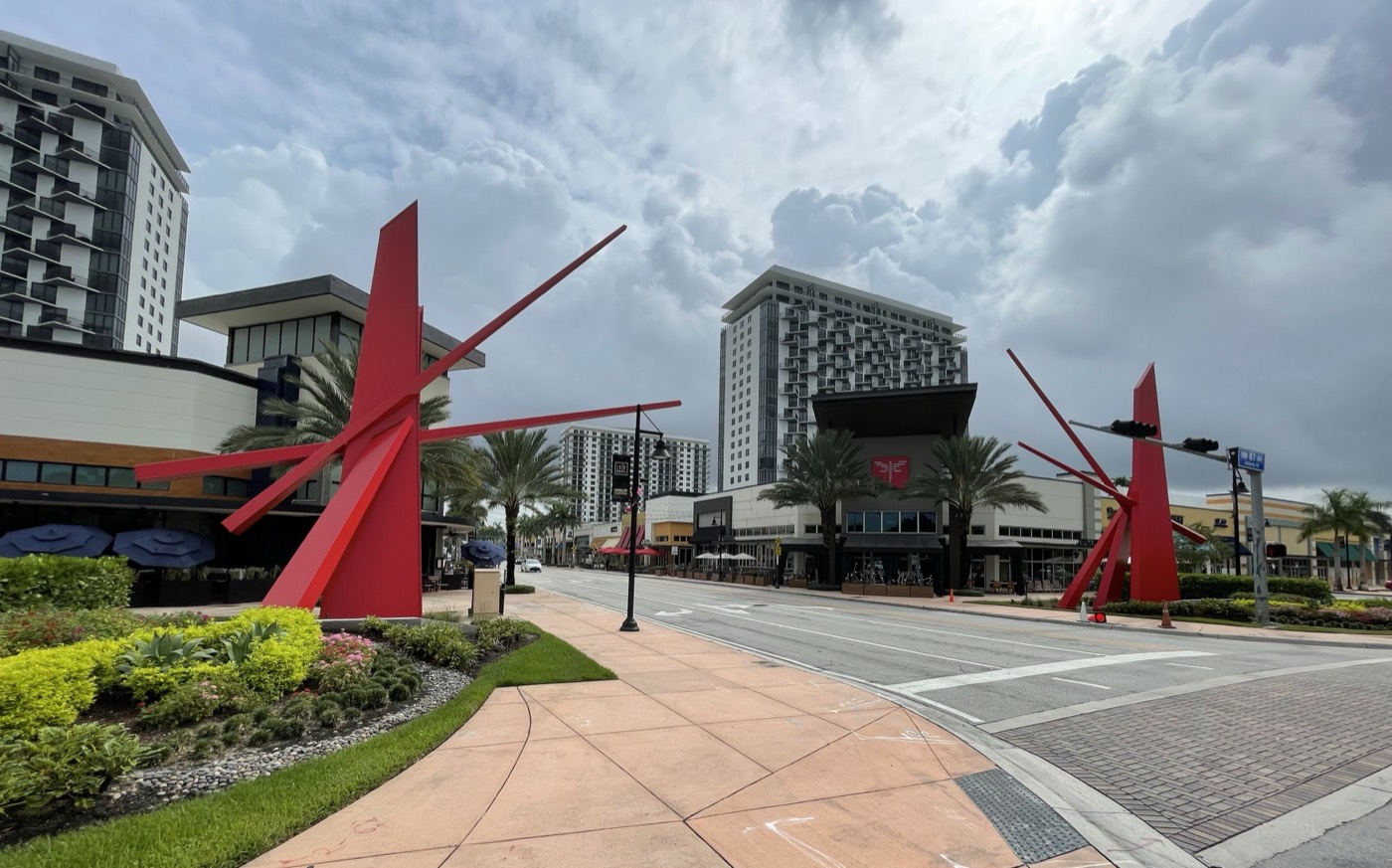
CityPlace Doral, 8300 NW 36th Street. The walkable downtown core, built with a central park, splash fountain, and amphitheatre, where the city’s restaurants and cafes cluster. It is where the Cuban cafeteria tradition of strong coffee at a walk-up window now shares the street with Venezuelan arepas and Colombian bakeries.
Doral Government Center, 8401 NW 53rd Terrace. The seat of the city that Doral’s Cuban-American founders fought seven years to create. The building stands as the literal address of a victory won in 2003, when 85 percent of voters chose to incorporate and elected a Cuban-American mayor to lead it.
Where They Came From
Doral’s Cubans came, almost without exception, by way of somewhere else in Miami. Their families had arrived in the great exoduses that followed the 1959 revolution, the early professional exiles, the Freedom Flights, and the 1980 Mariel boatlift, landing first in Little Havana, then spreading into Hialeah and Westchester as they found their footing.
The move to Doral, when it came in the 1980s and 1990s, was a move within the diaspora rather than a fresh migration. It was the second or third address of families who had already converted exile into a foothold and were now buying the newer house in the newer suburb.
That origin shapes the community’s character. These were people fluent in Miami, comfortable with civic life, and used to building institutions from scratch, exactly the qualities that turned a golf resort with no stores into an incorporated city in a single generation.
Doral Today
The Doral of the 2020s is no longer a Cuban town in the way it once was. As of the 2020 census the city’s population had climbed to roughly 76,000, and Venezuelans had become the single largest national-origin group at around 39 percent, followed by Colombians at about 11 percent. Cubans, at roughly 8 percent, are now a smaller share of a much larger and more varied Latin American city.
The nickname tells the story: outsiders call it “Doralzuela” now, for the Venezuelan flags, restaurants, and media that fill the streets. The Cuban presence has been somewhat absorbed into a broader Latin fabric, less a distinct enclave than a founding layer beneath everything that came after.
But the foundation holds. The homeowner associations, the city charter, the bilingual commercial culture, the cafeteria window pouring colada into thimble cups, all of it traces back to the Cuban-American families who got here first. Doral is a Venezuelan city built on a Cuban frame, and the frame is still very much standing. For a fuller picture of how Cubans settled the affluent southern suburbs of Miami-Dade, the communities of Cubans in Pinecrest, Cubans in Palmetto Bay, Cubans in Coral Gables, and Cubans in Key Biscayne trace the same upward arc. To understand the later waves that reshaped this same city, read about the Venezuelans in Doral and the Colombians in Doral.
Frequently Asked Questions
When did Cubans first move to Doral?
Cubans began settling Doral in significant numbers in the 1980s and 1990s, when the Kaskel family’s first planned communities, Doral Estates and Doral Park, opened up affordable new homes. Most were Cuban-American families relocating from older Miami areas such as Hialeah, Westchester, and Little Havana, rather than new arrivals from Cuba.
Are most Cubans in Doral wealthy professionals?
Doral’s Cuban community skews affluent and professional, made up largely of doctors, lawyers, business owners, and contractors who had already established themselves in Miami before moving to the newer, gated suburb. The Cubans in Doral represented an upwardly mobile second or third move within the diaspora rather than a first landing.
Was Doral’s first mayor Cuban?
Yes. When Doral incorporated as a city in 2003, voters elected Juan Carlos Bermudez, a Cuban-American, as its first mayor, alongside Cuban-American vice mayor Pete Cabrera. Cuban-American families had also led the homeowner associations and community councils that drove the seven-year fight for incorporation.
What percentage of Doral is Cuban today?
As of the 2020 census, Cubans made up roughly 8 percent of Doral’s population of about 76,000. Venezuelans had become the largest group at around 39 percent, followed by Colombians at about 11 percent, which is why the city is now nicknamed “Doralzuela.”
Why is Doral called “Doralzuela”?
The nickname reflects the large Venezuelan migration that arrived in Doral from the early 2000s onward, fleeing political and economic crisis at home. Venezuelans are now the city’s largest national-origin community, layered on top of the earlier Cuban foundation that built the suburb’s institutions.
Where do Cubans in Doral eat and gather?
Long-standing Cuban spots include La Esquina del Lechon on NW 58th Street for roasts, Las Vegas Cuban Cuisine on NW 41st Street for everyday classics, and Vicky Bakery for guava pastelitos and Cuban coffee. CityPlace Doral, the walkable downtown core, is where much of the city’s cafe and restaurant life now centres.
If your family’s story passed through Doral, or any of the places Cubans have made home in America, Atlas of Home can trace that journey. From the exile streets of Little Havana to a gated Doral cul-de-sac off the golf course, to wherever you are now.