
On a Friday evening on East Big Beaver Road, a parking lot fills with sedans dropping off children carrying workbooks of Chinese characters. Inside, classrooms hum with Mandarin. A few miles west, families browse a thirty-thousand-square-foot Asian supermarket before dinner. This is the rhythm of the Chinese in Troy, Michigan, a community that turned an affluent Oakland County suburb into one of the most concentrated Asian American populations in the Midwest.
The Place
Troy sits about twenty miles northwest of downtown Detroit, in the heart of Oakland County, the second-wealthiest county in Michigan. It was farmland for most of its history. The remainder of old Troy Township was incorporated as a city only in 1955, after neighbouring Birmingham and Clawson annexed pieces of it and local residents pushed to protect what was left.
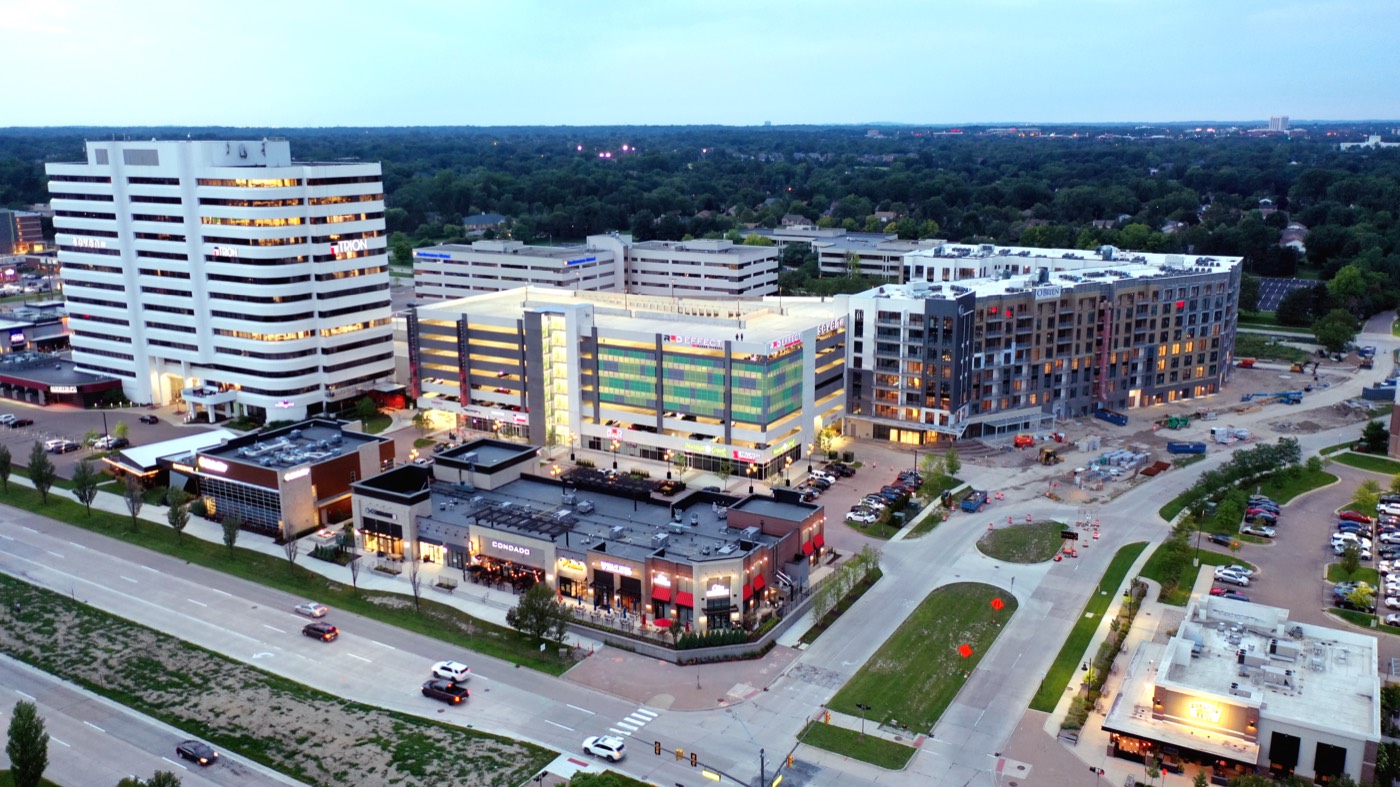
What followed was deliberate. From 1955 onward the young city government courted financial and automotive companies, and the Big Beaver Road corridor filled with corporate offices, including the former headquarters of Kmart at 3100 West Big Beaver. By the time the upscale Somerset Collection rose nearby, Troy had become a regional business and shopping centre, drawing executives, engineers, and professionals to its quiet subdivisions and top-rated schools.
How It Became Chinese
The story of the Chinese in Troy is not the story of an old Chinatown. It is the story of educated professionals arriving for work, then sending word home that this suburb was a good place to raise a family.
The 1965 turning point
For most of the early twentieth century, metro Detroit’s Chinese population was small and centred on a couple of downtown Chinatowns. The Immigration and Nationality Act of 1965 changed that. By scrapping the old national-origin quotas and favouring skilled workers and family reunification, it opened the door to a very different kind of migrant.
The Chinese who came to Detroit after 1965 were often doctors, nurses, scientists, and engineers. Many held advanced degrees, and a significant number had earned PhDs before joining the “Big Three” carmakers. They did not settle downtown. They followed the work to the suburbs.
It was a quiet kind of migration. There was no single sponsoring church, no garment trade or laundry economy pulling whole villages over, as in the older coastal Chinatowns. Instead, an engineer would take a job at a supplier near Troy, rent an apartment, buy a house, and a few years later a cousin or a former lab-mate would arrive to do the same. The chain was built one resume at a time.
Engineers and the automotive draw
The pull was concrete: Ford, General Motors, and Chrysler, along with the dense web of suppliers around them, needed technical talent. Chinese engineers with degrees from National Taiwan University and American graduate schools found steady careers in interior systems, powertrains, and product development. Troy, sitting in the middle of Oakland County’s corporate corridor, was an easy commute to most of it.
Professional networks reinforced the pattern. The Detroit Chinese Engineers Association, the oldest Chinese professional organisation in greater Detroit, gave newcomers a way to find mentors and jobs. Later, the Detroit Chinese Business Association, founded in 1995 and based at 2100 West Big Beaver Road in Troy, did the same for entrepreneurs.
The numbers climb
The growth shows up plainly in the census. Between 1990 and 2000, Troy recorded the largest numeric increase in Asian residents of any municipality across Oakland, Wayne, and Macomb counties, climbing from 4,932 Asian residents to 10,730. That decade gave Troy the largest Asian American population in the tri-county area, surpassing even Detroit.
By the early 2000s, ethnic Chinese were the second-largest Asian-origin group in the tri-county region, with roughly 16,829 people concentrated mainly in Troy, Rochester Hills, and Canton Township. The trend never reversed. Troy’s population today is roughly 90,000, and Asian residents make up close to 28 per cent of it, the highest share of any place in Michigan.
Why families stayed
Schools sealed it. The Troy School District ranks among the best in Michigan, and its high schools draw families specifically for academics. At Troy High School, Asian students make up close to half the student body. At Athens High School, which ranks better than roughly 88 per cent of Michigan high schools, about a fifth of students are Asian.
For first-generation parents who had crossed an ocean for opportunity, that combination of strong schools, safe neighbourhoods, and a short drive to the auto plants was decisive. They bought houses. They put down roots. And once a few families were established, relatives and former classmates followed.
The pattern fed on itself. Weekend Mandarin classes, Chinese churches, and an Asian supermarket gave families reasons to stay close, and proximity to one another made the suburb feel less foreign. A community that began as scattered engineers slowly knit itself into something a child could grow up inside.
The Landmarks
168 Asian Market, 2963 E Big Beaver Rd. One of Michigan’s largest Asian groceries, a thirty-thousand-square-foot store stocking ingredients from across China and the rest of Asia. A hot food court at the back serves Chinese dishes, and staff will cook seafood you pick out from the tanks. On weekends it is the social centre of the community as much as a grocer.
Southern Michigan Chinese School, 1522 E Big Beaver Rd. Established in September 1993, originally at the Troy Continuing Education Center. It teaches Mandarin and traditional Chinese characters across beginner, intermediate, and advanced levels, meeting on Friday evenings. For many Troy-raised children, this is where they first learn to read the language their grandparents speak.
Metro Detroit Chinese Christian and Missionary Alliance Church. The congregation bought its first church in Troy in October 1987, an early anchor for Chinese Christian families in the suburb. Today the Detroit Chinese Alliance North congregation worships at 5581 Wright Drive in Troy, one of several Chinese churches serving the area.
Somerset Collection, 2800 W Big Beaver Rd. The upscale mall that put Troy on the regional map, home to Michigan’s first Neiman Marcus and Nordstrom. For affluent Chinese families it is both a shopping destination and a Sunday gathering place, a public living room for a community that arrived with the suburb’s prosperity.
Detroit Chinese Business Association, 2100 W Big Beaver Rd, Suite 207. Founded in 1995 to build business ties between Chinese companies and American firms, it reflects the entrepreneurial wave that followed the first generation of salaried engineers. Its Troy address sits in the same corporate corridor that drew the community in the first place.
Troy High School, 4777 Northfield Pkwy. Among the highest-ranked public high schools in Michigan and a magnet for academically ambitious families. With Asian students near half the enrolment, its hallways tell the demographic story as clearly as any census table.
Where They Came From
Troy’s Chinese community draws from across the Chinese-speaking world rather than a single village or province. A large share trace to Taiwan, reflecting the mid-century wave of Taiwanese graduate students who earned American engineering degrees and stayed for careers with the automakers. The use of traditional characters and the Taiwan-linked roots of local Mandarin schools point to that heritage.
Alongside them came arrivals from mainland China, many from major cities and university towns, who followed the post-1965 professional path into engineering, research, and medicine. Later decades brought students and tech workers from a wider range of regions.
What united them was not a shared hometown but a shared route: higher education, then technical work, then a deliberate choice of a suburb with good schools. That is why the community feels professional rather than provincial, a network of engineers and entrepreneurs as much as a transplanted village.
Troy Today
Troy is now a suburb where you can buy hand-pulled noodles, enrol a child in Mandarin school, and join a Chinese professional association without leaving the city limits. The community is settled, multi-generational, and visible in the schools, the shopping centres, and the restaurants along Big Beaver and Rochester roads.
It also shares the suburb with other large Asian communities, most notably Troy’s substantial Indian population, which built its own temples, grocers, and institutions nearby. The two communities overlap in the same excellent schools and corporate offices while keeping distinct cultural lives, a reminder that “Asian Troy” is really several stories at once.
For the children raised here, Troy is simply home: a place of cross-country meets and calculus classes where Mandarin school on Friday and dim sum on Sunday are ordinary parts of an American childhood. The engineers who arrived chasing auto-industry jobs in the 1970s and 1980s could not have scripted it more neatly.
Related reading on the wider Michigan story: the Chinese in Ann Arbor, the academic counterpart to Troy’s corporate community; the Indians in Troy, who share the same schools and corridors; the Indians in Novi; and the Indians in Rochester Hills, a neighbouring Oakland County hub. For the broader Oakland County picture, see the Lebanese in Birmingham.
Frequently Asked Questions
How many Chinese people live in Troy, Michigan?
Troy does not publish a precise standalone count for ethnic Chinese, but it is a primary hub for the roughly 21,000 ethnic Chinese in Oakland County as of 2022. Asian residents overall make up close to 28 per cent of Troy’s population of about 90,000, the highest share of any place in Michigan.
Why did the Chinese settle in Troy rather than Detroit?
The Chinese in Troy arrived mostly after the 1965 immigration reforms as engineers, scientists, and professionals working for the auto industry. They followed the jobs to Oakland County’s corporate corridor and chose Troy for its short commutes, safe neighbourhoods, and top-rated schools rather than settling in the older downtown Chinatowns.
Is there a Chinese school in Troy, Michigan?
Yes. The Southern Michigan Chinese School, founded in 1993, teaches Mandarin and traditional Chinese characters on Friday evenings at 1522 East Big Beaver Road. It is one of several weekend Chinese schools serving families across the metro Detroit suburbs.
Where do Chinese families in Troy shop for groceries?
168 Asian Market at 2963 East Big Beaver Road is one of Michigan’s largest Asian supermarkets, a thirty-thousand-square-foot store with a Chinese food court. It anchors the everyday life of the Chinese community in Troy and draws shoppers from across the region.
How are Troy’s schools connected to the Chinese community?
Troy School District is one of the highest-ranked in Michigan, which is a major reason Chinese families chose the city. At Troy High School, Asian students make up close to half the enrolment, and at Athens High School roughly a fifth, reflecting how central the schools are to the community.
Is Troy’s Chinese community the same as its Indian community?
No. Troy is home to both a large Chinese community and a separate, substantial Indian community. They share the same schools and corporate corridor but maintain distinct cultural institutions, religious centres, and grocers, making Troy a place of several overlapping Asian American stories.
If your family’s story passed through Troy, or any of the places Chinese Americans have made home in America, Atlas of Home can trace that journey. From a graduate degree and a job offer at one of the Big Three, to a house near a top-rated Troy school, to wherever you are now.