
On a winter afternoon in 1892, two young women from Jiujiang, a river town on the southern shore of the Yangtze, stepped off a train in Ann Arbor to sit the University of Michigan medical school’s entrance exam. Kang Cheng and Shi Meiyu, known in English as Ida Kahn and Mary Stone, would graduate at the top of their class four years later, among the first Chinese women anywhere trained as Western physicians. The Chinese in Ann Arbor have been arriving ever since, drawn by the same thing that brought those two: a great public university, and the promise it makes.
The Place
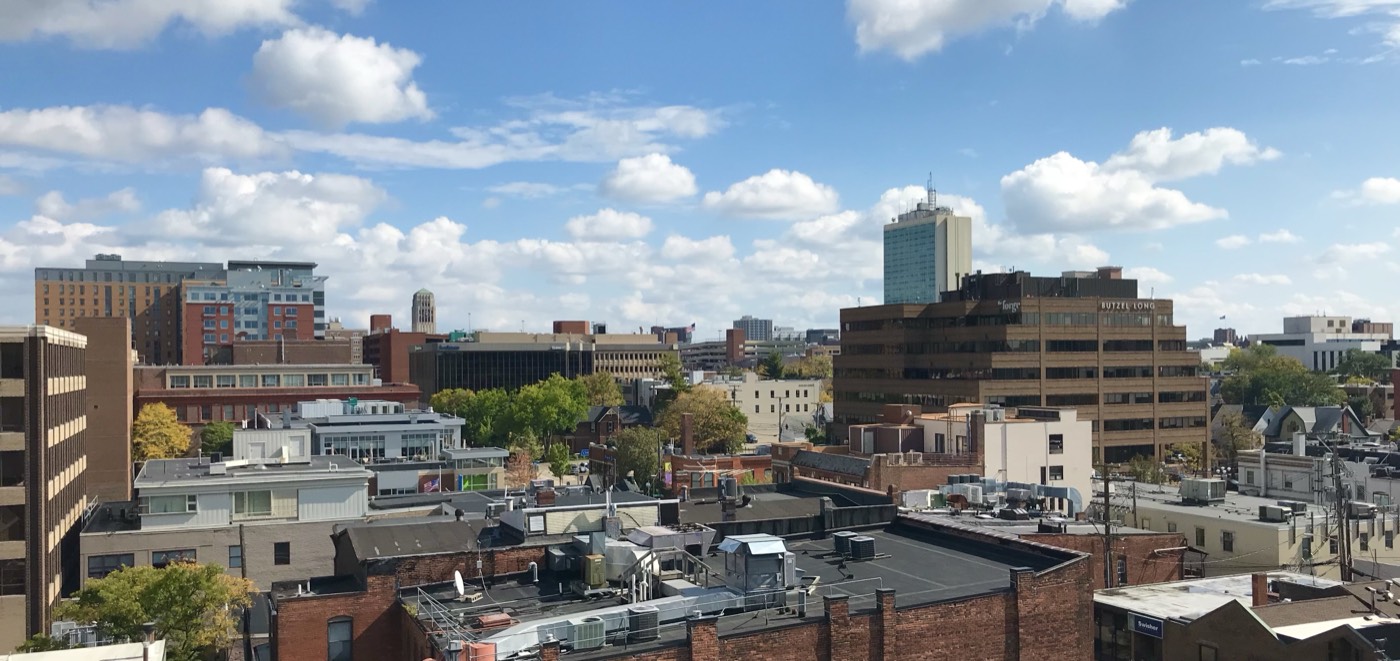
Ann Arbor sits on the Huron River in southeastern Michigan, about forty miles west of Detroit. It is a college town in the fullest sense, its rhythms set by the University of Michigan, one of the largest and most respected public universities in the country, with a hospital system, sprawling research labs, and a tech corridor that has grown up alongside.
It is also affluent and highly educated, the kind of place where a faculty appointment, a residency, or a software job can anchor a whole family for a generation. For the Chinese who have settled here, the campus has always been both the door and the centre of gravity.
How It Became Chinese
The story does not begin with a neighbourhood. It begins with a treaty and a university president.
Angell, the treaty, and the first students
In 1880, U.S. President Rutherford B. Hayes nominated the University of Michigan’s president, James Burrill Angell, as American minister to China. Angell sailed to Beijing and negotiated the Angell Treaty of 1880, which allowed the United States to limit, but not prohibit, the immigration of Chinese labourers. It was a compromise born of the same anti-Chinese politics that would soon produce the Chinese Exclusion Act of 1882.
Angell returned with something more lasting than a treaty: a conviction that Chinese students belonged at Michigan. When Kang Cheng and Shi Meiyu arrived in 1892, the Exclusion Act was in force, and Chinese travellers were routinely suspected of being labourers. The two were championed by missionary connections and by influential Methodists in Ann Arbor, who helped smooth their entry. They graduated in 1896 and returned to China to open hospitals and dispensaries.
The Barbour Scholars
Kang and Shi left a mark they could not have predicted. They met Levi Lewis Barbour, a University regent, whose admiration for them helped inspire the Barbour Scholarship, established to bring Asian women to study at Michigan. The fund drew students from across China and Asia for decades, and it still supports Asian women at the University today.
By the years between 1911 and 1917, the University counted between fifty and seventy Chinese students at a time, placing Michigan among the top three American universities for Chinese enrolment. The pipeline that Angell opened had become a river.
From scholars to a community
For most of the early twentieth century, Ann Arbor’s Chinese presence was a campus presence: students who came, studied, and often went home. The first sign of permanence in town was modest. In 1957, a restaurant called Leo Ping on Main Street was, by local memory, the only Chinese restaurant in Ann Arbor.
The shift to a settled community came in waves, each shaped by the politics of its decade. Ann Arbor’s Asian American population jumped between 1960 and 1970, and again through the 1970s and 1980s, lifted in part by a national shortage of medical personnel that drew foreign-trained doctors to American hospitals. Taiwanese families came first in large numbers, followed after 1979 by a growing stream from mainland China as relations reopened and students began staying on.
Amy Seetoo and CASAA
Among the new arrivals was Amy Seetoo, a Taiwanese American librarian who came to Ann Arbor in 1980. Over the following years she watched successive waves of Chinese and Taiwanese settle in town, each group keeping somewhat to itself, divided by dialect, origin, and politics.
In 1994 she founded the Chinese American Society of Ann Arbor, known as CASAA, with a deliberately broad mission: to bring together Chinese from Taiwan, Chinese from the mainland, and non-Chinese neighbours under one roof. It was a quiet act of bridge-building in a community that had grown faster than its institutions.
The University builds its own China
The University, meanwhile, kept deepening its ties. Its Center for Chinese Studies, founded in 1961 and now named the Lieberthal-Rogel Center for Chinese Studies, became one of the country’s leading hubs for the study of China. In 2009 the University opened a Confucius Institute, one of hundreds worldwide funded through China’s Ministry of Education, though Michigan declined to renew that partnership at the end of the decade as such institutes drew national scrutiny.
By the 2009 to 2010 academic year, Chinese students had become the single largest group of international students in the United States, and at Michigan they had already held that distinction for years. The students of Kang and Shi’s lineage now numbered in the thousands.
The Landmarks
Lieberthal-Rogel Center for Chinese Studies, Weiser Hall, 500 Church Street. Founded in 1961 and housed on the fourth floor of Weiser Hall on central campus, the centre is the intellectual heart of Ann Arbor’s relationship with China. Generations of scholars, diplomats, and analysts have passed through its seminars, and its public lectures draw the wider Chinese community downtown.
Lan City Hand Pulled Noodles, 1235 South University Avenue. A second location of the Lanzhou-style noodle house that began on Washtenaw Avenue, Lan City brings hand-pulled beef noodle soup, the signature dish of northwestern China, to the edge of campus. It fills at lunch with students who grew up on exactly this bowl.
Evergreen Modern Chinese, downtown Ann Arbor. Where mid-century Ann Arbor had chop suey, Evergreen serves regional Chinese cooking: Sichuan, Hunan, Shanghai, and Taiwanese classics aimed squarely at diners who know the difference. It is a measure of how far the city’s palate, and its Chinese population, have travelled since Leo Ping.
Ann-Hua Chinese School, 3250 Plymouth Road, Suite 203. One of several weekend Chinese schools serving Ann Arbor families, Ann-Hua teaches Mandarin language and culture to children from preschool through high school, alongside enrichment classes. For second-generation families it is where heritage is handed down, one Saturday at a time.
Ann Arbor Chinese School (AACCOM), established 1974. One of the oldest Chinese schools in the region, AACCOM has taught language and culture to local children for half a century, and more recently added a Taiwan Center for Mandarin Learning offering classes to adults. Its longevity tells you how deep the community’s roots now run.
Hua Xing Asia Market, 2867 Washtenaw Avenue. The largest Asian grocery serving Ann Arbor sits just east on Washtenaw Avenue, stocked with the produce, sauces, frozen dumplings, and live seafood that a campus city full of Chinese families needs. On weekends it functions as a meeting place as much as a market.
Where They Came From
Ann Arbor’s Chinese community is not the product of a single village or province. The earliest students came from the Yangtze valley and the treaty-port cities. The mid-century wave that put down roots was heavily Taiwanese, arriving as families of doctors, engineers, and academics in the decades when Taiwan sent many of its brightest abroad.
After 1979, as the mainland reopened, the balance shifted. Students came from Beijing, Shanghai, the coastal provinces, and increasingly from across China, many staying for graduate work, faculty posts, hospital appointments, or jobs in the local tech sector. The common thread was rarely geography. It was the University, and the kind of work it makes possible.
Ann Arbor Today
Today Ann Arbor has one of the largest Asian American communities in Michigan. Roughly fifteen to sixteen percent of the city is Asian, up from under twelve percent in 2000, and the Chinese are the single largest part of it, around nine thousand residents by recent census counts in a city where Mandarin is among the most commonly spoken languages after English.
Unlike the dense Chinatowns of older cities, Ann Arbor’s Chinese community is woven through the town rather than concentrated in one quarter. It lives in the faculty neighbourhoods near campus, in the newer subdivisions on the north and east sides, in the lab buildings, the hospital wards, and the weekend schools.
It is, in the end, a community built on the same bargain Kang Cheng and Shi Meiyu accepted in 1892: come for the University, and stay for the life it lets you build. For comparison, you can read about the Chinese community in Santa Clara, California, another university-and-industry town, or explore how other immigrant groups have settled across the same state, from the Lebanese in Bloomfield Hills to the Indians in West Bloomfield and the Indians in Farmington Hills.
Frequently Asked Questions
How large is the Chinese community in Ann Arbor?
By recent census figures, Ann Arbor is home to around nine thousand residents of Chinese descent, the largest single group within an Asian population that makes up roughly fifteen to sixteen percent of the city. That share has grown steadily since 2000, driven largely by the University of Michigan.
Why did the Chinese in Ann Arbor settle there?
The Chinese in Ann Arbor came overwhelmingly for the University of Michigan, first as students and later as faculty, physicians, researchers, and tech professionals. The connection dates to 1892, when the first Chinese students enrolled, and to University president James Angell’s diplomatic ties with China in 1880.
Who were the first Chinese students at the University of Michigan?
Kang Cheng (Ida Kahn) and Shi Meiyu (Mary Stone), two young women from Jiujiang, enrolled in the medical school in 1892 and graduated in 1896. They were among the first Chinese women anywhere to be trained as Western physicians, and their example helped inspire the Barbour Scholarship for Asian women.
Where do you find Chinese food and groceries in Ann Arbor?
Campus-area spots like Lan City Hand Pulled Noodles on South University and downtown’s Evergreen Modern Chinese serve regional Chinese cooking, while Hua Xing Asia Market on Washtenaw Avenue supplies groceries. The city now lists dozens of Asian eateries, a long way from the single Chinese restaurant it had in 1957.
Are there Chinese schools and cultural organisations in Ann Arbor?
Yes. The Ann Arbor Chinese School (AACCOM), established in 1974, and Ann-Hua Chinese School on Plymouth Road teach Mandarin and culture to local children, while the Chinese American Society of Ann Arbor, founded in 1994, organises community life across Taiwanese and mainland backgrounds.
How is the University of Michigan connected to China?
Deeply and for a long time. Its president negotiated the Angell Treaty in 1880, its Lieberthal-Rogel Center for Chinese Studies has been a national leader since 1961, and Chinese students have for years been the largest international group on campus, anchoring the wider Chinese community in Ann Arbor.
If your family’s story passed through Ann Arbor, or any of the places Chinese families have made home in America, Atlas of Home can trace that journey. From the river towns of the Yangtze to a lecture hall on the Diag, to wherever you are now.