
On a weekday morning along North Allen Avenue, the smell of warm beoreg drifts out of a bakery that has been open since before most of its customers were born. This is the quiet heart of the Armenians in Pasadena, a community older and more settled than its famous neighbour in Glendale, woven into the fabric of a city better known for the Rose Parade and Caltech. They came in waves across more than a century, and they have never left.
The Place
Pasadena sits at the foot of the San Gabriel Mountains, ten miles northeast of downtown Los Angeles. It is an old, monied city of Craftsman bungalows, Beaux-Arts civic architecture and tree-lined streets, home to Caltech and the Rose Bowl.
The Armenian presence here is concentrated in the northwest and central districts, around Allen Avenue, Washington Boulevard and Lake Avenue. It is not a single ethnic enclave so much as a long thread running through an affluent, mixed American city.
How It Became Armenian
The story does not begin with a wave of refugees. It begins quietly, with a single name in a local newspaper.
The First Arrivals
The earliest mention of an Armenian in Pasadena appeared in 1895, when a Dr. Milchonians spoke as a guest at the First Congregational Church. A handful of others followed. In 1903 the Pashgian Brothers opened a rugs and draperies shop, the first Armenian-owned business in the city, trading on a craft Armenians were already famous for across America.
These early figures were merchants and professionals, not a mass migration. Pasadena was a wealthy resort town then, and the small Armenian presence reflected that: people who arrived with a trade and the means to set up shop. The rug trade in particular gave Armenians a foothold in well-to-do American cities, and Pasadena’s mansions wanted exactly the carpets that Armenian dealers could supply.
After the Genocide
The First World War and the genocide of 1915 changed everything. Survivors scattered across the world, and a stream of them reached Southern California. By 1923 an estimated 2,500 to 3,000 Armenians were living in Pasadena.
Many of these newcomers were Protestant Armenians from Cilicia, in the southern reaches of the former Ottoman Empire. They settled near Allen Avenue and Washington Boulevard, the corridor that remains the community’s centre of gravity a century later.
Faith came with them. The Armenian Cilicia Evangelical Church and the Armenian Evangelical Brethren Church both trace their beginnings to 1922, the latter starting as a small Bible reading group. These were churches of survivors, built by people who had lost almost everything else.
This was the same dispersal that seeded Armenian communities across California in those years, from the farm towns of the Central Valley that became the Armenians in Fresno, California to the future enclave that would grow into the Armenians of Little Armenia in Los Angeles. Pasadena’s chapter was smaller and more affluent, but it sprang from the same catastrophe.
Building Institutions
A community needs more than churches. In 1924, twenty young Armenians founded the Varoujan Club to organise cultural and social events. Around the same decade, the Armenian General Benevolent Union, the AGBU, opened a Pasadena branch, linking the city to a global network of Armenian philanthropy.
The Apostolic church arrived later. The St. Gregory parish council first met in 1947, establishing the older of Pasadena’s two Armenian Apostolic churches. Over the following decades its grounds on East Colorado Boulevard grew into a full complex of sanctuary, hall and school. A second Apostolic parish, St. Sarkis, would follow in the 1980s, serving the newer arrivals.
The pattern is telling. Each generation of Pasadena Armenians built the institution it most needed: the survivors built evangelical churches, the postwar community an Apostolic parish and benevolent union, the later immigrants their own schools and a second church. The map of the community is really a map of its arrivals.
The Lebanese and Soviet Waves
The character of the community shifted again in the second half of the twentieth century. When the Lebanese Civil War erupted in 1975, Armenians who had rebuilt their lives in Beirut after the genocide were uprooted a second time, and many came to Pasadena. For a stretch, Lebanese Armenians were the predominant new arrivals.
Then, as the Soviet Union collapsed in the late 1980s and 1990s, immigrants came directly from Armenia itself. Iranian Armenians arrived too, leaving Tehran in the years around the 1979 revolution and overlapping with the wider Persian exodus that built the Persian community of Tehrangeles in Los Angeles. Each wave brought its own dialect, cooking and politics, layering newcomer energy over an already established base.
By 1989, a study commissioned by the Pasadena Board of Directors put the local Armenian population at 6,850. The community that began with one man at a church lectern had become one of the most rooted Armenian populations in the country, distinct from the larger, denser settlement that would define the Armenians in Glendale, California just to the west.
The Landmarks
St. Gregory Armenian Apostolic Church, 2215 E. Colorado Blvd. The spiritual anchor of Pasadena’s Armenians, with a parish history reaching back to 1947. Its complex includes the Alfred and Marguerite Hovsepian Day School, founded in 1984, which now teaches more than 200 children from Pre-K through eighth grade.
The Old Sasoon Bakery, 1132 N. Allen Ave. A family-run bakery on the community’s main artery, open since the 1980s, turning out beoreg, flatbreads and trays of baklava. It is the kind of place where the morning queue is its own neighbourhood gathering.
Armen Market, 1873 N. Allen Ave. A neighbourhood grocer stocked with the spices, breads and prepared foods of the Armenian and wider Middle Eastern table, the sort of shop that doubles as a meeting point.
Garni Meat Market. A family-owned butcher that has been a Pasadena fixture since 1995, known for its luleh, marinated chicken and house-made dips. Generations have bought their holiday meat here.
The Armenian Genocide Memorial, Memorial Park. Unveiled in April 2015 on the genocide’s centennial, it was designed by Catherine Menard, then a young Art Center College of Design student who won a 2013 competition. Water drips from a black steel structure every 21 seconds, one drop standing for thousands of lives lost. The Armenian National Institute records it as one of the country’s notable public memorials to the genocide.
Sahag-Mesrob Armenian Christian School. Established in 1980, an independent Armenian school that has educated the children of the community for decades, keeping language and faith alive across generations born in California.
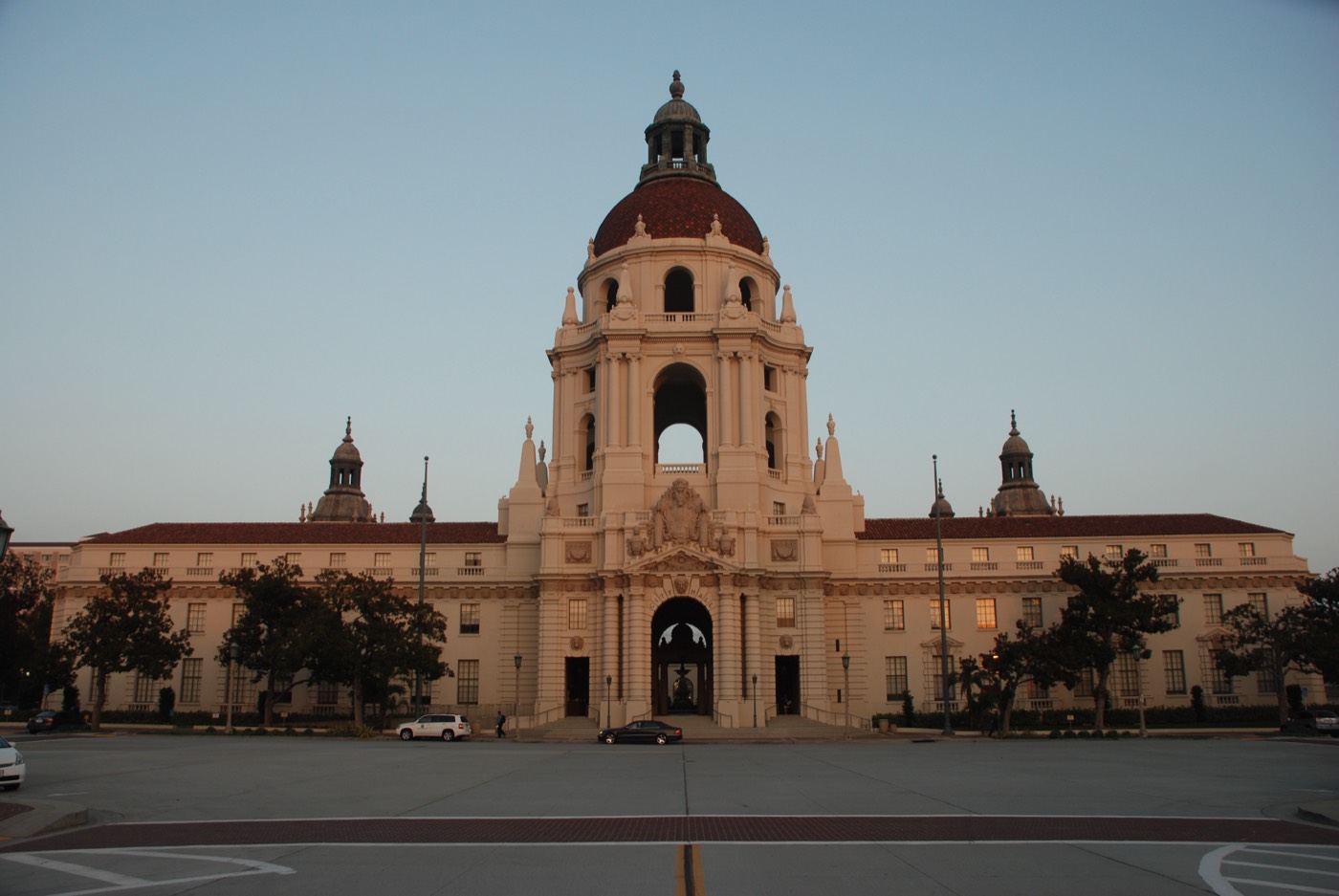
Pasadena City Hall, 100 N. Garfield Ave. Not an Armenian institution, but the civic stage where the city’s mayors have for more than thirty years proclaimed April 24 a Day of Remembrance, a measure of how fully the community has been recognised.
Where They Came From
Pasadena’s Armenians arrived from almost everywhere the diaspora scattered. The earliest came as individual merchants. The largest early wave were Protestant Armenians from Cilicia, fleeing the genocide that emptied their ancestral towns in the southern Ottoman lands.
Later generations came not from the homeland directly but from the diaspora’s second homes: Beirut, after Lebanon’s war turned violent in 1975, and Iran. Only with the fall of the Soviet Union did large numbers arrive straight from the Republic of Armenia.
That layered origin is why Pasadena’s community feels less monolithic than some. It holds Cilician Protestants whose families have been here a century, Beirut Armenians fluent in three languages, and recent arrivals from Yerevan, all sharing the same churches and bakeries.
The differences are not trivial. A family from Aleppo or Beirut speaks Western Armenian and carries the cooking of the Levant; a family from the Republic speaks Eastern Armenian and arrived with Soviet schooling. In Pasadena they have learned to be one community across those lines, partly because the institutions, the churches, the schools, the memorial, were already there to hold them.
Pasadena Today
The Armenian thread in Pasadena is older and quieter than Glendale’s, and it shows. There is no single dense Armenian downtown here. Instead there are the institutions, on Allen Avenue, on Colorado Boulevard, in Memorial Park, that mark a community fully at home.
Not everything has held. AGBU’s Vatche and Tamar Manoukian High School, which opened in Pasadena in 2006, closed in 2020 amid declining enrolment, a reminder that as families prosper and disperse across the region, the old neighbourhood institutions face hard arithmetic.
Yet the bakeries still queue out the door, St. Gregory still rings on Sundays, and every April the city marches to the memorial. Pasadena City College, just south of the historic Armenian corridor, has long counted Armenian students among its largest immigrant groups, and Armenian professionals, doctors, lawyers, engineers, are now thoroughly part of the city’s middle and upper class.
Many younger Armenians now live in Glendale, Montrose or La Crescenta and drive back to Pasadena for church and bread. The community has spread out across the foothills, but it has never abandoned the corridor where it began. The grandchildren of the Cilician survivors and the children of the Beirut and Yerevan arrivals still meet over the same counters.
That continuity is the real story of the Armenians in Pasadena. Not a single dramatic neighbourhood, but a hundred and thirty years of unbroken presence, each wave adding to what the last one built, the roots only ever sinking deeper.
Frequently Asked Questions
How long have Armenians lived in Pasadena?
The first recorded mention of an Armenian in Pasadena dates to 1895, and the first Armenian-owned business opened in 1903. The Armenians in Pasadena are one of the oldest established Armenian communities in California, predating the larger settlement in nearby Glendale.
How many Armenians live in Pasadena?
A 1989 study commissioned by the Pasadena Board of Directors placed the local Armenian population at 6,850. The wider Los Angeles County Armenian population is estimated at well over 180,000, the largest concentration in the United States.
Where is the Armenian neighbourhood in Pasadena?
The Armenians in Pasadena are concentrated in the northwest and central parts of the city, especially along Allen Avenue and Washington Boulevard, where survivors of the genocide first settled in the 1920s. Bakeries, markets and churches still cluster along this corridor.
What Armenian churches are in Pasadena?
St. Gregory Armenian Apostolic Church on East Colorado Boulevard, founded as a parish in 1947, is the oldest Apostolic church. The Armenian Cilicia Evangelical Church and the Armenian Evangelical Brethren Church both date to 1922, reflecting the Protestant Cilician origins of many early settlers.
How is Pasadena different from Glendale for Armenians?
Glendale has the larger and denser Armenian population, with Armenians forming a major share of the city. Pasadena’s community is older and more woven into a wealthy, mixed city, anchored by long-standing churches and family businesses rather than a single ethnic downtown.
Does Pasadena commemorate the Armenian Genocide?
Yes. Pasadena has formally observed April 24 as a Day of Remembrance for more than thirty years, and in 2015 it unveiled a permanent Armenian Genocide Memorial in Memorial Park, designed by Catherine Menard. Annual marches and vigils centre on the monument.
If your family’s story passed through Pasadena, or any of the places Armenians have made home in America, Atlas of Home can trace that journey. From the lost towns of Cilicia and the wars of Beirut, to a bakery on North Allen Avenue, to wherever you are now.