
Drive east from Sacramento on Highway 50, past the strip malls and the dry golden hills, and somewhere around the Folsom exits the cars in the lanes beside you start to feel familiar in a way that is hard to name. A bumper sticker for a Carnatic music school. A toddler’s car seat with a tiny Ganesha clipped to the visor. The Indians in Folsom, California did not arrive with fanfare. They came one engineer at a time, hired into a chip company on a rural road, and over forty years they turned a Gold Rush railroad town into one of the most quietly Indian suburbs in Northern California.
The Place
Folsom sits at the eastern edge of Sacramento County, where the valley floor begins to climb toward the Sierra foothills and the American River pools into Folsom Lake. It is an affluent town of roughly 93,000 people, with a median household income around $139,000, well above the California figure.
For most of America, Folsom means two things: the prison that opened in 1880, and the live album Johnny Cash cut inside its walls in January 1968. The town leans into that history. There is a Johnny Cash Trail, and the old granite cell blocks still loom above the river.
But the Folsom that the Indian families know is a different town entirely. It is the office parks off Iron Point Road, the top-rated schools, and the lake where parents take their children on Sunday afternoons. The Gold Rush is colour now. The chips are the real history.
How It Became Indian
Folsom’s Indian story does not begin in India. It begins with a microprocessor company looking for cheap land.
1984: Intel Comes to Town
In 1984 Intel chose a rural site at the corner of Iron Point Road and Prairie City Road for a research and development campus. The setting was so remote that construction is said to have displaced a family of mountain lions. At the time Folsom was a town of ranchers and farmers, with a population of just over 11,000 in 1980.
The campus grew fast. By 1990 Folsom’s population had nearly tripled, to almost 30,000, and Intel had become the largest private employer in the entire Sacramento region. The town reorganised itself around the company. New subdivisions, new schools, new shopping centres, all of it following the engineers.
The 1990s and 2000s: The H-1B Decade
Intel’s appetite for engineers coincided with a wave of Indian technical migration that reshaped American suburbs from Cupertino to Edison. The 1965 Immigration Act had opened the door to skilled professionals decades earlier, but it was the software and semiconductor boom of the 1990s, and the H-1B visa programme, that filled places like Folsom.
The path was specific. A young engineer trained at an Indian institute of technology, recruited by Intel or one of its suppliers, would land first in Silicon Valley or directly in Folsom. The Sacramento region offered what the Bay Area could not: a detached house with a yard, a short commute, and schools that ranked among the best in the state, all on a single engineer’s salary.
Word travelled the way it always does in Indian migration, through family and college networks. One cousin’s success in Folsom became another cousin’s plan. The community that grew was heavily South Indian, with strong Telugu, Tamil, and Kannada-speaking contingents, the same regional mix that staffs much of America’s chip and software industry.
Spilling into El Dorado Hills
As prices rose and families sought even larger homes, the community spread east across the county line into El Dorado Hills, an even more affluent master-planned suburb where Asian residents make up roughly 15 percent of the population. Today the two towns function as a single Indian catchment, sharing temples, grocers, music schools, and the same cluster of Intel and tech families. To talk about Indian Folsom is really to talk about the Folsom-El Dorado Hills corridor along Highway 50.
From Engineers to Everything
The first generation came for one company. The second generation widened the base. As Indian families put down roots, the professionals diversified: doctors at the regional hospitals, dentists, accountants, real estate agents who specialise in relocating tech families, and founders launching their own startups. Intel remains the anchor, but the community no longer depends on a single employer. That maturity is what separates Folsom from a company town that happens to have Indians in it. It is now a place Indians choose for itself.
The Landmarks
Folsom Hindu Temple and Cultural Center, 1710 Prairie City Road. Tucked into a shopping plaza a short drive from the Intel campus, the temple honours Sri Amirthakadeswarar, Sri Ganesha, and Sri Venkateswara, and follows the South Indian Agama tradition. It runs daily pujas and marks the full Hindu calendar, from Ekadasi and Pradosham to the big festival days, and doubles as a cultural centre where families gather well beyond worship.
Sri Venkateshwara Temple, 289 Iron Point Road. Established around 2020, this temple sits on the same Iron Point corridor that has become the spine of Indian Folsom. Its arrival within walking distance of Indian grocers and restaurants signalled how dense the community had grown, dense enough to support more than one temple within a couple of miles.
Reliance SuperMart, 297 Iron Point Road. Opened around 2015, this is the pantry of Indian Folsom. The aisles carry the staples that a homesick engineer’s family cannot find at the mainstream chain: fresh curry leaves and methi, sacks of basmati and idli rice, regional spice blends, and a frozen case that stretches the length of the store.
Dasara Indian Kitchen, 313 Iron Point Road. Named for the autumn festival, Dasara serves the South Indian dishes the local crowd grew up on, dosas, biryanis, and the kind of weekday thali that draws Intel engineers on their lunch break. It sits on the same block as the grocer and the temple, the small ecosystem that makes Iron Point Road feel like a single Indian high street.
Iron Point Road corridor. More than any single address, this stretch is the heart of the community. Within a few hundred metres you can pray, shop for groceries, eat a thali, and pick up sweets, all of it grown up alongside the office parks where so many residents work.
Vista del Lago High School. One of eight high schools in the Folsom Cordova Unified School District, Vista del Lago consistently ranks among the top high schools in Sacramento County and the top tier statewide. For Indian families, schools like this were never a bonus. They were the entire point of the move. Vista del Lago opened in 2004 and quickly became a magnet address.
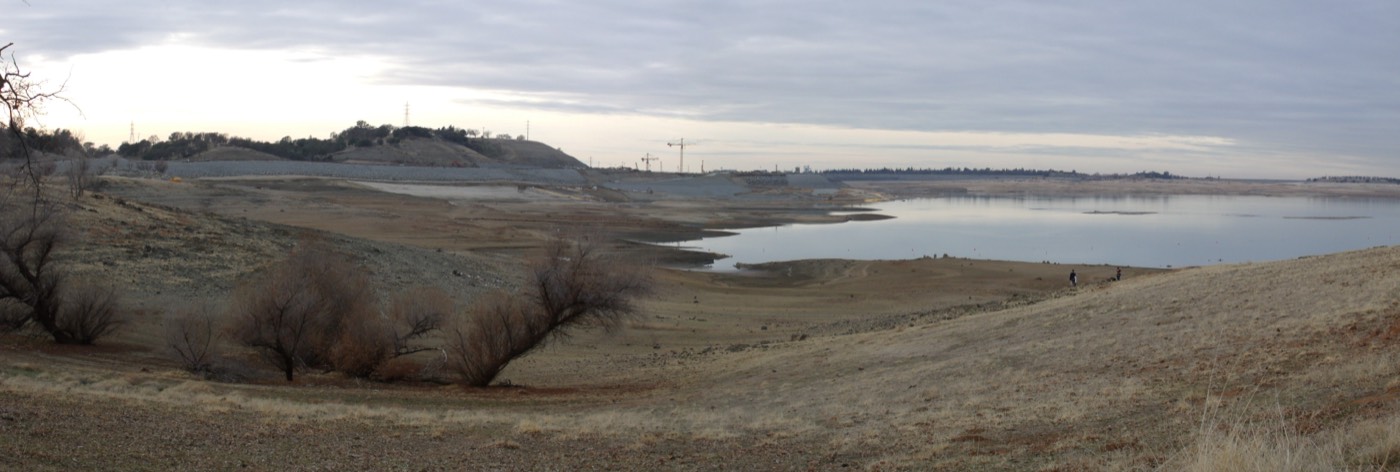
Folsom Lake. The reservoir on the American River is where the community exhales. On weekends the trails and the shoreline at Beals Point fill with multi-generational Indian families, grandparents visiting on six-month tourist visas walking beside grandchildren on bikes, a scene that has quietly become as much a part of Folsom as the prison upstream.
Where They Came From
Folsom’s Indians come overwhelmingly from the technical heartlands of southern and western India. The largest contingents are Telugu speakers from Andhra Pradesh and Telangana, Tamils from Tamil Nadu, and Kannadigas from Karnataka, the same regions that feed the engineering schools that feed Silicon Valley.
This is migration filtered through a very narrow funnel: the elite Indian institutes of technology and regional engineering colleges, the campus recruiters, and the visa system that rewards a degree in computer science or electrical engineering above almost anything else.
The result is a community that is, demographically, unusual. It skews young, married, highly educated, and professional, with comparatively few of the small-business and restaurant migration streams that shaped older Indian enclaves like the one along Oak Tree Road that made the Indians in Edison, New Jersey famous, or the Pioneer Boulevard storefronts of the Indians in Artesia, California. Folsom’s Indians did not arrive to open shops. They arrived to design chips, and the shops followed them.
Folsom Today
Asian residents now make up close to 20 percent of Folsom, and Indians are a large and visible share of that. You see it in the temple parking lots on festival weekends, in the cricket matches on the city’s fields, and in the scale of the Diwali celebrations that light up the corridor every autumn.
The community has reached the comfortable middle of its story. The engineers who arrived in the 1990s are now sending children to college, some of them back into Folsom’s own schools as the next cohort of families arrives. Carnatic and Bharatanatyam classes run on weekends. Cricket clubs compete across the Sacramento region. The home Diwali parties have grown into something closer to a town-wide season.
There is a shadow over the anchor, though. Intel has struggled in recent years, with rounds of layoffs hitting the Folsom campus and, in 2025, plans to sell the property that built the town. What that means for a community so closely tied to a single company is the open question of the coming decade. For now, the answer seems to be resilience. The doctors, the founders, the second generation, and the institutions, the temples, the grocers, the schools, have given Indian Folsom a foundation deeper than any one employer. The chips may have brought them. The town is now theirs.
Frequently Asked Questions
How many Indians live in Folsom, California?
Folsom does not publish a precise Asian Indian count, but Asian residents make up close to 20 percent of the city’s roughly 93,000 people, and Indians form a large share of that group. The community extends across the county line into El Dorado Hills, so the true Indian catchment is larger than Folsom’s borders alone suggest.
Why did so many Indians move to Folsom?
The Indians in Folsom, California came chiefly for jobs at Intel, which built a major research campus there in 1984 and became the largest private employer in the Sacramento region. Engineers recruited from India, especially during the software and semiconductor boom of the 1990s, were drawn by big affordable homes, short commutes, and top-ranked schools.
Are there Hindu temples in Folsom?
Yes. The Folsom Hindu Temple and Cultural Center on Prairie City Road follows the South Indian Agama tradition, and the Sri Venkateshwara Temple on Iron Point Road opened around 2020. Both serve the dense Indian community clustered near the Intel campus.
Where do Indian families shop and eat in Folsom?
The Iron Point Road corridor is the heart of Indian Folsom. Reliance SuperMart at 297 Iron Point Road stocks Indian groceries, while Dasara Indian Kitchen and other restaurants on the same stretch serve South Indian food a short walk from the temples.
What part of India are Folsom’s Indians from?
The community is overwhelmingly South Indian and western Indian, with large Telugu, Tamil, and Kannada-speaking populations from Andhra Pradesh, Telangana, Tamil Nadu, and Karnataka. These are the same engineering heartlands that staff much of America’s chip and software industry.
How does Folsom compare to other Indian suburbs in California?
Like the Indians in nearby Bay Area enclaves, Folsom’s community is built around the tech industry, but it is younger and more affordable than places such as Cupertino or Fremont. It offers the same schools-and-engineering profile at a fraction of the Bay Area’s housing cost, which is precisely why families chose it.
If your family’s story passed through Folsom, or any of the places Indians have made home in America, Atlas of Home can trace that journey. From an engineering college in Hyderabad or Chennai to a campus on Iron Point Road, to wherever you are now.