
On a Saturday morning at Diamond Jamboree, the queue outside Tim Ho Wan curls past the bubble-tea counters before the dim sum trolleys have even warmed up, and the conversation in the line is mostly in Mandarin. This is the everyday texture of the Chinese in Irvine: a community that arrived not into a crowded old Chinatown but into one of America’s most deliberately planned cities, and made its affluent suburbs feel, in places, like a transplanted slice of Beijing, Shanghai and Shenzhen.
The Place
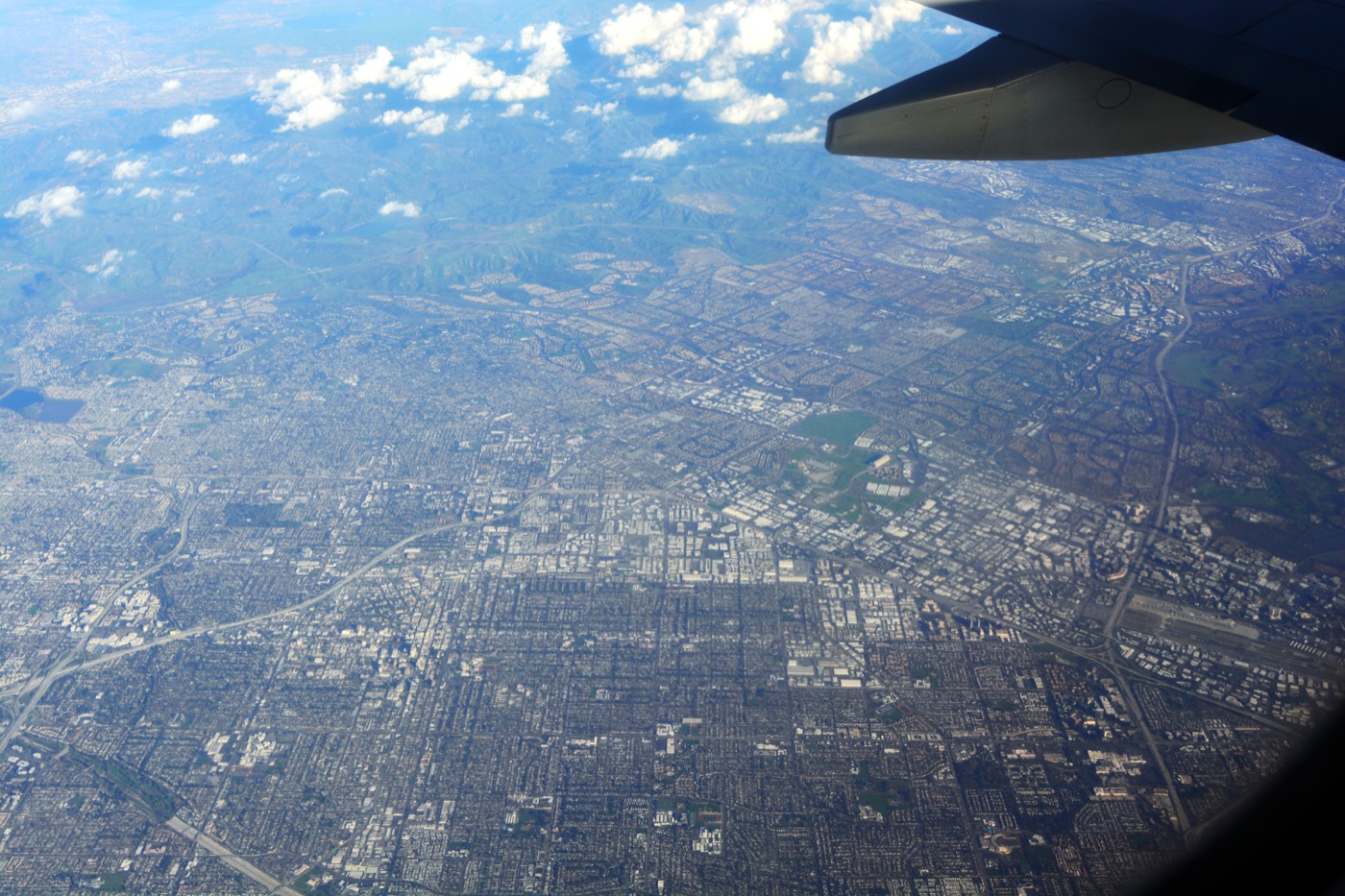
Irvine sits in the heart of Orange County, roughly forty miles south of downtown Los Angeles, built almost entirely on land once owned by a single ranching family. It is a master-planned city, laid out in the 1960s as a collection of villages, each with its own schools, parks and shopping, all knitted together by bike paths and broad parkways.
The result is orderly, green and prosperous, with one-third of its land preserved as open space. Incorporated only in 1971, Irvine has no historic ethnic quarter in the old sense. What it has instead are gleaming plazas and top-ranked public schools, and those two things, more than anything, explain why so many Chinese families chose it.
How It Became Chinese
The story of the Chinese in Irvine is, at its root, the story of a university and a school district. Where earlier Chinese immigrants to America gathered in dense urban Chinatowns built on laundries, restaurants and railroad labour, the families who shaped Chinese Irvine came later, with capital, credentials and a single overriding priority: education.
The university comes first (1965 onward)
In 1960 the Irvine Company sold the University of California a thousand acres for a symbolic one dollar. Construction began in 1961, and the still-unfinished campus opened to students in October 1965. The architect William Pereira designed both the university and the city around it, arranging the villages so they radiated outward from the campus.
UC Irvine became the anchor. Over the following decades it grew into one of the most popular American universities for students from China, home to thousands of Chinese international students and a magnet for Chinese-American families who wanted to live within reach of a serious research institution.
The early arrivals and the schoolhouse (1970s to 1990s)
The first wave of Chinese settlement in Irvine overlapped heavily with the better-known Taiwanese migration of the 1980s and 1990s, and the two communities are often blurred together. They are not the same. The Taiwanese community in Irvine traces its own distinct history, dialects and identity, and built much of the early Asian commercial scene here.
A telling marker of the broader Chinese-speaking community’s growth is the Chinese school itself. When the local Chinese school first opened in rented classrooms in the 1970s, only about thirty students enrolled. The South Coast Chinese Cultural Association, founded in 1977, would go on to anchor that world for generations of weekend students.
The mainland wave (2000s to today)
The most recent and most visible chapter belongs to immigrants from mainland China, who began arriving in force in the 2000s and 2010s. Many came with established wealth, drawn by Irvine’s schools, its safety and its property market, and a number arrived through investor and education routes rather than family chains.
Irvine added more than ninety-five thousand residents between 2000 and 2020, and a large share of that growth was Asian. By the 2019 census, Asian Americans made up around 44 per cent of Irvine’s population, and roughly a third of them, some 35,000 people, were of Chinese descent, up from about 25,000 in 2010. The mainland newcomers tended to be wealthier and more recently arrived than the Taiwanese families who preceded them, a distinction residents themselves draw.
Their footprint changed the city quickly. New plazas filled with hot-pot chains, Sichuan kitchens and Hong Kong dim-sum brands that had until recently meant a long-haul flight to reach. Real-estate offices began advertising in Mandarin, and whole new villages on the eastern edge of Irvine, built out from the old Marine air base, drew families who wanted brand-new homes inside the best school attendance zones. The city that had been planned around a single architect’s vision was now being reshaped, plaza by plaza, by a community that had chosen it on purpose.
The Chinese school tells the rest of the story. The handful of rented rooms became a campus, and the thirty students became more than twelve hundred. The plazas filled with hot-pot chains and dim-sum halls flown in directly from China. Mandarin became one of the most commonly heard languages in the city’s supermarket aisles and school pick-up lines.
The Landmarks
Diamond Jamboree, 2700-2750 Alton Parkway. The beating heart of Asian Irvine, this plaza at the corner of Alton and Jamboree packs more than twenty restaurants into a single car park. Chinese, Taiwanese, Korean, Japanese and Vietnamese kitchens sit side by side, and on weekends the lot is so full that circling for parking is its own local sport.
Tim Ho Wan, Diamond Jamboree. The Hong Kong dim-sum institution, famous for its baked barbecue-pork buns, drew long queues from the day it opened here. It is the kind of brand that once meant a flight to Asia, now a short drive off the 405.
Haidilao Hot Pot, Diamond Jamboree. The Sichuan hot-pot giant, known for its theatrical noodle-pulling and famously attentive service, brought a slice of mainland dining culture straight to Irvine. For many recent arrivals it is a taste of home rather than a novelty.
Dun Huang, Diamond Jamboree. A specialist in northwestern Chinese cooking, Dun Huang turns out hand-pulled Lanzhou beef noodle soup made to order. It is regional Chinese food of a kind that simply was not available in suburban Orange County a generation ago.
South Coast Chinese Cultural Center and Irvine Chinese School, 9 Truman Street. Opened in 2005 and run by the association founded in 1977, this is described as the largest Chinese cultural centre on the West Coast. Its weekend Chinese School teaches more than a thousand children across Saturday and Sunday sessions, from phonetics to calligraphy and Chinese chess.
99 Ranch Market, 15333 Culver Drive, Culver Plaza. The flagship Asian supermarket of the region, with tanks of live seafood, walls of dried goods and a bakery counter. For Chinese families it is the practical centre of the week, the place where the language of the city is unmistakably theirs.
University of California, Irvine. The campus the whole city grew around, and one of the most popular American universities for students from China. Its presence is the original reason many Chinese families looked at Irvine at all, and it remains the gravitational centre of the community’s ambitions.
Where They Came From
The Chinese of Irvine come overwhelmingly from the prosperous, urbanised regions of the People’s Republic. The professionals and investors of the most recent wave arrived from Beijing, Shanghai and the booming cities of the southern coast, places that produced both the wealth and the appetite for an American education that Irvine promised.
This sets them apart from the Taiwanese families who arrived earlier, and from the older Cantonese-speaking diaspora that built California’s historic Chinatowns. The pull here was never an enclave. It was the school district, the university and the sense that a child raised in Irvine had a clear path to a good American college.
That is why the community spread across the city rather than concentrating in one quarter, and why its institutions, a weekend school, a cultural centre, a cluster of plazas, look so different from the dense streetscapes of the Chinese community in Monterey Park or the older suburban Chinese hubs of the San Gabriel Valley like Arcadia and San Marino.
Irvine Today
Today the Chinese presence in Irvine is woven through the everyday rather than confined to a single street. More than half the students in the Irvine Unified School District are Asian, and the district has ranked first in California for state standardised testing, the precise outcome so many families moved here to secure, according to the district’s own reporting. Schools like Stonegate Elementary and University High sit near the top of state rankings, and the competition for seats in their attendance zones helps drive the housing market.
The community is not monolithic. Residents themselves note the differences between the recent mainland arrivals, many with wealth built in China, and the earlier Taiwanese families who came chiefly for education, and those differences sometimes surface in politics and identity. Irvine’s Chinese community sits alongside other large immigrant groups, including the well-established Persian community in Irvine, in a city where nearly half the population is Asian.
The plazas, meanwhile, have made Irvine a destination in their own right. People drive in from across Orange County and beyond for the dumplings and hot pot at Diamond Jamboree, and the weekend crowds at 99 Ranch and the Truman Street centre give a city famous for its calm a genuine sense of communal life. For older residents the change has been startling; for the children raised here, Mandarin classes on Saturday and AP Calculus on Monday are simply the rhythm of an Irvine childhood.
What endures is the original bargain. Families came for the schools, the laboratories and the quiet, orderly streets, and they got them. The dim-sum queues at Diamond Jamboree and the crowded weekend classrooms at the Truman Street centre are simply the visible edge of a much larger, quieter story about ambition, education and the suburban American dream rebuilt in Mandarin.
Frequently Asked Questions
How many Chinese people live in Irvine?
By the 2019 census, roughly 35,000 Irvine residents were of Chinese descent, about a third of the city’s Asian population, which itself made up around 44 per cent of Irvine. That was up from about 25,000 Chinese residents in 2010, reflecting rapid growth over the decade.
Why did so many Chinese families move to Irvine?
The Chinese in Irvine were drawn above all by education: the University of California, Irvine, and the top-ranked Irvine Unified School District, which has ranked first in California for state testing. Safety, open space and a strong property market reinforced the appeal.
What is the difference between the Chinese and Taiwanese communities in Irvine?
They overlap but are distinct. The Taiwanese arrived chiefly in the 1980s and 1990s for education, while the largest mainland Chinese wave came in the 2000s and 2010s, often with established wealth. Residents themselves draw the distinction, and Atlas of Home covers the Taiwanese community in a separate article.
Where do the Chinese in Irvine shop and eat?
Diamond Jamboree on Alton Parkway is the main hub, with chains like Tim Ho Wan, Haidilao and Dun Huang. The 99 Ranch Market on Culver Drive serves as the everyday Asian supermarket for many Chinese families.
Is there a Chinese school in Irvine?
Yes. The South Coast Chinese Cultural Center at 9 Truman Street, run by an association founded in 1977, houses the Irvine Chinese School. It teaches more than a thousand students across weekend sessions and is described as the largest Chinese cultural centre on the West Coast.
How did Chinese immigrants come to Irvine?
Many of the most recent Chinese arrivals in Irvine came through education and investor routes rather than family chains, with mainland investors among those drawn to Southern California property. Earlier families followed the university and the schools, settling across the city rather than in a single enclave.
If your family’s story passed through Irvine, or any of the places Chinese families have made home in America, Atlas of Home can trace that journey. From the coastal cities of China to the village plazas and schoolrooms of Irvine, to wherever you are now.