
Drive east along Baldwin Avenue on a Saturday morning and the signage tells you everything. The bakery windows stacked with egg tarts and pineapple buns, the herbalists, the boba queues, the property offices advertising in Mandarin. The Chinese in Arcadia did not arrive at the margins of this old horse-racing town in the San Gabriel Valley. They became its centre of gravity. A city that Lucky Baldwin laid out around a racetrack and an orchard is now, by some counts, close to half Chinese, and locals have a nickname for it: the Chinese Beverly Hills.
The Place
Arcadia sits about 13 miles north-east of downtown Los Angeles, tucked against the foot of the San Gabriel Mountains. It covers roughly 11 square miles and is home to around 56,000 people.
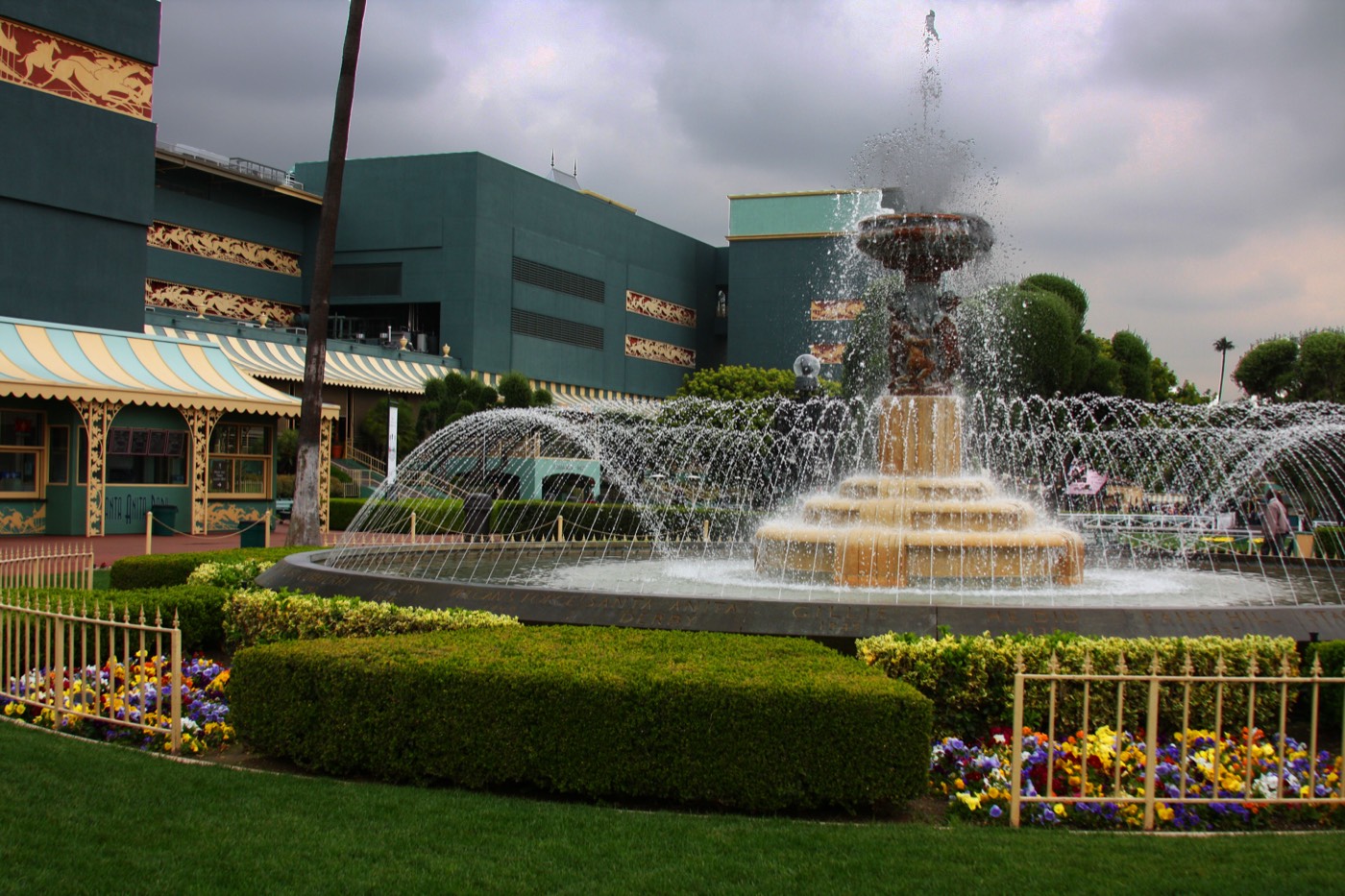
The two landmarks that built its name still anchor it. Santa Anita Park, the grand Art Deco racetrack that opened on Christmas Day in 1934, sits below the mountains on the city’s south side. Next door spreads the Los Angeles County Arboretum and Botanic Garden, 127 acres of lakes, peacocks and a white Queen Anne cottage that has appeared in countless films.
For most of the twentieth century Arcadia was a quiet, affluent, largely white suburb of large lots and good schools. That last detail, the schools and the land, is what changed everything.
How It Became Chinese
Monterey Park first, then the climb east
The story does not begin in Arcadia. It begins a few miles south-west in Monterey Park, the first place in America that earned the title of suburban Chinatown. In the 1970s a developer named Frederic Hsieh bought up property there and marketed it directly to investors in Taiwan and Hong Kong as a kind of Chinese Beverly Hills. You can read the fuller version of that story in our piece on the Chinese in Monterey Park.
Taiwanese money came first, fleeing political uncertainty and looking for a foothold in America. As Monterey Park filled and prices rose, the more affluent families looked further up the valley for bigger houses and quieter streets. The San Gabriel Valley now holds the largest concentration of people of Chinese and Taiwanese descent in the United States, and the migration moved steadily eastward through cities like Rowland Heights and into Arcadia and neighbouring San Marino.
The Taiwanese wave of the 1980s
Arcadia’s transformation took hold in the 1980s. Sho Tay, who would later serve as the city’s mayor, arrived from Taiwan in 1984, one of many professional Taiwanese families drawn by the schools and the space.
What Arcadia offered that Monterey Park could not was room. The lots were large, a legacy of Baldwin’s ranch subdivisions, and they sat in one of the best-regarded school districts in California. For families who prized education above almost everything, that combination was irresistible. It is the same pull that shaped Taiwanese suburbs further south, like the Taiwanese in Irvine.
The mainland Chinese boom
By the late 1980s and into the following decades, the source shifted. Wealthy immigrants from mainland China began to outnumber the earlier Taiwanese and Hong Kong arrivals.
The 1990 Immigration Act created the EB-5 investor visa, offering a green card to foreigners who invested several hundred thousand dollars in a US business that created jobs. The programme became a pipeline for Chinese wealth. In 2005 Chinese citizens received around 350 EB-5 visas. By 2015 that figure had climbed to roughly 9,500, about 85 per cent of all such visas issued that year, and a great many of those families looked to the San Gabriel Valley.
Arcadia offered them schools, large lots with relatively lenient building codes, and a place to hold wealth at a safe distance from Beijing. The result reshaped the streetscape, sometimes literally.
The monster houses
The most visible mark of the boom was the mansion. Buyers tore down modest mid-century ranch homes and replaced them with vast new builds, and the phenomenon picked up a nickname: mansionization, or the monster house.
In 2014 the city council projected that about 150 older homes would be demolished that year, more than half again above the normal rate, almost all to be replaced by far larger houses. Longtime residents pushed back, and the debate over house size and height became one of the defining local arguments of the decade. Median home values in Arcadia now sit somewhere above a million dollars, with the grandest properties selling for many times that.
The Landmarks
Din Tai Fung, originally 1108 South Baldwin Avenue. The Taiwanese dumpling house chose Arcadia for its very first location outside Asia, opening on Baldwin Avenue in 2000. For years the queue for its xiaolongbao, the soup dumplings folded with eighteen pleats, spilled onto the pavement. The original branch has since closed in favour of a larger home inside the Westfield Santa Anita mall, but Arcadia remains the place where Din Tai Fung introduced America to the dumpling.
99 Ranch Market, 400 South Baldwin Avenue. The Taiwanese-American supermarket chain anchors the Westfield Santa Anita complex with a full Asian grocery, a fresh seafood counter and a bakery turning out milk tea and airy cakes. For many Arcadia families it is the weekly ritual that needs no English.
Santa Anita Park, 285 West Huntington Drive. The 1934 racetrack is the city’s oldest landmark and its most cinematic, the grandstand framed by the San Gabriel Mountains. During the Second World War it served a darker role as an assembly centre where thousands of Japanese Americans were held before internment, a history the city now acknowledges. Today the surrounding mall and its Chinese restaurants draw far bigger weekend crowds than the horses.
Westfield Santa Anita, 400 South Baldwin Avenue. The regional shopping centre reads the room. Its dining promenade was redesigned with a look borrowed from a Beijing hutong, and its tenants run from Din Tai Fung and 99 Ranch to dessert counters selling Japanese cheesecake. It functions less like a mall than a town square for the Chinese San Gabriel Valley.
Wing Hop Fung, on the Arcadia stretch of Baldwin Avenue. The Asian general store, founded in 1985, sells loose teas, ginseng, herbs and dried goods of the kind that once meant a trip to old Chinatown. Its presence on Baldwin marks just how thoroughly the everyday business of Chinese life moved out to the suburbs.
Los Angeles County Arboretum and Botanic Garden, 301 North Baldwin Avenue. Established in 1947 on the grounds of Lucky Baldwin’s old estate, the 127-acre garden is where Arcadia’s older identity survives most intact, with its lake, its roaming peacocks and the white Queen Anne Cottage. On weekends it fills with multigenerational Chinese families, grandparents and children walking the same paths the racing baron once rode.
Arcadia High School, 180 Campus Drive. Not a restaurant or a shop, but arguably the single most powerful magnet of all. The high school sits at the heart of a district that ranks in the top few per cent of California, with a student body that is roughly two-thirds Asian. For many families the address came before the house.
Where They Came From
Arcadia’s Chinese community arrived in layers, and the layers came from different places. The earliest substantial wave in the 1980s was Taiwanese, professionals and entrepreneurs who had often passed first through Monterey Park. Hong Kong families followed, particularly as 1997 and the handover approached.
From the late 1980s onward the balance tipped towards mainland China. These newer arrivals were a broad mix, including Cantonese speakers from Guangdong, Fujianese, and a growing share of wealthy families from the northern and coastal cities, the cohort most associated with investor visas and the mansion boom.
By the 2011 to 2015 American Community Survey, Arcadia counted more than 26,000 residents of Chinese descent, including Taiwanese, around 45 to 46 per cent of the city. It is one of the most concentrated Chinese populations of any city in America, and unlike a historic Chinatown such as San Francisco’s Chinatown, it was built by people who arrived with means.
Arcadia Today
Arcadia today is a city that has been remade without being torn down. The racetrack still runs, the peacocks still cross the arboretum lawns, and the old street grid remains, but the lived texture of the place is Chinese.
You hear Mandarin in the supermarket aisles and the school pick-up lines. Property offices advertise to buyers in two languages. The bakeries, the hotpot restaurants and the boba shops along Baldwin and Las Tunas serve a community that can conduct nearly all of daily life in its own language.
It is not without friction. The mansionization fights continue, and in 2026 a former mayor’s federal case drew uncomfortable national attention to questions of Chinese political influence in the valley. These are the growing pains of a place that changed faster than almost any suburb in California, a transformation documented at length by LAist in its survey of the county’s cities.
But for tens of thousands of families, Arcadia is simply home, the place where Taiwanese grandparents and American-born grandchildren share a table, where the schools deliver on a promise, and where a town once built around a horse race became one of the most Chinese cities in the United States.
Frequently Asked Questions
Why did Chinese families settle in Arcadia, California?
Two things drew them above all: the highly rated Arcadia Unified School District and the large lots inherited from the city’s old ranch subdivisions. As nearby Monterey Park filled in the 1980s, affluent Taiwanese and later mainland Chinese families moved east up the San Gabriel Valley to Arcadia for bigger homes and excellent schools.
Is Arcadia, California actually majority Asian?
Yes. Nearly three in five Arcadia residents identify as Asian, and the great majority of those are of Chinese or Taiwanese descent. Survey data put the Chinese share, including Taiwanese, at around 45 to 46 per cent of the city’s population.
Why is Arcadia called the Chinese Beverly Hills?
The nickname reflects Arcadia’s combination of wealthy Chinese residents, very high home values and a heavily Chinese population. The original Chinese Beverly Hills marketing was used in the 1970s for nearby Monterey Park, but the label has since attached firmly to Arcadia, where median home values exceed a million dollars.
What are the best Chinese restaurants and shops in Arcadia?
Din Tai Fung opened its first US branch in Arcadia and remains the famous name for soup dumplings. 99 Ranch Market and Wing Hop Fung cover the groceries and Chinese provisions, and the Westfield Santa Anita mall has become a dining hub with a Beijing hutong-style promenade.
Where did the Chinese in Arcadia come from?
The earliest wave in the 1980s was largely Taiwanese, followed by families from Hong Kong. From the late 1980s onward, mainland Chinese immigrants predominated, including Cantonese speakers from Guangdong, Fujianese, and wealthy families from northern and coastal China, many arriving on investor visas.
When did Chinese immigrants first arrive in Arcadia?
Significant Chinese settlement in Arcadia took hold in the 1980s, with Taiwanese families such as that of future mayor Sho Tay arriving from 1984. The pace accelerated through the late 1980s and the following decades as mainland Chinese wealth flowed into the San Gabriel Valley.
If your family’s story passed through Arcadia, or any of the places the Chinese have made home in America, Atlas of Home can trace that journey. From Taiwan and Guangdong to Arcadia, to wherever you are now.