
They called it the German colony of North Alabama, and for once the nickname was no exaggeration. From the 1870s into the 1930s, if you stepped off the Louisville and Nashville train onto the platform at Cullman, the talk around you was not the soft Appalachian drawl of the surrounding hills. It was German, spoken in the shops, in the churches, at the dinner tables. A whole town of Bavarians and Rhinelanders had taken root in the red clay of the Protestant South, and they had done it on purpose.
This is the story of the Germans in Cullman, Alabama: how a refugee of failed revolutionary politics turned a stretch of railroad land into one of the most determined immigrant experiments in the American South, and what still stands today.
Cullman, Alabama: The Place
Cullman sits in the rolling sandstone hills of north-central Alabama, roughly fifty miles north of Birmingham and the same distance south of Huntsville, on the high ground between the Black Warrior and Tennessee river systems. The town grew up along the Louisville and Nashville Railroad, the steel spine that made the whole settlement possible.
The founder laid the streets out in wide, square blocks, broad enough, the old saying goes, to drive four teams of horses abreast. Today Interstate 65 runs past the eastern edge, but the original downtown grid still reads as the orderly plan of a man who designed a colony from scratch. It remains a county seat of small brick storefronts, church steeples, and farmland fanning out in every direction.
How Cullman Became German
Before the Germans
Before 1873, the land that became Cullman was thinly settled upcountry Alabama. This was the domain of the Cherokee and Creek before removal, and afterward a sparse frontier of yeoman farmers scratching a living from poor soil in the hills above the cotton belt.
It was not plantation country. The terrain was too broken and the ground too thin for the slave economy that defined the Alabama lowlands. When the railroad pushed through after the Civil War, it ran across a near-empty landscape that the Louisville and Nashville was desperate to fill with paying customers and freight.
The Germans Arrive
The man who filled it was Johann Gottfried Cullmann, born in 1823 in Frankweiler in the Rheinpfalz, then part of the Kingdom of Bavaria. He had been ruined by his part in the failed German revolutions of 1848, the liberal uprisings that sent so many idealists into exile, and he reached the United States in 1866 by way of Cincinnati.
Cullmann carried a single fixed idea: a place where German immigrants could own land, keep their language, and build their own institutions free of the crowded tenement misery of the northern cities. In 1871 he negotiated rights to a vast tract of railroad land, hundreds of thousands of acres, from the Louisville and Nashville.
In April 1873 the first five families arrived by train from Cincinnati. They felled the first trees together, and the free colony of Cullman was born. By the following year the count had grown to 123 families.
Cullmann was a recruiter of relentless energy. He worked through agents and placed advertisements in German-language newspapers across Europe and the American Midwest, selling cheap land and a fresh start. He named his vision in his own tongue: Die Deutsche Kolonie von Nord Alabama, the German colony of North Alabama.
By the time he died in 1895 he was credited with drawing thousands of German families to Cullman County, and his promotional work touched far more immigrants than ever settled in the town itself. He made sure ground was set aside for both Protestant and Catholic churches, and he founded St. John’s church and donated the land it stands on.
Cullman at Its Peak
For two generations Cullman was a German town in everything but its postal address. Into the 1930s the language heard in the stores and the pews was mostly German, and the calendar of the community ran on parish feasts, saints’ days, and the harvest.
The colonists were market gardeners and truck farmers. They grew Irish and sweet potatoes, tomatoes, pole beans, lima beans, pimiento peppers, grapes, and chickens, both to feed themselves and to ship north for cash. In the late 1890s, families like the Kesslers turned to strawberries as a high-value crop, and by the turn of the century Cullman had earned the boast of being a garden spot of the world.
The religious life of the colony deepened fast. German-speaking Benedictine monks came south to minister to the Catholic settlers, and in 1891 they founded St. Bernard Abbey, which remains the only Benedictine monastery in Alabama. A convent followed in 1892. This was the engine of the community: a German Catholic and Lutheran island in a sea of Southern Baptists and Methodists.
The same self-contained spirit defined Cullman as it did other German colonies across the country. The pattern repeats in the Bavarian Lutheran enclave of Frankenmuth, Michigan and in the German freethinkers and Catholics who built New Ulm, Minnesota. Each was a deliberate transplant of homeland life onto American ground.
The Change
The German tide slowed before the century turned. As more English-speaking Americans moved into Cullman and the flow of new arrivals from Germany thinned, English steadily replaced German in daily life.
Two world wars made German heritage something to mute rather than celebrate. Anti-German feeling during the First World War pressed many German-American communities to anglicise names and drop the old language, and Cullman was not immune.
Then came Prohibition and the local temperance movement. In the 1930s, driven in part by Baptist ministers, Cullman County voted itself dry, an irony in a town founded by beer-drinking Bavarians. The county would stay legally dry for decades, a detail that shaped even how Cullman would one day choose to remember its own roots.
The Landmarks of German Cullman
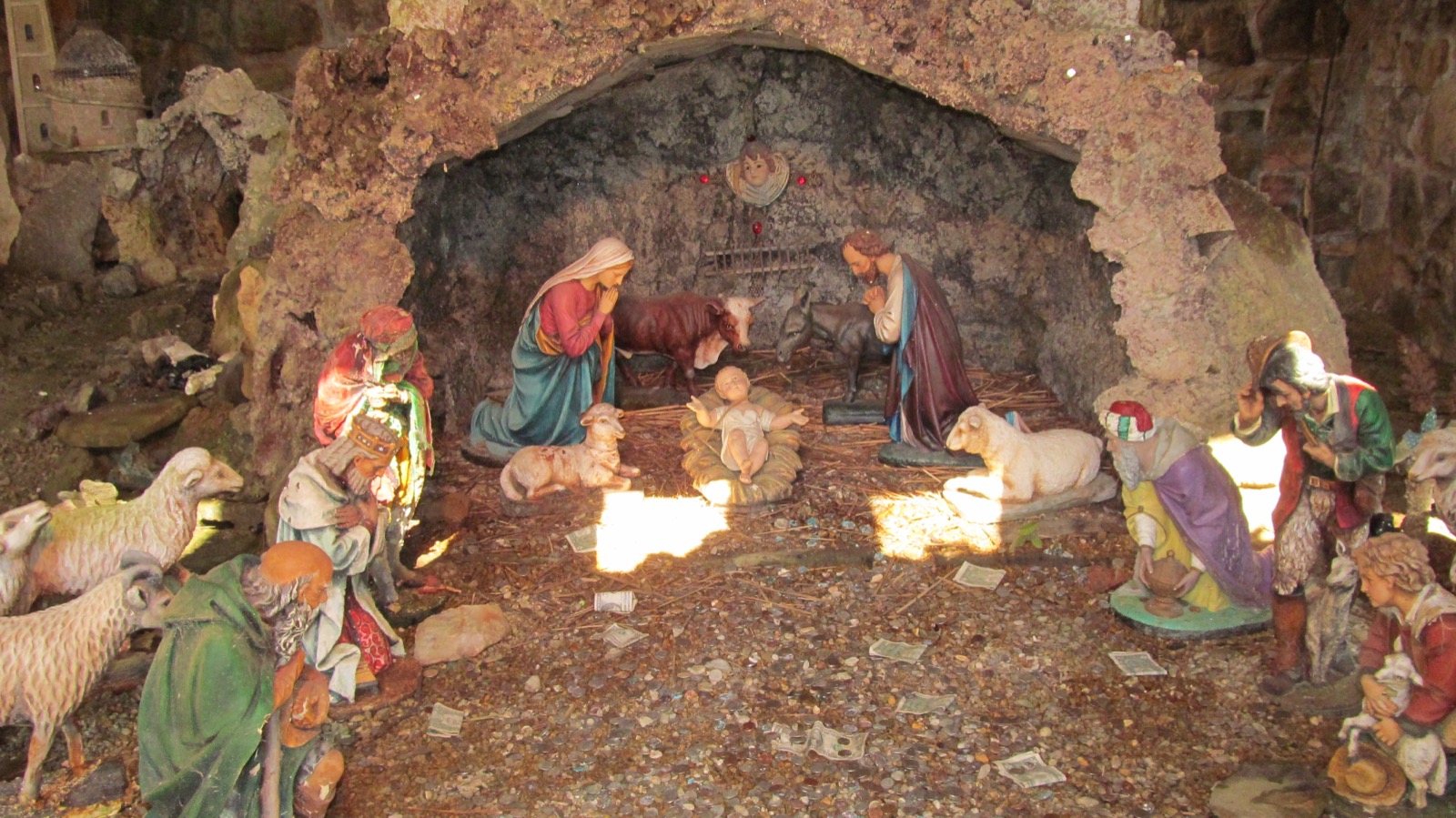
Ave Maria Grotto, 1600 St. Bernard Avenue SE. On the grounds of St. Bernard Abbey stands the masterwork of Brother Joseph Zoettl, a Benedictine monk born in Bavaria in 1878 who came to Cullman in 1892. Over roughly forty years he built around 125 miniature replicas of churches, shrines, and famous buildings from marble, cement, and salvaged oddments like cold-cream jars and marbles. Nicknamed Jerusalem in Miniature, the four-acre site is on the National Register of Historic Places and still draws around 20,000 visitors a year.
St. Bernard Abbey, 1600 St. Bernard Avenue SE. Founded in 1891 by German-speaking Benedictine monks, it is the only Benedictine monastery in Alabama and the spiritual anchor of the Catholic colony. The abbey and its school carried the German Catholic tradition forward when the wider community was letting the old language fade.
Sacred Heart of Jesus Catholic Church, 327 4th Street SE. Begun on April 9, 1874, to serve the growing body of German Catholics, it got its first resident pastor, the German-speaking Father James Meurer, in 1877. The grand stone church seen today was dedicated in 1916. Twenty-four of its stained-glass windows were made in Munich, buried for safekeeping during the First World War, then dug up and shipped to Cullman, where they were installed in 1920.
Cullman County Museum, 211 2nd Avenue NE. Opened in 1976 during the town’s centennial, the museum houses the Colonel Cullmann Room with a recreation of the founder’s bedroom, his furniture, and family photographs, plus a bust sculpted by a St. Bernard monk. A brass statue of Cullmann stands just outside.
St. John’s Evangelical Protestant Church. The Protestant counterpart founded by Cullmann himself, on land he donated, a reminder that the colony was Lutheran and evangelical as much as Catholic. The town’s German settlers were never a single church but two faith traditions sharing one homeland and one tongue.
The Cullman Oktoberfest, downtown Cullman. First held officially in 1982, the festival was for years famous as a dry Oktoberfest in a dry county. Instead of tapping a beer keg, organisers tapped a root-beer barrel, and revellers sipped a non-alcoholic apple cider sometimes called Octoberzest. It now draws crowds approaching 50,000 each autumn.
Where the Cullman Germans Came From
The founding impulse came from the Rheinpfalz, the Rhineland Palatinate, where Cullmann was born in the village of Frankweiler near Landau. That corner of southwestern Germany, then under the Bavarian crown, was a land of vineyards and small farms, exactly the kind of mixed husbandry the colonists would recreate in Alabama.
The wider settlement drew Germans broadly, Catholic and Protestant alike, many routed through Cincinnati and the German Midwest before they came south. Brother Joseph Zoettl, the grotto’s creator, came directly from Bavaria, recruited as a boy by a visiting American priest, a reminder that the colony’s links ran straight back to the old country.
That tie has never fully broken. In 1987 Cullman, Alabama, and Frankweiler, Germany, became official sister cities, sealed when the two towns’ leaders drank from a shared goblet now kept in the county museum. The German story in Cullman echoes the larger German movement into America that also built the Hill Country town of Fredericksburg, Texas and the Rhineland-styled wine country of Hermann, Missouri, each one a different answer to the same question of how to stay German in America.
Cullman Today
Modern Cullman no longer speaks German in its shops, and the immigrant generation is long gone. What remains is a town that has chosen, deliberately, to wear its origins with pride rather than let them dissolve into the generic American South.
The heritage is everywhere if you look. The annual Oktoberfest, the German-styled storefronts downtown, the Cullman County Museum’s founder room, the abbey, the grotto, and the steeples of Sacred Heart all keep the story visible. The county finally moved away from total prohibition in recent decades, so the modern festival can pour an actual beer alongside the root-beer tradition it inherited.
The Germans in Cullman, Alabama, did something rare. They did not just pass through on the way to somewhere else. They built a place in their own image and then held onto the memory of it, generation after generation, so that a colony founded by an 1848 exile is still legible in the streets a century and a half later.
Frequently Asked Questions
Why did Germans settle in Cullman, Alabama?
Germans settled in Cullman because Colonel Johann Gottfried Cullmann, an exile from the failed 1848 revolutions, founded it in 1873 as a planned German colony on railroad land. He recruited families through agents and German-language newspapers, offering cheap land and a place where they could keep their language and faith. The Germans in Cullman, Alabama, were drawn by that promise of land and self-governing community.
When did Germans first arrive in Cullman, Alabama?
The first five German families arrived by train from Cincinnati in April 1873 and felled the first trees of the colony together. Within a year the settlement had grown to 123 families. By 1874 the German Catholic parish of Sacred Heart had also been founded.
Is Cullman still German today?
Cullman no longer speaks German day to day, and the immigrant generation is gone, but the town actively celebrates its German heritage. The annual Oktoberfest, the Cullman County Museum, St. Bernard Abbey, and the sister-city bond with Frankweiler, Germany, all keep the identity alive. It is a heritage town rather than a living German-speaking enclave.
What are the most famous German landmarks in Cullman?
The best known is the Ave Maria Grotto at St. Bernard Abbey, a four-acre park of around 125 miniature buildings built by the Bavarian monk Brother Joseph Zoettl. Other key sites are Sacred Heart of Jesus Catholic Church with its Munich-made stained glass, St. Bernard Abbey itself, and the Cullman County Museum with its Colonel Cullmann room and statue.
Where in Germany did the Cullman settlers come from?
The founder, Johann Gottfried Cullmann, came from Frankweiler in the Rheinpfalz, the Rhineland Palatinate, then part of Bavaria. The wider colony drew Catholic and Protestant Germans broadly, many of whom passed through Cincinnati and the German Midwest before coming south to Alabama.
If your family’s story passed through Cullman, or any of the places the Germans made home across America, Atlas of Home can help you trace that journey. From a vineyard village in the Rheinpfalz to the red clay of north Alabama, to wherever you are now. Explore your story →
Sources and further reading: Cullman, Alabama on Wikipedia and the Encyclopedia of Alabama entry on the Ave Maria Grotto.