
They never put it on a freeway sign at first. But by the 1980s, if you got off the bus where Hollywood Boulevard meets Western Avenue and walked south toward Santa Monica Boulevard, you were somewhere that felt a long way from California. The smell of cardamom coffee and rotisserie chicken drifting out of storefront doors, Armenian script on bakery windows, old men playing backgammon outside a grocery. This was the heart of the Armenians in Little Armenia, Los Angeles, a stretch of East Hollywood that a people scattered by genocide had quietly made their own.
Little Armenia: The Place
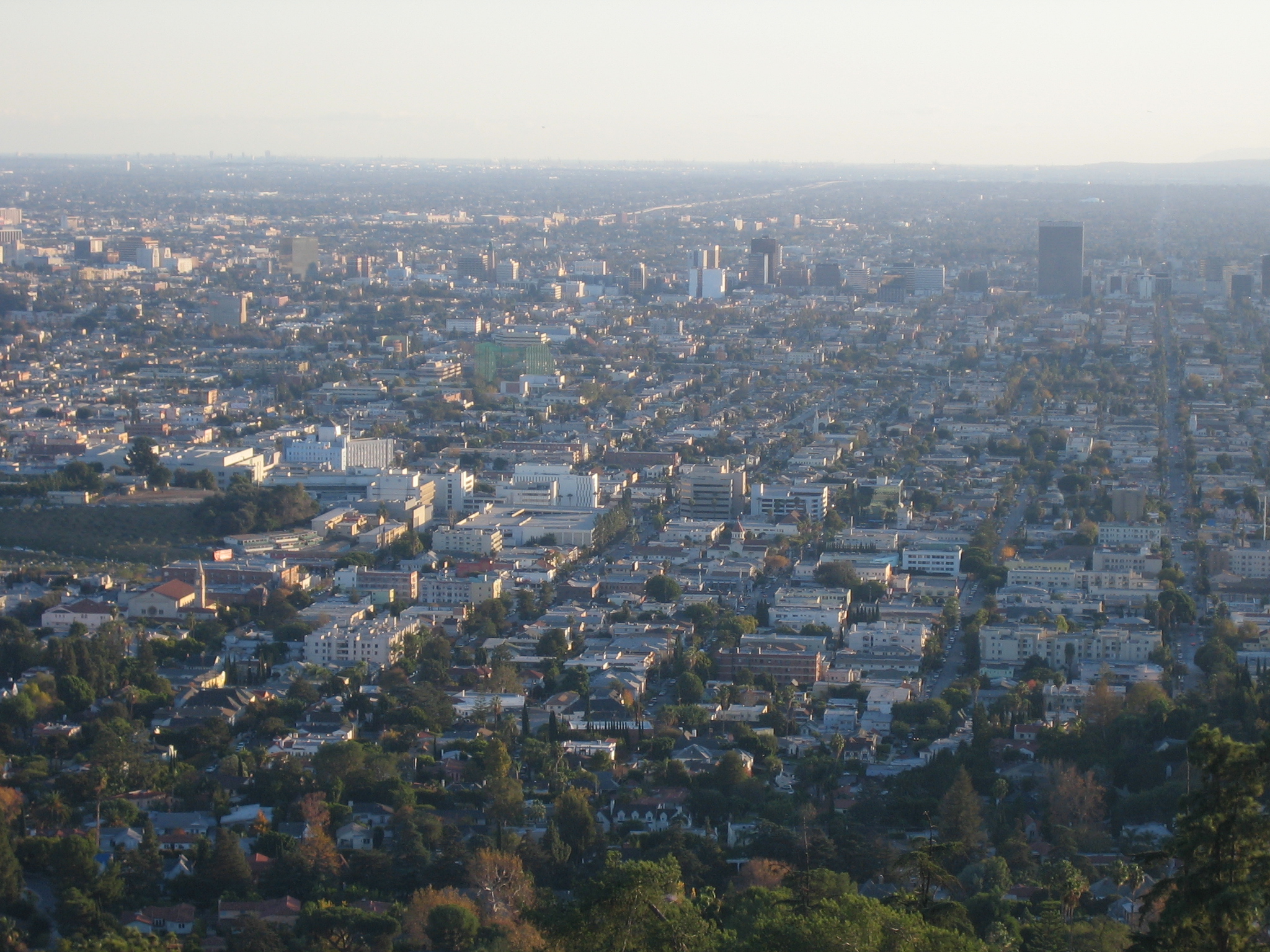
Little Armenia sits in central Los Angeles, in the eastern half of Hollywood. Its rough boundaries are Hollywood Boulevard to the north, Santa Monica Boulevard to the south, the Hollywood Freeway to the west and Vermont Avenue to the east, covering parts of the 90027 and 90029 ZIP codes.
The Metro Red Line runs beneath it, with stops at Vermont and Sunset, and the streets are a dense mix of 1920s apartment courts, stucco fourplexes and worn commercial strips. Thai Town sits directly to the north along Hollywood Boulevard, and Koreatown begins below the southern edge.
It is not a wealthy district. It is working class, crowded, and for decades it was the first American address for tens of thousands of new arrivals.
How Little Armenia Became Armenian
Before the Armenians
East Hollywood grew up in the early twentieth century as a streetcar suburb on the edge of the film industry, full of bungalows and apartment buildings put up for studio workers and middle-class families. By mid-century it had aged into an affordable, transient quarter of central Los Angeles.
That affordability is exactly what would matter. Cheap rent near downtown and good transit made the neighbourhood a natural landing pad for waves of newcomers, and from the late 1960s onward the newcomers were increasingly Armenian.
The Armenians Arrive
The first Armenians in Los Angeles were survivors of the Armenian Genocide of 1915 to 1918 and the massacres that preceded it under the Ottoman Empire. They trickled in through the 1920s and settled across the city, but East Hollywood did not become a true Armenian centre until much later.
The real transformation came from the Middle East. After the Lebanese Civil War erupted in 1975, Lebanese Armenians left Beirut in large numbers, many of them descendants of genocide survivors who had rebuilt once already. Political turmoil also pushed Armenians out of Iran, Syria, Egypt and Iraq in the same years.
They came knowing the language of exile. Many spoke Western Armenian, ran small businesses, and looked for a place where the rent was low and a compatriot was already on the next block. East Hollywood fit.
Then came the Soviet wave. In August 1987, as part of glasnost, the Soviet Union began approving exit visas for Armenians with relatives abroad. From October 1987 through March 1988 alone, roughly 2,000 Armenians arrived in Los Angeles County, and between 1987 and 1989 some 90 percent of Armenians leaving the Soviet Union settled in Los Angeles.
The catastrophes kept arriving with them. The 1988 Armenian earthquake devastated the cities of Spitak and Gyumri, and the energy crisis during the First Nagorno-Karabakh War, followed by independence from the Soviet Union in 1991, set hundreds of thousands of Armenians on the move. A large share of those who reached the United States came to this corner of Hollywood first.
Little Armenia at Its Peak
By the late 1980s this was the largest Armenian concentration in Los Angeles. The 1988 New York Times reporting on the community noted a quiet split that locals still recognise: Middle Eastern Armenians often gravitated toward Glendale, while Armenians from the Soviet Union were drawn to Hollywood.
Daily life ran in Armenian. You could buy your bread, see your doctor, fix your car, send your children to an Armenian school and worship in an Armenian church without leaving the neighbourhood. Bakeries, meat markets, jewellers, travel agents and coffee houses lined Sunset and Santa Monica Boulevards.
Chain migration did the rest. One family sponsored the next, a cousin found a relative an apartment in the same building, and word travelled back to Beirut and Yerevan that there was a place in Los Angeles where you would not be a stranger. The same pattern built the larger Armenian community in nearby Glendale, California, which would soon eclipse Hollywood in size.
The Change
The shift began even at the peak. By 1988, families who had found their feet were already moving out to Glendale, Burbank and other suburbs with better schools and quieter streets. In the early 1990s Glendale overtook Hollywood as the largest Armenian community in the Los Angeles area, eventually becoming home to more ethnic Armenians than any city outside Yerevan.
So when the Los Angeles City Council officially designated the district “Little Armenia” on October 6, 2000, it was honouring a community that was already partly in motion. The council cited the high concentration of Armenian businesses, residents, schools, churches and social and athletic organisations.
The name fixed something permanent onto a neighbourhood that immigration had always treated as a first stop rather than a final one.
The Landmarks of Little Armenia
St. Garabed Armenian Apostolic Church, 1614 N. Alexandria Avenue. The spiritual anchor of the district, part of the Western Prelacy of the Armenian Apostolic Church. Ground was broken on March 6, 1977, the building was finished by Christmas 1978, and the church was consecrated on November 2, 1980 by Catholicos Karekin II of the Great House of Cilicia. Before the building existed, mass was held in a classroom across the street.
Rose and Alex Pilibos Armenian School, 1615 N. Alexandria Avenue. Founded in 1969 as the Hollywood Armenian School and later renamed for its benefactors, this K-12 school is tied to St. Garabed and faces it across the street. History and religion are taught in Armenian, the rest in English. Among its students in the 1970s and 1980s were Serj Tankian, Daron Malakian and Shavo Odadjian, three of the four members of the band System of a Down.
Zankou Chicken, corner of Sunset Boulevard and Normandie Avenue. The Iskenderian family opened the first Zankou in 1962 in the Bourj Hammoud quarter of Beirut, naming it for a river in Armenia. After the family resettled in Los Angeles, Mardiros Iskenderian opened the first American Zankou here in 1983, and its garlic sauce, perfected by his mother Markrid, became one of the most imitated flavours in the city.
Sasoun Bakery, near Hollywood Boulevard and Western Avenue. A neighbourhood bakery whose nazook, cheese boreg and fresh lavash drew lines out the door. From its small Little Armenia start it grew to multiple locations across Los Angeles County, but the Hollywood shop remains the one old-timers name first.
Marouch, 4905 Santa Monica Boulevard. An Armenian and Lebanese restaurant serving the neighbourhood since 1982, the kind of room where mante, kebab and muhammara taste like a family kitchen in Beirut. Falafel Arax, opened in 1980, is a sister institution from the same era.
Armenian Genocide Memorial Square, Hollywood Boulevard and Western Avenue. On April 24, 2015, the centenary of the genocide, this intersection was formally designated by the city, after a proposal from council members Mitch O’Farrell and Paul Krekorian approved on March 18, 2015. It is the symbolic gathering point of the neighbourhood’s memory.
The April 24 March for Justice. Every year on Armenian Genocide Remembrance Day, marchers set out from Little Armenia, often from around 5300 Hollywood Boulevard, toward the Turkish consulate. The centennial march in 2015 drew an estimated 130,000 people along a six-mile route, one of the largest demonstrations in the city’s history.
Where the Little Armenia Armenians Came From
Almost no one here traces their roots to a single, intact homeland. The deepest origin lies in historic Western Armenia, the eastern provinces of the Ottoman Empire, including cities like Sasun and the wider Anatolian heartland emptied by the genocide of 1915.
From there the family map fans out across the twentieth century. Many Little Armenia families passed through Beirut and the Bourj Hammoud quarter, others through Tehran and Isfahan in Iran, still others through Aleppo, Cairo and Baghdad before a war or a revolution moved them again.
The newest layer comes straight from the Republic of Armenia and the Soviet republic before it: Yerevan, and the earthquake cities of Gyumri and Spitak. It is why a single block here can hold three different accents of the same language. Those routes also fed older Armenian centres far from California, from the farming families of Fresno in California’s Central Valley to the industrial Armenian community of Watertown, Massachusetts.
Little Armenia Today
Little Armenia in the mid-2020s is layered rather than fading. Many of the families who arrived in the great waves have moved on to Glendale and the suburbs, and the single largest Armenian population now sits there, not here. Yet the institutions hold.
St. Garabed still rings on Sundays, Pilibos still graduates Armenian-speaking classes, and Zankou, Sasoun and Marouch still feed a steady stream of regulars and pilgrims. The neighbourhood shares its blocks with Thai Town and a younger, more mixed Los Angeles, and gentrification pressure on the old apartment courts is real and rising.
Once a year the question of who this place belongs to is answered out loud, when thousands fill the streets every April 24. Little Armenia was always a doorway more than a destination, and the people who came through it carried it with them. The story did not end when the families moved to Glendale. It simply found another address, the way Armenian stories always have.
Frequently Asked Questions
Why did Armenians settle in Little Armenia, Los Angeles?
The Armenians in Little Armenia, Los Angeles came because East Hollywood offered cheap rent, central transit and an existing Armenian foothold from the 1960s onward. Waves of arrivals from Lebanon, Iran and the Soviet Union followed relatives already living there, building a self-contained community through chain migration.
Is Little Armenia still Armenian today?
It remains visibly Armenian, with churches, schools, bakeries and restaurants still anchoring the district, though many families have moved to Glendale and the suburbs. Glendale now holds the larger Armenian population, but Little Armenia keeps its name, its landmarks and its annual genocide commemoration.
What are the most famous Armenian landmarks in Little Armenia?
The best known are St. Garabed Armenian Apostolic Church on North Alexandria Avenue, the Rose and Alex Pilibos Armenian School across the street, and the original Los Angeles Zankou Chicken at Sunset and Normandie. Armenian Genocide Memorial Square at Hollywood and Western marks the community’s shared memory.
Where in Armenia did the Little Armenia community come from?
Most families ultimately descend from historic Western Armenia in the Ottoman Empire, scattered by the 1915 genocide. Their more recent stops were Beirut, Tehran, Aleppo and Cairo, while the newest arrivals came directly from Yerevan and the earthquake cities of Gyumri and Spitak in the Republic of Armenia.
When did Armenians first arrive in Little Armenia?
Armenian genocide survivors reached Los Angeles in the 1920s, but East Hollywood became a true Armenian centre from the late 1960s, accelerating with the Lebanese Civil War after 1975 and the Soviet emigration of 1987 to 1991. The Los Angeles City Council officially designated the area Little Armenia on October 6, 2000.
If your family’s story passed through Little Armenia, or through Beirut, Tehran or Yerevan on the way to East Hollywood, Atlas of Home can help you trace that journey. From a village in historic Western Armenia, to a doorway in Los Angeles, to wherever you are now. You can also explore the neighbouring story of the Thai community in Thai Town just up Hollywood Boulevard.
Sources: Little Armenia, Los Angeles (Wikipedia) and History of Armenian Americans in Los Angeles (Wikipedia).