
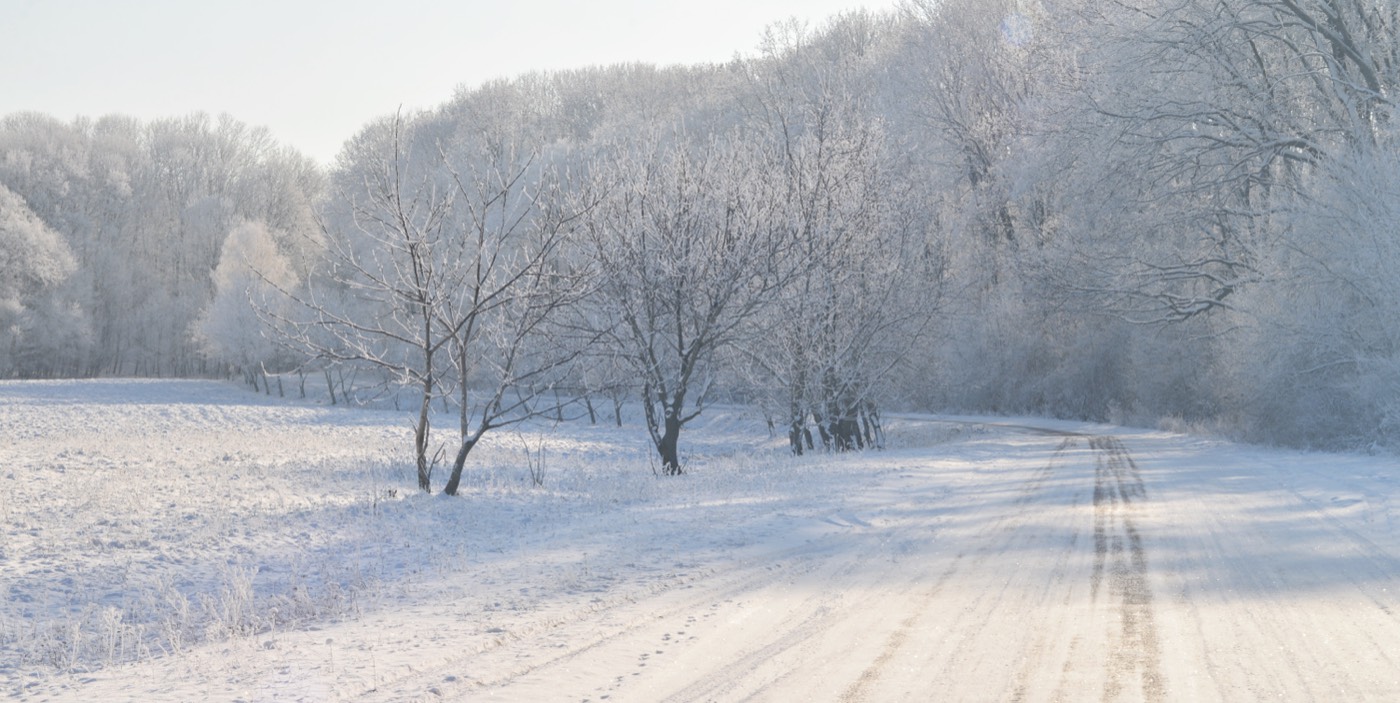
The Moroz surname means “frost”. It is written Мороз in Cyrillic, it is carried today by more people in Ukraine than anywhere else on earth, and it began as a nickname rather than a job or a village.
What Does the Surname Moroz Mean?
Moroz means “frost”. It comes straight from the ordinary East Slavic noun moroz (Ukrainian and Russian мороз, Belarusian мароз), the everyday word for a hard freeze, and it belongs to the class of surnames onomasts call descriptive: a byname pinned to a person, not a trade or a place.
The Dictionary of American Family Names (Oxford, 2022) records it as a Ukrainian, Belorussian, Polish, Slovak and Jewish (eastern Ashkenazic) nickname from that same word. That breadth is the first clue that Moroz is not the property of a single nation.
What the dictionaries will not tell you is why a man was called Frost. There are three readings in circulation, and honest sources give them all rather than choosing.
A child of the hard winter. Moroz existed as a pre-Christian secular given name long before it was a surname, and it was plausibly given to children born during a severe frost. An Ivan Semenovich Moroz appears in the chronicles in the fourteenth century, and his descendants became the Morozovs.
A man who looked like hoarfrost. The second reading takes the nickname visually, for white or very fair hair, or a beard gone early to grey. That is the standard mechanism behind Slavic colour bynames.
A man who felt like it. Polish onomastic tradition, following Kazimierz Rymut’s historical-etymological dictionary of Polish surnames, reads the cognate Mróz as a trait of the bearer: coldness, aloofness, severity of manner. A neighbour who never thawed.
All three readings are live, and no document survives that would let you choose between them.
Where the Moroz Name Comes From
Moroz is chiefly Ukrainian, with major secondary populations in Belarus, Russia and eastern Poland. Roughly four in five bearers worldwide live in East Slavic Europe, and Ukraine holds the largest single share.
The Ukrainian heartland
Forebears puts about 58,000 Moroz bearers in Ukraine, one person in every 784, and they are not clustered in the far west where so many Ukrainian American families trace their origin. The heaviest concentrations sit in Dnipropetrovsk and Donetsk oblasts and around Kyiv, which makes Moroz a Dnipro-basin name as much as a Galician one.
Belarus, Russia and Poland
Belarus has roughly 16,000 bearers, but at one in 590 the name is actually denser there than in Ukraine. Russia has about 38,000, Poland about 3,500. If your family came from the borderland zone of Volhynia, Polesia or Podlasie, the modern national label attached to the name may simply reflect which state the villages fell into after 1945.
The Jewish bearing
A substantial number of Morozes are Ashkenazi Jewish, from exactly these lands. When the Austrian and Russian empires compelled Jewish families to register fixed surnames around 1800, ordinary vocabulary words, weather words among them, were taken up in quantity. A Jewish Moroz family and an Orthodox Ukrainian one can share a spelling, a province and no ancestor at all.
Spelling Variants and Related Names
Moroz has cognates in nearly every Slavic language, and the form your family carries records which language the clerk was writing in.
Straight cognates. Belarusian Maroz, where the a reflects the akanye shift that turns unstressed o into a. Polish Mróz. Czech and Slovak Mráz, often anglicised in America as Mraz. Each is simply the word for frost in its own tongue.
Possessive and patronymic forms. Russian Morozov adds the -ov suffix, which is possessive: Morozov does not mean “frost”, it means “Frost’s”, the man or household belonging to a Moroz. The feminine is Morozova. Ukrainian prefers its own suffixes for the same job: Morozenko and Morozyuk or Morozchuk both mean roughly “Moroz’s lad” or “son of Moroz”. Polish supplies the diminutive Mrozek, “little frost”.
The Polish complication. Not every Mróz is a frost. Polish name scholars note that Mróz can also be a clipped form of Jamróz, the vernacular Polish version of Ambroży, that is, Ambrose. So a Polish Mróz line may descend from a saint’s name rather than the weather.
The spelling is a routing tell rather than an identity: it records the language of the office that wrote it down, not the language spoken at home. Our page on the Melnyk surname works this through in detail using the y/i transliteration split, and the same logic applies here. A Moroz entered in a Polish parish register could come out a Mróz; one processed through a Russian imperial office could come out a Morozov.
One variant carries real cultural weight. Morozenko is the hero of “Oi Moroze, Morozenku”, one of the best known Ukrainian historical ballads, in which all of Ukraine weeps for a young Cossack tortured to death by the enemy.
The Morozes in America
Morozes came to America in the same waves as every other Ukrainian, Belarusian and Polish farming family, and mostly for the same reason: there was not enough land at home.
The first wave ran from the late 1870s to 1914 and brought roughly 250,000 people, most of them young single men from Transcarpathia, the Lemko region, eastern Galicia and Bukovyna, where eastern Galicia alone carried 67 people per square kilometre living off the soil. They went to the anthracite fields of Pennsylvania, to the steel towns, and to the foundry districts of the Midwest. In Chicago they concentrated in the streets around Chicago Avenue that are still called Ukrainian Village. In New York they filled the blocks below Fourteenth Street that became the Ukrainian East Village, and in Pennsylvania they built the parishes that still anchor Ukrainian Philadelphia.
The second great arrival was political. The Displaced Persons Act of 1948 admitted around 85,000 Ukrainians out of the camps of occupied Germany and Austria, a markedly more educated cohort than the labourers of 1900. They gravitated to the auto and steel suburbs, which is why the densest Ukrainian American communities today sit in places like Parma, Ohio and Warren, Michigan rather than in the old inner-city parishes.
Barely a few thousand more came between 1955 and independence in 1991. After that the gates reopened, and the newest Morozes in America are more likely to be Kyiv-born engineers than Galician farmhands.
In the 2010 US Census, 96.65 per cent of Americans named Moroz recorded themselves as white and 2.86 per cent as Hispanic, with the remaining categories too small for the Bureau to publish. Those are self-identification proportions from one census form, not a measure of ancestry.
The wider family is bigger than Moroz alone. Trade names like Koval and regional ones like Boyko travelled the same routes, and the census counts 2,834 Americans named Mroz, 1,415 named Mrozek and 597 named Morozov alongside the 1,434 Morozes.
Notable People Named Moroz
Oleksandr Moroz (born 1944, Kyiv oblast) founded the Socialist Party of Ukraine and chaired the Verkhovna Rada twice, from 1994 to 1998 and from 2006 to 2007. In 2000 he made public the secret recordings from Leonid Kuchma’s office that ignited the Gongadze affair.
Valentyn Moroz (1936 to 2019), a historian and Soviet political prisoner, was arrested in 1965 and again in 1970 for circulating samizdat and released in a 1979 prisoner exchange. He became a hero to the Ukrainian diaspora in Canada, and later a divisive one.
Maryna Moroz (born 1991 in Vilnohirsk) fights in the UFC women’s flyweight division and coaches Ukraine’s Olympic women’s boxing team.
Daniela Moroz (born 2001 in Berkeley, California) won six Formula Kite world titles between 2016 and 2022, the first at sixteen, and was the first American sailor to qualify in kiteboarding for the Paris Olympics. Her family came out of Czechoslovakia, a reminder of how far west the root reaches.
Darya Moroz (born 1983) is a Russian stage and screen actress, one of the most visible bearers of the name in contemporary Russian film.
How Common Is Moroz Today?
Moroz is uncommon in the United States and very common in Ukraine. In America it ranks 19,004th; worldwide it is carried by well over 100,000 people.
| US rank (2010 Census) | #19004 |
|---|---|
| Americans with the name | 1,434 |
| Origin | Ukrainian, also Belarusian, Russian, Polish and Ashkenazi Jewish |
| Meaning | “Frost”, a descriptive nickname |
Frequently Asked Questions
What does the surname Moroz mean?
Moroz means “frost”, from the East Slavic word мороз. It is a descriptive nickname surname, given for a birth in deep winter, for white or fair hair, or for a cold and severe manner, depending on which reading you follow.
Is Moroz Ukrainian or Russian?
Both, and Belarusian and Polish and Jewish besides. Ukraine has the largest number of bearers, Belarus the highest density, and Russia a substantial population that more often uses the derived form Morozov. The word is identical in all of them.
Where does the Moroz family come from?
There is no single Moroz village or clan. The name arose independently wherever East Slavic was spoken, and modern bearers concentrate in Dnipropetrovsk, Donetsk and Kyiv oblasts in Ukraine, across Belarus, and in the Polish borderlands.
How common is the surname Moroz?
In the United States it ranked 19,004th in the 2010 Census, with 1,434 bearers. Globally it is far more common, with around 58,000 in Ukraine, 38,000 in Russia and 16,000 in Belarus.
Is there a Moroz family crest or coat of arms?
No. In every European heraldic tradition, arms are granted to an individual and pass to that person’s direct descendants, never to everyone who happens to share a surname. Any website selling you a “Moroz family crest” is selling a decoration with no connection to your line.
Is the surname Moroz connected to Ded Moroz, Grandfather Frost?
Only through the shared word. Ded Moroz, the Slavic winter figure who took his modern gift-giving form under Soviet patronage after 1935, is named with the same ordinary noun for frost that produced the surname. The surname does not descend from the folklore figure, and no Moroz family is related to him.
If your family carries the Moroz name, its route from the Slavic borderlands to America is traceable. Atlas of Home can follow it from the Dnipro villages and Galician parishes to wherever your family landed, and to wherever you are now.
Further reading: the Internet Encyclopedia of Ukraine on Ukrainian settlement in the United States, and Wikipedia’s Moroz article.