
The Wong surname is one of the most familiar Chinese names in America and one of the most misleading. Wong is a Cantonese spelling shared by two entirely separate family names from southern China: 黃, meaning yellow, and 王, meaning king.
What Does the Surname Wong Mean?
Wong means either “yellow” or “king”, depending on which Chinese character your family carries. It is a Cantonese romanisation used for two unrelated surnames, 黃 (Huang in Mandarin) and 王 (Wang in Mandarin), which English spelling collapses into a single word.
黃 is the character for the colour yellow. It is much the more common of the two among Cantonese speakers, and by a wide margin the likelier answer for an American Wong family. 王 is the character for a king: three horizontal strokes crossed by one vertical.
English is not the only thing hiding the difference. Cantonese speech hides it too. Both are pronounced wong4, a low falling tone, and they are exact homophones. Speakers separate them by naming the character rather than the sound: 黃 is “the wong of the Yellow River”, 王 is “three-stroke wong”. A third, rarer surname 汪 is also written Wong but is pronounced wong1 and can be told apart by ear.
So two Wong families in the same American city may descend from lineages that have never had a thing to do with one another. Before you trace a Wong line back across the Pacific, establish the character. Everything downstream depends on it.
Where the Wong Name Comes From
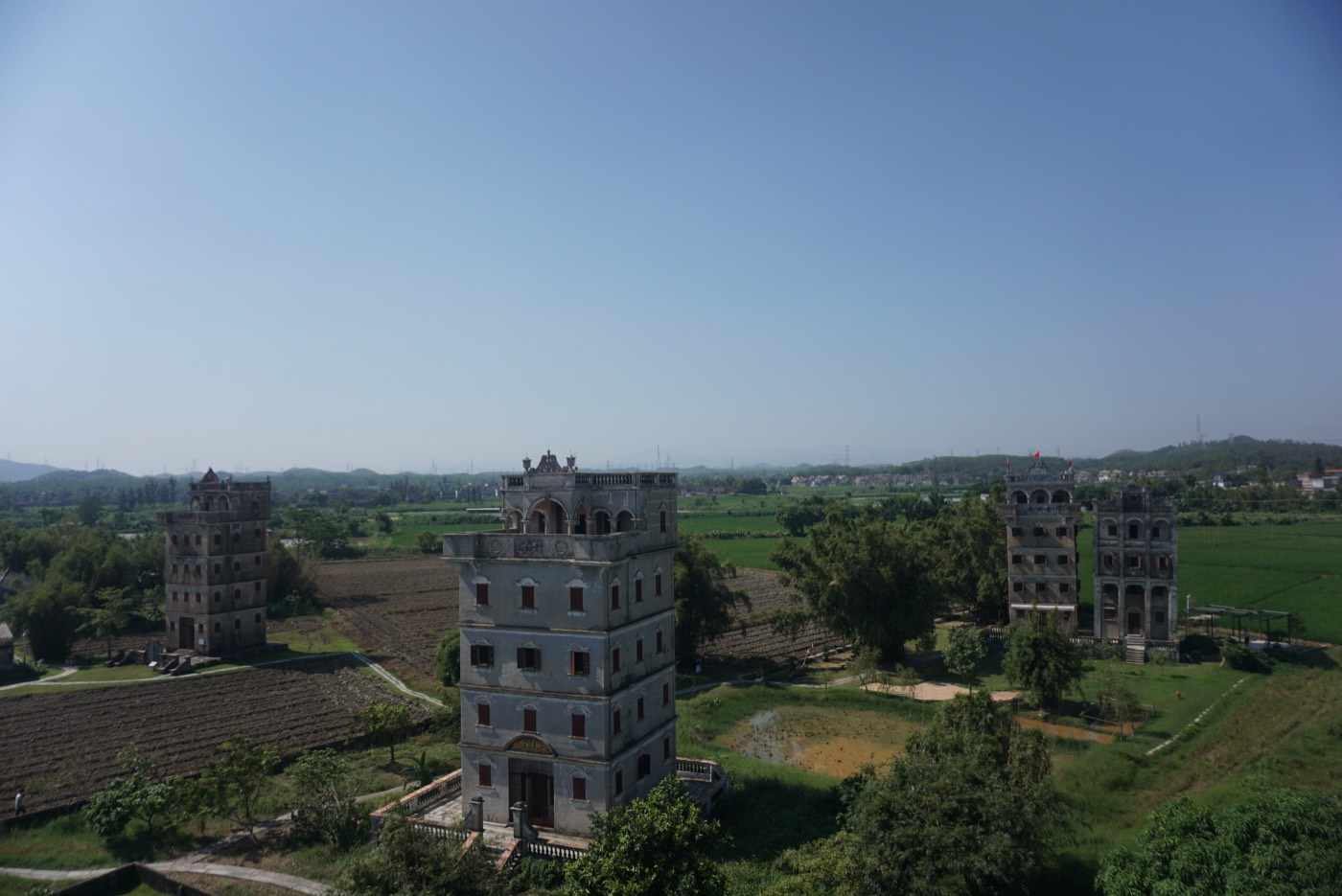
Most American Wongs come from Guangdong province in southern China, above all the Pearl River Delta and the Sze Yup counties west of Canton: Taishan, Kaiping, Xinhui and Enping.
黃, the Wong of Yellow
The traditions behind 黃 compete. Some lineages trace it to the ancient state of Huang and the descendants of Bo Yi, others to Hui Lian, credited with controlling floodwaters under the legendary Emperor Yao. Historians treat these genealogies as inherited claims rather than documented descent. The most celebrated early bearer, Huang Xie, Lord Chunshen, died in 238 BC.
What is measurable is where the name sits now. 黃 is the seventh most common surname in mainland China, carried by roughly 32 million people, and the third in Taiwan. Around 19 per cent of its bearers live in Guangdong. That southern concentration is exactly why the spelling Wong, rather than Huang, spread around the world.
王, the Wong of Kings
王 is the most common surname in mainland China, borne by over 100 million people. Its origins are unusually consistent: it belongs to families descended from royal houses who lost their thrones and kept the word for king as a name, including Zhou princes reduced to commoners and the line of Crown Prince Jin. The clans of Taiyuan and Langya made 王 a leading aristocratic surname of the Tang dynasty.
But its heartland is northern and central China, not the Cantonese south, which is why proportionally few overseas Wongs turn out to be 王. The director Wong Kar-wai is the famous exception, and fittingly his family reached Hong Kong from Shanghai, not the delta.
How to Work Out Which One Is Yours
The character is usually recoverable, often from objects a family already owns. The Chinese inscription on a grandparent’s headstone almost always gives it even when the English side does not, and so do old envelopes, funeral notices and the Chinese column of an immigration file.
The cleanest clue is often a clan association, since those of American Chinatowns were organised by surname character and home district. An ancestral village name does the same job, delta villages being typically single-lineage settlements.
Spelling Variants and Related Names
Both Wongs have long lists of alternative spellings, because each Chinese dialect pronounced the character differently and each colonial administration wrote it down its own way. The characters never changed. Only the transcription did.
For 黃: Huang in Mandarin, Vong in Macau and Taishanese, Wong, Vong or Bong in Hakka, Ng in Teochew, and Ooi, Oei, Uy or Wee in Hokkien communities across Southeast Asia. Beyond Chinese, the same character is the Korean surname Hwang and the Vietnamese Hoàng and Huỳnh, the second being the southern form.
For 王: Wang in Mandarin, Ong in Hokkien, Heng in Teochew, Wung in Shanghainese, Vương in Vietnamese, Wang in Korean and Ō in Japanese.
This scattering of one character across a dozen spellings is why so many searches dead-end. Our page on the Chen surname works through the dialect and romanisation system in detail, and the same logic governs every Wong.
The Wongs in America
Wongs began arriving in California with the 1849 gold rush and kept coming through the railroad decades, overwhelmingly from the Sze Yup counties. They worked the mines and the Central Pacific, then moved into laundries, groceries and restaurants as white hostility pushed them out of other trades.
In 1882 Congress passed the Chinese Exclusion Act, the first American law to bar a nationality outright, and it also barred Chinese immigrants from naturalising. The one door left open was birth: a man born on American soil was a citizen, and his children born abroad could claim citizenship through him.
In April 1906 the San Francisco earthquake and fire destroyed the city’s birth records. With nothing left to contradict them, thousands of Chinese men claimed San Francisco birth, and as citizens could then report the births of sons in China. Many of those slots were fictional, and they were sold. The buyers, an estimated 150,000 over the exclusion decades, are known as paper sons. They memorised coaching books describing a village, a house and a family that were not theirs, then were interrogated for days at Angel Island on the details.
This matters enormously for anyone tracing a Wong line, because a paper son took the paper family’s surname. A man born Lee or Ng might live, marry, work and be buried as Wong, and every American record would agree. Some American Wongs are not Wongs at all, and some true Wongs appear under someone else’s name.
Between 1956 and 1965 the Immigration and Naturalization Service ran the Chinese Confession Program, offering to regularise status in exchange for an admission of false entry. But confessing meant naming others, so many families stayed silent and carried the secret for decades. If an elderly relative was vague about a village, that is often the reason. Immigration case files at the National Archives frequently hold the real names.
Exclusion was repealed in 1943 and the 1965 Immigration Act reopened the door, bringing a second wave from Hong Kong and later mainland Guangdong. The Wongs of San Francisco Chinatown remain the oldest continuous concentration, but the centre of gravity has moved outward: to Monterey Park in the San Gabriel Valley, to neighbouring Rowland Heights, and to suburbs far from the coast such as Chandler, Arizona and Northbrook, Illinois.
Notable People Named Wong
Wong Kim Ark (born about 1873) was a San Francisco cook whose refused re-entry became United States v. Wong Kim Ark in 1898, the Supreme Court ruling that established birthright citizenship regardless of a parent’s race or status.
Wong Fei-hung (1847 to 1924), 黃飛鴻, was a martial artist, physician and folk hero from Foshan in Guangdong, a master of Hung Gar and the subject of an enormous body of Chinese cinema.
Anna May Wong (1905 to 1961), born Wong Liu Tsong (黃柳霜) in Los Angeles Chinatown to a Taishan family, was the first Chinese American Hollywood star and spent a career fighting the roles the industry would allow her.
Wong Kar-wai (born 1958), 王家衛, is the Hong Kong director of In the Mood for Love, and a rare globally famous Wong whose name is the king character rather than the yellow one.
B. D. Wong (born 1960), from San Francisco, won a Tony Award for M. Butterfly in 1988. Ali Wong (born 1982), also from San Francisco, is a stand-up comedian and writer who won an Emmy for the series Beef in 2023.
How Common Is Wong Today?
Wong ranked 274th in the 2010 United States Census, with 111,371 Americans carrying the name, making it one of the most common surnames of Chinese origin in the country.
| US rank (2010 Census) | #274 |
|---|---|
| Americans with the name | 111,371 |
| Origin | Chinese (Cantonese romanisation) |
| Meaning | “Yellow” (黃) or “king” (王) |
Of those bearers, 86.49 per cent identified as Asian or Pacific Islander in 2010, 5.2 per cent as two or more races, 4 per cent as Hispanic, 3.48 per cent as white and 0.79 per cent as Black. These are self-identification proportions recorded on census forms, not measures of ancestry. The Hispanic share is a trace of the Chinese communities of Cuba, Peru and Mexico, whose descendants carry Cantonese surnames and Spanish given names.
Frequently Asked Questions
What does the surname Wong mean?
Wong means either “yellow” or “king”. It is a Cantonese spelling used for two separate Chinese surnames, 黃 and 王, which sound identical but are unrelated in origin.
Is Wong Chinese or Korean?
Wong is Chinese, specifically a Cantonese romanisation. The character 黃 is also a Korean surname and a Vietnamese one, but it is romanised Hwang in Korean and Hoàng or Huỳnh in Vietnamese, never Wong.
Where does the Wong family come from?
Overwhelmingly from Guangdong in southern China, particularly the Pearl River Delta and the Sze Yup counties of Taishan, Kaiping, Xinhui and Enping, along with Hong Kong and Macau. Overseas Wong communities almost all trace back there.
How common is the surname Wong?
Wong ranked 274th in the 2010 US Census with 111,371 bearers. The underlying characters are far more common globally: 黃 is the seventh most common surname in China and 王 the first.
Is there a Wong family crest or coat of arms?
No. Heraldry grants arms to individuals and their direct descendants, never to everyone sharing a surname, and China has no heraldic tradition of that kind at all. Any site selling you a Wong crest is selling a decoration, not a lineage. What Chinese families do have is the genealogy book, the zupu, a real record of descent.
How do I find out which Chinese character my Wong family used?
Check the Chinese inscription on a family headstone, the clan association an ancestor joined, or the ancestral village recorded in an immigration file. Any one normally settles it, and it is the necessary first step before any research in China.
If your family carries the Wong name, its route from Guangdong to America is traceable. Atlas of Home can follow it from a delta village and a character on a headstone to wherever your family landed, and to wherever you are now.