
On a damp morning at the corner of 12th Avenue South and South Jackson Street, the smell of star anise and charred ginger drifts out of doorways before the shops have fully opened. This is Little Saigon, the heart of the Vietnamese in Seattle, a few blocks east of Chinatown where refugees who arrived with almost nothing built a neighbourhood out of phở bowls, jewellery cases and grocery aisles stacked with fish sauce.
The Place
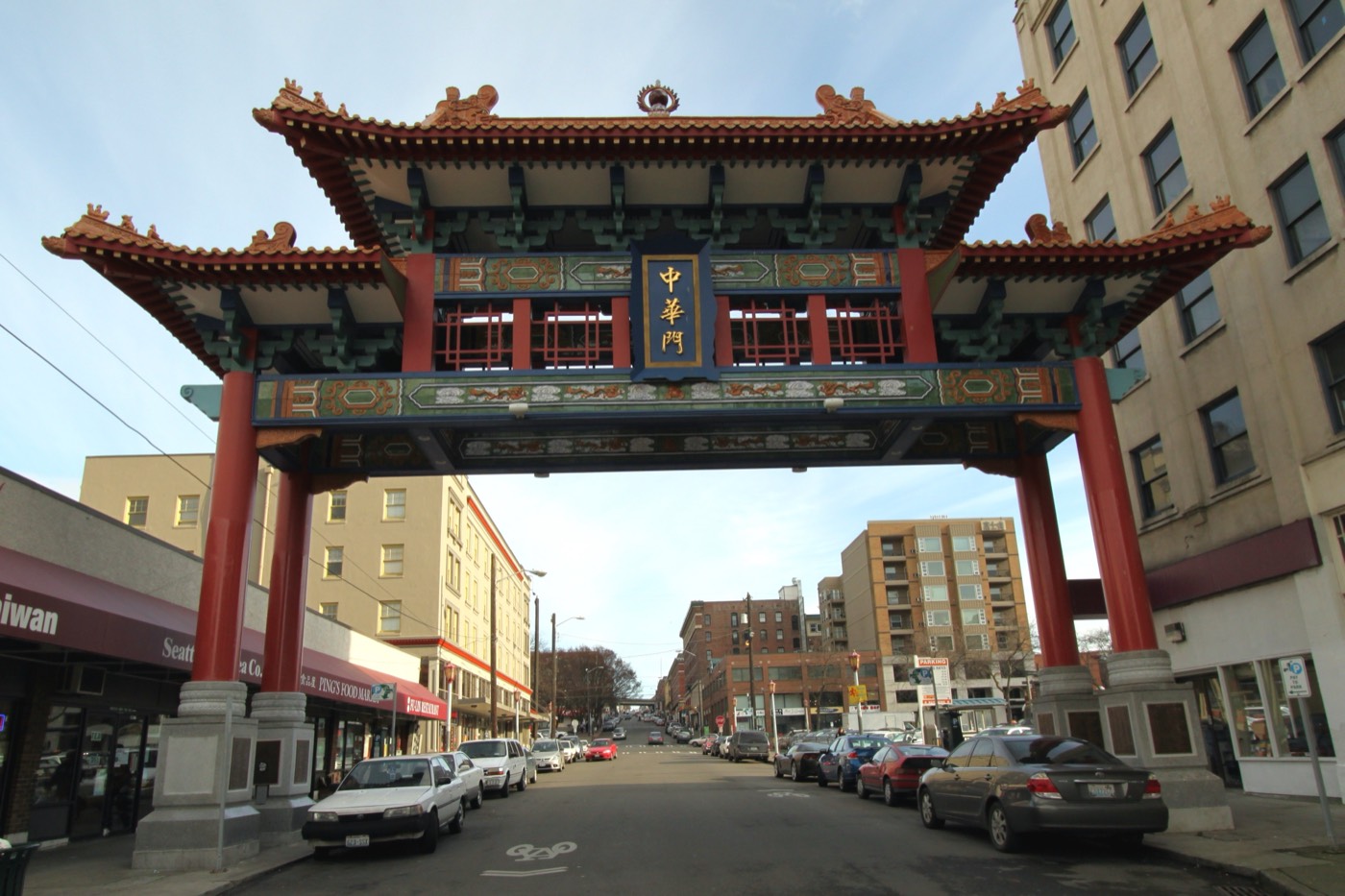
Little Saigon sits at the eastern edge of Seattle’s Chinatown-International District, the area locals call the C-ID or simply the I.D. An Interstate 5 viaduct slices between the older Chinatown core and the Vietnamese blocks, so the two districts feel joined and separate at once.
The commercial spine runs along South Jackson Street and 12th Avenue South, a flat stretch of strip malls, plazas and low storefronts rather than the picturesque gates of historic Chinatown. It is a working neighbourhood, built for grocers and noodle shops rather than tourists.
For decades it has been one of the densest concentrations of Vietnamese business in the Pacific Northwest, a place where you can buy a bowl of beef phở, a wedding ring and a month’s worth of jasmine rice within a single block.
How It Became Vietnamese
The land itself was made by hand. The Jackson Street regrade, a vast early twentieth-century earthmoving project, flattened the hills here and left the level ground that Asian immigrants would later fill with shops and homes. By the 1920s the corner of 12th and Jackson held a jazz venue, the Entertainers Club, long before any phở was served.
The fall of Saigon, 1975
The story of the Vietnamese in Seattle begins on 30 April 1975, the day Saigon fell. Within hours, hundreds of thousands of Vietnamese fled, and the United States scrambled to resettle them.
Washington’s Governor Daniel J. Evans did something unusual. While other states hesitated, he flew to California’s Camp Pendleton and personally invited refugees to come north and make a home in Washington.
For 133 days in 1975, roughly 500 of those refugees were housed at Camp Murray, a National Guard base near Fort Lewis, while sponsors were found to help with housing and work. By the end of that year, about 2,000 Vietnamese were living in Seattle, part of a resettlement that reshaped the International District.
The second and third waves
The first arrivals were soon followed by others. A second wave of Vietnamese, Cambodian and Laotian refugees came in 1978, many of them so-called boat people who had escaped by sea. A third wave arrived from 1987, including Amerasian children of American servicemen.
Demographers later credited that early welcome with reshaping the region. A former King County demographer described the 1975 resettlement as establishing a beachhead, a recognition that King County was a place where refugees and immigrants could land and stay. The rate of immigration to the county climbed in the decades that followed.
Building Little Saigon
The new arrivals did not stay dependent for long. Through the 1980s, Vietnamese refugees opened restaurants, markets, jewellery shops and clothing stores in the old buildings and new malls near 12th and Jackson, just east of the established Chinatown.
In 1981, a refugee opened Viet-Wah, the first Vietnamese-owned grocery store in the district. The following year brought the dish that would define the neighbourhood.
On 20 October 1982, Theresa Cat Vu and Augustine Nien Pham opened a small shop in a former insurance office. They had reached Seattle in October 1980, sponsored by Theresa’s sister after nearly a year in a refugee camp in the Philippines. The shop was first called Cat’s Submarine Sandwich Shop and sold sandwiches.
Members of the Vietnamese community persuaded the couple to add phở to the menu. Within four months the soup had taken over, and the restaurant was renamed Phở Bắc. It is remembered as Seattle’s first phở shop.
By 1984, with Southeast Asian merchants clustered into their own commercial centre east of Chinatown, the neighbourhood had earned its nickname: Little Saigon. The name stuck, and over time a handful of street signs went up to mark it, though the designation has always been more affectionate than official.
The jewellery years
Jewellery became one of Little Saigon’s signatures. Gold has long carried deep meaning for Vietnamese families, who fled their country with whatever wealth they could wear or carry, and the trade followed them to Jackson Street.
One jewellery store opened in 1986, and by the year 2000 the neighbourhood counted fourteen of them. Gold rings, bangles and necklaces filled glass cases up and down the blocks, a quiet record of how far the community had travelled.
The Landmarks
Phở Bắc, near 1240 South Jackson Street. The Pham family’s restaurant is the origin point of Seattle phở. The original boat-shaped building became a destination in its own right, and the family, often called the first family of phở in Seattle, later expanded into a larger space nearby. Four decades on, the second generation still runs it.
Viet-Wah, Asian Plaza, South Jackson Street. Founded in 1981, this 15,000 square foot grocery was the district’s first Vietnamese-owned market and a pillar of Little Saigon, with live seafood tanks, a pharmacy and aisles of Vietnamese, Chinese and Thai goods. The Jackson Street store closed in 2022 after four decades, and the building was damaged by fire in 2024. The business now trades in Renton.
Saigon Deli, 1237 South Jackson Street. A long-running counter known for overstuffed bánh mì sandwiches sold for just a few dollars, the kind of fast, cheap, excellent food that keeps a neighbourhood fed and gives newcomers an affordable foothold.
Tamarind Tree, 1036 South Jackson Street. Opened in 2004 by Tam Nguyen, this atmospheric dining room expanded the city’s idea of what Vietnamese food in Little Saigon could be, serving a large menu of carefully prepared regional dishes tucked behind a strip-mall facade.
Hello Em Vietnamese Coffee and Roastery, 1227 South Weller Street. Opened in January 2021 by Yenvy Pham of the Phở Bắc family and Nghia Bui, it is recognised as Seattle’s first Vietnamese coffee roastery, with an on-site roaster turning Vietnamese beans while customers wait for their cà phê sữa đá.
Hing Hay Park, South King Street between 6th and Maynard avenues. A short walk west in Chinatown, this small public square built in 1973 anchors the wider district. Its pavilion and gateway host lion dances and Lunar New Year crowds that draw the Vietnamese community out of Little Saigon’s quieter blocks.
Friends of Little Saigon. A community organisation devoted to preserving the neighbourhood’s culture and small businesses, it has become the steady voice arguing for Little Saigon’s future as development and displacement press in around it.
Where They Came From
The Vietnamese who built Little Saigon did not arrive on a planned migration. They came as refugees, scattered first by the collapse of South Vietnam in 1975 and then by the harder years that followed.
The earliest arrivals were often connected to the South Vietnamese government, the military or American operations, people with the most reason to flee when Saigon fell. Later waves included the boat people of the late 1970s and 1980s, who left by sea and waited in camps across Southeast Asia, in Thailand, Malaysia, the Philippines and Hong Kong, before sponsors brought them to Washington.
That refugee-camp pathway shows up in individual stories like the Pham family, who spent nearly a year in the Philippines before reaching Seattle. Many came not directly from Vietnam but through California, recruited north from Camp Pendleton by a governor who wanted them.
Seattle Today
Today the Vietnamese are a substantial presence across the Seattle metropolitan area, numbering more than 55,000 people, roughly 1.5 per cent of the region. The 2010 census counted almost 12,000 Vietnamese residents within Seattle itself, spread well beyond Little Saigon into South Seattle and the suburbs.
That dispersal is part of why Little Saigon has struggled. As families succeeded and moved outward, the commercial core lost some of its anchor population, and the neighbourhood has faced years of decline, public-safety problems and development pressure. The closure of Viet-Wah in 2022 and the fire that followed felt, to many, like the loss of a landmark.
Yet the neighbourhood is not finished. Younger members of founding families, the Phams among them, have reinvested in it, opening coffee roasteries and reimagining old restaurants rather than abandoning the blocks their parents settled. Each February the wider community gathers at the Seattle Center for Tết in Seattle, the Vietnamese Lunar New Year festival that has run under the city’s Festál programme since 1997, organised by a coalition formed in 1996 that included the nonprofit Helping Link. For two days the lion dances, áo dài and food carry the spirit of Saigon to the foot of the Space Needle, and then everyone goes home to Jackson Street.
For more on the Pacific Northwest’s other communities, see our accounts of the Ethiopians in Seattle and the Germans of Leavenworth. The Vietnamese story stretches far beyond Washington, too: read how it unfolded among the Vietnamese in Houston, the Vietnamese in San Jose, the Vietnamese in Irvine and the Vietnamese in Oklahoma City.
Frequently Asked Questions
Where do the Vietnamese in Seattle live?
The historic heart of the Vietnamese in Seattle is Little Saigon, on the eastern edge of the Chinatown-International District around 12th Avenue South and South Jackson Street. Many families have since spread into South Seattle and the surrounding suburbs, but the Jackson Street blocks remain the community’s commercial and cultural anchor.
When did Vietnamese refugees first come to Seattle?
The first large group arrived in 1975, after the fall of Saigon on 30 April. Governor Dan Evans invited refugees north from California’s Camp Pendleton, and roughly 500 were temporarily housed at Camp Murray. By the end of 1975 about 2,000 Vietnamese were living in Seattle.
How did Little Saigon get its name?
Southeast Asian merchants began clustering their shops just east of Chinatown in the early 1980s, and by 1984 the area had earned the nickname Little Saigon. The name marked the neighbourhood as the Vietnamese commercial centre of the city, and a few street signs were later put up to recognise it.
What was the first Vietnamese phở shop in Seattle?
Phở Bắc, opened by Theresa Cat Vu and Augustine Nien Pham. They started in 1982 with a sandwich shop in a former insurance office on Jackson Street, then added phở at the community’s urging. Within four months the soup took over and the restaurant was renamed, becoming Seattle’s first phở shop.
How many Vietnamese people live in the Seattle area?
More than 55,000 people of Vietnamese descent live in the Seattle metropolitan area, about 1.5 per cent of the region. The 2010 census counted almost 12,000 Vietnamese residents within the city of Seattle itself.
What happened to Viet-Wah grocery store?
Viet-Wah, founded in 1981 as the first Vietnamese-owned grocery in the district, closed its original Jackson Street store in 2022 after roughly four decades. The building was damaged by fire in 2024, and the business now operates in Renton.
If your family’s story passed through Seattle, or any of the places Vietnamese have made home in America, Atlas of Home can trace that journey. From a refugee camp in the Philippines to a phở shop on South Jackson Street, to wherever you are now.