
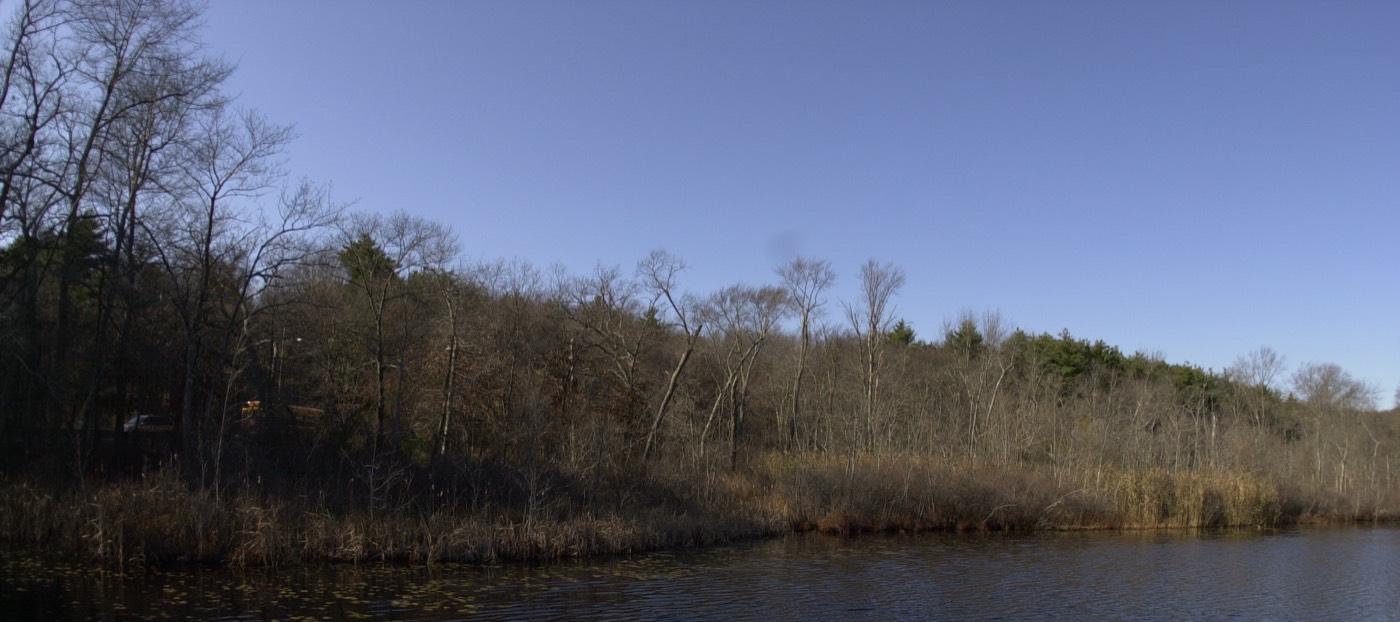
On a clear Sunday morning in 1885, the bells of a new English Gothic church rang out over Mount Neponset for the first time, and the Irish of Hyde Park, Massachusetts had a parish of their own at last. They had crossed the Atlantic for the mills along the river, raised families in the railroad villages of Readville and Fairmount, and worshipped for years in borrowed rooms. The story of the Irish in Hyde Park is the story of how a scrappy mill town on Boston’s southern edge became, parish by parish, unmistakably Irish.
The Place
Hyde Park sits at the far southern tip of Boston, wedged against Milton, Dedham and the Blue Hills, where the Neponset River curls through old mill country. It was the last piece of land Boston ever annexed, joining the city on the first day of 1912 after generations as an independent town in Norfolk County.
The neighbourhood is really a cluster of villages: Cleary Square at its commercial heart, Logan Square beside it, and the railroad settlements of Readville and Fairmount strung along the tracks. Even now the place feels a little apart from the rest of Boston, reached by the commuter rail and the long run of Hyde Park Avenue rather than the subway.
It was the river that made it. The mills that lined the Neponset drew waves of immigrant labour in the nineteenth century, and among the first and most numerous were the Irish.
How It Became Irish
Hyde Park did not exist as a town until 1868. Before that it was farmland cut from Dorchester, Milton and Dedham, quiet country in the Neponset valley. What changed it was a speculative idea, and then a flood of workers who came to make that idea pay.
The Twenty Associates and the mills
In 1856 a developer named Alpheus Perley Blake organised the Fairmount Land Company, the group remembered locally as the Twenty Associates, and began buying up land on the hills above the Neponset. The river offered water power, and the railroads offered a way to move goods. Factories followed, and where there were factories there was work.
The town was formally incorporated on 22 April 1868. By then its population was climbing fast, swelled by labourers drawn to the mills and metal works along the water. A great many were Irish, part of the same vast migration that had been filling South Boston and Dorchester since the Famine years of the 1840s.
Mass in borrowed rooms
For decades the Catholics of the area had no church to call their own. Before 1853 they belonged to Saints Peter and Paul Parish in South Boston, a long journey on a Sunday. In 1853 the new Saint Gregory Parish in Dorchester took in the Hyde Park district, but that too was miles away from the mill villages.
So the Irish improvised. Between 1853 and 1870, Mass was said in private homes and in a music hall in what is now Logan Square, wherever a priest could be found and a room could be borrowed. It was the religion of a people who had learned, in Ireland and in steerage, to keep the faith without a building.
A parish of their own
That changed in 1870, when the Archdiocese of Boston created Most Precious Blood Parish and assigned the Reverend William J. Corcoran as its first pastor. The young parish suffered setbacks including a fire, and finally settled on a commanding site at the corner of Maple and Oak Streets, on the rise known as Mount Neponset.
The cornerstone was laid on 4 July 1880, a date chosen because it fell on the Feast of the Most Precious Blood that year. The English Gothic church was completed in 1885 and formally dedicated on 13 September of that year. For the Irish of Hyde Park, it was the moment a working community became a settled one.
The parish grew so quickly that it spun off others. A satellite schoolhouse and chapel on Readville’s side of the neighbourhood led to the creation of Saint Anne Parish in 1918, and the Catholic footprint of Hyde Park kept expanding with the families who filled the pews.
Railroad villages and steady work
The Irish settled hardest in Readville, the industrial village at the southern end of the neighbourhood. There the B.F. Sturtevant Company built a sprawling works that became one of the largest fan manufacturing plants in the world, employing around 1,500 people. The New York, New Haven and Hartford Railroad ran locomotive and car shops nearby.
This was the kind of steady, unglamorous work that let an immigrant family put down roots: a job within walking distance, a parish up the hill, a three decker to fill with children. Generation by generation, the Irish of Hyde Park moved from the factory floor into the police and fire departments, the schools and City Hall.
Readville carried older history too. During the Civil War it had been the site of Camp Meigs, the training ground where the famed 54th Massachusetts Infantry, one of the first Black regiments raised in the North, drilled in the spring of 1863 before marching south. The Irish who later filled the neighbourhood lived among that memory.
Becoming Boston
By the early twentieth century Hyde Park had outgrown its independence. The town voted to join Boston, and on 1 January 1912 it became the city’s final annexed neighbourhood, trading the Norfolk County of its founding for Suffolk County and the wider machinery of Boston politics.
That timing mattered for the Irish. They were arriving at the centre of Boston civic life just as Hyde Park joined the city, and the neighbourhood became one more Irish stronghold in a city the Irish were learning to run. The patterns set in those years held for most of a century.
The Landmarks
Most Precious Blood Church, corner of Maple and Oak Streets, Hyde Park. The mother church of Catholic Hyde Park, dedicated in 1885 on the rise called Mount Neponset. Its tall spire was a landmark for decades until it was removed in 1954, and the parish remains the anchor of Irish Catholic life here, now part of the Blue Hills Collaborative with Saint Anne and Saint Pius X.
Camp Meigs Park, Hyde Park Avenue at Stanbro Street, Readville. A small green park of roughly three acres on the ground where the Civil War training camp once stood. A marker honours the 54th and 55th Massachusetts regiments and the 5th Massachusetts Cavalry who trained here, and the park sits in the heart of the old railroad village where many Irish families settled.
Cleary Square, junction of River Street and Hyde Park Avenue. The commercial heart of the neighbourhood and the place where Hyde Park does its shopping, eating and arguing. An eclectic run of storefronts, restaurants and historic buildings, it has long been the public square of an Irish working community and remains the closest thing the neighbourhood has to a town centre.
French’s Opera House, Fairmount Avenue. Built in 1897 by Leroy J. French, this handsome hall once hosted the entertainments of a mill town’s evenings. Today it is home to Riverside Theatre Works, a community theatre that keeps the old room in use more than a century after its first curtain.
George Wright Golf Course, 420 West Street. A public course designed by the celebrated architect Donald Ross and opened in 1938 with federal Works Progress Administration funding. Named for the Hall of Fame baseball player George Wright, it straddles the line between Hyde Park and Roslindale and is one of the finest municipal courses in the city.
Tutto Italiano, 1889 River Street. A family run salumeria near Cleary Square, importing groceries from Italy and cooking its own pastas and sauces. It is a reminder that Hyde Park’s Irish always shared their streets with Italians, and that the neighbourhood’s table has long been set by more than one immigrant tradition.
Stony Brook Reservation, off Turtle Pond Parkway. A large wooded park of ponds, ledges and parkways spreading across the neighbourhood’s western edge. For generations of Hyde Park families it has been the local wild place, the spot for a Sunday walk after Mass or a summer afternoon by Turtle Pond.
Where They Came From
The Irish who built Hyde Park came in the long wave that reshaped Boston from the 1840s onward. They were the sons and daughters of a country emptied by the Great Famine, by failed harvests and the grinding poverty of rural Ireland, who took ship for America in their hundreds of thousands.
Many reached Hyde Park by the same route the Irish reached so much of southern Boston: first into the crowded wards of South Boston and Dorchester, then outward to the mill villages where work and cheaper land could be found. The neighbourhood’s Irish were rarely first off the boat. They were the second movers, families who had gained a toehold in the city and were looking for a yard and a parish of their own.
That outward movement is the same current that carried Irish families to the streetcar suburbs and annexed towns around Boston, from the three deckers of Dorchester to the leafier streets of West Roxbury and, eventually, suburbs proper like neighbouring Milton. Hyde Park was a rung on that ladder, one step up from the inner wards and one short of the open suburbs.
Hyde Park Today
Hyde Park today is one of Boston’s most diverse neighbourhoods, home to roughly 35,000 people. Its largest communities are now Black and Latino, with families from Haiti, the Dominican Republic, Jamaica and across the Caribbean having made the neighbourhood their own in the way the Irish once did.
The Irish presence is smaller now, a fraction of the population rather than its dominant strain, but far from gone. Irish ancestry still runs through a meaningful share of households, and the institutions the Irish built, above all Most Precious Blood, remain standing and active. The parish has merged into a collaborative with its neighbours, a practical response to thinner congregations, but the bells still ring on Mount Neponset.
What endures most clearly is the shape of the place. The villages the Irish helped settle, Readville and Fairmount and the streets around Cleary Square, are still the bones of the neighbourhood. The church on the hill, the park at Camp Meigs, the old opera house on Fairmount Avenue: these are the landmarks of an Irish community that did not so much disappear as hand the neighbourhood on, the way it had once been handed to them. You can find that Boston more vividly in South Boston and Charlestown, but Hyde Park keeps its own quieter version of the story.
Frequently Asked Questions
When did the Irish settle in Hyde Park, Massachusetts?
The Irish in Hyde Park, Massachusetts arrived chiefly in the second half of the nineteenth century, drawn by the mills and railroad works along the Neponset River after the town was incorporated in 1868. Many came as second movers, families who had first settled in South Boston or Dorchester and then moved outward to the mill villages for work and land.
What is the main Irish Catholic church in Hyde Park?
Most Precious Blood Parish is the historic Irish Catholic church of Hyde Park. It was established in 1870, and its English Gothic church on Mount Neponset was completed in 1885 and dedicated on 13 September of that year. It is now part of the Blue Hills Collaborative alongside Saint Anne and Saint Pius X parishes.
Why was Hyde Park the last neighbourhood annexed by Boston?
Hyde Park remained an independent town in Norfolk County long after its neighbours joined Boston, but its growing industries and population eventually drew it into the city. Residents voted to annex, and Hyde Park officially became part of Boston on 1 January 1912, the final neighbourhood the city ever annexed.
What was Camp Meigs in Readville?
Camp Meigs was a Civil War training camp in the Readville section of Hyde Park, active from 1862 to 1865. It is best known as the place where the 54th Massachusetts Infantry, one of the first Black regiments raised in the North, trained in the spring of 1863 before heading south. A small park and memorial mark the site today.
Are there still Irish residents in Hyde Park today?
Yes, though they are a smaller share than in past generations. Hyde Park is now one of Boston’s most diverse neighbourhoods, with large Black and Caribbean communities, but Irish ancestry still runs through many households and the institutions the Irish built, including Most Precious Blood Church, remain active.
What are the main landmarks tied to the Irish in Hyde Park?
The clearest landmarks are Most Precious Blood Church on Mount Neponset, the commercial centre of Cleary Square, French’s Opera House on Fairmount Avenue, and Camp Meigs Park in Readville. Together they trace the neighbourhood the Irish in Hyde Park helped build, from worship to commerce to memory.
If your family’s story passed through Hyde Park, or any of the places Irish families have made home in America, Atlas of Home can trace that journey. From the mill villages of the Neponset to the church on Mount Neponset, to wherever you are now.