
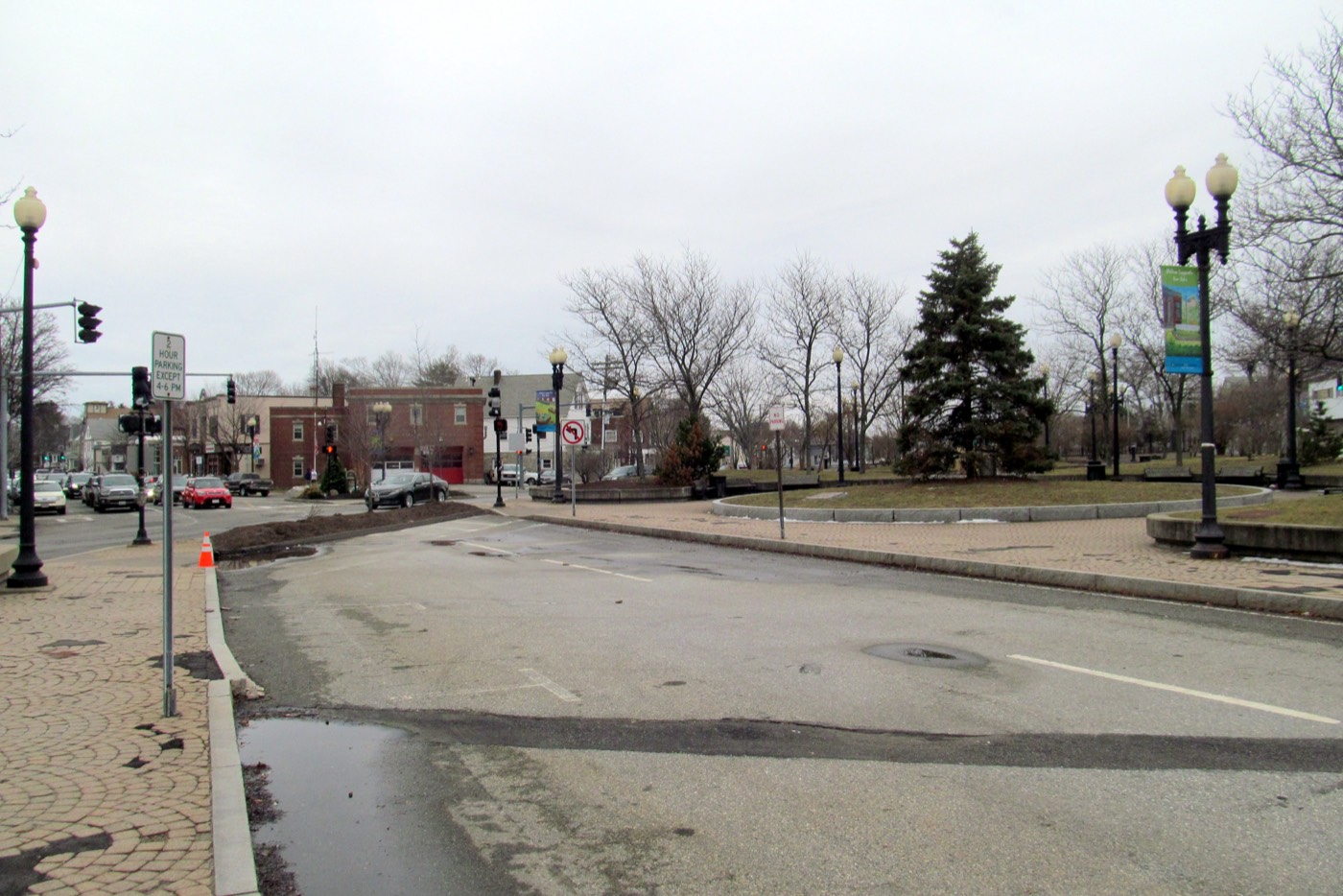
On a clear morning in East Milton, you can stand in the square above the highway and hear three things at once: the rush of the Southeast Expressway below, the bells of a Catholic parish founded for immigrant families, and a passing accent that could have come straight off a bus from South Boston. The Irish in Milton, Massachusetts did not arrive here by ship. They arrived by car, one generation at a time, carrying Dorchester and Southie with them up the hill.
Milton is, by the numbers, the most Irish town in America. Roughly 38 percent of its residents claim Irish ancestry, the highest per capita share of any municipality in the United States, a distinction noted in the town’s own recorded history. That figure is not an accident of history. It is the result of a deliberate, decades-long migration from the row houses of Boston to a leafy suburb that asked only that you bring your parish with you.
The Place
Milton sits directly south of Boston, in Norfolk County, wedged between the Neponset River and the 7,000 acres of the Blue Hills Reservation. It was settled in 1640 and incorporated in 1662, taking its name from Milton Abbey in Dorset, England. The town covers roughly 13.3 square miles.
For most of its history Milton was a place of mills, shipbuilding, and the fortunes of the China Trade. In the 19th century Boston’s merchant elite built grand country estates here, drawn by the rural quiet and the short ride into the city. That old money left Milton wealthy: the 2020 Census recorded a median household income of roughly $141,050.
Then, in the middle of the 20th century, a different kind of family began to arrive. They were not building estates. They were buying their first home.
How It Became Irish
To understand the Irish in Milton, you have to start a few miles north, in the dense Catholic neighbourhoods of Boston where their grandparents had already made a stand.
The City First
The great wave of Irish immigration to Boston began with the Famine of the 1840s and continued for generations. By the early 20th century, neighbourhoods like South Boston, Dorchester, Charlestown, and Hyde Park had become overwhelmingly Irish Catholic, organised around the parish, the pub, and the union hall.
Milton, just across the Neponset, was at that point still the preserve of Protestant Yankee gentry. The two worlds sat side by side and did not mix much. The Irish were the people who cleaned the big houses, not who owned them.
The GI Bill and the Hill
The decisive change came after the Second World War. Veterans returning to South Boston, Dorchester, and Hyde Park found themselves with something their parents never had: federal help to buy a house, through the GI Bill, and a growing willingness to leave the crowded city behind.
Milton offered exactly what they wanted. Land was more affordable than in the old streetcar suburbs, family-sized houses were going up, and the town was close enough that a man could still keep his job, his union, and his parish ties in the city. Through the late 1940s, 1950s, and 1960s, Irish Catholic families crossed the river in steady numbers.
Infrastructure accelerated the move. The Southeast Expressway, completed in 1959, put downtown Boston within a short drive of a Milton driveway. For a young couple from Savin Hill or Lower Mills, the calculation was simple: a yard, good schools, and the same Mass on Sunday, all minutes from where they grew up.
This was not the ocean-crossing migration of the Famine generation. It was a quiet, suburban one, measured in moving vans and mortgage applications, but it reshaped Milton completely.
East Milton, the Irish Heart
The migration concentrated most heavily in East Milton, the section closest to Dorchester and the highway. It became, and remains, a traditional Irish Catholic neighbourhood in the fullest sense: the kind of place where the parish boundary still means something and where families have lived on the same streets for three generations.
Milton’s northern neighbours, the Boston neighbourhoods of Dorchester and Mattapan, fed the town directly. As those areas changed through the second half of the 20th century, Irish families moving out often did not move far. They moved up the hill into Milton, keeping their old church a short drive away.
By the time the Census began measuring ancestry in detail, the result was unmistakable. Milton topped the national list. It belonged to a broader band of suburbs south of Boston, sometimes called the Irish Riviera, where 19 of the 20 most Irish communities in Massachusetts are clustered, but Milton stood at the very front of the line. The same suburban pull that drew the Irish up the hill has shaped affluent neighbouring towns for other communities too, from the Armenians in Belmont to the Chinese in Wellesley.
The Parish as Anchor
Nothing held the community together like the Catholic parish. The story of St. Agatha in East Milton tells it well. Mass was first offered to East Milton families in Ellsworth Hall as early as 1916, served by a priest from St. Gregory Parish in Dorchester, the mother church many of these families had left behind.
The first Mass in the new building was celebrated on 6 October 1918, while it still carried the designation of a mission chapel. On 19 June 1922, Cardinal William O’Connell formally established St. Agatha as a parish in its own right, appointing Father Carney its first pastor. Carney would serve for twenty-five years, completing the upper church and founding St. Agatha School, which still educates Milton children today.
That arc, from a borrowed hall to a mission chapel to a full parish with its own school, is the arc of the Irish in Milton in miniature. They came as an overflow from the city and built institutions that made the town their own.
The Landmarks
St. Agatha Parish, 432 Adams Street. Established as a parish on 19 June 1922 by Cardinal O’Connell, St. Agatha is the spiritual centre of Irish East Milton. Named for a saint martyred in 251 AD, it grew from a mission chapel of Dorchester’s St. Gregory into a full parish with its own school, the kind of institution that anchored Irish family life in the town.
St. Mary of the Hills Church, 29 St. Mary’s Road. Part of the Our Lady of the Visitation Parish, St. Mary of the Hills is one of the older Catholic footholds in Milton. For generations of Irish Catholic families settling on the Milton side of the river, churches like this one provided the weekly rhythm that knit newcomers into the town.
East Milton Square, around Adams Street and Granite Avenue. The commercial heart of Irish Milton sits on a deck built directly over the Southeast Expressway, with shops, a park, the post office, and a fire station gathered above the traffic. It is the neighbourhood crossroads, the place where the school run, the parish, and the local diner all overlap.
Forbes House Museum, 215 Adams Street. A Greek Revival mansion built in 1833 for the seafaring Forbes family and now a National Historic Landmark, the Forbes House is a reminder of the Yankee merchant Milton that the Irish later inherited. Its grandeur represents the old order: the China Trade money and the country estates that made the town wealthy long before the families from Southie arrived.
Abby Park, 550 Adams Street. Opened in 2009 on East Milton’s main commercial spine, Abby Park is the modern face of the neighbourhood’s social life, a New American restaurant where the children and grandchildren of the GI Bill generation now gather. It sits on the same Adams Street artery that has carried Milton’s Irish life for a century.
Blue Hills Reservation, off Routes 28 and 138. The 7,000-acre reservation that frames the southern edge of town is the green backdrop to Milton life. For families who moved out of the city precisely to give their children space, the Blue Hills are the reason Milton always felt like a step up from the triple-deckers of Dorchester.
Where They Came From
The Irish of Milton trace their American origins, in the first instance, not to Ireland but to Boston. Their immediate roots are in the Catholic neighbourhoods of South Boston, Dorchester, Hyde Park, and the Boston enclaves of Mattapan, the places the post-war generation grew up in before moving south.
Behind that lies the deeper migration: the Famine-era and post-Famine arrivals of the 19th and early 20th centuries who came from across Ireland and made Boston one of the most Irish cities in the world. Milton’s families are largely the great-grandchildren of those immigrants.
Irish communities elsewhere in America grew from very different soil, from the dockside parishes of the Irish in Pennsport, Philadelphia to the gold-rush arrivals of the Irish in the Mission District and the southern port life of the Irish in Savannah. Milton’s path was its own.
What drew them specifically to Milton was proximity and price. It was the nearest suburb where an ambitious Irish Catholic family from Dorchester could buy a house, keep their church, and still get to work in the city. They followed each other in the most reliable form of chain migration there is: a brother who moved first, a cousin who liked the schools, a parish that already felt familiar.
Milton Today
Milton today is an affluent, settled suburb that wears its Irish identity with quiet confidence rather than theme-park kitsch. The accents are softer than two generations ago, and the town is more diverse, with significant Black, West Indian, and Asian communities reshaping it. Irish ancestry no longer means working class here; it now often means professional, educated, and rooted.
Yet the Irish character is unmistakable. It lives in the parishes that still fill on Sunday, in the names on the storefronts and the town meeting roll, and in the steady stream of families who came up from the city and never left. Milton produced figures like Ken Casey, founder and bassist of the Dropkick Murphys, the band that turned working-class Boston Irish identity into an anthem, alongside other local sons of the same heritage.
It is, in the end, a town that proves identity can survive a move to the suburbs. The Irish in Milton did not dissolve into a generic American middle class. They carried their churches, their schools, and their sense of who they were across the Neponset, and they built a place that remains, by the cold arithmetic of the Census, the most Irish town in the country. For more on how this pattern played out across the city, see our piece on the Irish in Dorchester, Boston and the older stronghold of the Irish in Charlestown.
Frequently Asked Questions
Why is Milton, Massachusetts considered the most Irish town in America?
Roughly 38 percent of Milton’s residents report Irish ancestry, the highest per capita share of any municipality in the United States according to Census data. The Irish in Milton are largely descended from families who moved south from Boston’s Irish Catholic neighbourhoods after the Second World War, concentrating the population in one prosperous suburb.
When did the Irish settle in Milton?
While Catholic families had a presence earlier, the decisive migration came after 1945. Returning veterans from South Boston, Dorchester, and Hyde Park used the GI Bill to buy homes in Milton through the late 1940s, 1950s, and 1960s, a move accelerated by the completion of the Southeast Expressway in 1959.
Which part of Milton is most Irish?
East Milton, the section closest to Dorchester and the highway, is the traditional heart of the Irish Catholic community. It is organised around parishes like St. Agatha and the commercial hub of East Milton Square, and many families there have lived on the same streets for three generations.
What is the main Catholic parish for the Irish in Milton?
St. Agatha Parish at 432 Adams Street is the central parish of Irish East Milton. It was formally established on 19 June 1922 by Cardinal William O’Connell, grew out of a mission chapel of Dorchester’s St. Gregory Parish, and runs St. Agatha School, which still educates local children.
Where did Milton’s Irish families originally come from?
Their immediate origins are in Boston’s Irish Catholic neighbourhoods, especially South Boston, Dorchester, and Hyde Park. Behind that lies the 19th-century Famine and post-Famine migration from Ireland that made Boston one of the most Irish cities in America, of which Milton’s families are the suburban descendants.
Is Milton still an Irish community today?
Yes, though it has grown more diverse and more affluent. The Irish in Milton remain the largest ancestry group, visible in the active Catholic parishes, local institutions, and the steady identity of East Milton, even as Black, West Indian, and Asian communities have become an important part of the town.
If your family’s story passed through Milton, or any of the places Irish families have made home in America, Atlas of Home can trace that journey. From the row houses of Dorchester and South Boston to the parishes of East Milton, to wherever you are now.