
Drive west on Sample Road, past the strip malls and the gas stations, and the signs begin to change. Churrascaria. Padaria. Mercado. The radio in the bakery is tuned to Portuguese, the football on the screen is Flamengo, and the man behind the counter slices picanha as if he never left Minas Gerais. This is the everyday geography of Brazilians in Pompano Beach, a community that has quietly turned a stretch of north Broward County into one of the largest Brazilian enclaves in the United States.
It did not announce itself with a parade or a press release. It arrived the way most of America’s immigrant neighbourhoods do: one cousin, one job, one shared apartment at a time, until the bakery opened and the church filled and the whole thing was simply there.
The Place
Pompano Beach sits on the Atlantic coast about 36 miles north of Miami, the second oldest city in Broward County. It owes its existence to Henry Flagler’s Florida East Coast Railway, which laid track through here in 1896 and gave the farmers a way to get their crops north.
The town was incorporated on 3 July 1908, and it took its name from a fish. The story goes that a railway surveyor named Sheen jotted down “pompano” on his map after eating one for dinner, and the name stuck. For decades the economy ran on pineapples, then tomatoes, then beans and peppers shipped out on the FEC line.
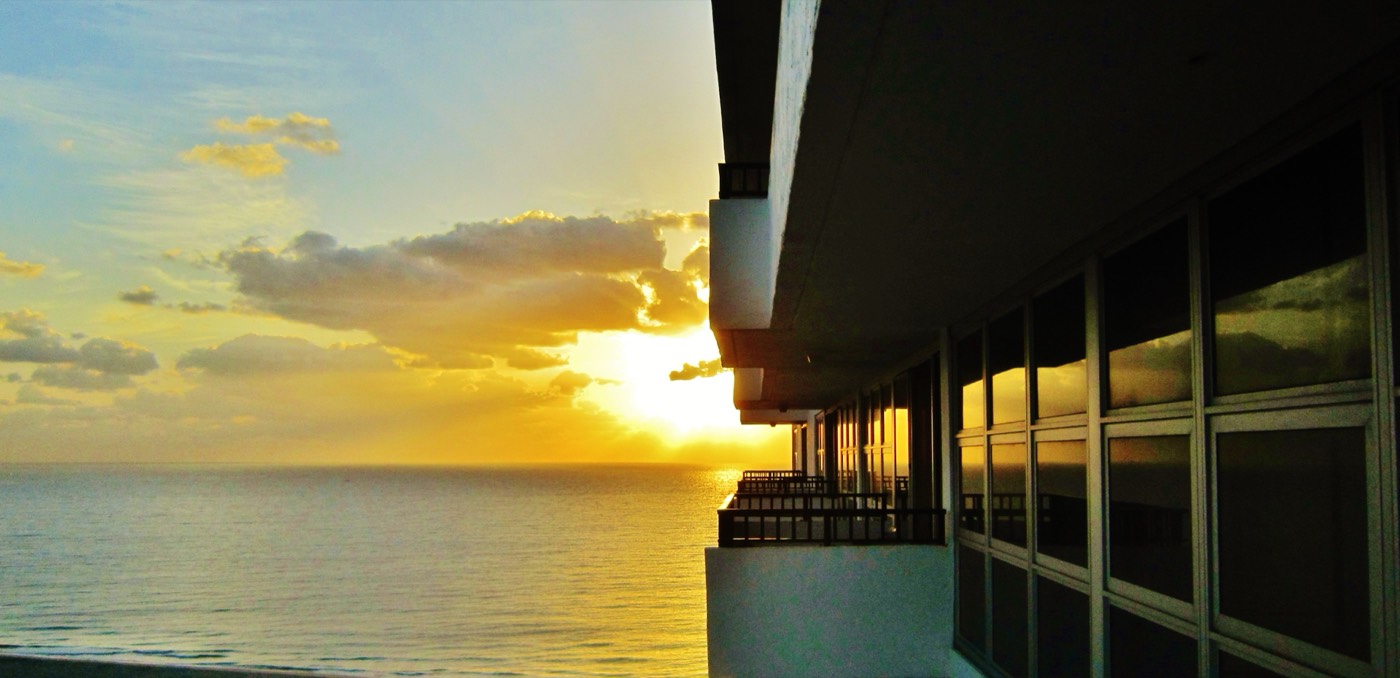
Today it is a city of just over 112,000 people, with three miles of beachfront, the 1906 Hillsboro Lighthouse standing at the inlet, and a fishing pier that draws anglers around the clock. It is not the wealthiest address in Broward, and that is part of why the Brazilians came. The rents were reachable, the work was here, and the ocean looked a little like home.
How It Became Brazilian
The Brazilian story in Pompano Beach is really the story of a single inland city in Brazil and the chain it pulled across the equator.
The Valadares connection
A disproportionate share of the Brazilians who emigrated to the United States came from Governador Valadares, a mid-sized city in the state of Minas Gerais. The link is old enough to have become folklore: American mica and crystal buyers worked the region during the Second World War, locals heard stories of dollars, and a migration corridor opened that has run for generations.
When Brazilians began leaving in larger numbers through the economic turbulence of the 1980s, that corridor already existed. People did not move to an abstract America. They moved to where a relative or a neighbour from back home was already waiting with a sofa and a lead on a job. It is the same pattern that built the Brazilian community in Framingham, Massachusetts and the Brazilian presence in the Ironbound of Newark, the two other great hubs of the Brazilian diaspora in the north-east.
Why north Broward
Within South Florida, the Brazilian population settled in the north-eastern corner of Broward County rather than in Miami proper. The cluster runs through Deerfield Beach, Pompano Beach, Oakland Park, Coconut Creek, Lighthouse Point and Sea Ranch Lakes, spilling north toward the Palm Beach County line.
Several things drew them to this corridor at once. Housing was more affordable than in Miami or Fort Lauderdale. There was steady work in construction, cleaning, landscaping, hospitality and the restaurant trade. And the coast, with its heat and its beaches, offered a climate that asked for very little adjustment from someone raised on the Brazilian Atlantic.
A short drive up the coast, the wealthier Brazilians of Boca Raton settled into a more affluent version of the same Atlantic dream, while the broader Latin American map of west Broward took shape around the Colombians of Weston and the Cuban families who built up the same city. The Brazilians, speaking Portuguese rather than Spanish, kept their own corner of the county.
The corridor takes shape
By the 1990s the community had reached the size where it could sustain its own institutions. Our Lady Aparecida, a Brazilian Catholic mission named for the patron saint of Brazil, was founded on 3 July 1996 to serve the Portuguese-speaking faithful, eventually celebrating a string of weekend masses with several held in Pompano Beach itself.
Bakeries and markets followed, then steakhouses, then law offices and remittance shops and Portuguese-language schools. The transformation was concentrated along the commercial spine of Sample Road and the stretch of Federal Highway running north into Deerfield Beach.
An “invisible” community recognised
For a long time the Brazilians of South Florida were described as an invisible community, a population of hundreds of thousands across the region that drew little notice from the wider public, a pattern not unlike the quieter, more affluent arrival of Israelis in nearby Boca Raton. They were sometimes mistaken for Hispanic neighbours, though they speak Portuguese, not Spanish, and they often arrived, worked and saved with the stated intention of going home one day.
Many did go home. Many more did not, and over time the temporary arrangement hardened into a permanent one. The proof is in the numbers: before Pompano Beach annexed surrounding areas, the city recorded the highest percentage of Brazilians of any place in the United States, at 2.67 per cent of its population.
The Landmarks
Seabra Foods, 839 West Sample Road. This Portuguese and Brazilian supermarket is the practical heart of the corridor, where the imported goods, the meat counter and the hot buffet make it as much a meeting place as a grocer. For a homesick family it is where the week’s shopping doubles as a small act of return.
Restaurante Brasil, 843 West Sample Road. A few doors from the supermarket, this buffet-style churrascaria serves the rodizio cuts that anchor a Brazilian Sunday: picanha, fraldinha, linguica, rice, beans and farofa. The address says everything about how tightly the community has clustered along this one road.
Rio’s Brazilian Market and Grocery, Pompano Beach. A neighbourhood market stocking the brands of home, from guarana soda to pao de queijo flour, the kind of small shop that lets a household cook the food it grew up on without a substitution.
First Brazilian Baptist Church of South Florida, Pompano Beach. A Portuguese-language Baptist congregation listed with the Brazilian-American Chamber of Commerce of Florida, one of the evangelical churches that, alongside the Catholic mission, gave the community its spiritual centre of gravity.
Our Lady Aparecida Brazilian Mission. Founded in 1996 to serve Portuguese-speaking immigrants, the mission ran an information centre that helped newcomers find jobs and housing and celebrated several of its weekend masses in Pompano Beach, where the largest local Brazilian community lives.
Pompano Beach Community Park, 820 NE 18th Avenue. Every autumn this park becomes the stage for the Annual Brazilian Festival, a day of samba, food vendors and live music that began in 2012 and grew into one of the largest events of its kind in the south-eastern United States.
The Hillsboro Inlet and lighthouse. Completed in 1906, the lighthouse marks the northern edge of the beach the community adopted as its own. On a warm weekend the sand fills with Brazilian families, coolers and beach chairs, a coastline that does a passable impression of home.
Where They Came From
If you ask in the bakeries along Sample Road where people are from, the same answer keeps returning: Minas Gerais, and very often Governador Valadares specifically. The pull of that single city on this single corner of Florida is one of the more striking examples of chain migration in the country.
There are Cariocas from Rio, Paulistas from Sao Paulo, and people from the southern states too, the sort who give Pompano Beach its sister-city tie with Itajai in Santa Catarina. But the centre of gravity is Mineiro, and that shapes the accent of the Portuguese you hear, the food in the buffet and the saints on the church calendar.
What they brought was less a regional identity than a way of doing things: arrive through someone you know, work harder than the job strictly requires, send money back, and recreate the rituals of home wherever you land. The festivals for Brazilian Independence Day on 7 September and for Nossa Senhora Aparecida on 12 October are not nostalgia. They are the calendar carried whole across an ocean.
Pompano Beach Today
By the most recent count, Pompano Beach is home to roughly 3,800 residents of Brazilian ancestry, about 3.4 per cent of the city, according to American Community Survey estimates for 2019 to 2023. Just to the north, Deerfield Beach is more concentrated still, with around 7,500 Brazilian residents, close to 9 per cent of that city. Across Florida the figure runs past 113,000.
Those numbers almost certainly undercount the reality. The community has long included people without documents, people who moved fluidly between Brazil and Florida, and people who simply slipped through the survey net. Ask anyone who lives here and the lived population feels far larger than the official one.
The corridor today is mature rather than new. The first generation that arrived to clean houses and pour concrete now owns the restaurants, the markets and the cleaning companies. Their children are bilingual Floridians who may have never seen Minas Gerais, who follow Brazilian football and American football with equal seriousness, and who carry two passports lightly. The annual festival, the Portuguese masses and the Sample Road supermarkets are no longer the markers of a temporary stay. They are the furniture of a settled, second-generation home.
Frequently Asked Questions
How many Brazilians live in Pompano Beach?
American Community Survey estimates for 2019 to 2023 put the number at roughly 3,800 residents of Brazilian ancestry, about 3.4 per cent of the city. The figure for neighbouring Deerfield Beach is higher still, near 9 per cent. Community members generally believe the true count of Brazilians in Pompano Beach is larger than official surveys capture.
Why did Brazilians settle in Pompano Beach?
Brazilians in Pompano Beach settled in north-eastern Broward County because housing was affordable, there was steady work in construction, cleaning and hospitality, and the coastal climate resembled home. Chain migration did the rest, with newcomers joining relatives and neighbours already established along the Sample Road and Federal Highway corridor.
Where in Brazil are most of them from?
A disproportionate share trace their roots to Governador Valadares in the state of Minas Gerais, a city with one of the oldest and strongest migration links to the United States. Others come from Rio de Janeiro, Sao Paulo and the southern states, but the Mineiro influence is the dominant thread.
Is there a Brazilian neighbourhood or main street?
The commercial heart runs along West Sample Road and north along Federal Highway toward Deerfield Beach. Within a few hundred feet on Sample Road you can find a Portuguese and Brazilian supermarket, a churrascaria buffet and Brazilian markets, which is why the Brazilians in Pompano Beach are often described as clustered rather than scattered.
What is the Brazilian Festival in Pompano Beach?
The Annual Brazilian Festival began in 2012 and is held at Pompano Beach Community Park at 820 NE 18th Avenue. Featuring samba, live music, a kids’ zone and dozens of food vendors, it grew into one of the largest Brazilian cultural events in the south-eastern United States.
What churches serve the Brazilian community?
The community is served by both Catholic and evangelical congregations. Our Lady Aparecida, a Brazilian Catholic mission founded in 1996, has long celebrated Portuguese-language masses in Pompano Beach, while the First Brazilian Baptist Church of South Florida is among the Portuguese-speaking evangelical churches in the city.
If your family’s story passed through Pompano Beach, or any of the places Brazilians have made home in America, Atlas of Home can trace that journey. From a bakery counter in Governador Valadares to a churrascaria on Sample Road, to wherever you are now.