
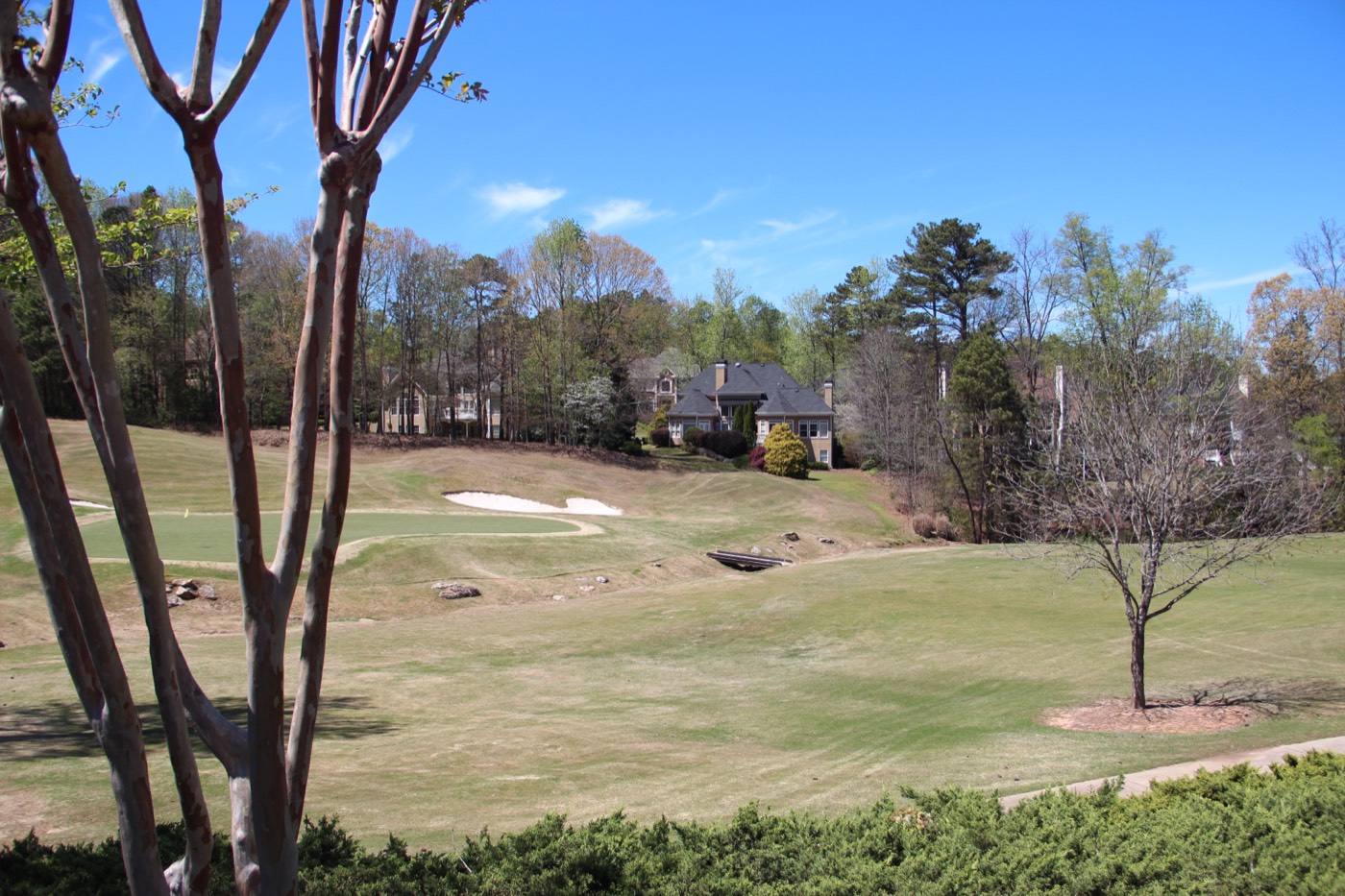
Drive north of Atlanta until the strip malls thin out and the fences turn to four-board horse rail, and you arrive in Milton, Georgia, a city that legislated itself into existence to stay rural and then quietly became one of the most concentrated homes for Indians in the metro area. Today more than five thousand residents of this 39-square-mile city trace their roots to the subcontinent, and the story of the Indians in Milton is, in many ways, the story of the town itself: deliberate, prosperous, and unusually fond of open land.
The Place
Milton sits at the northern edge of Fulton County, a wedge of pasture and woodland pressed against Forsyth and Cherokee. It is a young city built on old ground, incorporated only on 1 December 2006 after residents voted by more than 85 per cent to break away from unincorporated Fulton and govern themselves.
The name reaches back further. The area once belonged to Milton County, formed in 1857 and named for John Milton, Georgia’s first Secretary of State and a Revolutionary War veteran. That county dissolved into Fulton during the Depression, in 1932, but the name survived in churches, roads and memory.
What people protected when they incorporated was the land. Roughly 39 square miles, much of it still zoned agricultural, with more than two hundred active horse farms scattered between the subdivisions. Milton chose to be the suburb that does not look like one.
How It Became Indian
For most of its history Milton was farm country. Local growers once drove livestock, potatoes, apples and honey down to the Atlanta market in spring and autumn, then plodded home over the hills with tools and city goods. There was no Indian community here for the simple reason that there was barely a town here at all.
The corridor that came first
The Indian story in north Fulton did not begin in Milton. It began a few miles south and east, along the GA 400 corridor in Alpharetta and across the line in Johns Creek, where technology employers and the rise of the so-called Golden Corridor drew skilled migrants through the 1990s and 2000s.
Engineers, doctors and IT consultants arrived for jobs at the office parks clustered around Windward Parkway and North Point, and they put down roots in the school districts they trusted. The communities that formed in Johns Creek, Alpharetta and nearby Marietta became the gravitational centre of Indian north Atlanta.
Spilling north into the pasture
Milton was the next ring out. As the corridor filled and prices in Johns Creek climbed, families looking for more land, newer construction and the same standard of schools pushed north into the Birmingham and Crabapple districts.
The appeal was specific. A professional couple could buy a large house on an acre or more, send children to schools that consistently ranked among Georgia’s best, and still reach the Alpharetta tech offices in twenty minutes. For a generation of Indian families who had measured success partly in square footage and partly in test scores, Milton answered both.
The school equation
Few things shaped the Indian map of Milton more than its two public high schools. Milton High School is routinely placed among the top five per cent of public high schools in Georgia, ranked nationally inside the top thousand. Cambridge High School, which opened in Milton in 2012 to relieve crowding, climbed quickly into the same conversation, regularly listed among the strongest public high schools in the state.
For many Indian parents the decision to buy in Milton was, in plain terms, a decision about those attendance zones. Word travelled through temple parking lots and WhatsApp groups across the corridor: the houses were bigger up north, and the schools were just as good.
From newcomers to neighbours
By the 2020s the change was visible in the everyday texture of the place. The federal count and recent estimates put Milton’s population near 41,500, of whom roughly 16 per cent identify as Asian. The single largest slice of that is Indian: about 5,494 residents, or 13.3 per cent of the whole city.
That share ranks Milton fourth among all Fulton County cities for Indian population, behind Johns Creek, the city of Atlanta and Alpharetta. In a town that fought to stay rural, more than one resident in eight now has roots in the subcontinent.
The Landmarks
Milton’s Indian life is woven through a wider corridor, so its landmarks include places just over the city line that Milton families treat as their own.
Market District Crabapple, 12655 Birmingham Highway, Milton, GA 30004. The anchor of Milton’s emerging downtown, a mid-rise development set into the historic Crabapple crossroads where Crabapple, Mayfield and Birmingham roads meet. For families up in the horse country it is the closest thing to a walkable centre, and on weekends its restaurants and greens fill with the children of every community in the city.
Milton High School, 13025 Birmingham Highway, Milton, GA 30004. The town’s flagship public school and, for many Indian families, the reason the moving van came north. Its consistent national ranking made the surrounding attendance zone some of the most sought-after residential ground in the corridor.
India Plaza, 4150 Old Milton Parkway, Alpharetta, GA 30005. Just south of the city line, this Indian grocery is a staple of the weekly shop for Milton households, stocking the spices, lentils, fresh produce and puja items that no mainstream supermarket carries. It is the kind of unglamorous landmark that anchors a diaspora more firmly than any monument.
Brindavan Cafe, 5215 Windward Parkway, Suite A, Alpharetta, GA 30004. A pure vegetarian South Indian restaurant on Windward Parkway, the artery that links Milton to the old tech offices. Dosas, idli and biryani draw a steady weekend crowd of families who have driven down from the northern subdivisions.
Halcyon, 6365 Halcyon Way, Alpharetta, GA 30005. A 135-acre mixed-use village just over the Forsyth line, built on the old McFarland Parkway farmland and now lined with restaurants, shops and a green that hosts seasonal events. It has become a default Saturday destination for Milton families, Indian and otherwise, looking for somewhere to walk and eat after school sport.
Cherians, 2255 Peachtree Parkway, Cumming, GA 30041. A large Indian supermarket a short drive north in Cumming, popular for festival shopping and bulk staples. Its presence is part of why families felt comfortable settling this far out: the necessities of an Indian kitchen were never more than a few miles away.
BAPS Shri Swaminarayan Mandir, 460 Rockbridge Road NW, Lilburn, GA 30047. Farther afield in Gwinnett County, this hand-carved stone mandir, inaugurated in 2007, was for years the largest of its kind outside India. Milton families make the drive for major festivals and milestones, a reminder that the corridor’s sacred geography stretches well beyond any one city.
Where They Came From
The Indians who settled Milton did not arrive from one village or one state. They came, for the most part, through the professional migration that has shaped Indian America since the 1990s: graduate students and skilled workers who entered through technology, medicine and finance, and who followed jobs rather than family chains.
That means Milton’s Indian community is a national cross-section rather than a regional one. Telugu-speaking families from Andhra Pradesh and Telangana sit alongside Tamils, Gujaratis, Punjabis, Malayalis and Kannadigas, a mix you can read off the menus of the corridor’s restaurants and the festivals on the community calendar.
What united them was less a place of origin than a moment of arrival, and a shared instinct about where to raise children once the job in north Atlanta was secured.
Milton Today
Milton in 2026 is an experiment in having it both ways. It remains, by ordinance and by temperament, a rural city of horse farms, four-board fences and protected green space, where Crooked Creek still runs through the woods and barns appear on the city’s own social media. It is also, just as truly, a destination for affluent Indian professional families who have made it one of the wealthiest and best-educated corners of Georgia.
The tension is real but rarely loud. Some longtime residents worry that growth and mid-rise development threaten the equestrian identity that defined the place; newer arrivals tend to have chosen Milton precisely because that identity kept the land open and the density low. For now the two visions share the same roads.
For Indian families the result is a particular kind of belonging. The community here is not concentrated in a single neighbourhood the way it can be in Cumming or further south in Peachtree City. It is dispersed across subdivisions and acreage, knit together by schools, groceries, restaurants and temples that mostly sit just beyond the city line. In Milton you do not live in an Indian enclave. You live in a horse town that happens, increasingly, to be Indian.
Frequently Asked Questions
How many Indians live in Milton, Georgia?
Recent estimates put the Indian population of Milton at about 5,494, or roughly 13.3 per cent of the city’s population of around 41,500. That makes the Indians in Milton the fourth-largest Indian community among Fulton County cities, behind Johns Creek, Atlanta and Alpharetta.
Why did so many Indian families move to Milton?
Most came for a combination of top-ranked public schools, large homes on generous lots, and an easy commute to the technology and corporate offices along the GA 400 corridor in Alpharetta and Johns Creek. As those nearer suburbs filled, Indian families looking for more land at the same standard of schooling pushed north into Milton.
What schools draw Indian families to Milton?
Milton High School and Cambridge High School are the main draw. Both are consistently ranked among the strongest public high schools in Georgia, and for many Indian families in Milton the choice of where to buy a house was effectively a choice between those two attendance zones.
Where do Indians in Milton shop for groceries and eat?
Most households shop at Indian grocers just over the city line, such as India Plaza on Old Milton Parkway in Alpharetta and Cherians in Cumming. Vegetarian South Indian restaurants like Brindavan Cafe on Windward Parkway are popular weekend spots, alongside the cluster of Indian restaurants throughout Alpharetta.
Is there a Hindu temple in Milton, Georgia?
Milton itself is largely residential and rural, so most worship happens at temples elsewhere in metro Atlanta. The best known is the BAPS Shri Swaminarayan Mandir in Lilburn, a hand-carved stone temple inaugurated in 2007 that Milton families visit for major festivals.
What makes Milton different from other north Atlanta suburbs?
Milton incorporated in 2006 specifically to preserve its rural, equestrian character, and it still protects large amounts of agriculturally zoned land and more than two hundred horse farms. That low-density, open-land feel is what distinguishes Milton from denser corridor cities, and it is part of what attracted the Indian families who settled there.
If your family’s story passed through Milton, or any of the places Indians have made home in America, Atlas of Home can trace that journey. From a village in Andhra or a city in Gujarat, to a house on an acre off Birmingham Highway, to wherever you are now.