
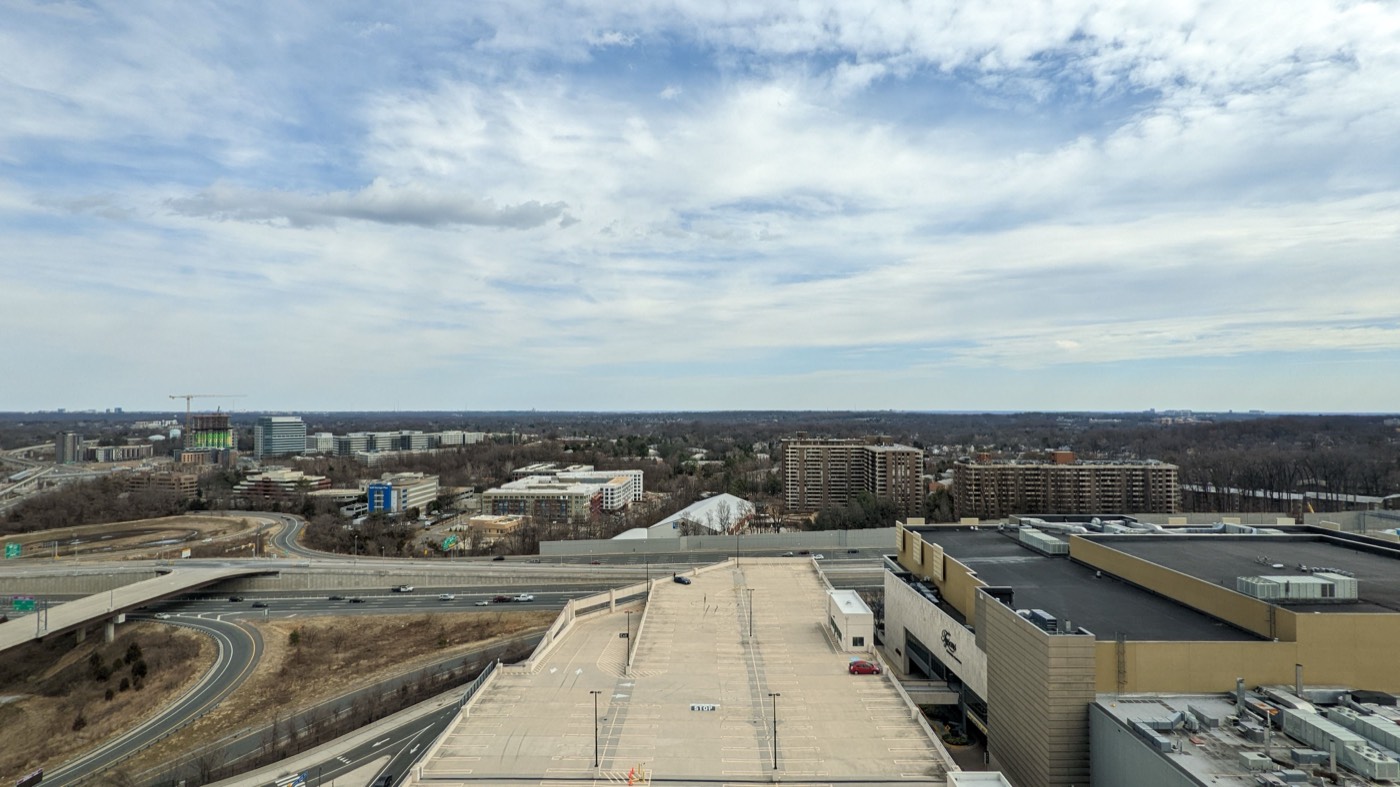
On a Saturday morning in McLean, a cardiologist who grew up in Hyderabad walks his daughter into a Kumon centre off Old Dominion Drive, then drives ten minutes to a Telugu study circle that meets in a member’s basement. His wife, a programme manager at a defence contractor in Tysons, is already at Patel Brothers loading a cart with toor dal and curry leaves. This is the quiet architecture of Indians in McLean, Virginia: a community measured less in storefronts than in school rankings, security clearances and the patient accumulation of a very particular kind of American success.
The Place
McLean sits eight miles northwest of downtown Washington, hard against the Capital Beltway in Fairfax County. It was founded in 1910, when the older villages of Lewinsville and Langley merged, and it took its name from John Roll McLean, the publisher who once owned The Washington Post.
For most of the twentieth century its prestige came from proximity: to the Pentagon, to Congress, and to the CIA headquarters that sits in the Langley section of town. McLean has long ranked among the wealthiest communities in the country, with a 2020 population of 50,773 and a median household income well into the six figures.
What changed in recent decades is who, exactly, was buying the brick colonials and the new-build mansions. By 2020 the Asian share of McLean had reached 21 percent, roughly 10,686 residents, up from less than 5 percent in 1980, according to census figures for the community. A large part of that growth is Indian.
How It Became Indian
The Indian story in McLean is not a story of a single neighbourhood filling up at once. It is a story of three engines, government, technology and medicine, pulling skilled migrants toward one of the most credential-hungry corners of America.
The federal pull, 1970s to 1990s
Northern Virginia’s first Indian arrivals were drawn by the things McLean is famous for. The federal government and its contractors expanded relentlessly after the Second World War, and by the 1970s and 1980s the region was importing engineers, statisticians and physicians from across India.
The earliest Indian families in the McLean and Tysons corridor tended to be doctors at the regional hospitals and analysts at federal agencies and consultancies. They were few, and they were scattered, but they set a template: arrive on a professional visa, buy into the best school district you can afford, and stay.
These pioneers carried a particular discipline. Many had crossed the world on a single student or work visa, with a degree from an Indian institute of technology or a medical college, and they understood McLean’s appeal in coldly practical terms. A house here was not just shelter, it was a permanent stake in the country’s best schools and a short drive from the agencies and contractors that would employ them for decades.
The Tysons technology boom
The decisive shift came with Tysons. The crossroads that had been farmland and a single shopping mall in the 1960s grew into one of the largest employment centres in the country, a forest of towers housing consulting firms, government IT contractors and telecoms.
Through the 1990s and 2000s, this was a magnet for Indian software engineers, many arriving on H-1B visas to staff the systems-integration and cleared-IT work that clusters around Washington. McLean, sitting directly beside Tysons, offered what those families wanted most: short commutes and the Langley pyramid of schools. The same dynamic played out across the technology suburbs of western Fairfax, in the Indian communities of Herndon and Chantilly, but McLean held the premium addresses.
The Telugu and Tamil wave
The most recent layer is distinctly South Indian. As the technology economy pulled engineers from Hyderabad, Chennai and Bengaluru, Telugu and Tamil families became a visible presence in the McLean and Tysons schools.
Their arrival reshaped the rhythms of family life in subtle ways. Weekend Carnatic music classes, Telugu and Tamil language circles, and Bharatanatyam recitals now thread through the calendars of McLean households, often hosted in members’ homes because the town itself has no Indian community hall. The cultural infrastructure is improvised, mobile and quietly resilient.
You can read it in the religious geography. Families here orient themselves toward South Indian temples such as the Sri Siva Vishnu Temple in Lanham, Maryland, and the Sri Venkateswara Lotus Temple in nearby Fairfax, both of which draw heavily on Telugu and Tamil traditions.
The result is a community that is overwhelmingly professional, often dual-income, and intensely focused on the next generation. McLean’s Indian families did not come to open a Little India. They came for the careers, the clearances and the classrooms, and they built their cultural life in temples, basements and weekend schools rather than on a commercial strip.
A note on the neighbours
McLean is not only Indian. The town is also home to one of the region’s most established Persian communities and a substantial Korean population, and the three groups share the same elite schools and the same Tysons shopping centres without occupying the same cultural spaces. The Indian story here runs alongside theirs, distinct in its temples, its languages and its origin regions.
The Landmarks
Patel Brothers, Tysons Corner. The South Asian grocery anchor for McLean’s Indian households, stocking everything from toor dal and basmati to fresh curry leaves and regional snacks. For families who cook the food of Andhra or Tamil Nadu at home, this is the weekly pilgrimage, the place where a McLean kitchen gets restocked for the week.
Bombay Tandoor, 8603 Westwood Center Drive, Vienna. Open since 2000 in the Tysons corridor, it became the area’s go-to for Indian fine dining and the lunchtime buffet that office workers from the surrounding towers fill at noon. It has hosted countless family celebrations and post-temple dinners for the McLean professional set.
Durga Temple of Virginia, 8400 Durga Place, Fairfax Station. Established in 1989 by pioneering Hindu families in Northern Virginia, it grew into one of the region’s most important North Indian temples. Many McLean families make the drive south for Navratri, weddings and the milestone ceremonies that mark a child’s life.
Sri Siva Vishnu Temple, 6905 Cipriano Road, Lanham, Maryland. Built between 1988 and 2002 in the Pallava and Chola architectural styles, with priests from Karnataka, Andhra and Tamil Nadu, it is one of the largest Hindu temples in the country. For McLean’s Telugu and Tamil families it is the spiritual centre of gravity, worth the cross-river drive.
Sri Venkateswara Lotus Temple, 12501 Braddock Road, Fairfax. A South Indian temple devoted to Lord Venkateswara, it serves the Tirupati-rooted devotional tradition that so many engineers from Andhra and Telangana carry with them. Weekend abhishekams here are thick with families from across western Fairfax County.
Langley High School, McLean. Established in 1965 and named for the Lee family’s estate, Langley is one of Virginia’s top-ranked public high schools, with an Asian enrolment of roughly a third of its 2,181 students. For Indian parents, an address inside the Langley pyramid is a goal in itself.
Tysons Corner Center and Tysons Galleria, Tysons. The twin shopping anchors beside McLean are where the community’s economic story is most visible, a skyline of office towers feeding two of the busiest malls in the mid-Atlantic. Many of the Indian professionals who fill those towers live a few minutes away in McLean.
Where They Came From
The Indians of McLean come overwhelmingly from urban, educated India, and increasingly from the south. The largest origin streams trace to Hyderabad and the wider Telugu belt of Telangana and Andhra Pradesh, to Chennai and Tamil Nadu, and to the technology hub of Bengaluru.
That southern weighting is a direct consequence of the technology economy. The same cities that supply America’s software industry, Hyderabad above all, supply the engineers who staff Tysons, and they bring their languages and their temple traditions with them.
There is also an older, more mixed cohort, North Indian doctors and federal professionals who arrived earlier, alongside Gujarati and Punjabi families woven through the broader Northern Virginia diaspora. Indian Americans are the single largest Asian group in Virginia, and the vast majority live in the northern counties of Fairfax, Loudoun and Prince William, alongside the older diaspora hub of Ashburn, with McLean among the most affluent addresses of all.
McLean Today
Today the Indian presence in McLean is prosperous and largely invisible to anyone driving through. There is no commercial Indian quarter, no row of sari shops. Instead there are families in the colonials off Chain Bridge Road, second-generation teenagers running cross-country for Langley and McLean High, and parents trading notes on coding camps and Carnatic music lessons.
The community’s institutions sit just outside the town, in Fairfax Station, Lanham and Fairfax, because McLean’s zoning and land prices were never built for temples and grocers. So the cultural life commutes, the way the people do, radiating out from McLean to the temples and back.
What McLean offers, and what this community came for, is durable: top schools, proximity to power, and a professional ecosystem in Tysons that keeps refilling with new arrivals from Hyderabad and Chennai. It is a diaspora defined not by a street you can photograph but by a school pyramid, a cluster of temples and a generation of children being raised to inherit all of it.
Frequently Asked Questions
How large is the Indian community in McLean, Virginia?
McLean’s Asian population reached about 21 percent of its 50,773 residents in 2020, roughly 10,686 people, with Indians forming a large share. Indians in McLean, Virginia are part of the broader Northern Virginia diaspora, the largest Asian group in the state.
Why did so many Indian families settle in McLean?
Three forces drew them: federal and contractor jobs near the CIA and Pentagon, the technology and consulting boom in adjacent Tysons, and the strength of the Langley and McLean High School pyramids. Indians in McLean, Virginia overwhelmingly arrived as skilled professionals.
Are there Hindu temples near McLean?
The temples sit just outside McLean. The Durga Temple in Fairfax Station, the Sri Venkateswara Lotus Temple in Fairfax, and the large Sri Siva Vishnu Temple in Lanham, Maryland all serve McLean families.
Where do McLean’s Indian families buy groceries and eat out?
Patel Brothers in the Tysons Corner area is the main South Asian grocer, and Bombay Tandoor in nearby Vienna, open since 2000, is a longstanding choice for Indian dining and lunchtime buffets.
Which parts of India do McLean’s Indians come from?
Increasingly the south, especially Hyderabad and the Telugu region, Chennai and Tamil Nadu, and Bengaluru, reflecting the technology workforce. An older cohort of North Indian doctors and federal professionals came earlier.
How is the Indian community in McLean different from the Persian and Korean ones?
All three share McLean’s elite schools and the Tysons malls, but they are culturally distinct. The Indian community is anchored by Hindu temples and South Indian languages, separate from McLean’s established Persian and Korean populations.
If your family’s story passed through McLean, or any of the places Indians have made home in America, Atlas of Home can trace that journey. From a flat in Hyderabad to a colonial off Chain Bridge Road, to wherever you are now.