
Drive the residential lanes off Old Dominion or Kirby Road on a Sunday morning and the cars in the church lots tell a quieter story than McLean’s reputation lets on. Among the diplomats and the contractors and the Beltway commuters, the Koreans in McLean have built a community that rarely announces itself, yet shapes the schools, the sanctuaries, and the long weekend pilgrimages to grocery stores a few exits west. It is one of the most affluent Korean American settlements in the country, and one of the least visible.
The Place
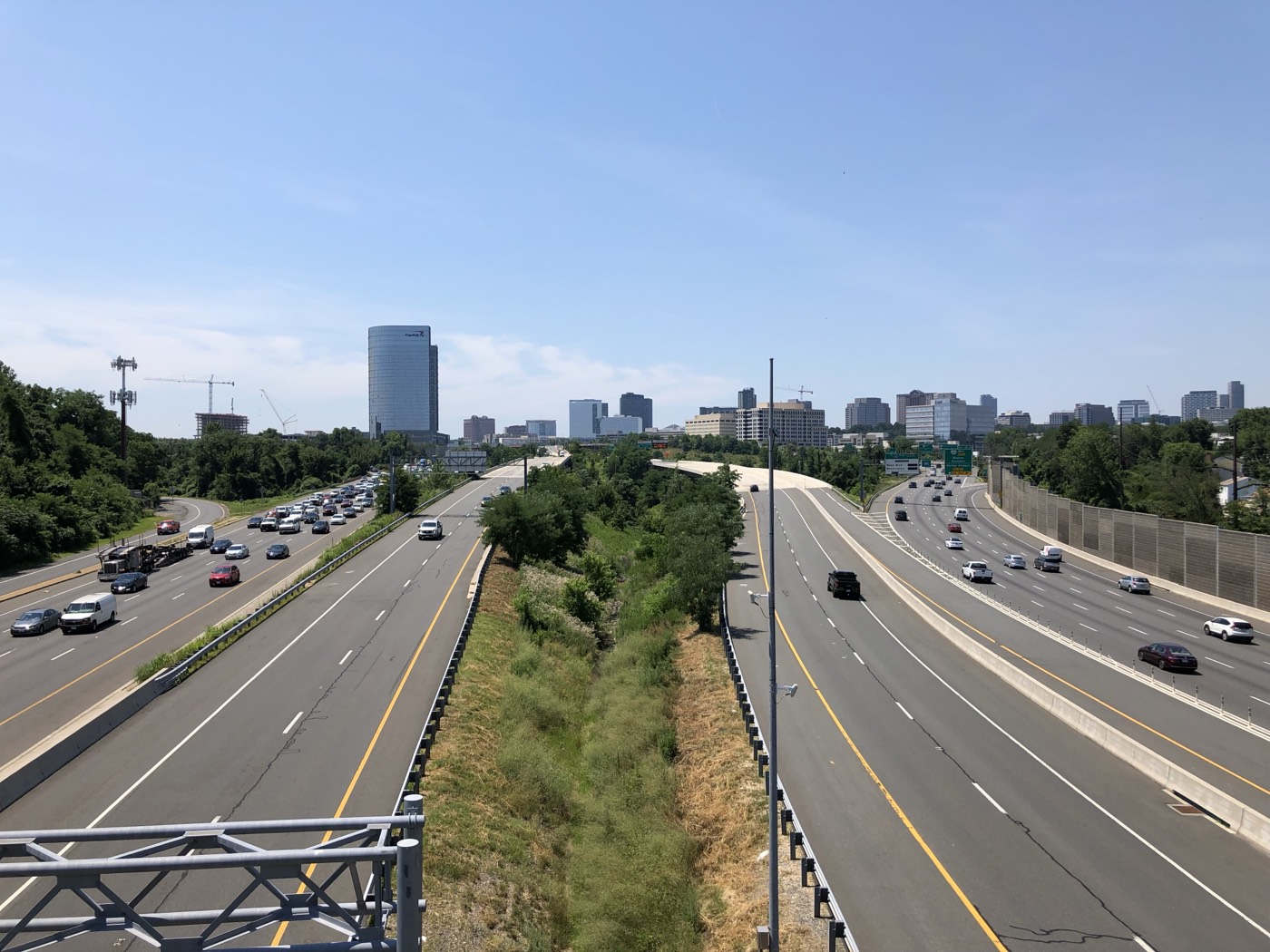
McLean sits eight miles northwest of downtown Washington, on the Virginia bank of the Potomac, hard against Tysons and the Capital Beltway. It grew out of two older villages, Lewinsville and Langley, merged in 1910 and named for John Roll McLean, a former publisher of The Washington Post who had bought the charter of the railway that connected the area to the capital.
It is not a town in the formal sense but an unincorporated community of roughly 50,000 people, governed as part of Fairfax County. What it is, unmistakably, is wealthy. The 2010 census recorded a median household income near $165,000 and median family income close to $195,000, with home values that have long sat among the highest in Virginia.
That affluence has a particular source. McLean is the home of the CIA at Langley, the Office of the Director of National Intelligence, and a dense ring of federal contractors and corporate headquarters anchored to Tysons next door. People come here for proximity to the work of government, and increasingly, for the schools.
How It Became Korean
The Korean presence in McLean is a later chapter of a much older Washington-area story. To understand the families parking at the McLean Korean Presbyterian Church, you have to start a few miles south and a generation earlier.
Arrival in the capital, 1970s
Korean immigrants began arriving in the Washington region in large numbers in the early 1970s, after changes to United States immigration law and a loosening of South Korea’s own emigration restrictions. Before that, leaving had been difficult. The first wave clustered in the same apartment complexes across Landover, Arlington, Alexandria and Falls Church, close to where the jobs were.
Many of those early arrivals worked in the District itself. They wanted somewhere affordable to live, close to the city, with good schools for the children they were determined to educate. The answer, for thousands of families, was Annandale.
It was office workers, by one local account, who built Annandale’s Koreatown rather than merchants alone. The pattern was familiar across the post-1965 Korean diaspora in America: a first generation that worked long hours in service and small business, and pinned its hopes on the schooling of the next. Greater Washington, together with the Korean cluster around Ellicott City in Maryland, would grow into the third-largest Korean American metropolitan area in the country.
The Annandale years
From the late 1980s, Annandale’s central business district became the recognised Koreatown of the Washington suburbs, its signage and storefronts increasingly Korean. A planning survey would later find that a majority of the commercial properties in the district were Korean-owned. This was the commercial and cultural heart, and for many McLean families it still is. You can read the fuller account in our piece on the Koreans in Annandale, Virginia.
By the 2010 census, some 41,000 ethnic Koreans lived in Fairfax County, about 3.8 percent of the population and more than 60 percent of all the Koreans in Virginia. The county’s Korean population had more than doubled since 1990. Greater Washington had become one of the largest Korean American metropolitan areas in the country.
The move to McLean
What happened next was a story of generational climbing. The professionals among that first wave, and especially the children they had sent through the region’s public schools, did well. Engineers, physicians, lawyers, federal contractors and small-business owners who had started near the city began moving to where the property and the schools were best.
McLean offered both. Its public high schools, Langley and McLean, rank among the strongest in Virginia, and for a community that has treated education as the surest investment, that draw is decisive. The same calculus pulled Korean families into nearby Vienna and farther out to Centreville, each with its own character.
The numbers show the shift plainly. In 1980 McLean was 4.8 percent Asian and 89.9 percent non-Hispanic white. By the 2020 census the Asian share had risen to 21 percent, the white share down to under 65 percent. Koreans are a substantial part of that change, alongside Chinese, Indian and other communities. At Langley High School, roughly a third of students are now Asian.
This is not a Korean enclave in the way Annandale is. There is no McLean Koreatown, no concentration of Hangul storefronts. The community here lives dispersed among the cul-de-sacs, expressing itself less through commerce than through churches, schools, and the rhythms of family life. McLean is also home to a notable Persian community with a similar professional profile, a parallel we trace in our article on the Persians in McLean, Virginia.
The Landmarks
McLean Korean Presbyterian Church, 7144 Old Dominion Drive. A Presbyterian congregation that has long served Korean families across McLean and the surrounding towns. For a dispersed community, churches like this do the work that a Koreatown main street does elsewhere, gathering people weekly and anchoring the calendar of births, weddings and holidays.
Korean United Methodist Church of Greater Washington, 1219 Swinks Mill Road. One of the larger Korean Methodist congregations in the region, set on the quiet residential roads of McLean. Its Korean-language and English-language services reflect the two generations it serves, the immigrant parents and their American-raised children.
St. Francis Korean Church, 1830 Kirby Road. A Korean Episcopal congregation, smaller and more contemplative, evidence that the community’s faith life spans many denominations rather than a single tradition.
Langley High School, 6520 Georgetown Pike. Consistently ranked among the top public high schools in Virginia, Langley is one of the principal reasons Korean families pay McLean prices. Roughly a third of its students are Asian, and the school’s college-preparatory reputation is a fixture of dinner-table conversation in Korean households across the area.
H Mart, 10780 Fairfax Boulevard, Fairfax. The nearest of the big Korean supermarkets to McLean, a weekly destination for produce, banchan and the kind of pantry staples no regular grocer stocks. For McLean families, the Saturday run west to H Mart is a familiar ritual.
Lotte Plaza Market, 5900 Centreville Crest Lane, Centreville. The other great Korean grocery anchor of the western suburbs, with a food court serving jajangmyeon, tangsuyuk and bulgogi. Lotte and H Mart between them supply the Korean kitchen of half of Northern Virginia, McLean included.
Annandale’s Korean business district. Not in McLean at all, but indispensable to it. The restaurants, bakeries, bookshops and offices of Annandale, a short drive south, remain the commercial and cultural centre that the residential community of McLean leans on.
Where They Came From
The Koreans of McLean trace their roots overwhelmingly to South Korea, and like most of the post-1965 Korean diaspora in America, disproportionately to Seoul and the surrounding Gyeonggi province. They are, by and large, an urban, educated migration rather than a rural one.
What distinguishes the McLean families is less their region of origin than their path within America. Many did not arrive in McLean directly from Korea. They came first to the apartment complexes of Arlington and Falls Church, raised children in Annandale or Fairfax, and moved to McLean once careers in medicine, law, engineering, government contracting and business had made it possible.
It is a migration measured in two generations rather than one, the second leg internal to the Washington suburbs, climbing toward the best schools the county could offer.
That second leg is the quiet engine of the whole story. The parents who arrived in the 1970s and 1980s did not, for the most part, arrive with money. They arrived with degrees, ambition, and a conviction that a good American education would compound into something their children could keep. McLean is what compounding looks like a generation on: a destination earned rather than inherited, reached by way of Falls Church and Annandale and a great many hours of work.
McLean Today
The Korean community in McLean today is prosperous, professional and quietly woven into the fabric of one of America’s wealthiest suburbs. You will not find it in a row of storefronts. You will find it in the Asian faces that make up nearly a third of Langley High School, in the full parking lots of the Korean churches on a Sunday, in the second-generation lawyers and doctors and contractors raising a third generation here.
Its commercial life still flows outward, to Annandale’s Koreatown and to the H Mart and Lotte Plaza markets to the west. McLean is where many Korean families live, sleep and send their children to school; the eating, shopping and Korean-language errands often happen a few exits away. The arrangement suits a community that has always valued the home and the school above the storefront.
It is, in the end, a story of arrival completed. The families who came to the Washington area to work near the government, who built a Koreatown in Annandale and sent their children to the best schools they could find, ended up in McLean because that is where the path of the diaspora was always pointing.
Frequently Asked Questions
How many Koreans live in McLean, Virginia?
McLean does not publish a separate Korean count, but it sits within Fairfax County, where about 41,000 ethnic Koreans lived as of the 2010 census, more than 60 percent of all Koreans in Virginia. McLean’s Asian population reached 21 percent in 2020, of which Koreans are a substantial share.
Why did Korean families move to McLean?
The Koreans in McLean were drawn chiefly by the schools and the affluence. Langley and McLean high schools rank among the strongest in Virginia, and McLean’s proximity to Washington, the CIA and the Tysons corporate corridor made it a natural landing point for successful Korean professionals.
Is there a Koreatown in McLean?
No. Unlike Annandale, McLean has no concentrated Korean commercial district. The Korean community here is dispersed across residential neighbourhoods and expresses itself through churches and schools, relying on Annandale and the western suburbs for shopping and dining.
Where do Koreans in McLean buy Korean groceries?
Most drive a short distance west to H Mart on Fairfax Boulevard in Fairfax or to Lotte Plaza Market on Centreville Crest Lane in Centreville. Annandale’s Korean business district to the south is the other main destination for restaurants and specialty shops.
Which Korean churches serve McLean?
McLean is home to several, including McLean Korean Presbyterian Church on Old Dominion Drive, the Korean United Methodist Church of Greater Washington on Swinks Mill Road, and St. Francis Korean Church on Kirby Road. For a dispersed community, these congregations serve as its main gathering places.
How does McLean’s Korean community relate to Annandale’s?
Closely. Many Korean families in McLean began in or near Annandale, the recognised Koreatown of the Washington suburbs since the late 1980s, and moved to McLean as their careers advanced. Annandale remains the commercial and cultural heart that McLean’s residential community leans on.
If your family’s story passed through McLean, or any of the places Koreans have made home in America, Atlas of Home can trace that journey. From the apartment complexes of Arlington and the Koreatown of Annandale to the quiet lanes of McLean, to wherever you are now.