
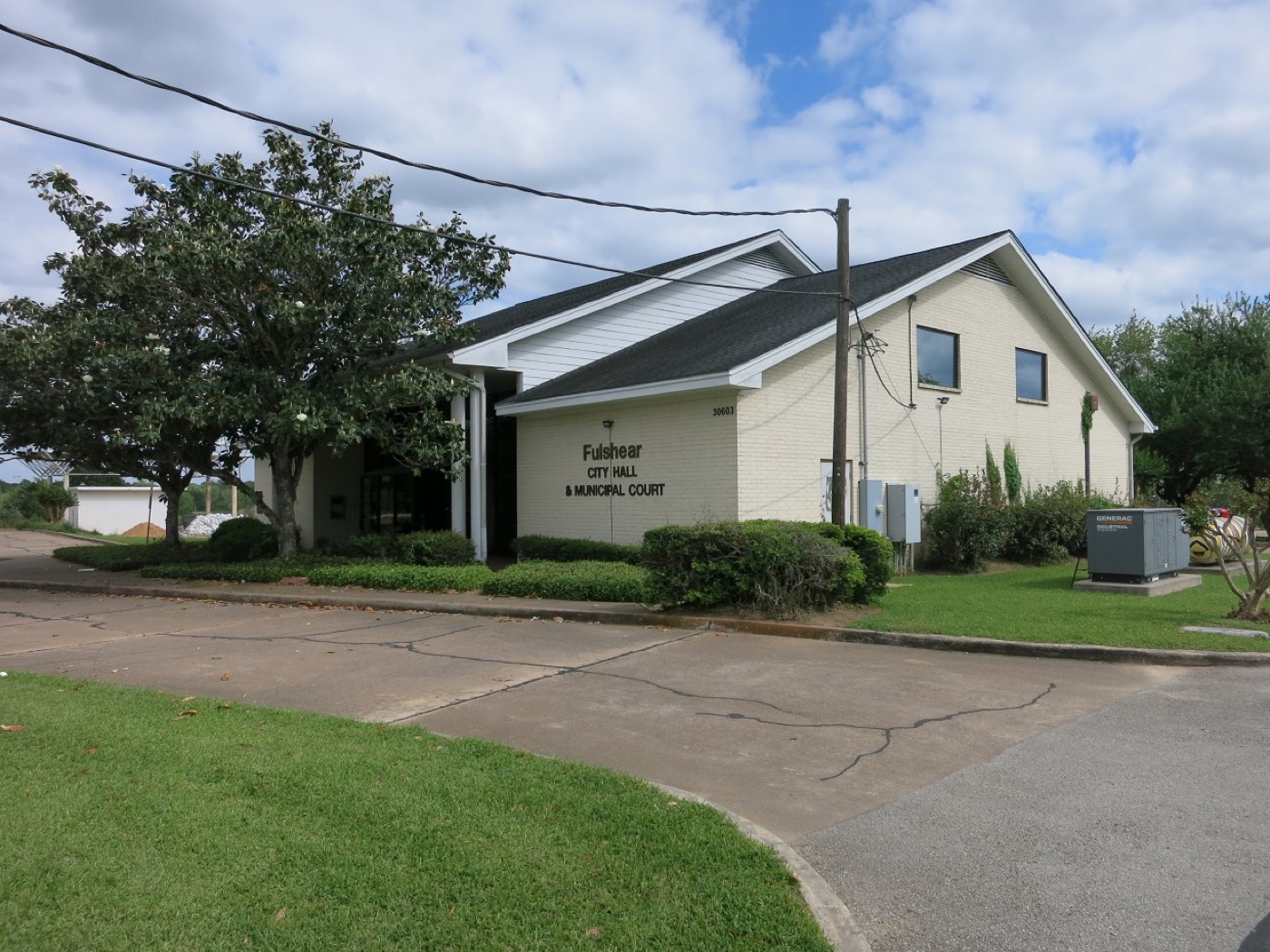
Twenty years ago, Fulshear was a railroad hamlet of a few hundred people, a name on a map west of the Houston sprawl where cattle still outnumbered commuters. Today the Indians in Fulshear, Texas form one of the youngest and most affluent diaspora pockets in the metro, drawn into master-planned subdivisions that rose out of rice fields almost overnight. The story of how engineers from Hyderabad and Ahmedabad ended up raising children on the far western edge of Fort Bend County is, in many ways, the story of Fulshear itself.
The Place
Fulshear sits roughly 30 miles west of downtown Houston, near the point where the suburban grid finally gives way to open prairie. It takes its name from Churchill Fulshear, who received a land grant on 16 July 1824 as part of Stephen F. Austin’s colony, and for most of the next two centuries it remained a small farming and ranching town.
The town grew up around a rail corridor after 1888, when Churchill Fulshear Jr. granted the San Antonio and Aransas Pass Railroad the right of way through his plantation. For more than a hundred years afterward, little changed. As recently as 2010 the city counted only about 1,134 residents.
Then came the developers. Fulshear is now repeatedly ranked among the fastest-growing cities in the United States, and its newest residents look very little like the cattle ranchers who came before them.
How It Became Indian
The Indian presence in Fulshear is too recent to have a long mythology. There is no decades-old enclave here, no founding family whose arrival in the 1970s seeded a community. What there is instead is a particular kind of arithmetic: top schools, large new houses, a manageable commute to high-wage technical work, and a price point that, for a while, undercut neighbouring suburbs.
The Houston foundation
To understand Indians in Fulshear, you have to start east of it. Greater Houston has been a major centre of Indian settlement since the energy and medical booms of the late twentieth century, anchored by institutions like the Sri Meenakshi Temple in Pearland, built in 1982, and the BAPS Shri Swaminarayan Mandir in Stafford, inaugurated in 2004 as the first traditional Hindu stone mandir of its kind in North America.
For years, Indian families clustered closer in, in Sugar Land, in southwest Houston, and increasingly in Katy as that suburb’s schools earned a national reputation. Fulshear, just beyond Katy, was the next square of farmland in the path of the same migration.
The master-planned wave
The turning point was Cross Creek Ranch, a 3,200-acre master-planned community launched in 2008 on the prairie at Fulshear’s edge. It offered exactly what professional families with young children were looking for: new construction, lakes and trails, community pools, and access to acclaimed schools.
Cross Creek Ranch and the developments that followed it pulled Fulshear’s population from roughly 1,134 in 2010 to 16,856 by the 2020 census, and then past 60,000 within a few more years. The Asian share of the city rose in lockstep, from about 2 percent in 2010 to roughly 13.6 percent by 2020, a sevenfold jump in a single decade.
The professionals
The people filling those houses were not arriving as first-generation strugglers. Many were energy-industry engineers, software developers, physicians, and finance professionals, often moving out from inner suburbs after a few years in the country, or transferring in from Indian metros for jobs in Houston’s energy and technology sectors.
The corridor that makes Fulshear work is geographic. The Westpark Tollway, Interstate 10, and the Grand Parkway feed commuters toward Houston’s Energy Corridor and downtown, putting high-wage technical jobs within a tolerable drive of a five-bedroom house on a quiet cul-de-sac.
Within the Houston metro’s Indian population, the Katy and Fulshear belt has become known for an unusually high concentration of Telugu-speaking families from Andhra Pradesh and Telangana, alongside a strong Gujarati presence. The combined Katy and Fulshear area now records some of the highest median household incomes and homeownership rates of any Indian residential zone in the region.
Schools as the engine
Nothing has shaped Indian Fulshear more than its schools. The city is served by Lamar Consolidated Independent School District, with Fulshear High School, Leaman Junior High, and Huggins Elementary anchoring the newer neighbourhoods.
For families who measure a town first by its classrooms, the calculus was straightforward. The schools were new and well-rated, the houses were larger and newer than equivalents closer in, and the community filled, quietly and quickly, with neighbours who had made the same calculation.
The Landmarks
Because the Indian community here is so new, much of its religious and cultural life still happens in the older, larger institutions to the east. But a layer of distinctly Indian Fulshear has begun to appear close to home.
Green Bawarchi, 4020 FM 1463 Road, Fulshear, TX 77494. An Indo-Pak restaurant on the FM 1463 corridor that has become a default gathering spot for Fulshear and west Katy families, known for Hyderabadi biryani and a sprawling menu of North and South Indian dishes prepared with halal meat. For many newer residents it is the closest taste of home.
Sri Meenakshi Temple, 17130 McLean Road, Pearland, TX 77584. Built in 1982 in the South Indian Dravidian style, this is the spiritual anchor for much of the metro’s South Indian, and especially Tamil and Telugu, population. Families from Fulshear make the longer drive south for major festivals and life-cycle ceremonies that no local hall can yet host.
BAPS Shri Swaminarayan Mandir, 1150 Brand Lane, Stafford, TX 77477. Inaugurated in 2004 as the first traditional hand-carved Hindu stone mandir of its kind in North America, the Stafford mandir draws Gujarati families from across Fort Bend County, Fulshear included, for worship, youth activities, and large community festivals.
Indian Bazaar & Cafe, 653 Pin Oak Road, Katy, TX. One of several Indian grocers in the Katy townsite that supply Fulshear kitchens with spices, lentils, fresh produce, and puja items, paired with a small cafe. The drive east to stock up is a weekend ritual for many households not yet served by a grocer of their own.
The Katy Indian grocery belt. Beyond Indian Bazaar, stores such as Triveni Supermarket, Keemat Grocers, and Tirupati Balaji serve the wider Katy and Fulshear population, a cluster dense enough that families rarely have to choose between Indian staples and a short drive.
Cross Creek Ranch, Fulshear. The 3,200-acre community that started it all functions as the de facto centre of Indian Fulshear, its trails, pools, and parks the backdrop for the everyday life, after-school carpools, evening walks, weekend cricket, of the families who arrived with it.
Fulshear High School, Lamar CISD. More civic than ceremonial, the high school and its feeder campuses are where the second generation is growing up, where spelling bees, robotics teams, and college-admissions seasons mark the rhythm of the community as surely as any festival.
Where They Came From
The chain that leads to Fulshear runs through two distinct regions of India. The first is the Telugu south, the states of Andhra Pradesh and Telangana, whose engineers and IT professionals have fed the United States technology workforce for a generation and who form a notably large share of the Katy and Fulshear cohort.
The second is Gujarat, long the heartland of Indian migration to America, whose families anchor the region’s Swaminarayan and broader Hindu institutional life. Smaller streams of Tamil, Hindi-belt, and other Indian families round out the picture.
What unites them is less a place of origin than a stage of life. The typical arrival is a married professional in their thirties or forties with school-age children, moving not directly from India but from an earlier American suburb, choosing Fulshear for room to grow.
Fulshear Today
Fulshear in the mid-2020s is a town in the middle of becoming something. Construction crews still work the prairie at its edges, new sections of master-planned communities open faster than the road network can absorb them, and the population continues to climb at a pace that keeps the city near the top of national growth rankings.
For Indian families, that newness is both the appeal and the limit. The schools, the houses, and the neighbours are everything they came for. But the temple, the proper grocery hauls, and the big festival gatherings still mean a drive east, to Stafford, Pearland, or the Indian shopfronts of Katy.
That gap is closing year by year as restaurants, grocers, and informal cultural networks follow the families west. Fulshear is doing in a decade what older diaspora suburbs took half a century to do, and the Indians putting down roots here are, quite literally, building the community as they live in it.
Families weighing Fulshear often compare notes with the longer-established Indian communities nearby, from the Indian families just east in Katy who pioneered the school-driven move west, to the deeper-rooted diaspora of Indians in Pearland around the Meenakshi Temple. Others look to the Chinese community in nearby Sugar Land for a model of how a Fort Bend suburb matures, or, further afield, to the Dallas-area enclave of Indians in Coppell. Fulshear’s own chapter is still being written.
Frequently Asked Questions
How large is the Indian community in Fulshear, Texas?
There is no official Indian-specific count, but the Asian share of Fulshear rose from about 2 percent in 2010 to roughly 13.6 percent by the 2020 census, with Indians forming a large part of that growth. As the city has since pushed past 60,000 residents, the Indian community has grown accordingly into one of the metro’s most affluent.
Why do so many Indians live in Fulshear?
The Indians in Fulshear, Texas were drawn primarily by highly rated Lamar CISD schools, new and spacious master-planned housing, and a reasonable commute to high-wage energy and technology jobs in Houston’s Energy Corridor and beyond. Many arrived as established professionals moving out from inner suburbs like Katy and Sugar Land.
Where do Indians in Fulshear worship?
Most travel to established Houston-area temples, including the Sri Meenakshi Temple in Pearland and the BAPS Shri Swaminarayan Mandir in Stafford. As Fulshear’s community matures, more local religious gatherings are emerging, though the major temples remain to the east.
Where do Indians in Fulshear shop for groceries?
The nearest concentration of Indian grocers is in Katy, including Indian Bazaar & Cafe on Pin Oak Road, along with Triveni Supermarket, Keemat Grocers, and Tirupati Balaji. Families typically make weekend trips east to stock up on spices, lentils, and fresh produce.
What part of India do Fulshear’s Indian families come from?
The Katy and Fulshear belt is known for a large Telugu-speaking population from Andhra Pradesh and Telangana, drawn by technology and energy careers, alongside a strong Gujarati community and smaller Tamil and Hindi-belt streams. Most arrive as professionals with school-age children.
How is Fulshear different from Katy and Sugar Land for Indian families?
Fulshear is newer and further west, with master-planned communities like Cross Creek Ranch that offered larger, more affordable new homes than the more established suburbs. Katy pioneered the school-driven Indian migration just to its east, while Sugar Land remains a more mature Fort Bend hub with deeper institutional roots.
If your family’s story passed through Fulshear, or any of the places Indians have made home in America, Atlas of Home can trace that journey. From a software job in Hyderabad or a family line in Gujarat, to a new house on the prairie of Cross Creek Ranch, to wherever you are now.